Wall Street will never change, speculators will change, stocks will change, money bags will change, but Wall Street will never change, because human nature will never change.
The market always has only one direction, neither long nor short, but the correct direction.
"In 1907, he correctly judged the stock market crash and earned $3 million in one day. In order to save the market, the financier Morgan (JPMorgan) sent a special envoy to ask him not to be short again, and he honorably agreed; During the downturn of the stock market, he entered the market to go long; in 1929, he accurately shorted before the big crash, earning 100 million U.S. dollars and reaching the peak."
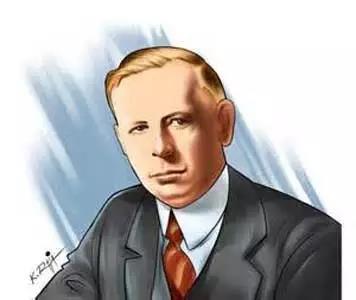
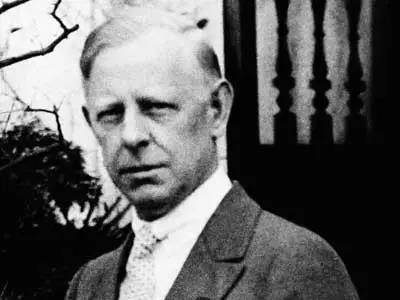
He is Jesse Livermore, the king of speculation, a milestone legend on Wall Street.
Today we will unravel Jesse Livermore's life, including what you already know and what you don't.
The Life of Jesse Livermore
$5 a week to make a fortune
Jesse Livermore was born in the United States in 1877 to parents who were farmers. As the youngest of three children, Jesse was not well liked by his father, but his mother loved him and wanted to teach him the best things in life.
The good news is that Jesse is a fast learner. He started learning to read and write when he was three and a half years old. By the age of five, he could already read newspapers and enjoy the financial pages. But his father was a pragmatist who forced Jesse, who was still in school at the age of 14, to drop out of school and leave school to work in farming to earn money.
The young and determined Jesse left his hometown ambitiously in a carriage.
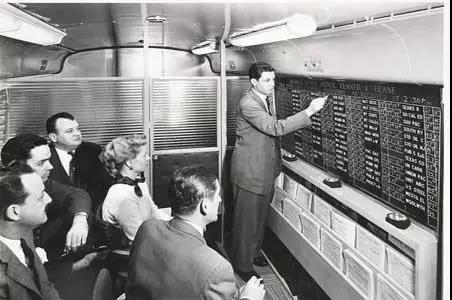
He threw away the slip of paper clutched in his hand, which had the address his mother had given him. Because when the carriage drove past Paine Weber Company, Jesse immediately asked the driver to stop. It was a Boston stock exchange, and little Jesse was completely captivated from the moment he saw it.
With an air of maturity beyond his years, Jesse quickly found a job at Paine Weber and the trust of others. As a small trader with a weekly salary of $5, Jesse officially started his legendary life by writing numbers on the trading board.
After working for a period of time, Little Jessie filled his notebook with dense numbers, but soon found that these transaction numbers seemed to follow a pattern. So, at the age of fifteen, Jesse began trading his five-dollar-a-week salary in the market, and within a few weeks, he was making more than he had made at Penn Webb.
This was the first time Jesse made his first pot of gold through research on trends. After that, 16-year-old Jesse left Paine and began to trade in the larger market in Boston.
The high-profile Jesse always wins beautifully, and wins are a bit flamboyant. Soon the trading market discovered the young man's reckless behavior, so he kept kicking him out. Cleverly, he put on a beard, but was eventually discovered and permanently banned. At that time, he also made a small fortune of 10,000 US dollars.
In 1899, Jesse felt that it was time to challenge his abilities. He decided to go to New York and met his wife, Nettie Jordan, in the same year. They married after only a few weeks of knowing each other, only to have a rough separation after a few months.
With a 30 to 40 minute lag in real-time data, Jesse lost everything. He makes Nettie pawn some of the jewelry he gave her as a gift, which angers her.
$5,000 up and coming
Abused miserably but still full of confidence, Jesse has returned to the origin of his fortune. He's lingering in the St. Louis trade market again. Because of the trading ground's ban on him, he can only entrust others to help him trade. In the end, he earned $5,000. The $5,000 later made "the name of Jesse Livermore resound through the clouds of Wall Street."
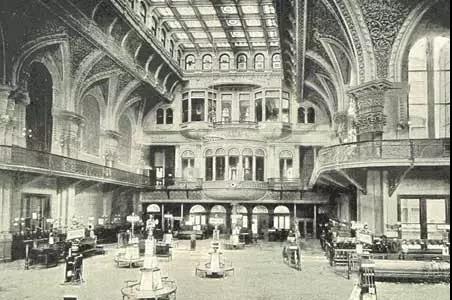
In 1901, Jesse returned to Wall Street, which was in the midst of a bull market. The 24-year-old made $50,000 in an instant, but lost it on a cotton trade. This failure taught Jesse a lesson, and his trading style became conservative, too worried to hold back.
“I could have made $20,000, but I only made $2,000,” he said, enjoying the rich, seductive, diamond-filled life in the city.
At the age of 28, Jesse had $100,000 to his name, but at this time he lost his confidence. His conservatism, coupled with the experience of no winning streak in the stock market, made him question his long-term stock market trading ability. So he decided to give himself a vacation in Palm Beach—and it became a turning point in his life.
Jesse gambles and socializes with the owner of the beach while vacationing at the luxury hotel. He had a "psychological shock" he had never experienced before, and decided to short Union Pacific stock.
As soon as Jesse was back in town, he heard the news about the San Francisco earthquake—the Union Pacific stock dropped. By this time Jesse had $250,000. His friends thought he was crazy, or thought he had inside information.
Soon after, Jesse decided to buy Union Pacific stock and was looking for an opportunity to do so. But an old friend of his, Edward Hutton, warned him not to take it lightly. Jesse took this advice and then regretted it, because Hutton was completely wrong. For this, Jesse blamed himself.
In 1907, Jesse made as much as $1 million in a single day, but seeing the market was in crisis, Jesse decided to do something right and sensible. He began to buy as much as possible, and led other Wall Street people to buy together, and the market began to recover.
Jesse gets the title of hero. Inspired by following him, many of his companions have made fortunes one after another.
In just one year, Jesse achieved a leap from 0 to 3 million US dollars and entered a new wealth class. To imitate Morgan, he bought a yacht for $200,000 and purchased a villa on Manhattan's Upper West Side. Since then, he has only been in and out of the most exclusive clubs in New York, and has countless mistresses.
But gradually Jesse was unable to make ends meet due to high costs, so he returned to the stock market again.
$5 million fame
In 1908, he lost $5 million of his property on the Chicago Commodity Exchange because he trusted a "friend". He was in a corner with nowhere to go.
In 1915, Jesse went bankrupt. The stocks he bought to save the market in 1907 gave him a buffer until this long and protracted bear market passed. Just one year later, he made back the $5 million he had lost in the ensuing bull market.
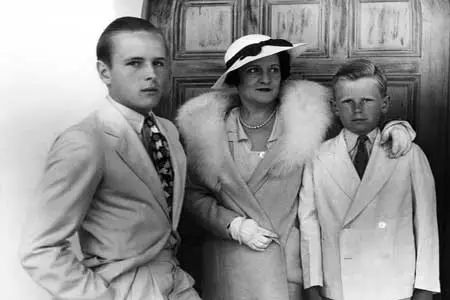
After a high-profile and protracted divorce, 40-year-old Jesse finally got rid of Nettie and married 22-year-old Ziegfeld actor, Dorothy. In 1919, they had their first child, Jesse Livermore II. In 1922 their second child, Paul, was born. They are rich, high-status, and travel in high society. Those were the happiest moments of family time for Jesse.
The famous Livermore also frequently appeared in the headlines of the media, and people relied on his recommendations in the newspapers to buy and sell stocks. Jesse built a formal trading office and made $15 million. 2 years later, they moved to a larger office, Jesse has 60 employees.
Edwin Rachel contacted and interviewed Livermore for "Memoirs of a Stock Operator," which was published in 1923 with permission. During its release, no one realized that the book was actually based on Livermore, whose protagonist was named Livingston. But it did sell well and was reprinted many times.
Meanwhile, Jesse's popularity continued to grow on Wall Street. In 1925, he traded $10 million in wheat and corn on the Chicago Board of Trade. It was also a declaration of war on the famous bull trader Arthur Cotton, who was known for his good manipulation of the market.
In 1927, two robbers broke into the Livermore home and held him and his wife at gunpoint. Dorothy was unexpectedly calm, and only asked the robbers to leave some of their valuable jewels. She also persuaded the robber not to wake her children when he was gone.
$100 million short Wall Street
In 1929, Livermore was keenly aware of some changes in the market. He decided to leave the office and save the deal until Oct. 29. News of Black Tuesday went viral, markets crashed, and countless traders went bankrupt overnight. The listeners turned pale, and panic engulfed Dorothy and her mother. When Jesse returned home, they cried to him that everything was over. What they didn't realize was that Jesse had made $100 million shorting Wall Street.
Jesse got the news that the Bank of England was preparing to raise interest rates, and accurately predicted that the stock market was about to sell off, and the stock price fell undoubtedly. At the same time, he was so shrewd that he analyzed the value of the economic depression warning through various newspaper clippings, so he kept selling short-selling stocks one step ahead. Because of the correct judgment and the first step to sell, he made $100 million and made a lot of money.
However, the family fun seems to be coming to an end in Livermore. Dorothy gradually became unable to extricate herself from alcoholism, and Jesse's lace scandals and countless mistresses also made her humiliated. She demanded a quick end to the marriage. She asked for custody of her two children and a $10 million villa. On the same day as the divorce, Lightning married a young official.
Jesse, 56, no longer young or rich, has decided to spend whatever money he has left on vacation. He also met his third wife, American singer Harriet Meuse.
Livermore plans to use the vacation to recuperate, recover from bankruptcy, and return to New York. But he was already overwhelmed mentally.
His ex-wife, Dorothy, still wants to live the same luxurious Palm Beach life as before, but she is already heavily in debt. So, she sold Jesse's hard work, the mansion he was proud of, the house that carried countless family joys, was sold in an instant. Jesse fell into great despair. Also, the jewelry and wedding ring that Jesse had given Dorothy were sold off at a very cheap price, much to Jesse's shame. The purchase and renovation cost Jesse $35 million, but Dorothy sold it for $220,000.
The third bankruptcy curtain call
A year later, Livermore had to declare a third bank bankruptcy. This time, he felt that he was exhausted. He has friends and has made a comeback. But this bankruptcy at the age of 60 may be fatal for him. Although Livermore made two high-profile returns to the stock market in the past , the creation of the US Securities and Exchange Commission and the passion of the Phoenix Nirvana no longer dragged everything into the abyss of despair and ended.
Jesse's son, Livermore II, is a dandy, problematic and alcoholic like his mother. On Thanksgiving night, they had dinner together, and Dorothy's son had another drinking problem. Dorothy stared at her son and said coldly: "I'd rather see you die than see you drink like that." Her son threw her a gun contemptuously and said word by word: "You I don’t have the guts to shoot.” The drunken Dorothy lost his mind during the quarrel and pulled the trigger on his son. Although the son survived with difficulty and Dorothy was exonerated from the charges, this incident made Jesse's already high-stress life worse.
A series of family changes and the establishment of the American Securities and Exchange Commission deeply made Jesse realize that his former glory is gone, and he can no longer dominate the Wall Street trading market as before. In 1940, Livermore's "How to Trade the Stock Market" was published, but it was obviously not as popular as the memoirs of the great operator before it.
No heat can consistently hold the high ground in the wise man's game of stock trading. Feeling lost in himself, Livermore shot himself in a New York hotel in 1940, leaving little money. His son took his own life in the same way in 1975.
The reason for Livermore's final suicide was not because of bankruptcy as everyone guessed, but more because of depression caused by the failure of marriage and family life. A certain speculator once entrusted his classmates in the United States to check relevant information, which proved this point.
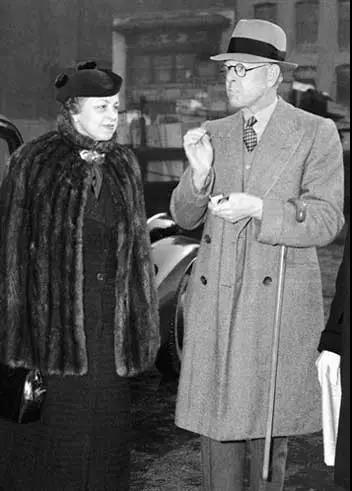
If you've done your research, you'll know that he's been bankrupt four times, so bankruptcy wasn't a terrible blow to him, and he's had a pretty good life after the last one. From the news and photos at the time, it can be known that after his bankruptcy in 1934, the first thing he did was to travel to Europe with his wife for 20 months. some of the problems." He came and went in cars, wore crisp suits to social occasions, and frequented nightclubs.
Although Livermore went bankrupt in his career for the fourth time in his later years, his actual life was not poor, because he had already left a large amount of living expenses for himself and his family in advance, which was enough to ensure that he continued to live a luxurious and rich life—— The strongest evidence to prove this comes from Wikipedia. Their investigation concluded that " Livermore still had $5 million in immovable funds when he died, which is roughly equivalent to $100 million today. " Learning lessons from previous bankruptcy, I set up a trust fund for myself and my family as early as possible, so that even in bankruptcy, I can ensure that I have no worries about food and clothing in my later years.
Although the legendary life of Jesse Livermore has come to an end, his wisdom has been passed down and influenced generations of traders. The mistakes he made are also regarded as lessons and lessons by today's traders.
Lessons from the Legendary Life of Jesse Livermore
Although Jesse's legendary and splendid life has come to an end, his story is still widely circulated and talked about on Wall Street, just as he read the news on the financial page with relish when he was 5 years old.
Fundamentals: Jesse never believes in gossip, but believes in sufficient preparation and research on fundamentals, and also conducts market research by himself. He followed the trend, operating only those leading stocks with promising prospects in strong industries, and selling stocks in industries with poor prospects. He is an extremely self-disciplined person, with regular work and rest, light diet, and accurate judgment. He emphasized that it is the profitability of the company that affects the stock price trend.
Trend: Unlike traders who frequently trade several times in the market, Jesse is very patient. As long as he judges that the trend is right, he can wait until the best time appears. Most successful traders move in the direction of the market and minimize resistance. Before making a big move, Jesse will first use a small amount to test, and then follow up after confirming that it is correct.
Risks: The boldness of shorting Wall Street with $100 million has led many people to think that Jesse is an out-and-out high risk appetite. According to Neil of the Gordon FRM Research Center, this statement is only half true. Livermore is sometimes very conservative when it comes to taking risks. He famously said: When I see a red flag, I don't argue with it, I run away, and a few days later, if all looks good, I come back. Moreover, Neil added, as long as the performance of the market is contrary to his judgment, considering the risk of the principal, Jesse will stop immediately and never allow a loss of more than 10%.
Psychological aspect: Good stock operators do not rely solely on technical analysis and some inside information, they also have a thorough study of the deep desire in stocks - human nature. Jesse grasped this point, studied trading psychology, and took psychology courses at night school, hoping to have a better understanding of the stock trading market. Although Jesse believes that it is relatively safe to follow the majority of people, he has the idea of breaking away from the group and going in the opposite direction at any time. Buffett also said something similar, "Be fearful when others are greedy, and be greedy when others are fearful."


 Add
Add


