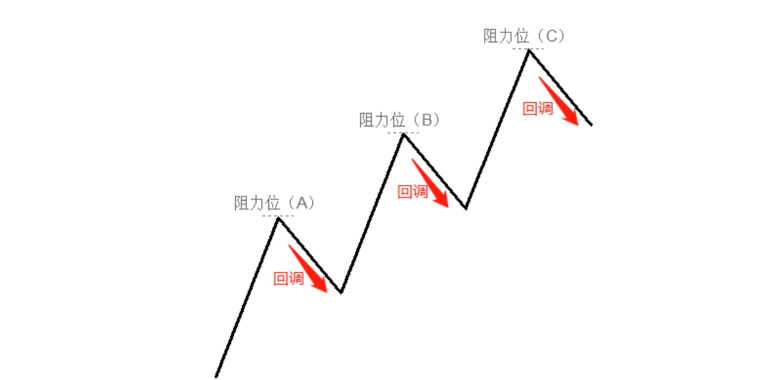
Resistance level, also known as pressure level, the price encounters some obstacles in the process of rising, preventing the price from continuing to rise, and the position where the hindering factors take effect is called the resistance level. After the price encounters a resistance level, it may stop rising or correct down for a period of time. This kind of decline is called a pullback.
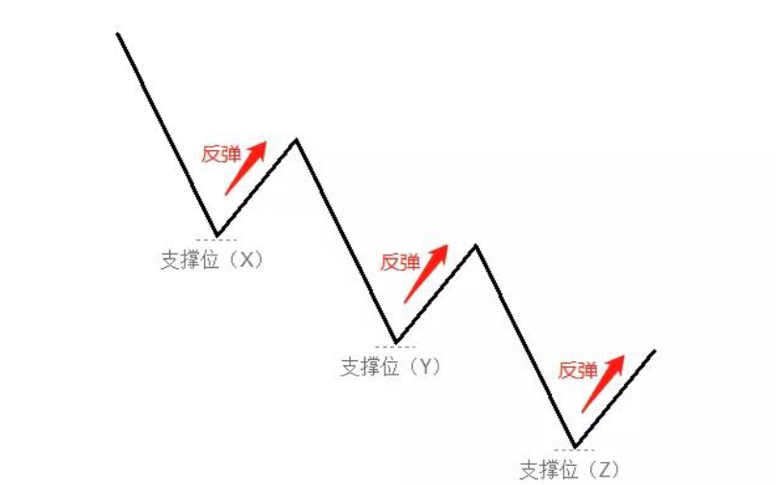
Support level, the price encounters some obstacles in the process of falling, preventing the price from continuing to fall, and the position where the obstacles take effect is called the support level. After the price encounters a support level, it may stop falling or correct for a period of increase. This increase is called a rebound.
Resistance levels and support levels can be transformed into each other: when a resistance level is broken, it will be transformed into a support level, and when a support level is broken, it will be transformed into a resistance level.
It can be seen from the above figure:
● The resistance level is the opening position for short orders and the closing position for long orders.
● The support level is the position for opening a long position and the position for closing a short position.
Resistance and support levels provide some opportunities for trading, so how to find resistance and support?
▼
Method 1: High and low points
The easiest way is to look at the previous highs and lows. The previous high is where the resistance level is located, and the previous low is where the support level is located.
Method 2:
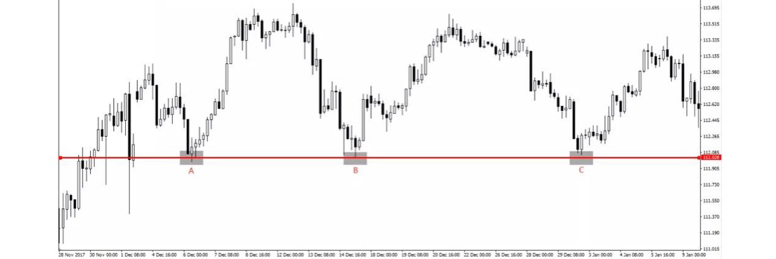
The integer mark of the exchange rate may create psychological pressure on people and provide strong resistance or strong support;
It can be seen that during the fluctuation process, the exchange rate did not fall below the previous low of 112.000, so A, B, and C all provided effective support.
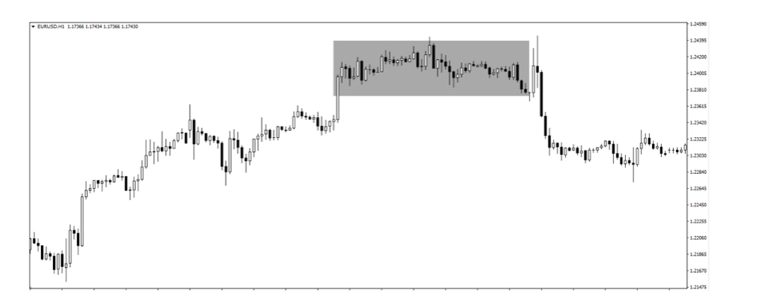
Method 3: Price Intensive Area
The consolidation range after the rising market is where the resistance level is located. The price encounters some obstacles here to prevent the price from rising, and the position where the obstacles take effect is the resistance level.
Method 4: Moving Average (MA) moving
average is a line drawn based on the average level of prices in the past period of time.
Generally speaking, when the price is above the 60-day moving average, it means that the price is in an upward trend, and you should mainly go long on dips; Therefore, the 60 SMA can be regarded as the position of the resistance level or the support level.
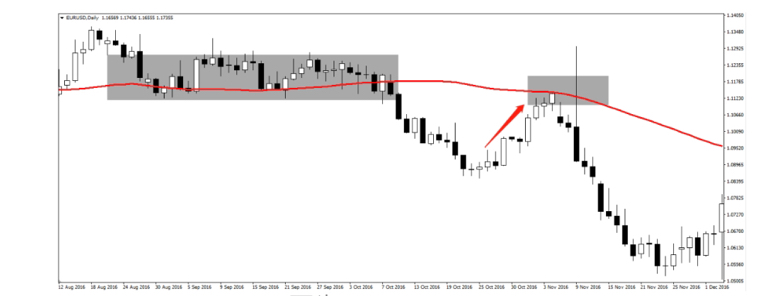
For example: Open the daily chart of a commodity and add 60SMA.
Adding method: insert--technical indicators--trend indicators--moving average--period (60)--ok.
The price tested the 60SMA downward, and it has not fallen below for a long time. The 60SMA provides strong support.
After falling below, the 60SMA turned into a resistance level again, preventing the exchange rate from rising.
Method 5: Trend line
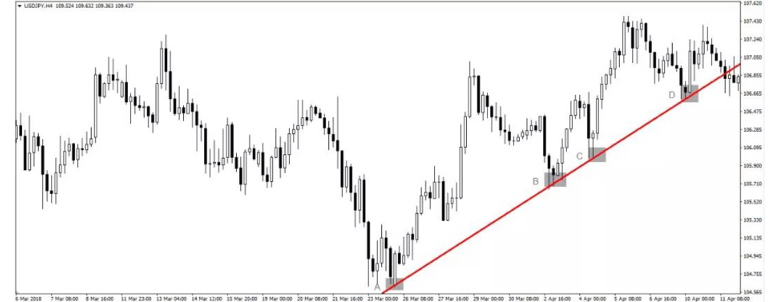
The rising trend line provides support for the price callback
and the falling trend line provides resistance for the price rebound
In the upward trend, connect the low points A, B, and C formed during the price operation process with a straight trend line, and at least three low points fall on the trend line. Then the trend line (D) once again provided effective support for the price's pullback.
Method 6: Fibonacci retracement line
Fibonacci retracement line is often used to help traders find the support level during the callback in the rising market and the resistance level during the rebound in the falling market. The support and resistance levels often provide many opportunities for our trading.
Drawing method:
● Rising market, generally select the previous low point and the recent high point, and draw from the bottom left to the top right.
● For a falling market, generally select previous highs and recent lows, and draw from upper left to lower right.
Method 7: The Bollinger Channel
is composed of three lines: upper rail, middle rail, and lower rail.
Adding method: insert--technical indicators--trend indicators--bollinger bands--parameters (20,2)--ok
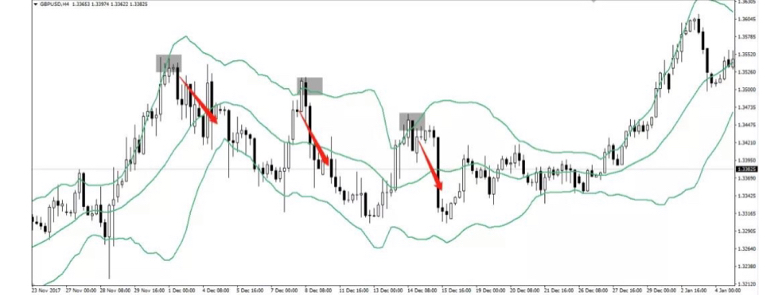
under the default parameters, The middle track of the Bollinger Band is the 20-day moving average, the upper track is the 20-day moving average plus 2 times the standard deviation, and the lower track is the 20-day moving average minus 2 times the standard deviation. Approximately obeys a normal distribution. Most of the price will fall inside the Bollinger Bands.
When the price reaches the upper track of the Bollinger Band, it may pull back downwards, and when the price reaches the lower track of the Bollinger Band, it may rebound upwards.
So the upper rail provides resistance and the lower rail provides support.


 Add
Add


