The RSI indicator is a prominent role in the oscillator. When we mention RSI, we usually mention RVI.
In fact, it’s not just hype, I want to prove that the RVI indicator has a wide range of applications!
It is also one of the few five-star indicators among the 13 oscillators.
In application, it is quite similar to the stochastic oscillator (KD) indicator, which can be used not only to judge the market trend, but also to easily judge the entry point.
Let's take a look at this indicator together with Hui Classroom.
Introduction to RVI Indicator
RVI stands for Relative Vigor Index, relative vitality index. Reflect the price trend by calculating the relationship between the closing price, opening price, highest price, and lowest price within the trading day, and determine the entry and exit points.
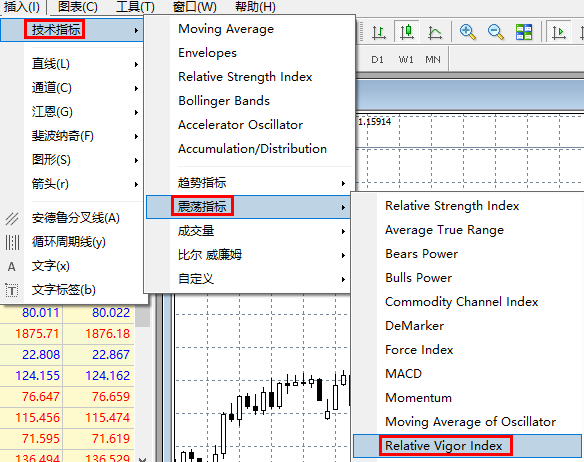
When using it, directly select it in the MT4 tool, insert - Technical Indicators - Oscillating Indicators - Relative Vigor Index .
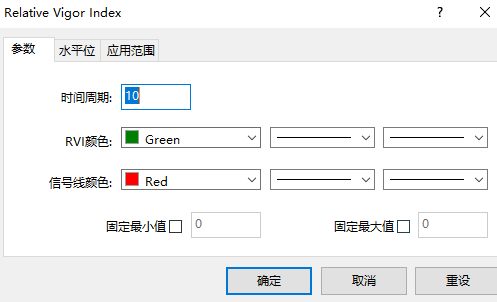
The default time period is 10. The RVI line is represented by a green line, and the signal line is represented by a red line.
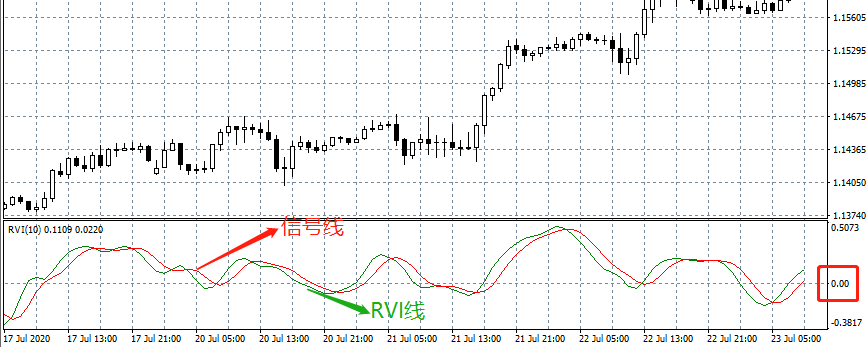
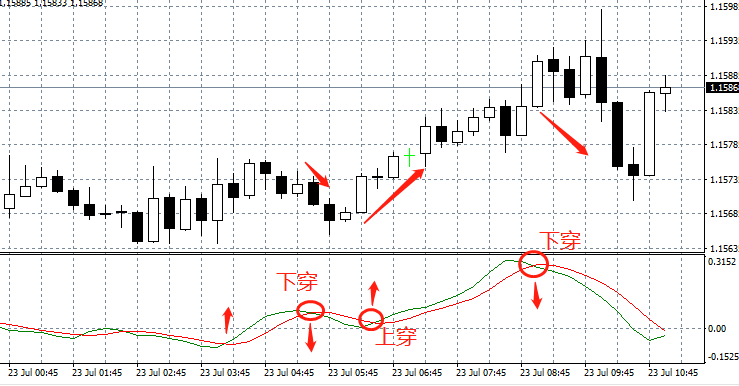
The RVI indicator consists of 2 lines, one is the RVI line (the green line in the figure) and the other is the signal line (the red line in the figure). The RVI line is a simple moving average, the signal line is a weighted moving average , and the periods of the two are the same. The signal line can send a signal earlier, with the 0 line as the center line, the signal line crosses the RVI line up and down to send out a signal.
Calculation formula of RVI indicator: RVI of each period = (closing price - opening price) / (highest price - lowest price) of the period
How to Trade with the RVI Indicator
Basic application of RVI indicator
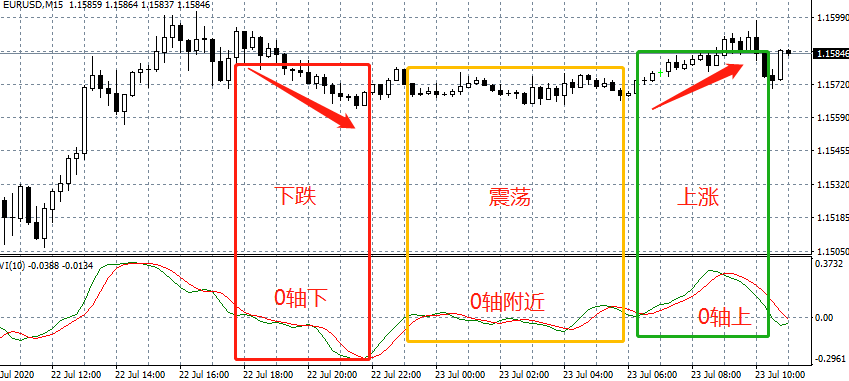
We know that when the closing price is higher than the opening price, it means that the market is in a bull market, and the RVI line is also above the 0 line; when the closing price is lower than the opening price, the RVI line is below the 0 line, and the market is in a bear market.
Therefore, we can judge the market trend through the trend and position of the RVI line.
At the same time, buy and sell signals can be determined by the intersection of the RVI line and the signal line.
When the RVI line crosses the signal line from bottom to top, you can consider doing more;
When the RVI line crosses the signal line from top to bottom, you can consider shorting.
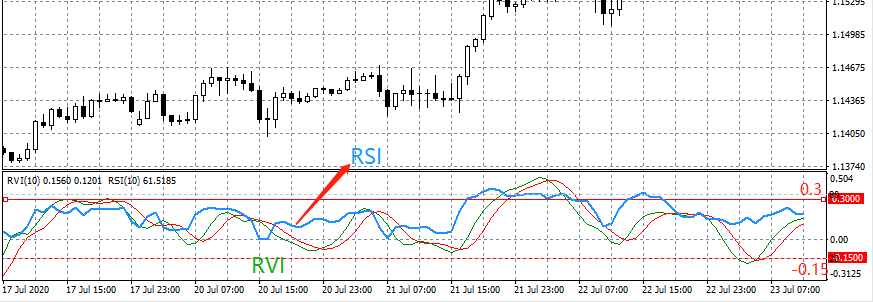
Both the RVI indicator and the RSI indicator actually belong to the measurement of price shocks, so the RVI indicator can also reflect the overbought and oversold of the market. When the RVI value exceeds 0.3, it means that the market is oversold, and it is advisable to go short; when the RVI value is lower than -0.15, it means that the market is overbought, and it is advisable to go long. This overbought and oversold value is for reference only!
Formal divergence of the RVI indicator
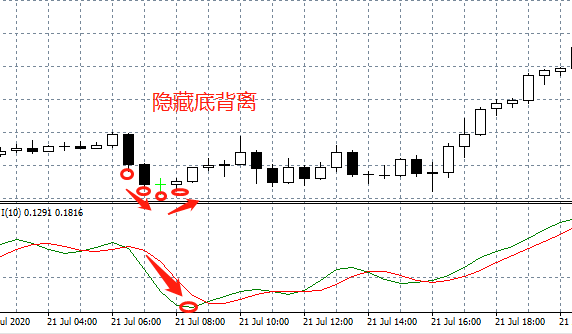
In the downward trend, when the low point of the K-line chart gradually decreases, but the low point of the RVI indicator rises after the downward trend is stable, this is the bottom deviation of the RVI indicator, and it is a short-term long-term signal;
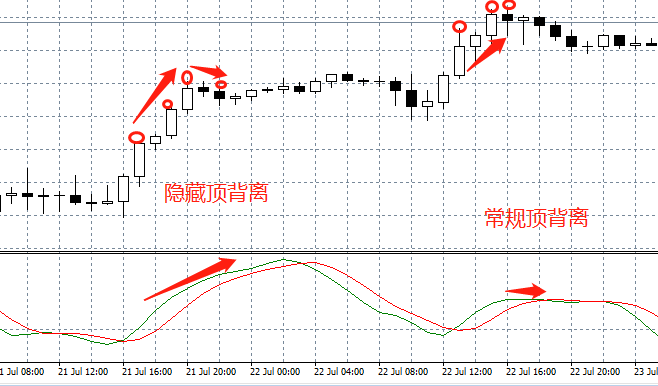
In the upward trend, when the high point of the K-line chart gradually rises, but the high point of the RVI index gradually decreases after the upward trend gradually flattens, this is the top divergence of the RVI index and a short-term short-term signal.
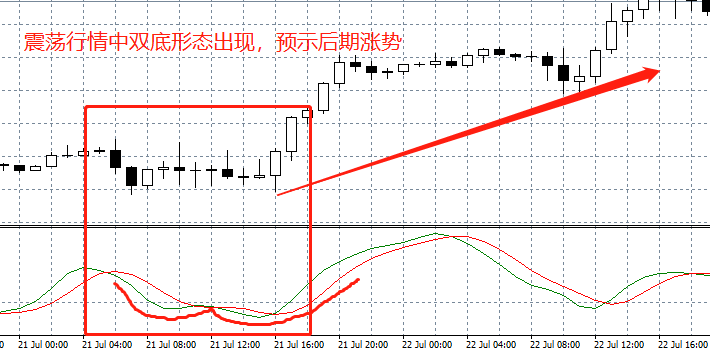
In addition to the divergence pattern, the RVI indicator will also appear in a double top, double bottom or head and shoulders pattern. On a long-term frame, it can be used to predict market trends.
Combine with other indicators
In addition, RVI indicators are often used in combination with KD indicators, moving averages, RSI indicators, etc., as an auxiliary indicator. Support is also a key role in trading profitability.
Combination of RVI indicators and KD, RSI, MACD indicators
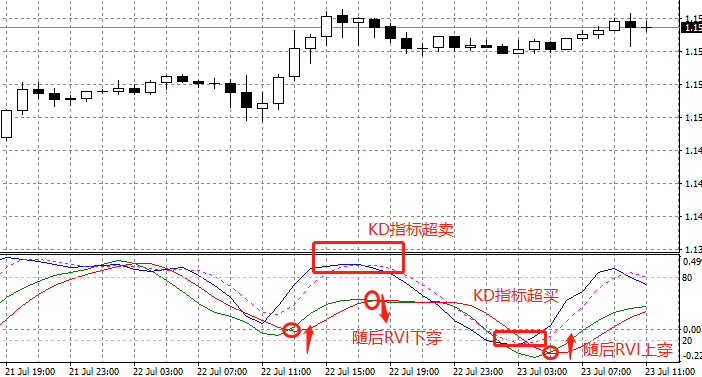
After the oversold and overbought signals of KD, RSI, and MACD indicators were issued, the two lines of the RVI indicator crossed soon, verifying the corresponding long-short signal. Take the KD indicator as an example below:
Combination of RVI indicator and moving average
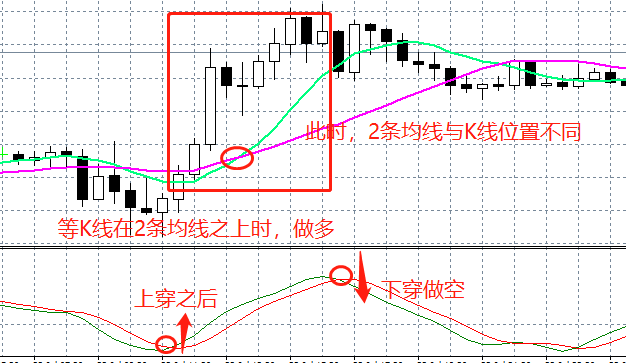
Usually, the cross of two moving averages is used to verify the long-short signal sent by RVI. This is the best combination of indicators for day traders.
Let's take the 2 moving averages of 10 and 20 periods as an example:
Combination of RVI indicator and Bollinger Bands
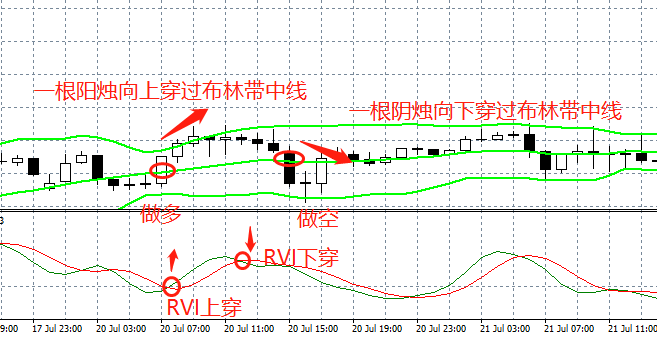
Use the middle line of the Bollinger bands to verify the long-short signal issued by RVI, and also rely on the cross relationship between the middle line of the Bollinger bands and the K line.
To sum up, the RVI indicator is a very useful indicator, and it is often used in conjunction with the star indicator to assist in verifying the accuracy of the signal. Hope this article is useful to you.


 Add
Add


