When investors are analyzing market conditions, they will inevitably need some tools or theoretical cognition as assistance, the most common ones being: technical indicators (average line, KD line, MACD...), drawing indicators (trend line, equidistant Channel, Fibonacci, Gann...), quantity energy data (trading volume, pending order depth table, market quotation), theoretical schools (wave, Dow, Wyckoff), etc., these tools can let investors know When can enter the market, but also can turn out to be seriously misleading.
Today we will discuss from the perspectives of quality and quantity, how serious cognitive biases will arise in different situations and how we should improve them.
The "quality" of a set of analytical techniques lies in its precision, and the main factors that determine the precision are parameters, compatibility with each other, and logic.
First, take the moving average as an example to talk about the influence of parameters. The parameters are different, the gameplay is also different, there are many kinds. Small parameters such as 5 and 12 can be used for short-term speculation; larger parameters such as 50 and 72 can be used for trend judgment; larger parameters such as 100 and 200 can also be used as the basis for long-short intervals. However, this parametric model cannot be applied to all commodities, which brings up the issue of compatibility.
Most varieties will have their own market patterns. For example, Europe, the United States, and gold, which often follow the trend, have a high compatibility with the above parameters; for those with mostly consolidation patterns, such as the Swiss franc series, and silver, the suitable trading mode is to execute low buying and high selling within a certain range, and the above average parameters are consistent function, it belongs to a different field, and the error rate in use will also increase.
Finally,
logical thinking accounts for a large proportion of the success or failure of the analysis. As mentioned above, the small parameters of the moving average, such as 5 and 12, can be used for short-term speculation. It is of course extremely unreasonable to use this set of parameters to judge long and short , It is as unreasonable as using the 200 moving average for short-term speculation. The parameters of each indicator will have a reasonable use method, and unreasonable use is like decoration, which will not help the analysis results.
The variable of "quantity" lies in all the analysis points covered in the technical strategy.
For example, take the moving average 200 as the long-short judgment:
(1) KD determines the golden cross and dead cross
(2) The basic shape of the K line is waiting for a reversal
(3) Gann judges the time period
(4) Fibonacci as the distance period Calculation method
(5) 5 variable analysis points.
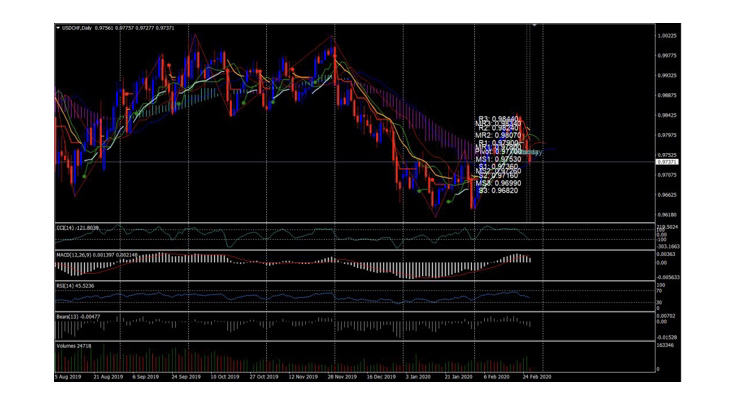
The number of analysis points varies from person to person, but it is definitely not the more the better. I believe that readers must have come across attractive pictures advertised on the Internet, as shown below.
There are a bunch of indicators integrated in one chart, combined with the hype analysis content, so that readers have the illusion that if they don’t understand it, it must be due to insufficient skill, and this teacher is really powerful.
There are more than 10 analysis points in the figure alone. Although the increase of analysis points can increase the success rate of orders, the disadvantages brought by too many analysis points are even more fatal . Too much noise tortures people, etc. The most serious thing is that the timing of entering the market is too late, causing the market to actually turn around and causing a lot of unnecessary losses.
In addition, after entering the market, you also need to reserve room for analysis of the market direction. It is very dangerous to insist on the market direction. Many investors insisted that their analysis was correct after entering the market, and finally turned into a miserable situation of carrying orders. A qualified trader will not give the analysis to death, and will adjust the previous analysis as soon as the market shows signs of reversal. Most of the high-profile quotations on the Internet are just false claims. Come back after half a year. How many god point quotes are still alive in the market.
A successful technical strategy must first focus on quality and then quantity. Assuming that a single indicator or theory is not effective, then it is useless to combine multiple analysis viewpoints. On the other hand, if a single quality is good, too many analysis viewpoints are not needed, and excessive noise and lag problems can be avoided. With the increase in the number of analysis tools, although more objective results can be obtained, it also brings lower flexibility and more unstable signals. Too much is not good.






 Add
Add


