The investment income is mainly determined by three factors: probability (also called winning rate), odds and frequency. Probability or winning rate means how sure we are when we make an investment. Odds mean that when we make investments, we see how much we can earn if we are right. Frequency is the number of bets we make an investment.
1. Probability and odds are incompatible
What we need to realize is that high-probability investments often have low odds. Investments with high odds often have low probabilities. The most important part of investment return is probability (or win rate). Maintaining a high probability for a long time means that in the investment game, you will win more times than you will lose. From the standpoint of human nature, if he wins more times in a game than he loses, he can only continue to play.
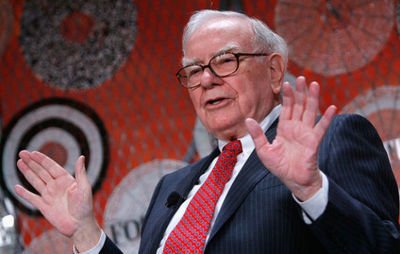
Buffett and Munger, they are also making high-probability investments. So Buffett said a principle of punching, if you only punch 20 times in your life, then you must analyze each punch in detail. Behind this is also the thinking of probability. Buffett hopes that the probability of each shot is relatively high.
Odds in a sense is "a small gain big".
If you read it wrong, the proportion of loss is not large; but if you read it right, the profit will be very high. This is different from our traditional investment, which believes that a company has "ten times the potential". In most cases, the risks and benefits are matched. If a company has ten times its potential in a short period of time, it often implies a relatively large downside risk.
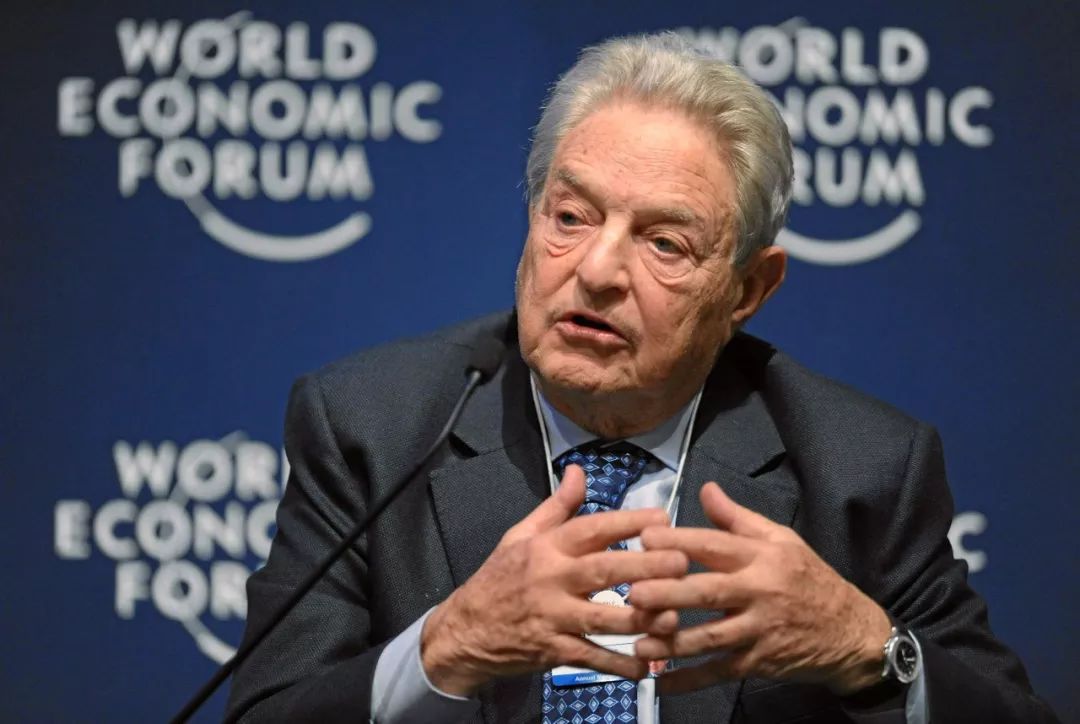
Among investment masters, Soros attaches great importance to odds. What he wants is a big chance, and what he values is not the number of victories, but the weight of the victories. It is much more difficult to make money through long-term high odds than high probability. If most ordinary people pursue odds, they will become a lottery buyer.
2. Frequency is leverage
Frequency is neutral. In the long run, frequency has a leverage effect, which will amplify your gains.
For example, in investment, the best combination is high frequency + high winning rate. Every time you bet, you can have a 70% winning rate, and if you keep playing this game, your profit will be very high.
The worst investment is high frequency + low winning rate. Since frequency is a lever, completely neutral, then if you're playing a loser's game, high frequency will speed up the rate at which one loses one's stake.
For example, in a casino, if a person keeps playing slot machines, the faster he plays, the shorter the time it takes for him to lose all his principal. In trading, if it is a low-probability game, the more you trade, the faster you will lose your principal.
For example, futures are far more cruel than the stock market. Because futures is a "negative-sum game", after deducting handling fees, everyone's average rate of return is a loss. Moreover, the futures market is T+0, and many transactions can be made every day, which accelerates the speed of losses, if you do not have a competitive advantage in this area.
Therefore, it is best for us to increase the frequency in the field where we have a "competitive advantage"; in the field without a "competitive advantage", reduce the frequency or even give up.
Regarding odds + frequency, it gets more complicated. In fact, it is rare to find investment opportunities with high odds, and most fund managers who aim at high odds will not have a high frequency. There aren't many opportunities where the risk-reward ratio is good.
Soros is like a crocodile, waiting most of the time for that high-odds opportunity to appear. At the same time, in order to find opportunities with high odds, you need a very wide field of vision. The core of investment opportunities with high odds is not to judge, but how to find this opportunity.
3. Learn to be a friend of "frequency"
Time is a part of frequency, and compound interest is to continuously let frequency build your moat under high probability.
Every time you do more accumulation, the snowball will get bigger and bigger. Frequency is also a kind of leverage, we should be friends with leverage. The function of leverage is to amplify, both good and bad.
For those who pursue probability, they need several abilities. The most basic part is to understand and calculate probability. In many cases, the weakness of human nature will make us lose the ability to think probabilistically.
In addition to probabilistic thinking, you also need to have a "competitive advantage" in this game. Competitive advantage means that you can do it better than others.
Buffett's "competitive advantage" in investment, on the one hand, is his firm belief in value investing, although value investing also has years of failure. On the other hand, his business model has a stable liability side, which leads to the acquisition of good assets.
For those who pursue odds, investment vision may be more important. Opportunities with high odds and low risks are not as many as we seem. At the beginning of each year, everyone feels that the market has so many opportunities to double. But after a year, I found that earning a 20-30% rate of return is actually very high. That means that those opportunities that at first appear to have a lot of room also correspond to the same risks. Vision becomes important, whether you can see this opportunity.
In the end, the absolute long-term benefit is that we have a high probability of winning in investment, or find opportunities with high odds and low cost. We must learn to be friends with frequency, so that the longer we play in this game, the higher the income.


 Add
Add


