Hammer and hanger lines
Both the hammer line and the hanging neck line belong to the reversal candle line. As far as the shape of a single candle line is concerned, the hammer line is basically the same as the hanging neck line shape, and the biggest difference is that the previous trend is different.
Because of their different trends, the hammer line is the bottom candle line, and the hanging neck line is the top candle line. Next, we will introduce the hammer line and hanging neck line respectively.
The characteristics of the hammer line
(1) In a downward trend;
(2) The lower lead is longer, the upper lead is absent or extremely short, and the lower lead is at least twice the width of the entity;
(3) The entity can be either Yin or Yang.
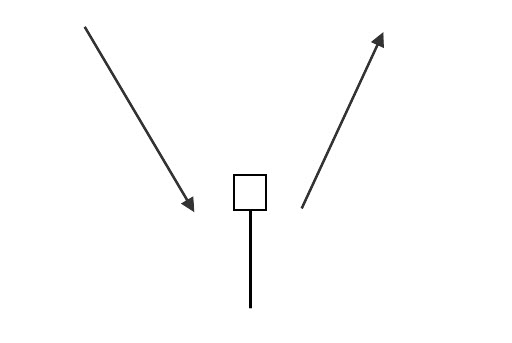
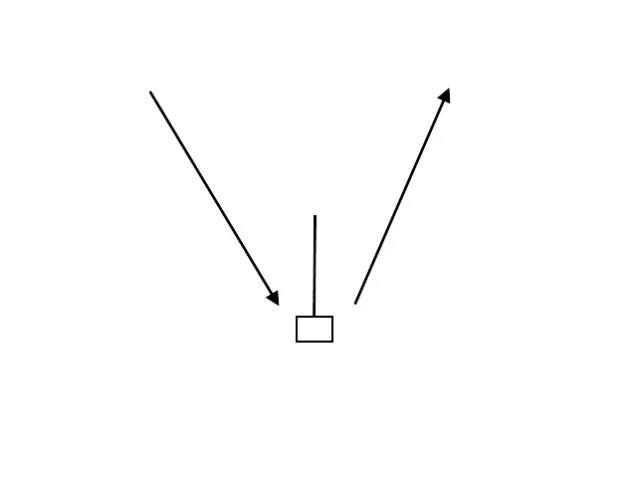
Figure 2.13 Hammer line
When a hammer pattern appears during a downward trend (as shown in Figure 2.13), it indicates that the lower support is more obvious, the previous downward trend has lost momentum, and there is obvious buying intervention.
When the hammer pattern appears during the decline, it indicates that the market may turn from decline to rise or enter the stage of horizontal consolidation.
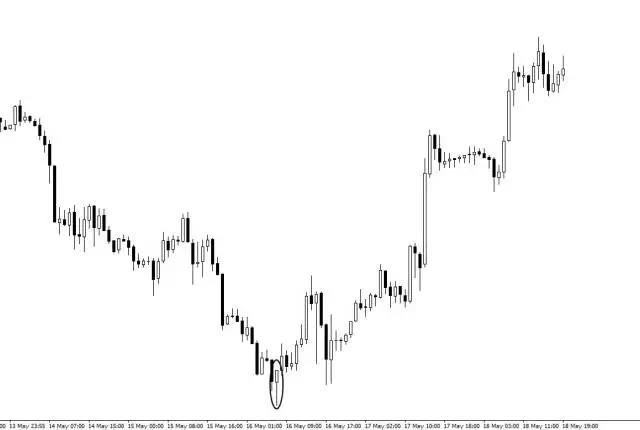
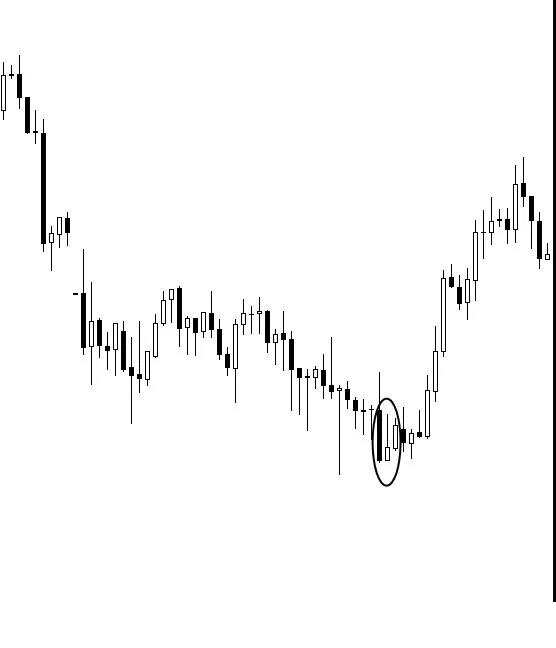
If investors have a short position at this time, they should consider whether to close the position (as shown in Figure 2.14); if it appears at the end of the correction of the upward trend, then we should consider possible long opportunities.
Figure 2.14 Hammer line example
The hanging neckline is the same as the hammer - it is a reversal type of candlestick, but the hanging neckline is a signal of a top rather than a bottom. A hanger has the following characteristics:
(1) In an upward trend;
(2) The lower lead is longer, the upper lead is absent or extremely short and the lower lead is at least twice the width of the entity;
(3) The entity can be either Yin or Yang.
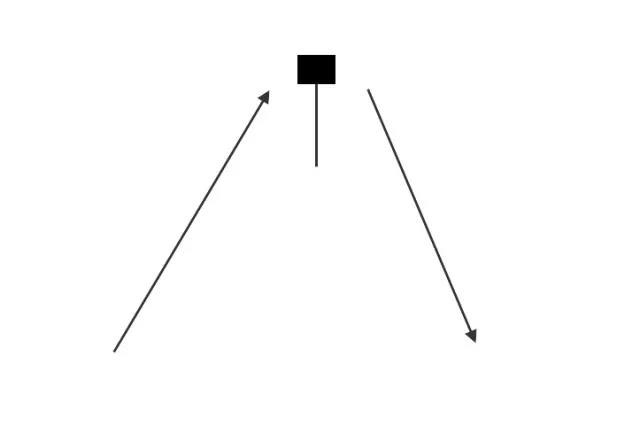
Figure 2.15 Hanging wire
Figure 2.15 is a standard hanging neckline, which appears in an upward trend and is a signal of peaking. This candlestick shows that the previous bulls were unable to push the price to a higher position, the bulls are gradually losing power, and the previous upward trend may turn or enter a consolidation phase.
Hanging neckline is a kind of weaker candle line in the reversal candle line, which generally requires the confirmation of the latter candle line, such as the big Yin line.
Its significance is more to provide an early warning function for our transactions. When such a hanging neckline appears at a high level in an upward trend, especially after the trend has been running for a long time, we must pay close attention to its possible reaction. Turn, if the follow-up K-line is confirmed, our previous longs will consider timely profit-closing;
If the previous overall trend is a downward trend, and the hanging neckline appears during the upward correction, we should be vigilant and pay attention to whether there is a possible short opportunity.
Generally speaking, the reversal ability of the hanging neck line is weaker than that of the hammer line, but it has a better early warning effect at the end of the trend.
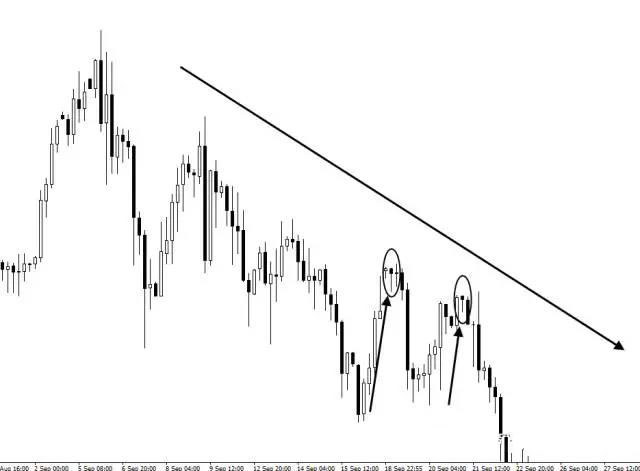
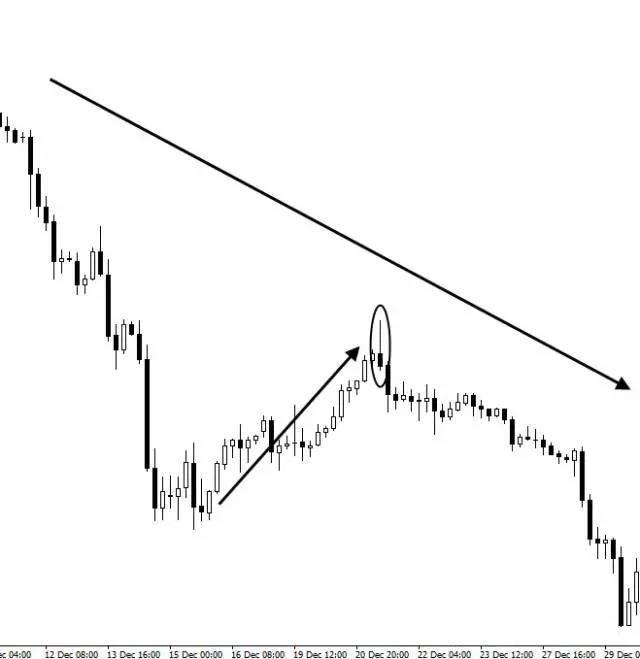
The two hanging necklines circled in Figure 2.16 both appear at the end of an upward pullback in a market environment with a general downward trend. Therefore, once such K-lines appear, one should pay attention to trading opportunities that continue to decline in the market outlook.
Figure 2.16 Example of a hanging neckline
Shooting Star and Inverted Hammer
The shooting star line is basically the same as the inverted hammer line. The biggest difference between the two is that the previous trend is different.
The shooting star line appears in the rising market and belongs to the top candle line; the inverted hammer line appears in the falling market and belongs to the bottom candle line. Next, we will introduce the shooting star line and the inverted hammer line respectively.
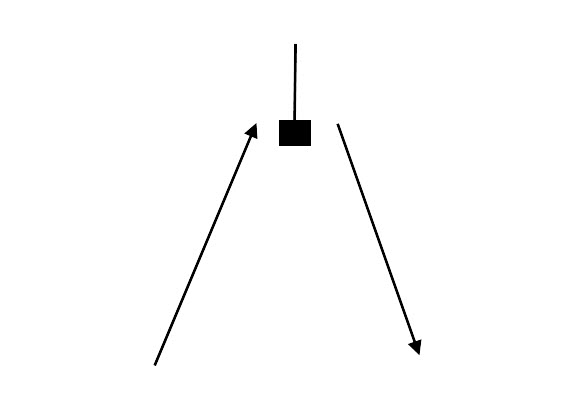
The shooting star line appears in the rising market. When the shooting star line appears, it means that the upper pressure is greater. The market once rushed high, but due to the strong selling above, the price quickly fell back within the time period of the K line to form a candle with a long upper lead. form.
Meteor lines have the following characteristics:
(1) The previous market was an upward trend;
(2) The upper lead is longer and the lower lead is absent or extremely short, and the upper lead is at least twice the width of the entity;
(3) The entity can be either Yang or Yin.
Figure 2.17 Meteor Line
The shooting star line is a common peaking signal. When the shooting star line appears in an upward trend, it means that the upper pressure is more obvious, and the bulls have encountered greater obstacles.
At the beginning, the price continued to run according to the original trend, but after encountering strong pressure from above, the price quickly fell back, and the short sellers suppressed the price to near the opening price of the candle line.
When a shooting star line appears during the rising process, it means that the previous trend has lost momentum, and the upper pressure is relatively high, and the market outlook may reverse or enter the stage of shock adjustment.
If investors with long positions should pay close attention to the possible profit-making opportunity at this time; if it appears in the callback market of the downward trend, then we should pay attention to the possible opportunity to build a position, and the callback may already be in place (as shown in Figure 2.18 ).
Figure 2.18 Meteor line example
The inverted hammer line is basically the same as the shooting star line in terms of the candle line shape. The biggest difference between the two is that the shooting star line appears in the rising market, while the inverted hammer line appears in the falling market. An inverted hammer has the following characteristics:
(1) The previous trend was a downward trend;
(2) The upper lead is longer and the lower lead is absent or extremely short, and the upper lead is at least twice as long as the physical width;
(3) The entity can be either Yang or Yin.
Figure 2.19 Inverted Hammer Line
The inverted hammer line appears in a falling market. After the opening of this period, the price moves upwards as a whole. Due to the inertial effect of the short force, the price falls again, but the force of the short force is not enough to push the price to a lower position, or even push the price to the opening price. .
This shows that the bears are gradually losing momentum, and the market outlook may enter a consolidation phase or a reversal may occur.
The reversal ability of this K line is relatively weak, and it often needs to be verified by subsequent candle lines. However, when the market is in a serious oversold stage and an inverted hammer line appears, its effectiveness will increase. At this time, we should give it a high degree of attention.
If we hold short positions in our hands, when the market is in the oversold area and an inverted hammer line appears, we should be highly vigilant—the market may have a risk of stabilizing upward, and short-term trading should consider whether to close the position. If the subsequent K-line Confirm with the positive line, then we can leave the market decisively.
As shown in Figure 2.20, in the falling market, after a big negative line, there is an inverted hammer line, which cannot make a new low. At this moment, we should pay attention to the possibility of short position liquidation, followed by another positive line confirmation, which can basically confirm the short-term The bottom has been reached, if you hold a short position, you should leave the market decisively at this moment;
If the inverted hammer appears in the callback market of the upward trend, it may mean that the adjustment is in place. Of course, it would be better if there are follow-up candle lines to verify.
Figure 2.20 An example of an inverted hammer line



 Add
Add


