There are many methods of market analysis, from Dow Theory, Chaos Theory, Efficient Market Hypothesis, etc. Among them, Dow Theory, as the originator of all technical analysis, is also the most instructive in trading practice.
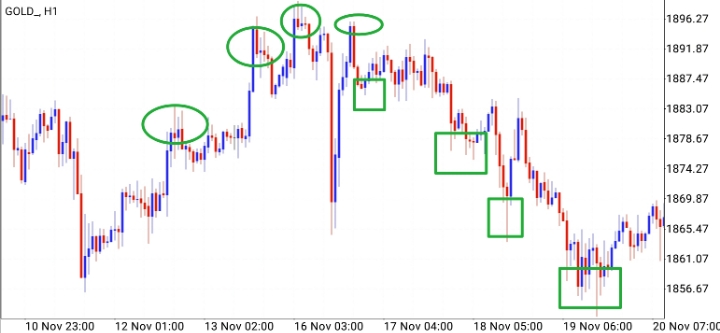
We know that doing market analysis in the trading process is mainly to solve two key issues: qualitative analysis and quantitative analysis. This is the most fundamental basis for making orders. If you don't do these two analyzes well, making orders is just tossing a coin. Let's take a look at the Dow Theory's definition of a trend: the highest point exceeds the previous high point in a bull market; the lowest point exceeds the previous low point in a bear market. As shown below
Rising highs (green circles) constitute a bull market (rising)
Falling lows (green boxes) constitute a bear market (falling)
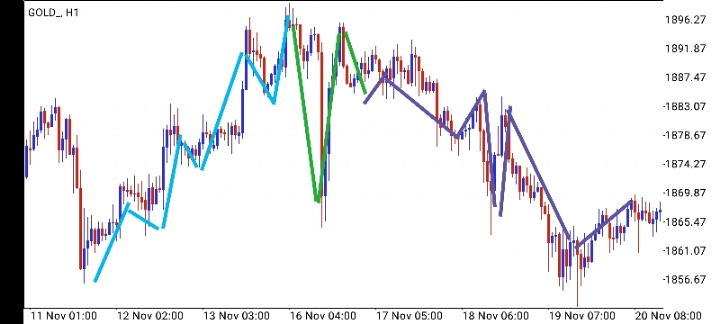
From the picture above, we can see that no matter you want to go long or short, all opportunities are hidden in a structure: N-word structure. Look at the picture below:
Whether it is the first order to be long, no matter how much you miss, increase your position, or short the first order, if you miss it and then short, increase your position, all opportunities are in the N-word structure. Among them is a key turning point, that is, the green N-shaped structure, which is a long-short conversion point. This includes two types of morphological structures of the N-word structure analysis method: the continuation form of the N-word and the reversal form of the N-word. After a short period of quotations, we see that the problems of qualitative analysis have been solved, and they are as precise as mechanical structures in the quotations.
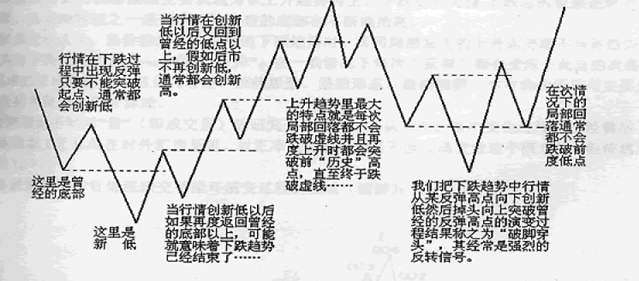
After years of practice, I have summarized two types of eight models. These structures are specific and subject to certain deformations, but they are all reproducible, easily identifiable, and even quantifiable. I use these models to keep up with market trends. context, instead of getting lost in a sea of indicators, like when you first entered the market 10 years ago.
Next, I will use a series to finish these models, finish the qualitative and quantitative issues, first solve the problem of "skills", and then solve the problem of "Tao". "Tao" between money management formulas and fundamentals. Technical analysis is just a necessary "art", K-line is the result, it is the price trajectory of a certain period of time before, and fundamentals are the fundamental reason for driving prices.
Technical analysis, fundamental analysis, fund management, and trading concepts are the core and important supporting conditions in the system. Fragmented indicator usage methods, trend lines, patterns, etc. Trading won't help much.


 Add
Add


