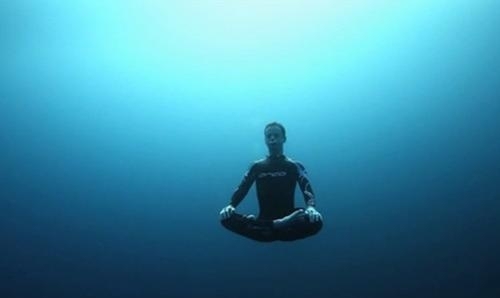
Everyone who dives knows that holding your breath underwater is a test. Everyone's breath-holding time is different. This is related to each person's physical condition, especially the lung capacity. However, each person will have a limit value for the breath-holding time. You are about to drown. It has been reported that someone can last for hours without carrying oxygen underwater, but it was later proved to be just a scam. Leaving aside diving, this is talking about trading. Most professional traders do not hold a losing position for too long. Once a trading position is "underwater" (in a state of loss), a professional trader will immediately look for an exit strategy, and if he does not have an exit strategy beforehand, he will immediately use a protective stop loss.
Some people abroad have used very simple trading strategies to study transactions. With a fixed stop loss of 20 points and a profit of 40 points, the basis of the transaction is to flip a coin, buy heads and sell tails, and there is a small profit after 6 months.
The enlightenment from this incident is that there are thousands of trading strategies and countless options to choose from, but prudent fund management, or risk control is extremely important, in other words, quick stop loss is the key. The above said that the transaction is determined by flipping a coin. I think the profit result comes from a fixed stop loss and a risk-reward ratio greater than 1:1. Rough mental calculation, even if the success rate of this system is only 50%, it is probably profitable .
I've had a liquidation experience, and I've seen it happen to others. The general situation is that a large part of the positions are submerged, and they do not get enough oxygen, and they drowned as a result. If you lose too much, you will be called for margin, and as a result, your position will be forcibly closed or even liquidated. In many cases, it starts with a small loss, and the loss accumulates slowly because the loss is not stopped. When the loss is so big that I can't accept it at all, my mind goes blank. This is when traders "hope" that the market will reverse and that lost money will come back. But many times the market doesn't know what you think, and "hope" doesn't work. The market will never know your hopes, and will never care what you think. When you feel uncomfortable when you hold your breath underwater, you should immediately surface to sleep to absorb oxygen. Similarly, once a transaction loses to a certain range, you should stop the loss and get out. Strict risk management is the way to survive, and we must be cautious.
Those traders who hold losing positions often don't realize that losses can get bigger, and big losses can be even bigger. I often hear some traders say: "Since I have lost so much, just wait and wait for the market to reverse. I have lost so much, and the market should not go higher or lower. At this time you In fact, it is not far from disaster and bankruptcy. The irony is that the market really reverses when you are just kicked out. The small money of individual speculators is nothing, waiting for death = liquidation!
There is an old trading adage that traders should take to heart. "Anything is possible in the market, and the most likely thing it can do is to frustrate and despair the vast majority of traders." Who is most likely to be frustrated and hopeless? It is those who hold loss orders for too long. Holding a loss-making position for too long, even if there is no risk of liquidation, will have a great blow to traders' emotions. It is easy to feel frustrated if you rely on the market reversal to save your losses all day long, and it is easier to create new losses when you conduct new transactions with a negative psychology. Once you say something like where I "hope" the market will reverse, the desperation starts to set in, and most of the time, that hope doesn't come true.
Successful traders often just stick to a few basic and effective trading rules for several years, but for many ordinary traders, sticking to these few rules is very difficult, because they run counter to human nature . For example, stop loss is difficult to stick to, because human nature does not like to lose money.


 Add
Add


