Foreword:
There is a well-known common sense about investment: investment is risky. So many people think that there is no risk without investment. The wages are directly deposited into the bank account and converted into a fixed deposit, which saves time and worry, has no risk of loss, and can also earn interest. On the surface, it seems that the funds are safe, but is it really risk-free?
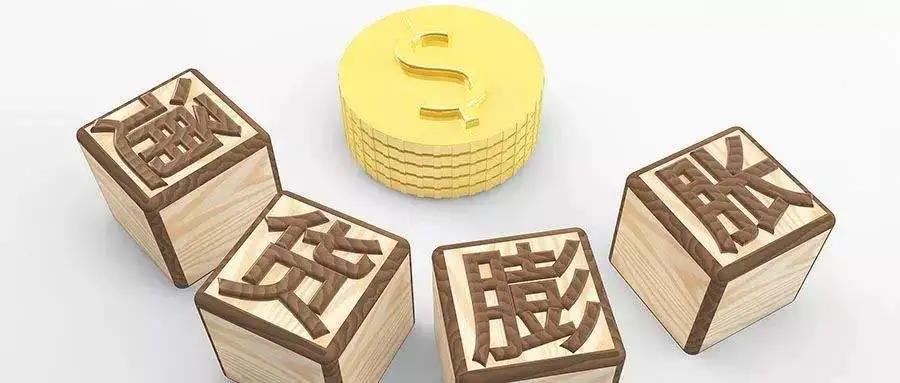
inflation erodes wealth
Those who hold the idea of "no investment, no risk" only see superficial phenomena and lack a deep understanding of social economy. For ordinary people, there are often greater risks if they do not invest.
Now we have to admit the fact that the rate of rising prices is much faster than that of wages, and the various expenses for food, clothing, housing and transportation have also increased significantly compared to the past, which makes the RMB in our hands continue to depreciate.
You have 100,000 yuan in cash today, so how much will this 100,000 yuan be equivalent to now in 10 years? To maintain current spending power, your income level must be able to withstand inflation. Otherwise, although the funds seem to be abundant in the present, it is very likely that they will not be enough in the future. Isn't such a risk worth paying attention to?
Let's do some calculations, assuming that the price rises by 4% every year, taking the current 100 yuan as an example:
After 5 years, the actual consumption power is equivalent to the current 81.5 yuan
After 10 years, it is equivalent to 66.4 yuan now
After 20 years, it is equivalent to the current 44.2 yuan
After 30 years, it is equivalent to 29.4 yuan now
It can be seen that 100 yuan 30 years later can only buy what 30 yuan can buy now.
In other words, how much can 100 yuan buy 20 years ago, how much can you buy now, and how much can you buy 20 years from now? Therefore, investment is risky, and the "hidden risk" of not investing is also terrible.
Is it safe to deposit money in the bank? NO!
To resist the impact of inflation, you can't just store your money in the bank, because the function of savings is only a drop in the bucket. Holding cash in the form of savings deposits is only a typical low-risk and low-yield choice. Putting money in a bank carries little or no risk in the short term. In the long run, savings deposits not only have low returns, but also have increased risks.
In January this year, my country's consumer price index (CPI) surpassed the one-year deposit rate after the rise of the state-owned major banks, and then surpassed the joint-stock commercial banks in February. This marks that my country has entered the era of real negative interest rates at this stage. In this regard, people in the industry calculated an account, and the net loss of 100,000 yuan deposited in the bank was 537 yuan a year.
So, how much money will you lose if you save a deposit for a period of one year? In this regard, the analyst calculated an account, assuming that the deposit is 100,000 yuan, and the annual CPI is around 2.3%, that is, 2.3% is the inflation rate.
Calculated according to the deposit interest rate of a large state-owned bank: the one-year deposit rate is 1.75%, and the total principal and interest due for a deposit of 100,000 yuan is 101,750 yuan. According to the cash value, the principal and interest due is discounted at an inflation rate of 2.3%, 101,750÷ 1.023 equals 99462.37.
That is, the 101,750 yuan one year later is only equivalent to the current 99,462.37 yuan. That is to say, if you deposit 100,000 yuan in the bank for a one-year term, you will actually have a net loss of 537.63 yuan when it matures.
Asset allocation! Diversify risk + increase income
Isn't such a number worthy of your attention? The above "hidden risks" brought about by not investing are already clear at a glance, shocking! So don't say things like "Investment is too risky, I'm afraid, and I dare not invest!"
Some people may say that there are friends who have lost investment, so they dare not invest. In fact, when Chinese individual investors invest, some immature investment concepts and habits are an important reason for investment failure. They either pay too much attention to the safety of the principal and ignore the expected return of funds, so that Real returns cannot protect against the risks of declining purchasing power and inflation. Either pay too much attention to investment income, ignore the safety of funds, and overestimate the individual's tolerance for risk and liquidity.
"Father of global asset allocation" Gary Brinson said, "The most important thing in making investment decisions is to focus on the market and determine the investment category. In the long run, about 90% of investment income comes from successful investments asset allocation."
The reason why asset allocation is reasonable and effective is because different investment tools have different returns, risks, and liquidity; and different investment tools have different correlations. Different investment tools have different performances in each economic cycle. If individual investors carry out diversified asset allocation according to their own financial status, risk tolerance and other related factors, then in each market stage, there will be corresponding asset performance. Better to make up for the poor performance of other assets, thereby reducing the volatility of the overall portfolio income and smoothing the overall risk in the investment process.
At the same time, in order to cope with the impact of investors' mentality and their own liquidity needs, the overall logic of asset allocation can give enough time and patience to individual assets that do not perform well temporarily to reflect their investment value. In this case, over time, we can naturally obtain long-term and stable returns on assets.
The market has taught us many times about the cyclical performance characteristics of various assets. Let's briefly review the bond market in 2008, the stock market in the first half of 2009, the housing market in the second half of 2009, the commodity market in 2010 and 2011, the cash asset market in 2012 and 2013, until Stock market quotations in 2014 and 2015, P2P and private equity in 2016...
The country always takes turns, but unfortunately, no one can accurately predict the economic cycle and market cycle, and switch between various assets at an accurate time. For an ordinary person, only through asset allocation can one actually grasp investment opportunities in various markets. Investors' self-confidence comes from learning and trusting scientific methods, rather than superstitious belief that they or anyone else is God.
In summary, asset allocation has the following characteristics:
① Smoothed the risk performance in the investment process;
② It is conducive to obtaining long-term returns;
③ Liquidity needs can be met during the process.
Generally speaking, if the asset allocation reaches more than 3 years, the investment value can be reflected and a reasonable return on investment can be obtained. Without asset allocation, even the most professional institutions in a certain field cannot escape the systemic risks in this field. With the promotion of China's interest rate marketization, the pricing hub is constantly in line with international standards. The risk-free interest rate reduction is a high probability event. With the risk-free interest rate level of less than 2%, facing the pressure of economic downturn, investors can only do well Asset allocation is the best medicine for investment.




 Add
Add


