The market is a cycle of shocks and unilateral cycles. The market is both complex and simple. How to simplify the complex market and then clarify the trading signals is the process of enlightenment and the key to success in manual trading.
Oscillation is a horizontal movement, and its characteristic is that the direction is easy to change, or has no direction. Therefore, the oscillating market cannot solve the directional problem in the transaction, so our trading system cannot participate in the oscillating trend in the selection of the market.
One side runs in a straight line, the direction is clear and unique, which solves the problem of directionality very well, so our trading system must be a system that captures one side.
unilateral
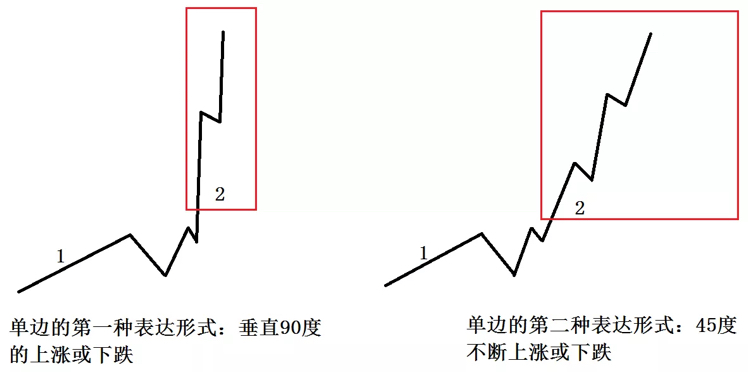
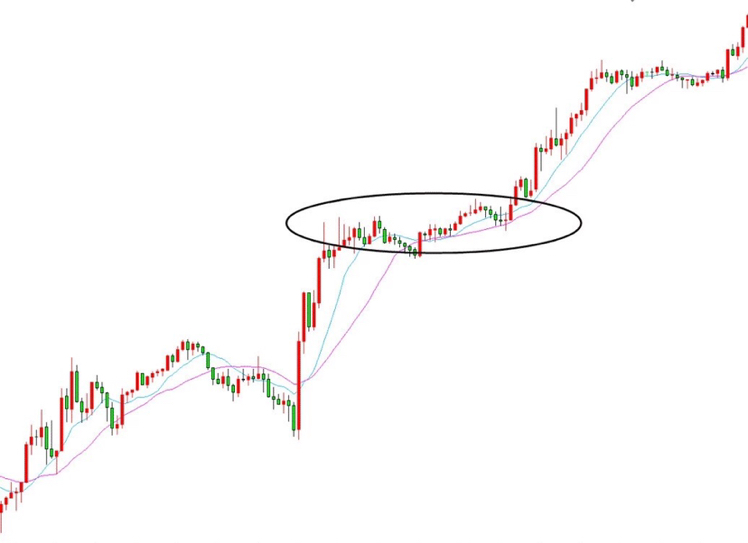
Unilateral is the core market that every trend-based trading system wants to grasp, and it is also the market that the original system wants to capture. The unilateral feature is: the price is arranged smoothly on the left side of the moving average, and the slope is generally greater than 45 degrees. There are two forms of smooth unilateral expression, as shown in the figure:
The first kind of unilateral close to 90 degrees usually appears during the data release period, or the surprise market launched by the main funds. The k-line trend is simple and rough, and it is the most profitable market in breakthrough trading.
The second type of unilateral slope is generally an n-shaped trend of 45 degrees rising or falling, with a stable and mature structure, and is generally the expected trend before the data or the digested trend after the data.
shock
The characteristics of the shock are: the price crosses back and forth on the moving average, and there are many glitches on the K line. Trend trading captures one side, so it is necessary to avoid oscillating trends, that is, to filter false signals. In the process of practice, many investors are very troubled about how to distinguish between shocks and unilaterals. People often have such a concept, that is, when they know unilaterals, the market has almost gone, and it is easy to get caught if they chase after them. I believe that many investors will have this idea. In fact, to solve this popular intractable disease, we need to clearly understand the following two points:
1. The symbiotic relationship between shock and unilateral, shock contains unilateral, unilateral contains shock;
2. For the selection of entry signals, what we need to judge is not unilateral, but the imminent generation of unilateral.
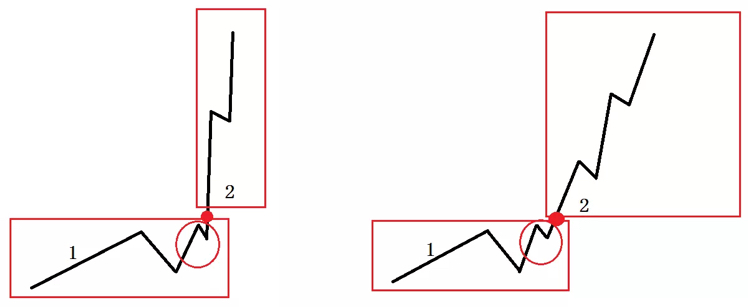
As shown in the figure above, box 1 is a oscillating trend, and box 2 is a unilateral trend. In actual combat, we need to understand: the trend of the market, shocks include unilateral, unilateral includes shocks, you have me, I have you, this is a dialectical relationship.
So when the market is about to break out on one side, that is, the area circled in red in the picture above, the market has actually begun to show unilateral characteristics. Whether this unilateral feature can form a more powerful breakthrough trend in the later stage and form a unilateral has a great relationship with the release of data and the trend structure of the market.
How to improve the accuracy of unilateral judgment of shocks is the difficulty of trading, and it is also the essence of trading.
climb
In addition to oscillating and unilateral, there is also a variation trend, that is, the climbing trend. The slope of this trend is generally less than 45 degrees, and the trend is messy, often interspersed back and forth between the 10 and 20 moving averages, which looks neither unilateral nor oscillating! This kind of climbing trend is obviously not strong enough, and the direction is easy to turn back. Therefore, for unilateral trading, the climbing trend cannot be participated.
Unilateral types and structures
The purpose of the analysis is to find out the unilateral side, which means constant new highs or new lows. In practice, we must avoid the volatile market, because it is difficult to grasp the direction of the volatile market, and it can be said that the turbulence has no direction. However, there is only one direction on one side, and the unilateral market is either rising or falling, and the direction is determined, so the method of touching the unilateral can solve the direction, and the method of studying the unilateral is the correct method. The study of unilateral types and structures is actually the study of shock types and structures, and the two are in a dialectical relationship.
There are three ways to touch the unilateral method: one is to solve the direction through fault tolerance and times, the other is to solve the direction through the market probability, and the third is to follow the direction through the strength of liquidity. These three methods have their own characteristics, and the third method is relatively efficient in practice.
The method of touching the unilateral is implemented in detail: breakthrough system, moving average system, trend line system, indicator system, etc. The purpose is to express the possible existence or imminent occurrence of unilateral in a way, and then use some rules and techniques to To assist transactions in order to achieve positive expectations.
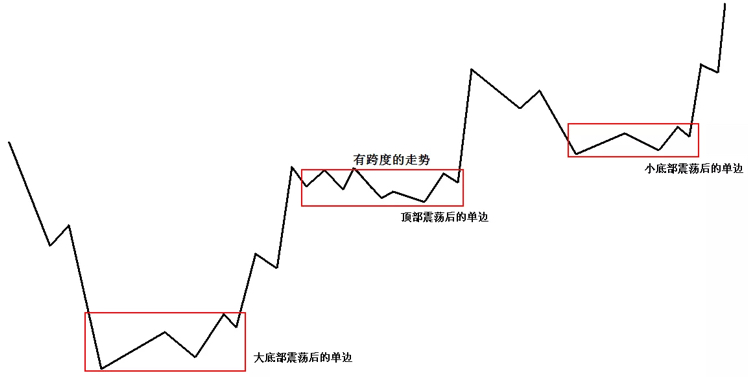
There are three common unilateral structures (take long positions as an example, short positions are the same, so they are omitted):
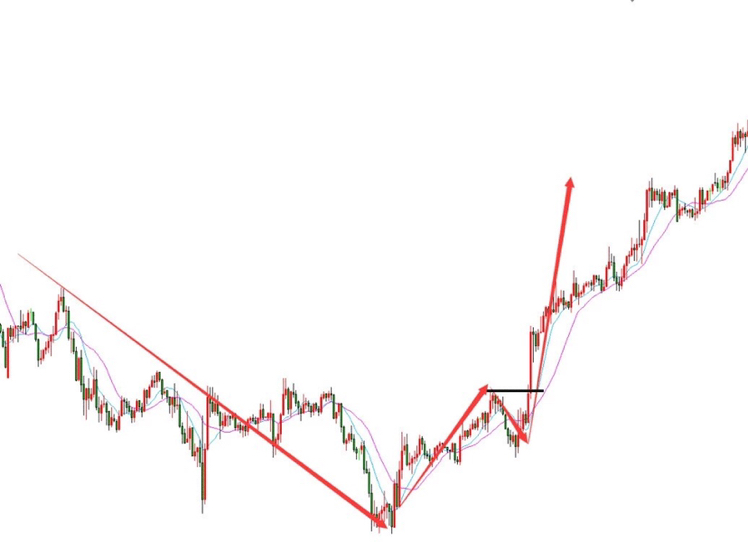
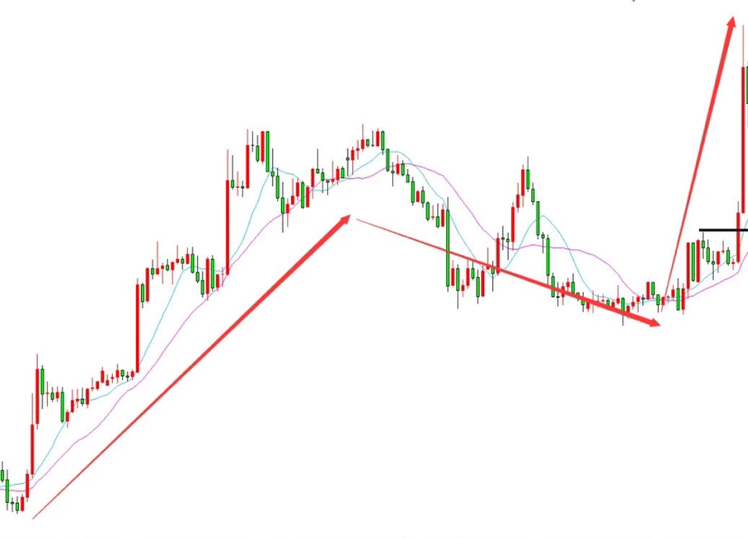
1. The box on the lower left is a big bottom shock, which is characterized by: the market drops sharply and then turns, and the shock range is the shock under the "turning trend" market. Turning the market, because the first wave of rebound is generally a process of energy accumulation, so the amplitude and speed of fluctuations are relatively weak. This kind of trend can be understood as the process of gathering energy and popularity of bulls, and most of them are "climbing" at this time. The market trend is fragile and easy to turn back, so the first wave of rebound is generally not allowed to participate. The turning trend of the market should be unilateral, and it usually starts after the breakthrough range in the second wave of rebound.
As shown in the figure above (30-minute period), under the changing market, the first wave of rebounds is generally relatively fragile, and there is no continuity in the trend, so it is best not to participate in the first wave of rebounds. The real main market is basically It started after the second wave of rebound broke through the range.
2. The box in the middle is the top shock, which is characterized by: the market does not fall, and the direction continues to extend. There is no obvious decline in the shock range, which is a typical top shock and no fall trend. This kind of market generally breaks through to new highs after going out of the span.
As shown in the figure above (30-minute cycle), the market fluctuates at a high level without falling, and then generally breaks through to a new high after going out of the span.
3. The box on the upper right is a small bottom shock. Its characteristics are: the overall market drops slightly, and then turns. The shock range is the shock under the "extended market". Due to the overall upward momentum of this kind of market, the choice of a long-term breakthrough point is more concerned with the trend and structure of the market at that time or that day. That is to say, for the upward trend of the overall momentum, in the choice of entry point, more attention should be paid to the breakthrough of the key point of the day, rather than the breakthrough of the key point of the previous day or before.
As shown in the figure above (30-minute cycle), the market as a whole has fallen slightly, and when the price goes to the horizontal line, when choosing the market breakout point, you should pay more attention to the trend and structure of the market at that time, rather than the previous one. Therefore, in the figure above, when the price breaks through the horizontal line, enter the market decisively and do long.
A complete rising or falling market is basically composed of the above three unilateral types and structures. After understanding this, we can know in the process of practice that the current market is roughly in a certain stage or state of the trend Among them, this directly determines our follow-up operations, such as where to open a position, where the stop loss should be set is more appropriate and other trading decisions. The so-called masters in the market are generally high here.
chapter summary
All market trends are nothing more than the repeated alternation of driving and adjustment. In practice, how to accurately judge the end of the shock is one of the cores of the transaction, and it is also the key to the breakthrough method. In addition, in practice, we also need to understand the stage or state of the market, which is of great help to us in dealing with some details.


 Add
Add


