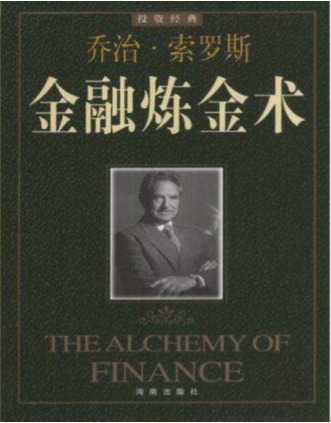
When it comes to Soros, all the investors in the financial market are well-known and well-known. His success is mainly due to the advanced nature of his philosophical thinking, because he has a set of reflexive theories and uses them with ease.
The magic of this theory is that it is an open system, which requires investors to constantly adjust in the "dynamics" and "feedback" in the process of investment, so as to guide the future to "keep pace with the market". ". The core of Soros' "Financial Alchemy" is "dynamics" and "feedback".
1. Reflexive Theory - Soros' Philosophy
Reflexive theory, in simple terms, refers to an interaction between investors and the market. Soros believes that the relationship between the financial market and investors is: investors predict market trends and act accordingly based on the information they have and their understanding of the market, and their actions actually affect and change the market that may have occurred in the first place. The trend of the two continues to influence each other. Therefore, it is impossible for anyone to have complete information. In addition, investors will also have individual problems that affect their cognition, causing them to have a "prejudice" against the market.
If you believe that the A-share market is now a bull market, as an investor, your cognition will participate in the process of forming the bull market. This is what Soros said-the market price of stocks is part of a historical process.
In Soros's theoretical system, there is no static equilibrium, only "dynamic" and "feedback". The market price at any point in time is a section of the market sequence. If you understand this sequence, no matter where the market is, you will naturally be able to make good investment decisions.
The so-called reflexive theory means that the consciousness of the participants determines the direction of the future, and the future will be different because of the current decision of the individual. The world is a process of dynamic change, and finding the law in the dynamic change is the high level of investment philosophy.
2. Application examples of reflexive theory
The following two cases can well illustrate how the reflexive theory of "dynamics" and "feedback" is "alchemy".
The first example is about the diversification trend of the 1960s.
In the late 1960s, with the development of investment portfolio theory, a wave of diversification began to emerge in American business circles. Risk diversification to increase value is a mainstream bias, that is, after the various tendentious views in the market offset each other, the final dominant view. Diversification is the basic trend. A positive bias is a bullish market, while a negative bias is a bearish market.
Under the mainstream bias of increasing value through risk diversification, companies with diversified operations begin to generate market premiums. Therefore, as long as a company announces that it will acquire other companies and conduct diversified operations, the stock price will start to rise, and Soros defines this as the "realized price".
Soros believes that the basic trend, mainstream bias and realized price, these three variables are always in the middle of a process of dynamic change and mutual support. Positive feedback creates prosperity, negative feedback creates depression.
If the three variables start to enter the feedback process, it is time to enter the market and make money. Soros realized at that time that a feedback mechanism such as the premium of diversified group companies had begun to take shape, so he decided to enter this market with all his strength.
At that time, many companies in the market tried every means to acquire other companies, package and transform themselves into group companies. The market then reacts positively to their decision, and the stock price starts to rise. The rise in the stock price allows the company to have more money to make acquisitions, which in turn makes the price of the target of the acquisition also rise. In this way, the entire market expects the added value of diversification to be more intense, which in turn drives up prices further. More companies are eager to join the game, and at the same time, other market participants, such as firms, help with various accounting and auditing processes to make the books look better. Fund managers have invested heavily in diversified group companies, analysts have continued to sing more, and academic circles have also conducted various studies to prove the benefits of diversified operations.
These are all part of the feedback, which also contributed to further price increases. Then players in this market will naturally earn a lot of money. Soros' strategy allowed him to perfectly seize this opportunity of positive feedback.
But Soros is also aware that this feedback mechanism is not a stable equilibrium, expectations, that is, the mainstream bias we just mentioned, and it plays an important role in it. As the price rises further, you have to rely on a stronger and stronger mainstream bias, so the feedback mechanism of negative reinforcement becomes weaker and weaker. Now as long as a little bit of negative information appears, this feedback can be interrupted or even reversed.
Later, in the late 1960s, some people gradually realized that the diversification premium had been overloaded. Soros began to withdraw from this market at this time. With the failure of a certain acquisition, the market price began to decline, and the mainstream bias turned, and then the downward trend entered a self-reinforcing process, and the market turned from prosperity to depression. But Soros escaped perfectly again.
This is a battle in which Soros used positive reflexivity to make huge profits.
The second example is that he sniped the Thai baht in 1997, setting off a bloody battle in the Asian financial market. In fact, the principle here is the same, he just used the negative reflexivity.
In the 1970s and 1980s, when the "Four Asian Tigers" took off, there was a perception around the world - "East Asian Miracle". Such a strong cognition has accelerated the optimistic expectations of these markets in the market, causing the currency values of these countries to continuously hit new highs.
In the mid-1990s, after careful analysis, Soros believed that the positive feedback mechanism had entered a very fragile stage. As long as the market had a strong enough negative signal, it could interrupt this process and turn into a negative feedback.
Therefore, he chose the most vulnerable Thai baht to start, raised tens of billions of dollars, and began to short the Thai baht. One day even sent the baht down more than 17%. Such a strong signal not only interrupted the positive feedback of the market, but turned quickly, forming a negative feedback and panic selling in the market. Expectations changed from "optimistic" to "pessimistic" and even to "super panic". The fall of the Thai baht led to a reversal of market expectations for the entire Southeast Asian currency. In just a few months, negative feedback spread rapidly, forming a domino pattern. Soros made tens of billions of dollars from this negative feedback mechanism.
3. The Enlightenment of Reflexive Theory
From the above cases, it can be seen that "market" in Soros's investment philosophy has never been a static concept, but an evolution process of "dynamic changes and mutual feedback" - his investment achievements are all based on this A deep understanding of the "evolutionary process".
No matter at what point in time, the market will always show a certain bias, and this bias will affect the events it expects. Market opinion and market price are an endogenous relationship, price is shaped by opinion tendency, and opinion and tendency are strengthened or changed by price.
So for individuals, investment is to find a dynamic balance. In the middle of our decision-making process, in fact, we are particularly prone to fall into a rut of static analysis. What we really want to analyze is the possible direction of the evolution of market dynamics.
Since the market is dynamic, what's the point of all static analysis? From another perspective, static equilibrium actually provides us with a starting point for thinking about dynamic evolution. Only with a starting point can we know where the dynamic begins, and then use the principle of reflexivity to make judgments.





 Add
Add


