Many people who do business will ask this question:
In your trading system, how is your opening strategy established?
This is a very good question. In fact, not many people will consider such a basic question. Most people will ask:
What are your opening rules?
instead of asking:
How did you come up with your opening rules?
Question 1:
Is this position opening strategy established synchronously with the stop loss strategy, fund management strategy, and position increase strategy, or are they established separately and gradually deduced and connected?
answer:
I deduced the connection gradually. There is a dynamic process between steps such as position opening rules, stop loss strategies, fund management strategies, increase position strategies, and market selection. Each position opening rule has its corresponding stop loss strategy, Fund management strategy, position increase strategy, market selection, any change in the value of any of these will have a greater impact on the benefits and risks of the entire system.
Therefore, the first thing you should establish is the "core theory". (In the following, we will focus on opening a position, and skip the others)
If you want to design a trend swing trading system, then your position opening should follow the main trend of the market and choose the opening rules. We can give you a few examples:
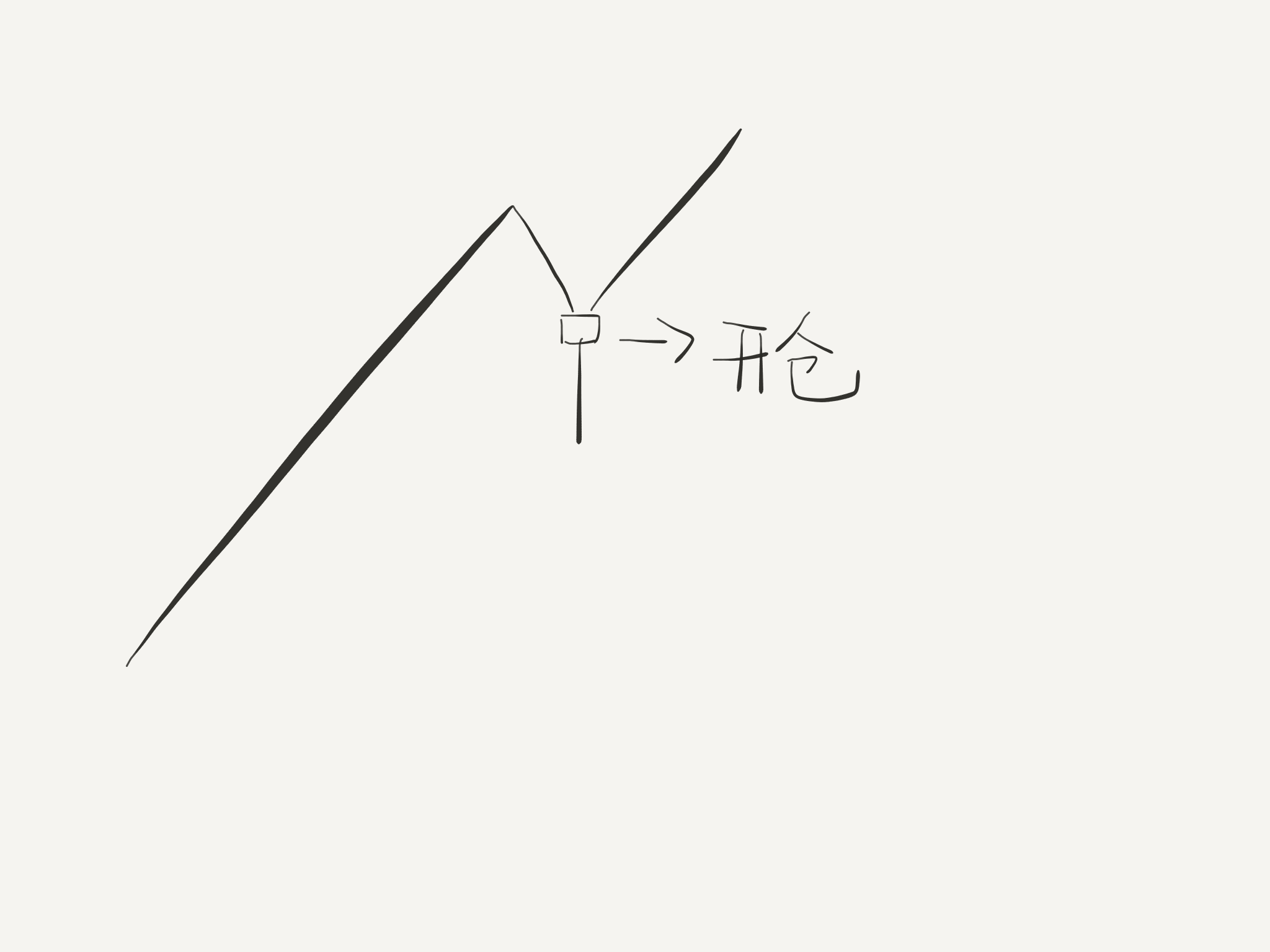
On the basis of the main trend, use the pullback to enter the market through the reversal pattern.
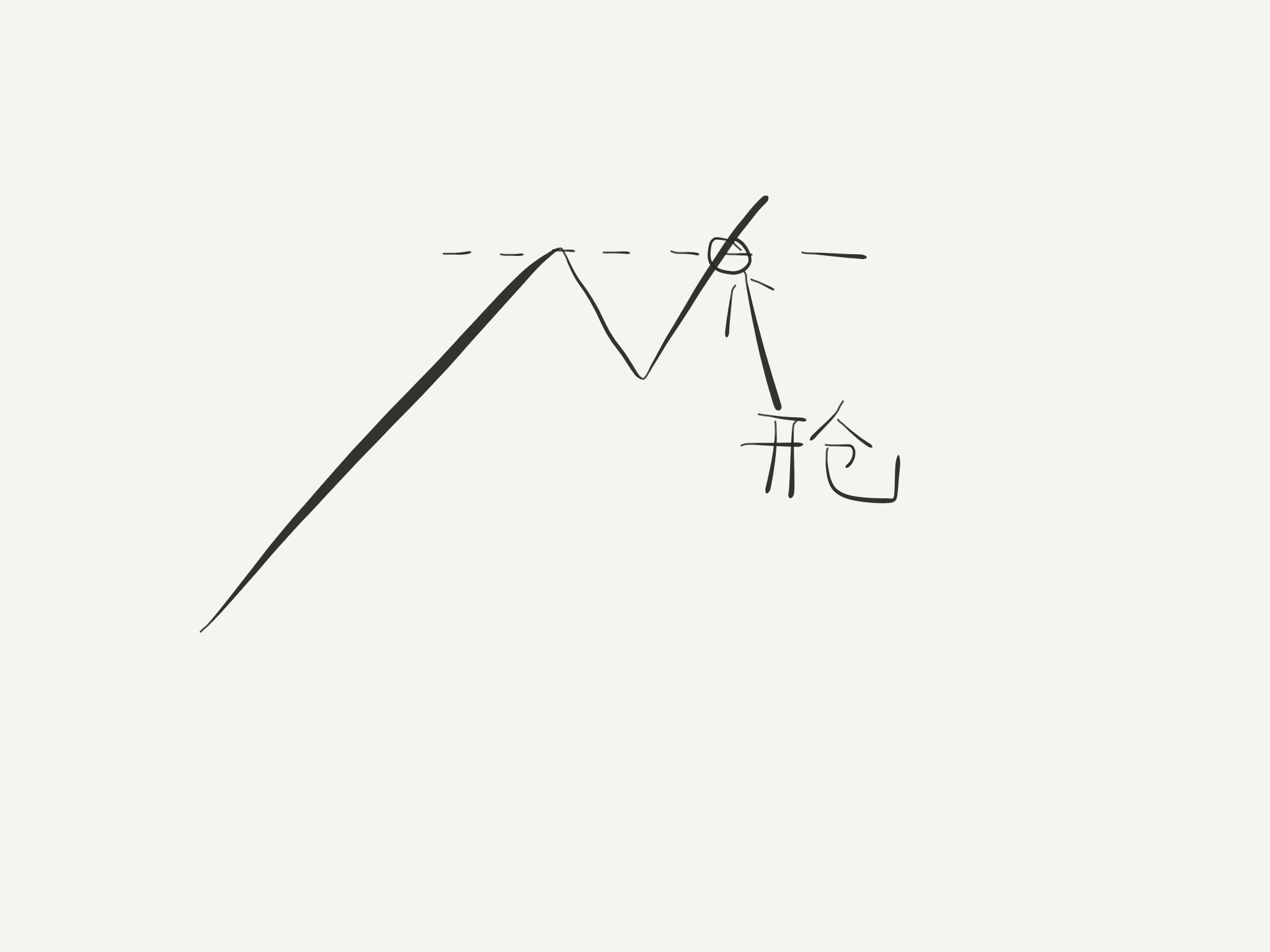
On the basis of the main trend, use the pullback to enter the market when the price makes a new high or new low.
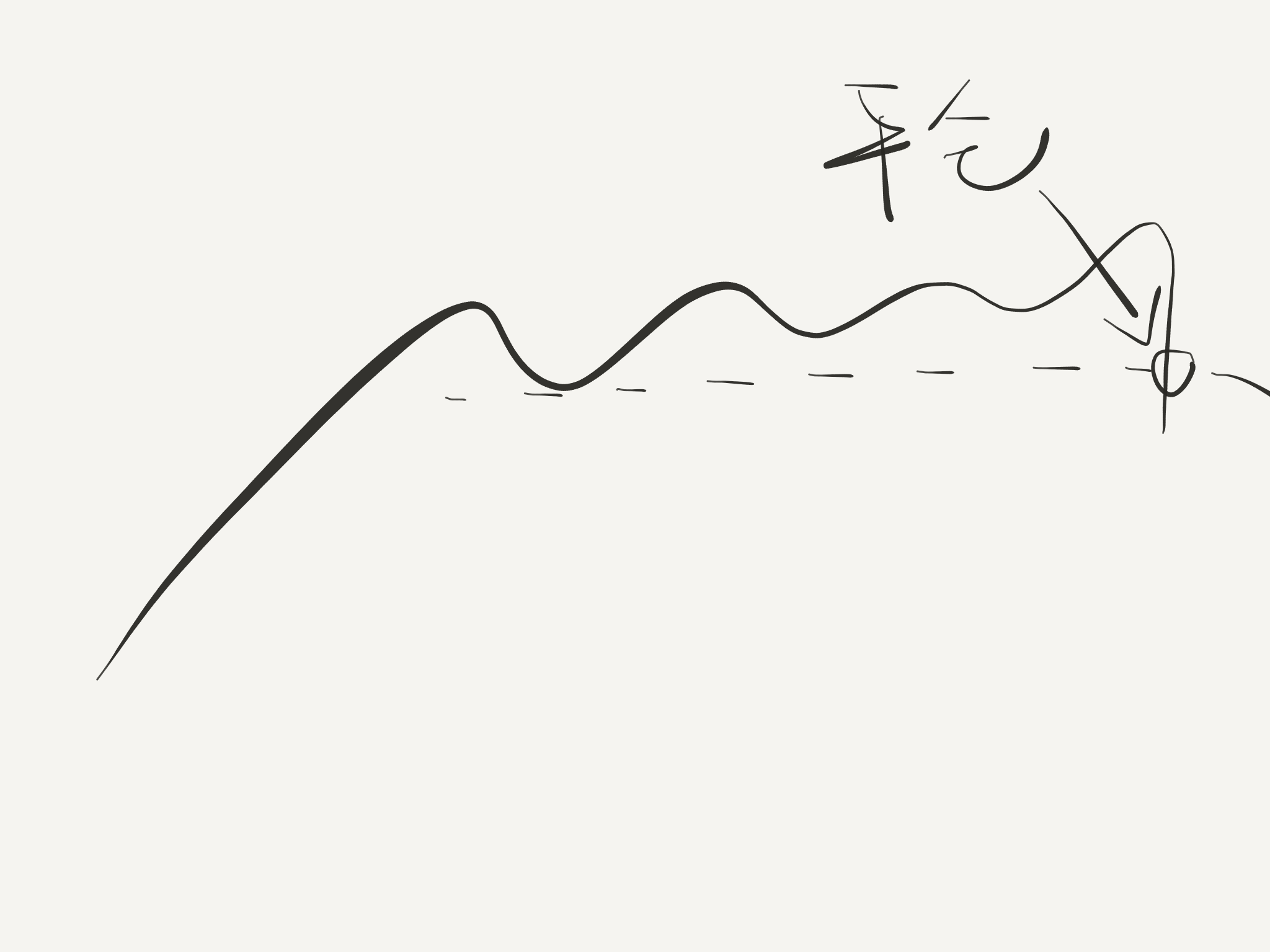
On the basis of the main trend, enter the market after breaking through the small consolidation zone.
On the basis of the main trend, when the price touches the moving average, the successful entry is verified.
On the basis of the main trend, when the price touches the upper or lower track of the Bollinger Band, the successful entry is verified.
If you want to design a trend-following trading system, then your opening position may be the same as the trend swing trading system, but the closing rules are quite different. You should try to keep your system out of the market when it is in a trend , until the trend has an obvious reversal and then enter the market. According to this idea, we can have the following
closing rules:Break through the new highs or new lows of N bar bars and enter the market.
Breaking through a long-term moving average, note that it is a long-term.
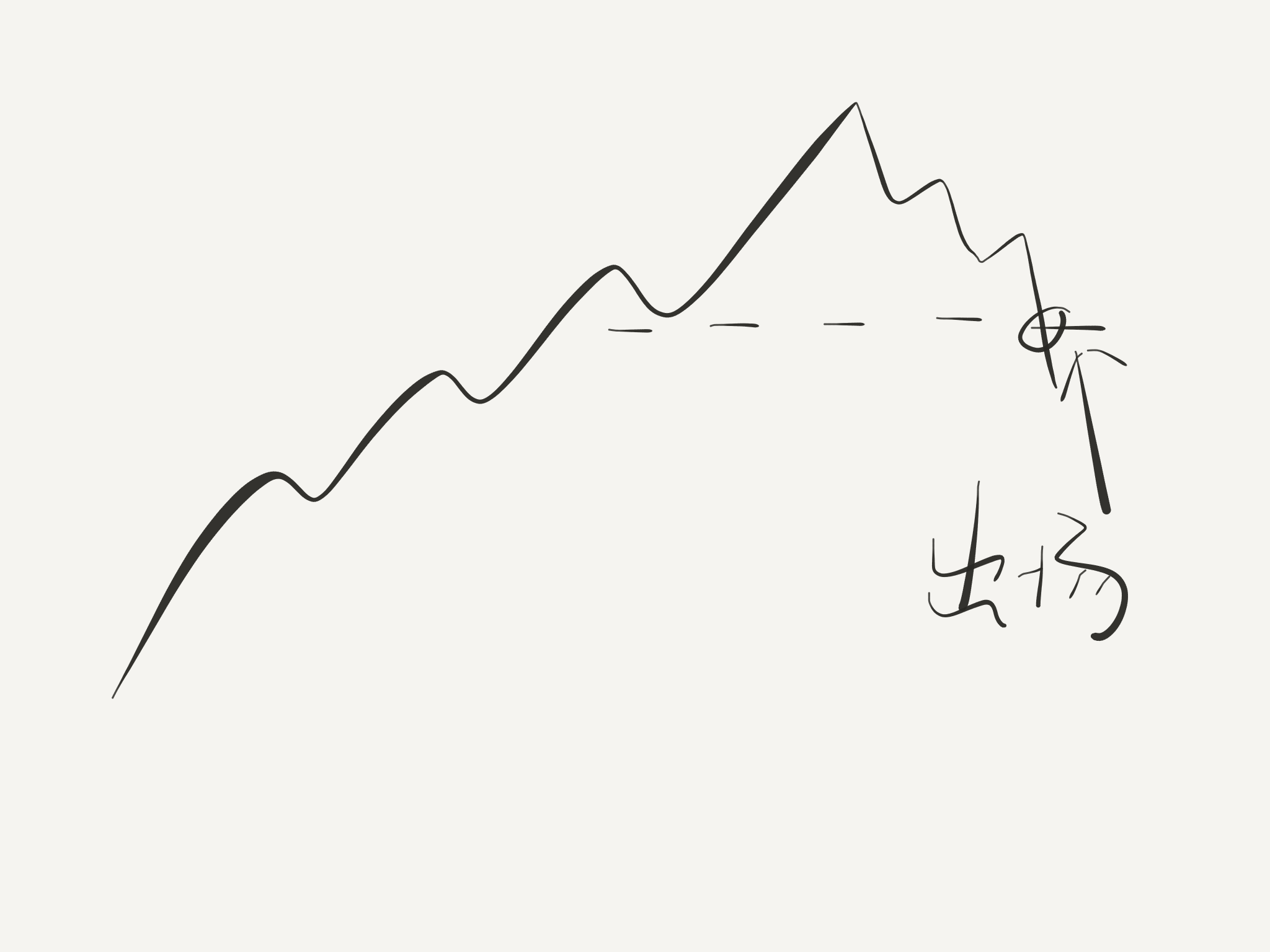
According to the method of judging peaks and valleys, the main trend has reversed.
If you want to design a counter trend trading system , there are several ideas:
Go short at the resistance level of the consolidation zone and go long at the support level of the consolidation zone.
Go short on the Bollinger Band, and go long on the Bollinger Band.
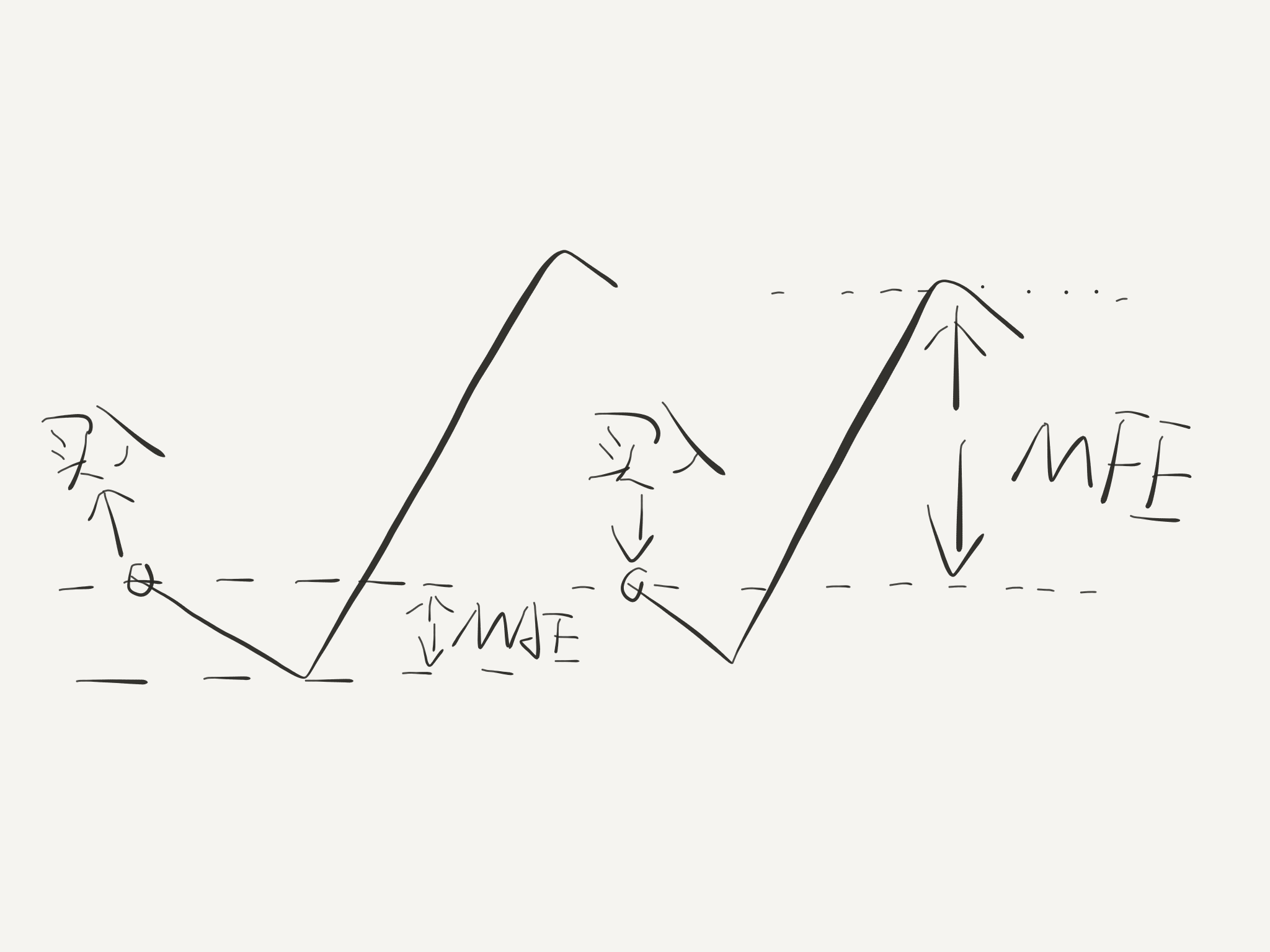
How to measure whether a position opening rule has an advantage?After you buy or sell, the maximum price change in the bad direction is MAE, and the maximum change in the good direction is MFE, as shown in the figure:
If the average MFE is greater than the average MAE, it means that there is an advantage in opening a position, otherwise, there is no advantage in this opening rule.
Specific calculation method:
Calculate MFE and MAE after N K lines for each market entry signal
Sum the above MFE and MAE respectively, divide by the total number of market entry signals within a period of time, and obtain the average MFE and MAE values
If you don't know what your advantage is by now, then you don't have an advantage.
Question 2:
In addition, this strategy is from simple to complex and then simplified, or is it in other forms?
answer:
Most people can’t go from simple to complicated. The reason is that everyone knows many entry rules for trading. There are only a few. There is no secret in trading. It is impossible that there is a rule that everyone does not know that can help Everyone benefits. For example, "Japanese Candle Chart Technique", "Turtle Trading Rules", and "Trading for a Living" all fully disclose the opening rules of a system. You don't need to calculate their opening advantages, just use them directly, because historical data tells We, how good their system performance is.
However, there are also many people who really like to make a fuss about the rules of opening positions. When the history is detected, they always want to increase a little more profit. The reduction can reach 30%. I think there is no need to modify it. Use the simplest rules to increase the robustness of the system. The more complex the system rules are, the system may face failure when the market changes.
Question 3:
Does the trading system need to consider market news? If so, how to bring data into the system?
answer:
I don't think about it.








 Add
Add


