


Stay in touch!
Subscribe to our newsletter to get the latest updates on live market analysis, trading strategies and more. You can unsubscribe anytime.
By subscribing, you agree to Trading.live Privacy Policy.



Do you use the daily chart for trading, or do you use the daily chart for analysis?
I personally think that the use of charts should follow objective and logical principles. Objectively speaking, there is no distinction between charts and charts. Each cycle has its own independent trends and characteristics. This is from the objectivity of the cycle. From a logical point of view, we have to look at it according to our own operating cycle. If you are using daily charts, your analysis period should be based on weekly charts at a minimum. So, the daily chart is not that big.
In trading, it is better to use matching charts for logical verification to have better returns. When trading, from the sending of signals to logical entry and exit and holding positions, objective principles should be followed.
Copyright reserved to the author
Last updated: 08/14/2023 21:13
 Add
Add

Which cycle you are suitable for can only be proven after trading for a period of time (it is recommended to continue trading for half a year). Continuous trading for half a year, if your average holding time (note the holding time, that is, the opening to closing of an order) does not exceed two hours, it means that you are suitable for a 5-minute cycle. If the holding time can exceed 8 hours, it is suitable for 30 minutes. minute cycle. There must be enough lists and time for this reference to be meaningful.
Set a cycle in advance. When your trading environment changes, such as a larger amount of funds or full-time trading, it will make you invalid again in this cycle.
Copyright reserved to the author
Last updated: 08/10/2023 23:52
Add

The daily chart is only used as a direction indicator for your next trading day. If the daily chart is positive, then pull back and go long. If the daily chart is negative, then pull back and short. It should not be said that the cycle of the daily chart is too large. To make orders, you need to formulate a trading plan. The monthly and weekly charts are the main long-short directions for your orders. As long as the daily chart does not change the line, follow the direction of the previous trading day Make orders. Now that you know the main direction of your operation, it's easy to place orders. Then find out the approximate price position of the callback in 4 hours, and then in detail in the 1-hour period, judge the precise price of the callback. Wait until there are signs of stabilization in 1 hour, and you can open an order on the right to enter the market after 2 bottoms and tops at the 5-minute level. The stop loss is also relatively easy to set, and a stop loss of about 4 dollars is enough.
If you still don’t know how to operate, according to my personal experience, I will give you a simpler operation method. Find the highest point A and the lowest point B of the previous trading day on the daily chart, and subtract the lowest point from the highest point to equal yesterday’s The high and low fluctuation range C.
Calculation such as: C×0.382=X
C×0.618=Y
Intra-day trading is adopted for split position operation. If the daily line is rising, the first order will be opened based on the highest point of the previous trading day minus X, and the second order will be opened based on the highest point of the previous trading day minus Y. Single 3% increase position. Break the low stop loss of the previous trading day.
However, if you want to do a good job in trading, you must have a planned designated trading plan, draw a disk analysis chart, and cooperate with MACD, KDJ, channel trends, moving averages, etc. to make a complete trading plan chart. In this way, it can be achieved that there is no basis for entry and no evidence for exit. Try not to look at the market with your eyes, but learn to use technology to read the market. Although technical analysis cannot be 100% correct, technical analysis can greatly improve your correct rate.
Copyright reserved to the author
Last updated: 08/03/2023 06:38
Add

Any time can be used as the final layer of the transaction. As big as your heart is, you can do as many time trends as you want.
How much money can you carry fluctuating in your heart? !
Copyright reserved to the author
Last updated: 08/14/2023 21:27
Add


This is a question about the investment cycle. Although the questioner gave his own opinion, I still want to give my opinion based on my own cognition. The following is the picture
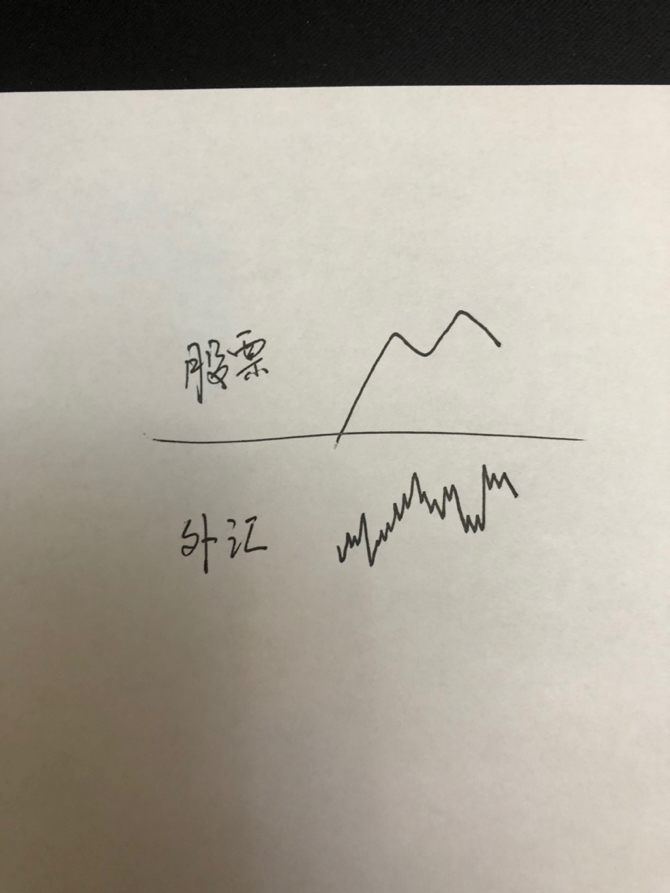
It can be seen that the obvious equal period (on the length of the horizontal axis), the line of foreign exchange will be longer if it is straightened, which means that it has more twists and turns at present, and there are more times of profit or loss. In the field of investment, we What is usually valued is the number of investment opportunities per unit time, so as to avoid the long-term dragging effect caused by one failure.
That is to say, if the foreign exchange is done well, the profit effect of stocks can be achieved in a short period of time. Some people have a month, and some people have a week (I personally don’t recommend getting high profits in a short period of time, because the risk is equivalent to being magnified).
Secondly, the rate of rise and fall, the rise and fall of foreign exchange in a year is indeed smaller than that of stocks. This is due to the fact that foreign exchange is currency in nature, and it must be subject to the macro-control of currency makers and governments of various countries at any time, because the essence of currency is to maintain circulation. As the first element, excessive fluctuations in ups and downs are not conducive to liquidity.
From the perspective of profit, long-term holdings of stocks obviously have greater profit margins, but please note that long-term holdings are four words, and stocks will take up the value factor of time. In layman's terms, time is the value factor that is occupied in the case of quilt. directly reflected.
If the foreign exchange does not achieve the expected profit in the short-term game, if the principal is sufficient, the consequences of losses can be avoided by holding in a large period. This is also a risk-avoiding investment method due to the stable fluctuation of foreign exchange (anti-risk Order), of course, depends on the value of the game you participate in the market through leverage --- how much the opening margin occupies. Usually, this characteristic of foreign exchange, because of the existence of leverage, also determines that there is no need for a full position like stocks. The same benefits can be obtained by heavy warehouse operations, but stock traders who switch to foreign exchange, because of their stock trading habits, often ignore the role of leverage, turning convenience into risk, which also happens from time to time!
As for whether it is suitable for large funds or small funds, there are two factors:
1 The security of stocks is intuitive, so people are willing to invest a lot of money in stocks, and the foreign exchange industry is relatively insufficient.
2 Stock users need to spend a lot of money to earn high profits because they have no leverage. Forex users are considered to not need to invest a lot of money because they have leverage.
Answer: From the perspective of security, the benevolent sees the benevolent and the wise see wisdom. There is an obvious misunderstanding about the necessity of investment, that is, a stock investment of 300,000 will double in a year. Why should a foreign exchange investment of 3,000 also have the ability to double?
In terms of risk, it is obvious that foreign exchange is a financial investment field higher than that of stocks. This misunderstanding often leads to customers who invest in foreign exchange not correctly understanding the power of leverage, and small funds to obtain high returns, resulting in frequent losses.
It is said that if the stock loses, you still have a ticket. If the foreign exchange loss is forced to leave the market, it is a real loss. No matter how the market moves in the future, it will be a matter of starting the transaction next time. The profit and loss this time is a foregone conclusion !
So in terms of necessity, I think foreign exchange needs a high amount of principal as a guarantee. You don't need to invest directly in the market, but when you need to increase resistance to risk factors, you must have enough reinforcements.
It's a pity that most people can't implement this point, or they don't have reinforcements to commit suicide, and they become young models in the club, and they lose, and go to work in the sea!
Either the reinforcements are not enough, causing all the follow-up reinforcements to fill the hole!
Basically, you have to know how far you have to stretch the front line. If you stretch the front line to hundreds of kilometers, and throwing in a company of reinforcements will only increase the casualties in vain.
Either don't open such a large position, or you are strong enough!
Therefore, foreign exchange users turn into game transactions amid repeated failures, and technical analysis is only a summary made in the lottery station, leaving a basis for the next stud, it is difficult to call it investment!
It is also the direct reason for the general loss of foreign exchange users.
Copyright reserved to the author
Last updated: 08/06/2023 23:58
Add

Foreign exchange is suitable for small levels, and stocks are suitable for large levels
Compared with foreign exchange, stocks are more suitable for large-scale stocks. There are two main reasons. First, because stocks are a unilateral market compared to foreign exchange, foreign exchange generally fluctuates around 10% throughout the year, and stocks tend to double at any time. It is impossible for the two countries to experience extreme changes in exchange rates, but after a few years, the stock market is likely to double several times without knowing it, because the upside of stocks is unlimited, while the upside and downside of foreign exchange is limited.
The second reason is that stocks have no leverage, and margin financing and securities lending are only 2 times leveraged, while the leverage of foreign exchange is usually more than 100 times. Leverage, and the absolute volatility is not large, it is bound to rely on leverage to trade small-level opportunities.
To earn 10% in stocks, the price needs to rise by 10%, which is equivalent to a daily limit for a full position. For foreign exchange, with 100 times leverage, the fluctuation is only 10 points, and the profit and loss effect of 10% can be achieved. It can be seen that the profitability of foreign exchange at a small level is far higher than that of stocks, and for medium and long-term investments that cannot be bought, stocks are obviously better than foreign exchange.
The trading mechanism of stocks and foreign exchange itself is doomed that stocks are more suitable for large cycles, and foreign exchange is more suitable for small cycles, which is not a fact that can be changed by human subjective preferences.
Copyright reserved to the author
Last updated: 08/02/2023 07:06
Add

In my personal understanding of foreign exchange varieties, the daily trend is the best. Weekly volatility is too high. The hourly chart is too small.
Copyright reserved to the author
Last updated: 08/04/2023 22:00
Add

The smaller the period, the more unstable the structure, and the larger the period, the more stable the structure. As for how long the period is, according to your own position period, if you are doing short-term intraday, it is recommended to focus on the period of one hour or less.
Copyright reserved to the author
Last updated: 08/10/2023 07:35
Add

The daily line is very very very critical, important things are said three times, if you are addicted to the time-sharing line and cannot extricate yourself, you will never see the vast world of the daily line
Copyright reserved to the author
Last updated: 08/12/2023 01:15
Add

The daily chart is not big, and the weekly and monthly charts should also be looked at, because all information that can affect the market will eventually be converted into images and recorded. The function of looking at the long-term chart is to understand the market and the degree of risk within a certain period of time .
Most of the short-term line charts, the ones below 4 hours, have lost the value of predicting the trend, because there are too many reasons affecting the current trend, and it is impossible to detect it clearly. The fluctuation of the trend is a probabilistic event.
Of course, short-term charts are not useless at all. Some well-known patterns and indicators also constitute factors that affect the market, but what everyone knows is easily distorted.
Friends who do short-term trading, the uncertainty is too high, it is easy to produce a situation where the return on investment is not proportional, and it is difficult to tell what trading strategy you have.
The combination of medium and long term, short term can certainly improve the utilization rate of time, but you have to be clear that every short term you make has a half probability of losing money.
Copyright reserved to the author
Last updated: 08/04/2023 08:34
Add

It is impossible to grasp intraday fluctuations by looking at the daily line. Intraday trading personally sees 3 minutes-15 minutes-60 minutes, a combination of small, medium and big three cycles. The main thing to do trading is to establish your own trading system, so that you can move freely in each cycle.
Copyright reserved to the author
Last updated: 08/10/2023 19:54
Add

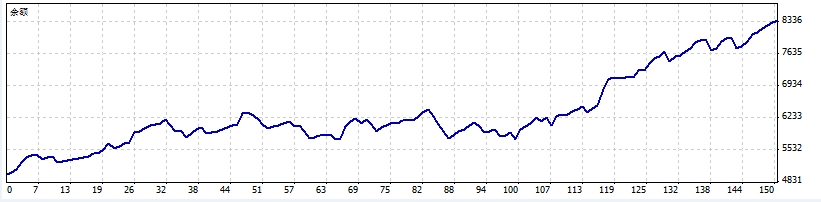
Make judgments on the daily chart, grasp the entry point in four hours, set the stop loss from the four-hour period, and set the stop profit on the daily chart. It is still possible to match the entry winning rate and profit-loss ratio with multiple periods. ~~~~~Look at my stable and breakthrough ea, if you are interested, add friends to chat
Copyright reserved to the author
Last updated: 08/11/2023 04:50
Add

First of all, it is very clear which type of transaction you are doing. The operation strategy of foreign exchange professional institutional traders, that is, Day trading, focuses on the daily line level K-line shape structure, and then performs intraday trading operations, so the daily line level is correct. suitable
Copyright reserved to the author
Last updated: 08/12/2023 18:10
Add

For intraday trading, the most important thing is to look at the daily line, and the short cycle can be combined with 4H and 1H. If you like to play ultra-short-term, you can look at 30min, the period below 30min changes too much, and the reference is not very meaningful
Copyright reserved to the author
Last updated: 08/06/2023 15:37
Add

Take this opportunity to talk about the trading cycle in foreign exchange trading.
Transaction risk and transaction cycle.
As we all know, transactions are divided into three types: short-term, mid-term, and long-term, and foreign exchange transactions can also be done from these three perspectives. Many people think that foreign exchange trading is volatile and margin trading is risky, and they are more inclined to short-term or even ultra-short-term trading. They think that the shorter the time I open a position, the less risk I take. In fact, this understanding is wrong. The real situation is that the more times you place orders, the greater the risk you take. Therefore, intraday ultra-short-term trading is the most risky of all cycles.
The foreign exchange market is not as intense as imagined.
Standard hedging products such as the Swiss franc mostly fluctuate below 1% every day, and the daily fluctuations of the Japanese yen, British pound, and gold that are more intensely traded are also about 2 to 5%, which is almost the same as the fluctuation of the stock market too much. The real risk comes from leverage, and the operation of high leverage and heavy positions makes your account unable to withstand the fluctuation of only a few percent. Therefore, it is impossible to participate in the operation of high leverage and heavy positions, which mainly considers the daily line. Long-term operation. The light position operation is equivalent to self-lowering leverage, so that the stop loss in the space of two to three daily average amplitudes will not be so fatal, and light position traders also have the opportunity to earn profits of several hundred to one or two thousand standard points.
A reasonable trading cycle is determined by your account size and your trading style.
A small account of one or two hundred dollars has no basis for participating in the multi-day market, and can only participate in the intraday market quickly. According to the "Turtle Trading Law", a standard account of 50,000 US dollars is used to capture The big market that lasts for about 100 days is the goal. Some people like heavy positions, so you can just look at the five-minute chart, and you can’t bear the fluctuations in the hourly chart. Some people like light positions, then you can use the K-line chart of more than four hours to trade.
Regardless of long-term or short-term, the daily K-line is an important reference data.
True intraday traders cannot ignore the important reference function of the daily K-line. Important positions such as the opening price, closing price, highest point, and lowest point of the previous day will also play an important role in today's market. Because there are short-term, mid-term, and long-term traders in the trading market at the same time, the reference function of the daily line will not lose its meaning just because you are doing ultra-short-term. Doing short-term thinking that the daily line is useless is like an ostrich sticking its head into the sand, deceiving itself and others.
Copyright reserved to the author
Last updated: 08/01/2023 15:51
Add

Hello subject,
Use that cycle to trade, it depends on your personal trading preferences, if short-term intraday trading, contact the cycle of 4 hours and below!
The period above the daily chart of long-term trading, combined with the small period to enter the market!
It all depends on your trading system! The lower the cycle, the greater the randomness, and the larger the cycle, the smaller the randomness!
Copyright reserved to the author
Last updated: 08/11/2023 15:43
Add

If you look at it for a minute, you may not see it quickly, it is not good-looking, you can use it, 15 minutes, 30 minutes, one hour and four hours, to find the pattern, and then to operate. The market is mainly divided into upward trend, shock trend and downward trend After confirming the trend, it is more feasible to cooperate with the above-mentioned time cycle frame to find support and resistance to operate and find the law
Copyright reserved to the author
Last updated: 08/09/2023 01:50
Add

For intraday trading, first look at the daily chart, then 1 hour, 15 minutes.
There is no best trading cycle, only suitable.
Copyright reserved to the author
Last updated: 08/13/2023 20:36
Add

Look at a direction on the daily chart, and then find an entry in an hour or 30 minutes. As for exit, it depends on your profit target. Don't be too entangled in whether you are long-term, medium-short-term trading or intra-day trading, just wait after setting a stop loss, and hold a profitable order if there is no exit signal, and hold it for as long as you can. for reference only! ! !
Copyright reserved to the author
Last updated: 08/04/2023 12:45
Add

There is no problem with using the daily chart for long-term trading. Personally, I have placed orders for long-term weekly and monthly lines.
It is enough to use more than 1 hour to 4 hour chart within a trading day or within a week
Copyright reserved to the author
Last updated: 08/01/2023 03:26
Add

0
work
0
subscriber