


Stay in touch!
Subscribe to our newsletter to get the latest updates on live market analysis, trading strategies and more. You can unsubscribe anytime.
By subscribing, you agree to Trading.live Privacy Policy.


First of all, rely on the mountain to respect the god of the mountain, and rely on the water to respect the god of water. I live off the market, so I don't agree with what you say about cash machines, planting and harvesting. Trading this thing, in my opinion, is a matter of planning and success. Do what you should do well, and leave it to the market to make money.
Back to the question. What is the core secret of profitable trading? In fact, I didn't think about this problem before, because many things happened naturally. After thinking about it carefully, I think it should be self-discipline and mentality management.
Yes, it may disappoint everyone. There are no profound cheats, and there are no tactics that make people feel tall. In my opinion, the secret of profit is often hidden in nonsense, it depends on whether you can detect it and grasp it. Those things that are said to be hype, I think it is not true.
It's a bit off topic, let's continue to talk about the topic. Let me talk about my trading style first, I am a short-term day trader. The holding time is generally above 4 hours, and in a few cases, the holding time is overnight. Mainly doing swings, and then, what everyone calls a left-handed trader. Although I have always denied that I am on the left side, the angle of denial is only based on the saying that going against the trend is the left side, and following the trend is the right side. Whenever someone uses this as a judgment and concludes that I am on the left side, I will ask: What is homeopathy? Why buck the trend? Follow whose trend? And against whom? Talking about trends out of the trading cycle is all bandit logic. Putting aside this judgment basis, I have no objection to dividing me into the left side. In the current environment of talking about the trend and talking about the right side, my trading method is indeed a bit different.
I am a low frequency trader. I only trade 2 orders a day, and at the same time, I set profit targets and loss targets for myself every day, so I won’t go into details. Once the goal is reached, no more transactions will be made, and even if there is an opportunity, it will be ignored. This is a self-fusing mechanism I set for myself. After all, I believe that great joy and great sorrow are not suitable for trading. Winning streaks and losing streaks will affect the mentality, which is not conducive to trading. I'm just an ordinary person, and I can only be cautious and cautious. Although I have set myself the opportunity to trade twice a day, in fact, in most cases, I only trade once a day is enough, and there are also two times, but very few. In most cases, I am waiting for opportunities in the European market, because for direct currencies, the first peak or volatility of the intraday trend often appears in the European market. After entering the market, I hold the U.S. market. Of course, I will not touch the data. When important data is announced, I will either leave the market directly or wait for the data to operate.
And this, I understand as a manifestation of self-discipline. Of course, self-discipline is not the only aspect. For example, keeping records, my records may also be rather strange, because I don't know how to keep transaction records. What did I record? What I record are the fundamentals of various countries, economic data, major events around the world, the interest rate resolutions of each central bank, meeting minutes, president speeches, and my own analysis records. The time is from 2016 to the present. Well, it can be said to be my own small database. Whether it is the data in this event or the event, as long as I think, I can find it as soon as possible. I may not remember the specifics of a certain event or data, but I can only remember a general idea, but as long as I say a time, I can find it and review it. I think this is very helpful for me.
These are all done on my own initiative. I think this should also be regarded as a manifestation of self-discipline.
The above is self-discipline, let’s talk about mentality management. It's management, but it's just adjustment. I haven't reached the level of management yet. To be honest, this entry point is hard to find, so I think it would be better to go to the transaction record. Just the last record that I think can best explain my mentality adjustment.
First of all, I'm sorry, there should not be too many online stolen transaction records. I am too lazy to make watermarks, so I just made them casually to prevent others from stealing them. (There are still typos in the name of the first picture, but don’t worry about these details) You can see that this account was opened in November 2015. The whole month of November was good, and it ended with a profit. The profit is directly released at the end of the month. Everyone understands the reason. I am afraid that the profit will accumulate too much, and I will not pay out later. . . Forgive my arrogance, that's exactly what I thought at the time. . .
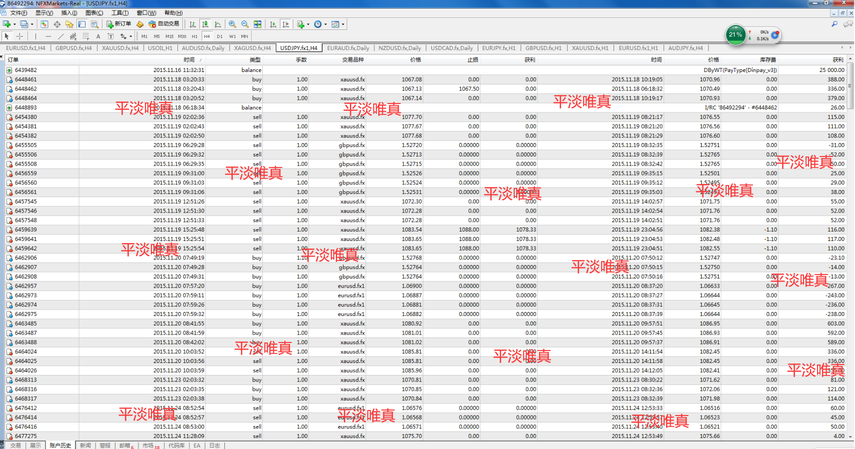
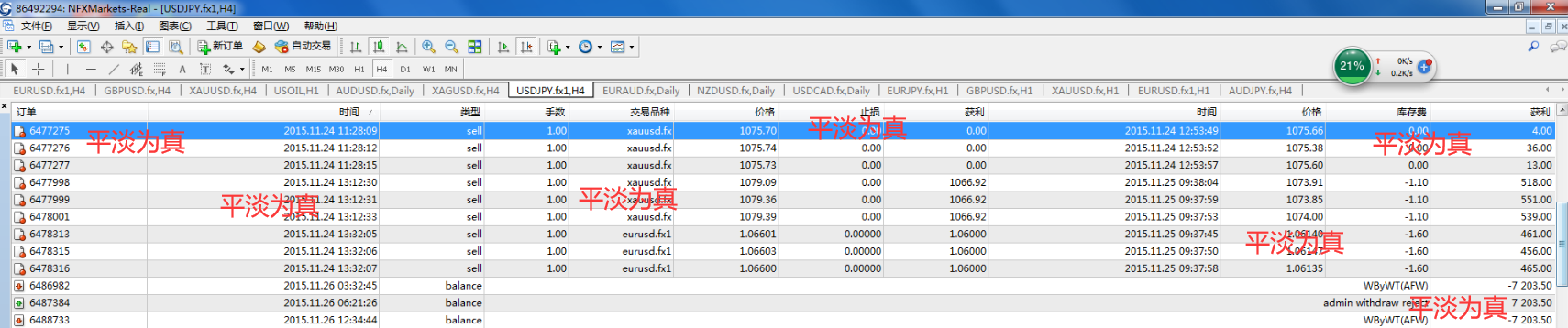
When the time came to December, the account began to lose money. This was the beginning of a change in my mindset. You can see the entire month of December, which can be described as horrible. In fact, at this time, I have realized the changes in my mentality brought about by continuous losses.
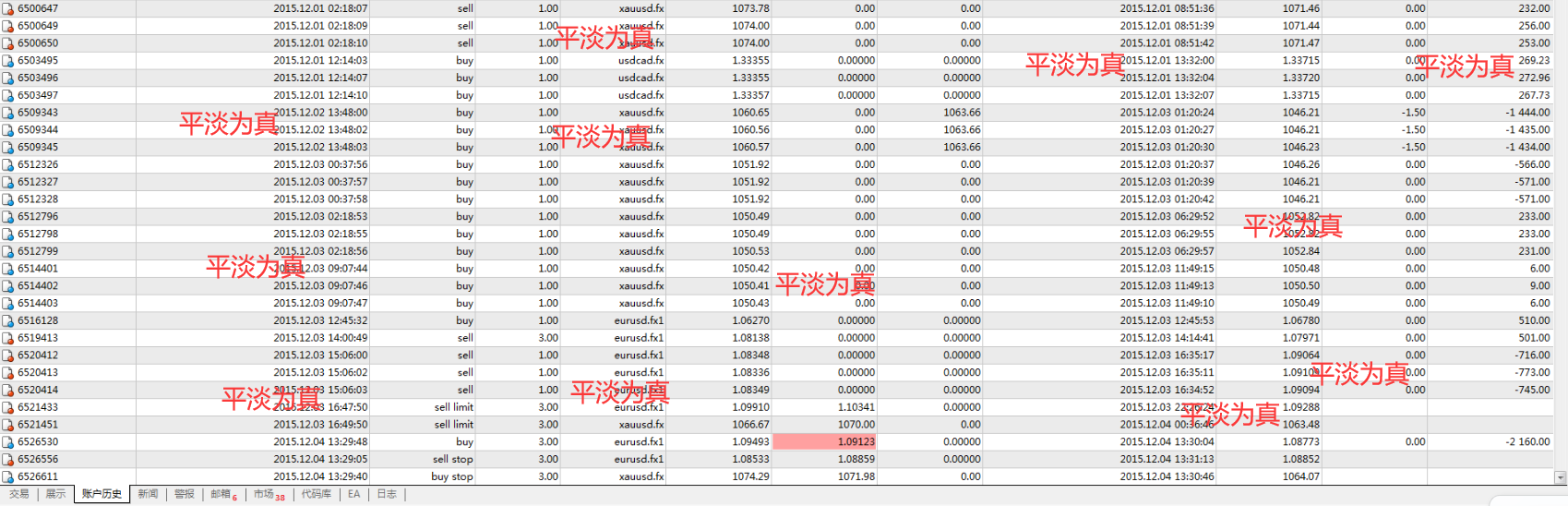
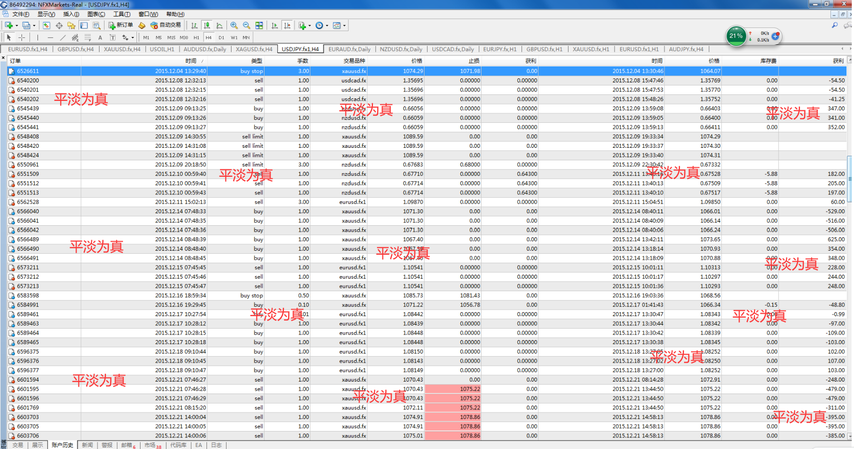

Therefore, compared with December, the order volume has been greatly reduced in January. At the same time, you can take a look at the order interval in January, which is also relatively long. At this time, I am making orders again and again, and slowly adjusting my mentality again and again. But the results can be imagined, the results in January were not very beautiful. This made me realize the seriousness of the problem.
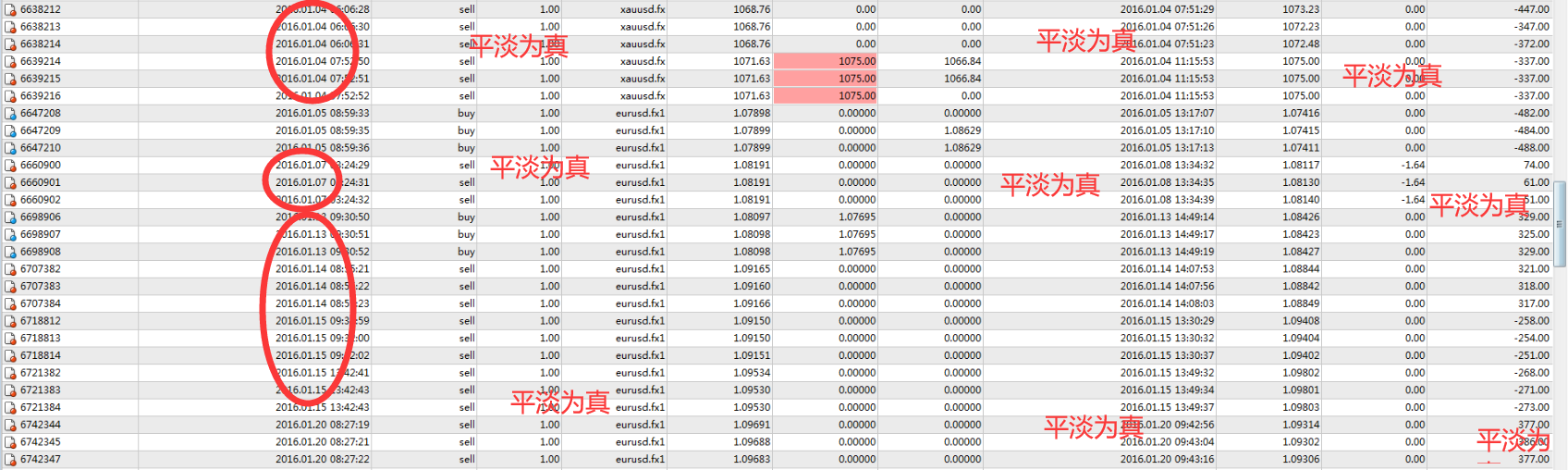
Therefore, I decided to suspend trading until my mentality adjustment recovered. Throughout February, I was resting. During this period, I felt that I had adjusted my mentality and tried to trade, but I found that I didn't. So the transaction is still suspended. The time came directly to March. It can be seen that after more than a month of adjustments, it is still effective. The status has been recovered in March, and the withdrawal was made again in early April.

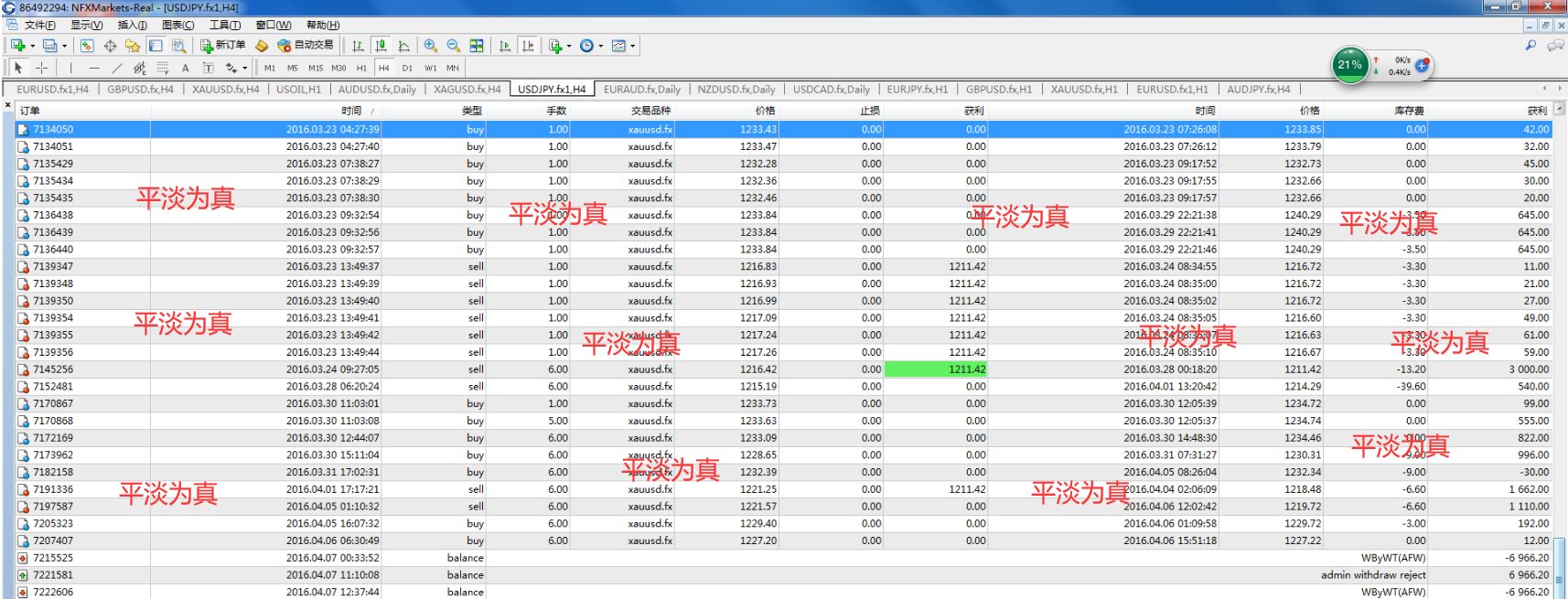
After that, the condition got better and better. After the previous withdrawal at the beginning of April, the profit was withdrawn again at the end of April.


The state is good in May, and the withdrawal is close to 16,000
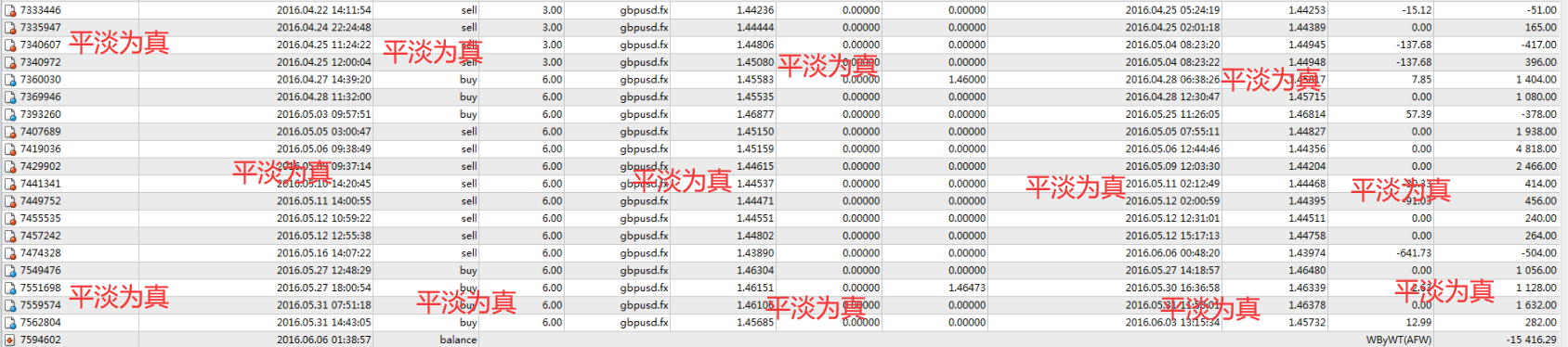
Then, June was a turning point. You know what happened in June, the Brexit referendum. . . But that's another story. So much for the moment of mentality. As a result, I can tell everyone that the account has doubled several times. So I think mentality is actually quite important.
This is the secret to my profit, simple and unpretentious.
Copyright reserved to the author
Last updated: 08/24/2023 12:31
 Add
Add

Master, you want to ask me how to make money?
In other words, before my trading was indeterminate, it was not until I read the book "Ghosts of Wall Street" that I slowly formed my own trading style and formulated my own trading system. Of course, everyone's trading style is different, so if I just tell you my trading system, you may not make a profit because of it, or even go astray.
Therefore, I think that instead of talking about my core secrets of trading profits, it is better to tell you the three major principles I learned from the book "Wall Street Ghost", so that you can build your own trading system on this basis; only in this way, you Only in this way can you find the core of your own profit, without asking around for other people's secrets.
Rule 1: Only hold correct positions.
That doesn't seem like anything extraordinary, and in fact I think that if I had to sum up this book in one sentence, it would be this one. Most of the trading books on the market first emphasize the importance of stop loss, through stop loss to protect our principal from too much damage. The subtext of stop loss is that unless it is proved to be wrong by stop loss, the position you hold is correct. This is the essential difference between the two laws.
My understanding is just the opposite. I think trading is a loser's game. That is to say, if it is not proven to be correct, it is wrong. According to the first rule, as long as there is no rising position within our approved range, it should be cleared. This is much more active than the stop loss rule, and the position cleared at this time may still be slightly profitable. Even if there is a loss, the loss will be much less than the passive stop loss caused by hitting the stop loss position . Based on my past experience, the stop loss trades that end up losing money are usually the ones that lost money in the first place.
In practical application, the second rule is also very helpful for the swing operation of stocks, but it is not very helpful for intraday trading. "Wall Street Ghost" also spends a lot of time explaining this point, which is more suitable for intraday trading The most important thing is to directly establish a large enough position, which is caused by different trading cycles and modes.
Rule 3: Sell all stocks within two or three days after placing a huge amount.
Anyone has to admit that there is no perfect selling rule in this market, and the third rule can only be aimed at specific situations; because the definition of huge volume varies with the actual situation of trading volume, this rule three can be Operability is relatively low. Of course, in fact, some selling rules have been taken into account in the first rule: as long as the rising situation no longer meets your original expectations, then you should sell decisively. Therefore, rule three can only be used in specific situations, and cannot be applied indiscriminately.
In other words, in just a few hundred words, I mentioned the title of the book several times. I hope the title owner will not think that I am selling books, right? I also hope that the three rules I summarized will help the subject to establish his own profit-making secrets.
Copyright reserved to the author
Last updated: 08/20/2023 19:45
Add

What is the core secret of profitable trading? Or, what do you rely on to make money?
Seeing such a problem, many people may blurt out: Create a stable and profitable trading system by yourself!
I said this is bullshit! Based on my many years of trading experience, I believe that the profitability of trading does not depend on indicators, formulas, systems, fund management and risk control, but the most core and key is a person's concept and logical thinking. In this sense, to do business is to be a human being, and it is a process of self-cultivation.

From a novice to a top trader, you must go through the transformation of trading philosophy. The following are the 17 phased changes in trading philosophy that I have summed up after years of experience, and I share them for the subject’s reference. Topic, as long as you understand these advanced changes, you will not pursue any secrets of profitable trading. In other words, if there is a secret, who would share it with you so impartially? If a master really shared it, how could you easily believe it without doubting it? Isn't this an endless loop?
1. The first level doesn't know anything, a novice.
2. At the second level, after reading a few books and gaining some real experience, I have technical concepts in my mind.
3. The third level: start to summarize several key points, such as "trend", "capital management", "strict loss stop", "no heavy positions", "not scratching the head and tail"... This level is regarded as advanced Passed the first threshold for trading profits: graduated from kindergarten.
4. The fourth level: Start to fix the style, know to give up some opportunities, form your own style, give up some indicators, and only need a few standards.
5. The fifth level: Begin to discover that money management is very important. Study the knowledge of fund management and conduct position management.
6. The sixth level: I set some rules and regulations and style positioning for myself, and I began to realize that execution is very important. This level can be regarded as the second threshold: Congratulations on graduating from elementary school.
7. Gradually discover that forecasting is almost an impossible task, and begin to downplay forecasts and directions. It is found that observation is more important than prediction, and control is more important than analysis. Congratulations, you're a little enlightened—you're starting to judge the market with your own mind.
8. Slowly discover that each method and system has its own weaknesses and advantages, no longer seek to be right every time, no longer seek the perfect method, and try to find a system that suits your personality and ideological values. It went one step further.
9. Finally decided to give up subjective trading. It is a painful thing to give up years of tools, disk sense and experience—but you have to give up—because you find that subjective trading is too difficult to achieve discipline, consistency, and system. You should be ready to start building your own trading system. Congratulations, you have completed the key steps of not breaking and building, and you have graduated from junior high school!

10. You try to use your own experience and knowledge structure to build your own trading system. I started to be confused and found that trading turned out to be a comprehensive university question. I have figured out with psychology, philosophy, art of war, engineering control, etc., and even have the idea of leaving this market, brother, you finally know that there are too many things you don’t know, this is the beginning of your awakening!
11. You start to keep learning, looking for information, classic books, looking for articles on the Internet, looking for friends and teachers who can inspire you to re-analyze your previous experience and views, re-puzzle, and try to find your own way. Accumulation and learning are impossible. No, communication is very important. There are countless people supporting a successful person, so you must know how to be grateful and reward, no matter what you do!
12. You finally find an admirer, a master or an idol, or an idea. With this ideological system as the center, you start to build your own trading system. In this, you find that you used to have such a superficial understanding of increasing positions, fund management, probability, market knowledge, and this game. You find that your own tools and your own knowledge structure are so poor (it is very important to meet a good teacher or a good book that suits you at the right time at this stage, depending on fate, you can’t find it), and at the same time A time when you feel your confidence, your talent, your fortitude again. Brother, graduated from high school, take the college entrance examination!
13. The thirteenth level: At this time, you feel that you have a lot to say, but you can't say it. When you reread the classics, surprises often pop up in your heart, applause, and you constantly have new insights. When you face a novice, you feel that you have a lot to say, but you feel that you have nothing to tell him. When many things learned, the knowledge seems to start to integrate, brother, you passed the exam in freshman year.
14. The fourteenth level: You continue to accumulate, learn and select, start to build your own trading projects, and start to purchase various good parts to build your own "golden chariot"... Slowly you may build it yourself If you develop a practical trading system, you may also find that you "copy" other people's classic trading systems. In the process of operation, you gradually find that it is not very important to use that system. You deeply feel that your greatest wealth is not your trading system, but your mind, your thinking, your experience, and your quality. You will not even be stingy about making your trading system public, and you know that even if you make it public, maybe no one will believe it, and you will not insist on implementing it for a long time. Brother, you passed your sophomore exam.
15. The fifteenth level: You may start to compare different trading systems and find that they have something in common. In fact, successful systems are not so complicated, but they are all "simple and practical" and have their own profound thinking principles. Even you I deeply feel the beauty of which trading system, it is the same as art, pottery and bronzes of famous cars, but you are no longer arrogant, you deeply realize that what you don’t know is the whole sea, and you are just a small island. In the process you are constantly checking the transaction to improve and learn. Brother, you passed your junior exam.

16. The sixteenth level: You may start to discover some deficiencies in your system, but you will not feel that there are problems, and you will no longer demand perfection. You will start to realize that the market is invincible, and you will feel the risks of the market more deeply. Although you have made a lot of money this year, you have considered the risks of the market at a deeper level, and you are worried that the black swan will fly. You start trading not in one market but in multiple markets, and prepare for the once-in-a-century flood. Sir, you graduated from college! Congratulations!
17. The seventeenth level: Maybe at this time you continue to use your trading system, maybe at this time you turn into a value investor, maybe at this time you leave the market to do things you like to do but didn’t do when you were young, perhaps…………
Copyright reserved to the author
Last updated: 08/10/2023 07:01
Add

What is the profit of the transaction?
1. Rely on trading strategies (Is the trading strategy profitable? It may be a trading strategy that loses money)
2. Rely on trading technology (can trading technology really make money? It may be a money-losing technology)
3. Trading depends on the trading system (does the trading system make money? It may be a trading system that loses money)
4. Rely on algorithms and models (algorithms and models use the current reserve conditions to get a fixed answer, think about whether this assumption is true)
5. Make money by relying on the fund management system (whether the withdrawal of the account can be tolerated, and can the profit target be achieved without touching the risk control)
The expansion of these questions is estimated to be the core of profitability
1. Rely on trading strategies (Is the trading strategy profitable? It may be a trading strategy that loses money)
Continuous questioning: what is a strategy, what are the basic conditions for formulating a strategy, how the trading strategy comes from, how to obtain the profitable data, where the prototype of the strategy design and the basic data come from; where is the rationality of the data, and how to prove the rationality of the data Sexuality and scientificity, whether the logic of the strategy is contradictory, and how to eliminate its logical contradiction.
2. Rely on trading technology (can trading technology really make money? It may be a money-losing technology)
Continuous questioning: How did the trading technology come from, how to obtain the profitable data, where did the basic data come from; where is the rationality of the data, how to prove the rationality and scientificity of the data, and whether there are logical fallacies of stealing arguments. (If you don’t know what a logical fallacy is, then trading technical analysis is useless. The basic cognitive logic is not established, just like the state of water, liquid, solid, and gas. If you only know liquid, it is insufficient cognition.) Lack of cognition And how to use technical indicators, how to resolve this contradiction?
3. Trading depends on the trading system (does the trading system make money? It may be a trading system that loses money)
Continuous questioning: How did the trading system come from, how to obtain the profitable data, where the prototype and basic data of the strategy system come from; where is the rationality of the data, how to prove the rationality and scientificity of the data, how to deal with the internal logical contradictions of the trading system , whether the principle of consistency is violated, whether the overall risk control design is reasonable, why is it reasonable, and where does the data come from? If there is no data support, it is a castle in the air, whether it can stand up to logical deduction.
4. Algorithms and models (algorithms and models use the current reserve conditions to get a fixed answer, think about whether this assumption is true)
Continuous questioning: The idea of algorithms and models is to use fixed conditions to calculate a fixed result, but the transaction is random and there is no fixed value. , use the method of carving a boat and seeking a sword to calculate a fixed result, think about it.
5. Make money by relying on the fund management system (whether the withdrawal of the account can be tolerated, and can the profit target be achieved without touching the risk control)
Continuous questioning: how to obtain profitable data, where the prototype and basic data of fund management come from; where is the rationality of the data, how to prove the rationality and scientificity of the data, whether the data template is diverse, and can the profit target be achieved .
6. Learn to be a trader (deadly torture)
How do you know whether the knowledge you learn can make a profit, whether it is a temporary profit or knowledge that can be continuously used all the time, whether there are logical errors in this knowledge, how to know whether it is correct or wrong, because 99% of the transactions are lost, so that is certain Trading is not technology. 99% of people can learn to drive. Technology has execution standards, and fixed results can be obtained according to the execution standards. What is the execution standard of trading? If there is no fixed execution standard, how can it be executed? Therefore, it is deduced that the current learning materials and knowledge cannot provide implementation standards. At most, they are reference materials and analysis materials, which are not technical standards at all. 99% of those who may get the correct result lose money, at least providing a clue to think about the problem.
Losing money after studying the materials (fatal torture) Is it because people are lazy, and they can’t know that there is a problem with the materials without even reading the materials; is there a problem with people (what problems do people have, as long as they have normal intelligence, basic knowledge, and learning ability , the nerves are not messy), then there is basically no problem. What's the problem if you still lose money if you memorize the learning materials backwards? It is also in accordance with the standard implementation or loss, what is the problem.
Learning reference materials and analyzing materials will have high requirements for learners to summarize and summarize. Those with insufficient inductive ability and summary ability or those with incorrect methods will come to different conclusions, so how to get consistency.
After such torture, no grass grew anywhere. Trading is art, and artists also have basic skills. Without basic skills, where can art come from? It is really not easy to distinguish what is flickering and what is the essence.
I am not afraid of problems, but I am afraid that there are no problems. If there are problems, at least I know what my level is. I am aware of the seriousness of the problems, but I am afraid that I don’t know that there are so many problems. I am still optimistic and blindly confident.
Copyright reserved to the author
Last updated: 08/26/2023 14:59
Add

My trading system is transformed from practical experience, and its logic is based on wave theory. In the following time, I will use the logic that constitutes the trading system to analyze the actual market. Borrow everyone to practice the law.
The composition of the trading strategy:
The trading system is the execution process of trading strategy formulation, and its composition is divided into three aspects:
1: Trading model; it is the mode for judging entry and exit signals. Among them are fundamentals, technology, etc. I use technical logic here.
2: Trading cycle: I understand it as two aspects, intraday and swing positions. Swing positions are also trend tracking positions.
3: Fund management: Fund management, also known as position management. Compared with swing positions, in the process of following the trend, repeated trial and error will cause losses, so positions must be divided into positions, and the trend will increase positions. The best way to enter the market for my trading system is the decreasing method with the optimal ratio of 5+4+3+2+1.
The core part of the trading system is the trading model.
The technical logic of building a trading model: traders use their own understanding of the market to form their own judgment logic for the market; whether this judgment logic is consistent with the objective market; if the logic can be consistent with the objective market, the trading system will be profitable, otherwise there is no profitability;
The percentage of fit between the trading model and the objective market is the profit ratio.
Whether the understanding of technical logic is feasible is the key to whether the trading model can be profitable.
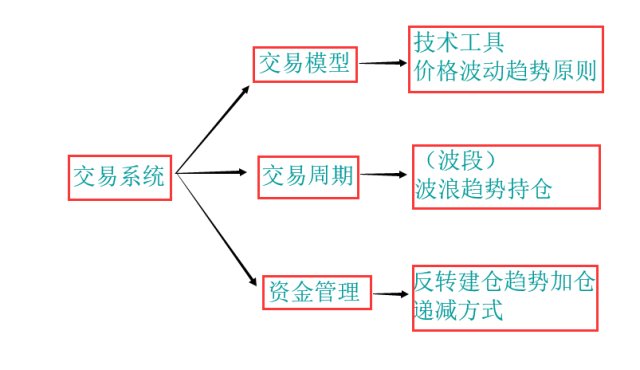
The composition of the transaction model:
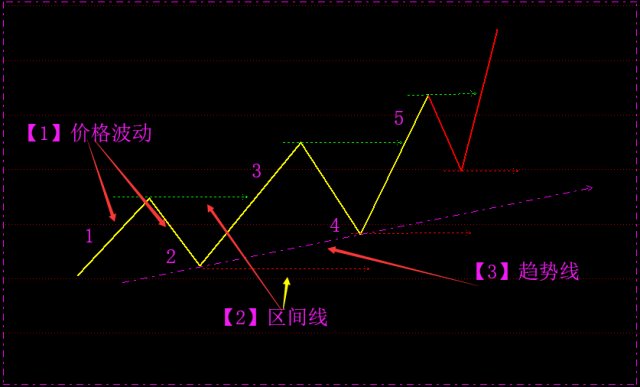
The trading model is based on the purpose of trend tracking, and trend tracking is based on wave theory; the trend market in wave theory is a five-wave structure with a band position as a cycle.
The wave structure is divided into three parts:
1: Price fluctuation; I call it unilateral fluctuation here.
2: Interval line, (wave high wave low interval);
3: Trendline;
[The position cycle of the trading system is based on the five-wave trend market as the cycle]: standard five-wave structure
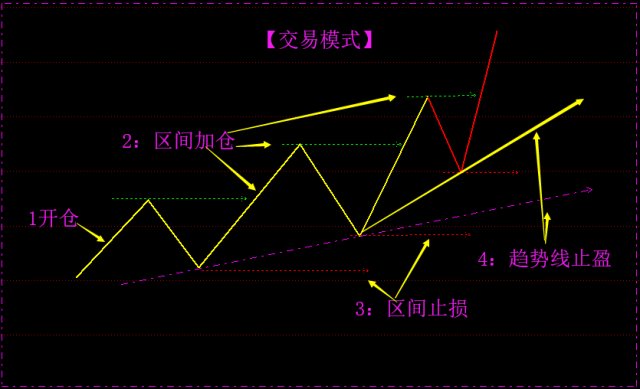
【Trading Mode, (Rules)】
[The most basic judgment principle that constitutes a trading model]
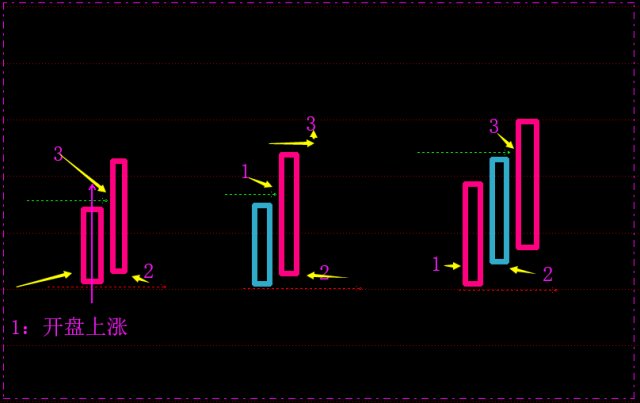
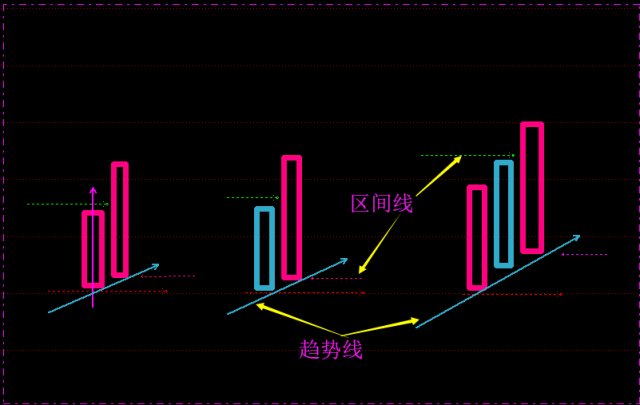
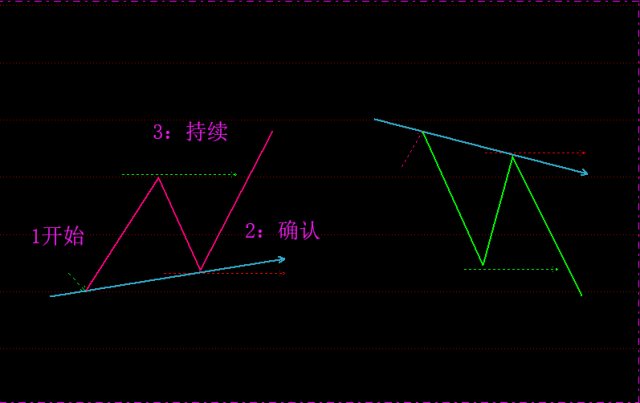
[Using the above judgment principles as parameters, the quantitative indicators formed after quantification: the picture shows the upper index day K]
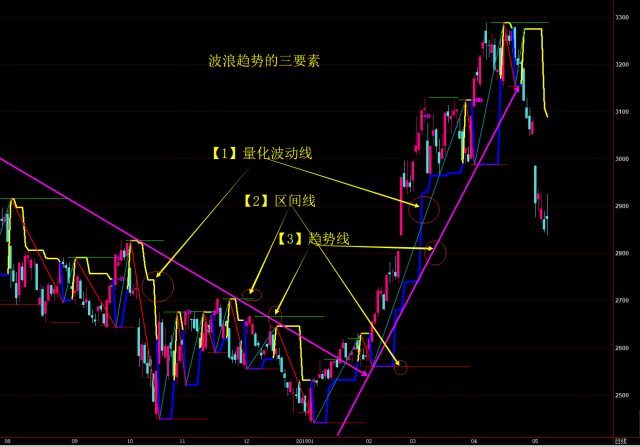
Copyright reserved to the author
Last updated: 08/10/2023 02:19
Add

【Model Trading】
I have been in contact with foreign exchange market investment for no less than 10 years, and it has been almost 10 years since the first firm offer transaction. Summarize why you use model trading.
At the beginning of entering the market, basically wherever there is an opportunity, one should rush there. The psychology is one goal, to make money, as long as there is money to be made, it is a good opportunity. What followed, the result is also predictable. After falling into contemplation, I continued to study on weekends. Basically, I spent two days on weekends studying except for meals. I have basically learned all indicators, moving averages, and even EA. I dare say that few people work as hard as me. Growth is also natural. In one month, all the indicators that the outside world can talk about can be mixed into the topic. That's getting into the first phase - and more!
In fact, more is not of great help to the operation, but it infects a lot of thinking, the moving average is bullish, and the indicators are bearish. Every indicator is different. If you know a lot, you can only get out of it. You should go to other people to trade, copy your homework, and watch others call orders.
By chance, I saw a person writing his own model continuously, and took the 1-hour level 5EMA Jincha 10EMA as a trading model. Every wave of trading can give 100 points of profit space, which inspired the research on the model. Followed by continuous imitation of this model, tracking good places and shortcomings.
Let's take a look at the trend of gold in the past two days. One transaction per day is a very rich return.
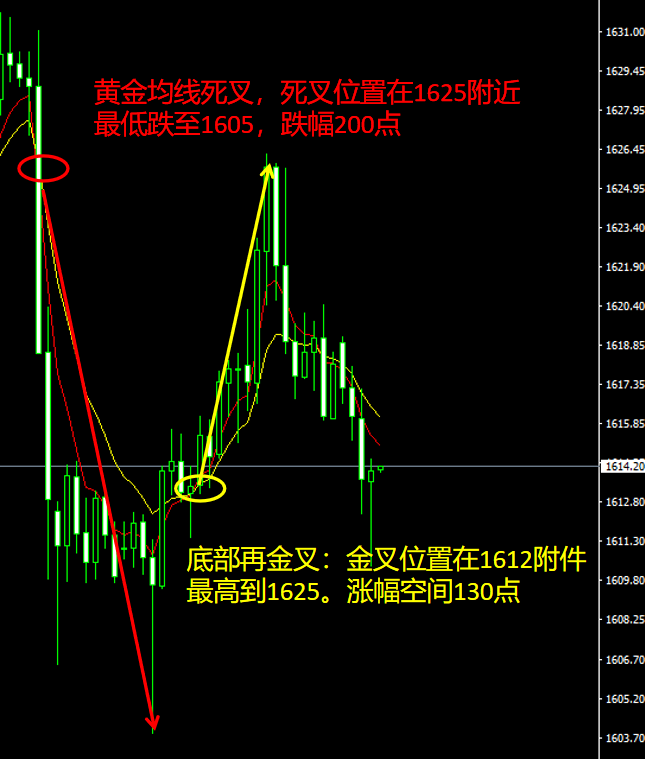
The advantage of this method: when the trend is clearest, the EMA golden cross and dead cross signals are relatively slow, but the signals are very stable. Every time a signal appears, it is a good opportunity. Only eat fish body, give up fish head and tail. Another advantage is that the 1-hour period is just right, giving 1-2 signals per day, and avoiding frequent transactions.
After the model is set, there is basically little confusion in thinking. If there is a signal, you will trade, and if there is no signal, you will rest. In the middle, gradually combine the big cycle, avoid some minor signals, basically make a profit every week, and grasp it every time is a big opportunity. I have been doing this model trading for 5 years. Every time I see other people’s analysis, I have a lot of problems. I don’t need too much analysis, just follow the signal.
Let me show you the models of Pound Beauty in the past two days. I hope you can find a model that suits you soon
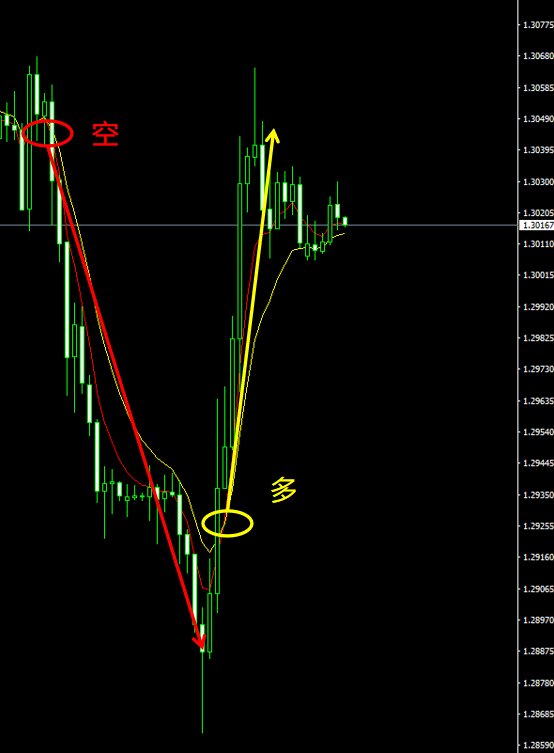
Copyright reserved to the author
Last updated: 08/09/2023 10:33
Add

Topic, I personally think that the core secret of trading profits is to take advantage of the trend, light positions, accumulation, increase positions, stop losses, hold positions, and Mingde!
Financial transactions can be truly profitable, and it is a long-term stable profit, which actually has nothing to do with the trader himself. If you go with the trend, you can make a profit, because the market is making you a profit; if you can’t make a profit, it’s because you are holding a position against the trend, and the market is not making you a profit.
The way to make a profit is that you can follow the trend without moving your position. You can go with the trend while holding the position, it is the power of your cultivation that is at work, not your ability to make profits in trading.

If you make a profit, it is definitely not because of your credit or trading ability, but because your "Tao" nature is at work.
Some people say that I have the ability of technical analysis, I have the knowledge of fundamental judgment, and I can predict the market, these are all jokes.
Technical analysis is a summary of high-probability events. I admit that it is useful for judging future market trends, but first, most of them are summed up after the fact. Second, technical analysis is mostly limited to a certain price market stage. In fact, There is no need to pay more attention to the impact of local movements on the overall trend.
Fundamental forecasting, I believe your ability is still far behind. Even if it can be predicted, it is only ambiguous.
So, trading is just following the trend.
Are plans, principles, and strategies important? My answer is that I don't have these things, and I never pay attention to them. I just open positions lightly, set a stop loss, follow the price, and continue to lighten and increase positions after profits, that's all; if there must be a plan, I only have these simple actions, but in fact it is not a principle of method, you are Do margin leveraged trading, can you not take a light position, can you not stop loss? So I don't have any principled strategy.
All in all, profit has nothing to do with you, don't brag about yourself, it's just a gift from the market. It's not that you have the ability to make money. If you are struggling in the trading market, or looking for a way to win, from now on, you should know that this will not help your trading at all.
But if you are always losing money, it is really about you. You are always doubting, you are always expecting, you are always fearing, you are always analyzing, you are always planning, and you are always stipulating yourself to abide by trading principles , when in reality, you are always losing money.
The law of trading lies in impossibility. Stay out of the market, build a position in the trend, wake up to the truth of enlightenment, and be good at making profits. The world is free and unrestrained, the world is self-contained, knowing the beginning of the action and knowing the end, the market is self-interested and I am self-interested, and I am self-interested but I am outside the market.
Putting yourself in the middle of a deal doesn't do you any good. You have to try to put yourself out of the transaction, so that you can empty yourself, so that the transaction has nothing to do with you. Because profit is determined by the market, not your decision. Your position direction, if it matches the price movement, he will win. If not, then change it. The market is the leader. You are just an outsider. Do you put your heart in the transaction? In the final analysis, whether you make a profit or not has nothing to do with you. Therefore, following the trend is what should be done, and it is natural. I don’t take the initiative, I have to follow the trend or something. I just need to see his movement and gently follow the movement. Then I place an order and go to sleep. The market Automatic and I am selfish. This is the Tao.
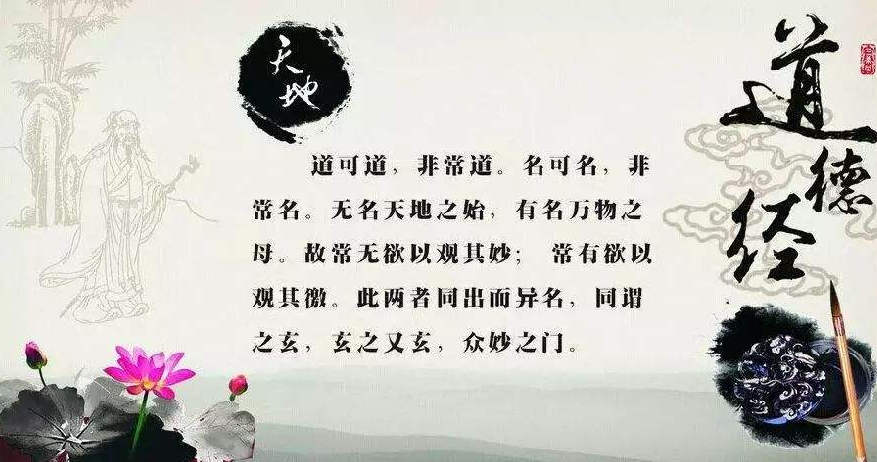
So there is no so-called profitability in it. If you can make money, don't feel that you are great, you are awesome. Just like when the weather is good and the common people have food to eat, the king of that country feels that he is very awesome. It is his power that makes the common people have enough food and clothing. Isn’t this a self-deception? Just like the air makes all things grow, you feel that your own ability makes the air work, isn't this ignorance? Therefore, profit is just going along the way, and going along the way is virtue. The "Tao" and "virtue" of the "Tao Te Ching" need to be clarified. Lao Tzu thousands of years ago can see it so clearly. After thousands of years, don't you think about it seriously? Conversely, if you can't make a profit, it's because you take yourself too seriously, devote yourself to the transaction, work hard, and lose more and more, because it's all about self-assessment.
Topic, if you can’t make a profit yet; if you have already started to make a profit, but always complement each other, then please try to empty yourself and cultivate your own thoughts. Only in this way can you increase your profitability!
Copyright reserved to the author
Last updated: 08/16/2023 17:29
Add

There is no holy grail in the trading market, and there is no secret in the trading market. What everyone does is the same, that is, to find their own trading system, and then improve the trading system. The last thing to do is to strictly repeat the implementation.

1. Personality determines what kind of trading strategy you are suitable for
The trading system is a tool for traders. Having a trading system is a necessary but not a sufficient condition for sustained and stable profits in the market. This shows that having a good trading system is a good start to achieve investment success, but the ultimate success still requires the cooperation of the transaction executor, that is, the trader. The most difficult thing in the trading process is people's mentality. There is a saying, "Character determines destiny", and in trading, it is character that determines the choice of trading tools and the ultimate success or failure of the transaction.
2. Short-term trading and trend trading
Short-term traders are not suitable for trading with the trend system. Short-term traders need to watch the market carefully and gain insight into the clues. They must be highly concentrated in trading and cannot be affected in the slightest.
For trend traders, there is no need to keep an eye on the market, and they are not disturbed by the ripples on the market. Even watching the market carefully has become a big taboo for trend traders.
This completely different approach comes from the trading personalities of two different traders. Different personalities determine different concerns, different trading methods and different trading tools.
The short-term trading system puts more emphasis on the success rate of the system, that is, the number of profits is required to be significantly greater than the number of losses, and the investment philosophy it pursues is "small profits but quick turnover, accumulating less to make more";
The trend trading system pays more attention to small losses and big wins, and uses continuous stop loss as cost and price to exchange for large trend profits. Trend traders are not sensitive to the success rate, and the number of profits of some trend trading systems is even smaller than that of losses The number of times, but in the end it is a profitable system, which fully demonstrates that the investment philosophy pursued by the trend system is "large profits and small sales, small losses and big wins".
For the two trading methods of short-term trading and trend trading, there is no right or wrong, or better or worse. The key depends on whether it suits the personality of the trader. Therefore, short-term traders choose the short-term trading system as their trading tool, and mid-line traders choose the trend trading system as their trading tool, which is a good match between traders and trading systems.
3. The three pictures explain clearly what is going on with trend trading
The first picture: trend following system diagram
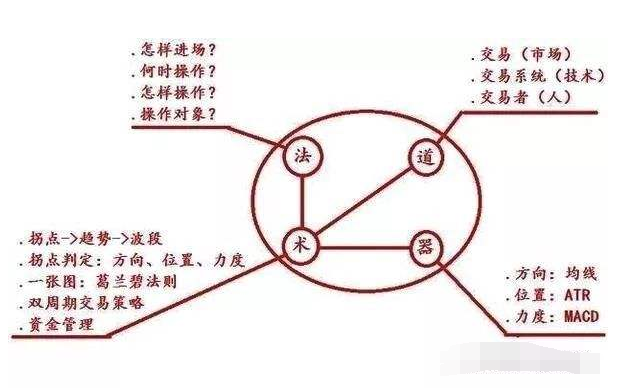
Dao: Understand the whole transaction from three perspectives: market, technology, and people.
Technique: Inflection point->band->trend->position, and finally integrated into a chart to form a trend-following technical system.
Method: How to enter the market? When to operate? How to do it? Operation object? Four aspects have established disciplines to ensure the execution of transactions.
Detector: The operation of trend tracking is assisted by indicators such as moving average, ATR, MACD, and BOLL.
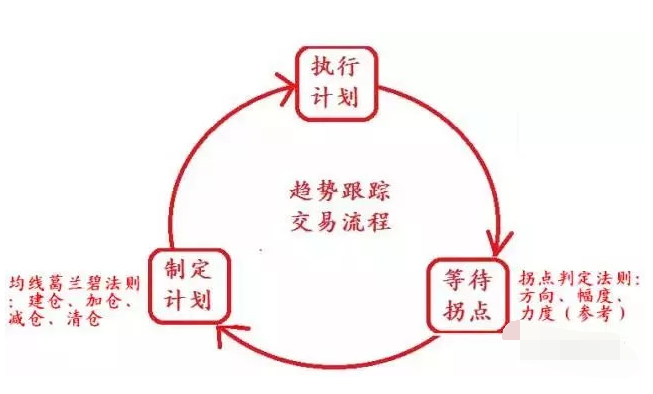
The second picture: transaction flow chart
With a mature trend following system, we can trade according to the following process:
Make a trading plan -> wait for the inflection point to form -> execute the trading plan
The whole process is just three steps: plan->wait->execute.
The three-step trend-following process mentioned above can be drawn into a picture, which is the trend-following transaction flow chart.
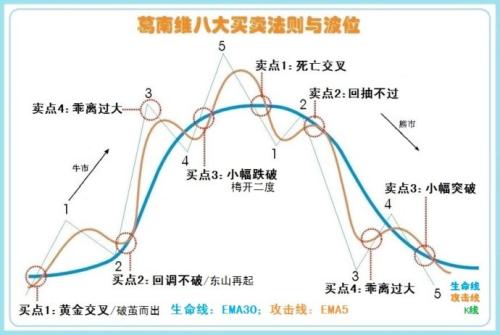
The third picture: the core picture of trend tracking technology (Granbe's eight rules)
Trading plans include probing, building positions, increasing positions, reducing positions, clearing positions, etc. How to formulate a trading plan can be formulated according to the following eight rules of Granville.
4. The essence of trend trading is that you have been following
We know that whether it is long-term or short-term, the reason for profit is because we have done the trend of a stage correctly, and where the market trend will go, in what form and at what speed, we generally can only fully understand it after the fact. Know. But if we can keep up with the market, even knowing where it is after the fact, can make good money. Therefore, the theory of trend following has become an investment method recognized by many investors, and many investors have also used this method to obtain profits.
The core essence of trend following is that you keep following the market closely, always only half a beat behind it, never predict its next beat, and just keep following without losing track to win. It's as if you want to follow an important person, and he walks in one direction after leaving home, you have to follow, don't judge whether he is going in that direction, is it true or not; in the middle he stops to eat, you'd better also Pause, because you don't know whether he will continue to go forward after eating or go home, or continue to stay in the hotel; or if he turns back in the middle, you'd better be ready to turn back with him at any time, because you still don't know Did he forget something and went to pick it up at the restaurant and came back immediately, or went home directly, or continued to walk in the opposite direction without going home; the only way to ensure that he will not be lost is to follow him all the time, not to judge him. Where will he go in one step, and then choose an intersection that he thinks is suitable to wait for him.
Everything that prevents a person from being successful is all inside. Experience determines emotions, and emotions determine behavior. No matter how good the method is, there are also losses, and they are frequent losses. It is difficult for a normal person to remain indifferent to these loss experiences. No one's heart can bear seeing his frequent losses. But you have to accept these losses. If you are clever and want to deviate from the method system in future transactions to avoid losses, or want to close positions early to lock in profits, I promise...you will definitely miss the real big profits later. Chance.
There is a saying in the market that finding your own trading system, simplifying complicated things, and repeating simple things is equal to success.
Copyright reserved to the author
Last updated: 08/20/2023 19:31
Add


The core secret is: follow the system signals unconditionally, and execute risk control unconditionally. Everything is unconditional and without excuses, without subjective consciousness.
Although this may cause you some seemingly unnecessary losses, over the years, the system will tell you that you cannot overcome it.
In other words, when the market trend sends out a signal, we cannot subjectively judge what the market will do next. The most common manifestation is that when the bearish signal is sent out, we often look for the support level to buy the bottom instead of thinking about how to go short.
This is because we don't believe in our own system, and always judge the market subjectively, which will inevitably lead to huge losses.
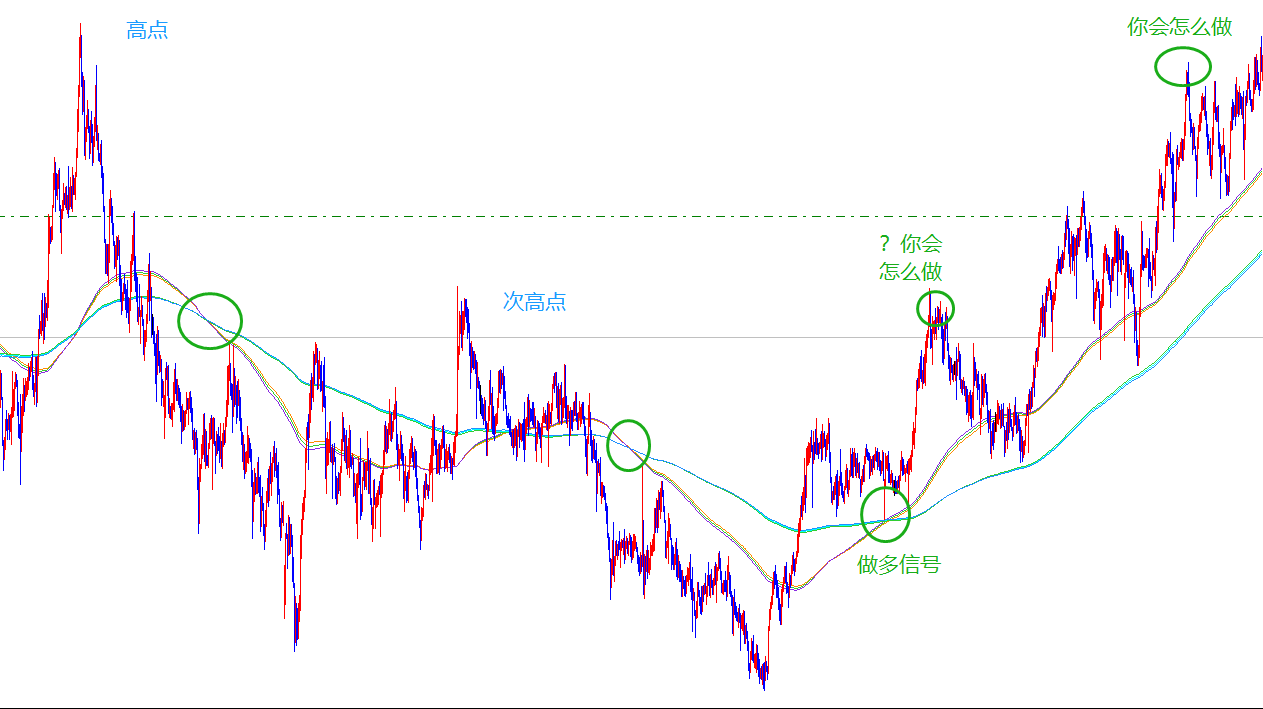
For example, after my moving average trading system sent out a bullish signal for the last time, due to the previous decline, I encountered resistance at both the previous high and the second high. So what do you do? Do you go against the trend and go short at possible resistance points, or follow the trading signal to increase your position and go long?
Many people will definitely say that of course it is long, because I am now saying that we have to follow the system, of course you will say that. If you keep doing this, then congratulations, you will definitely succeed. But if the short-selling is not closed in time when encountering obstacles, the loss will be huge. Let's take a look at the development of the market behind.
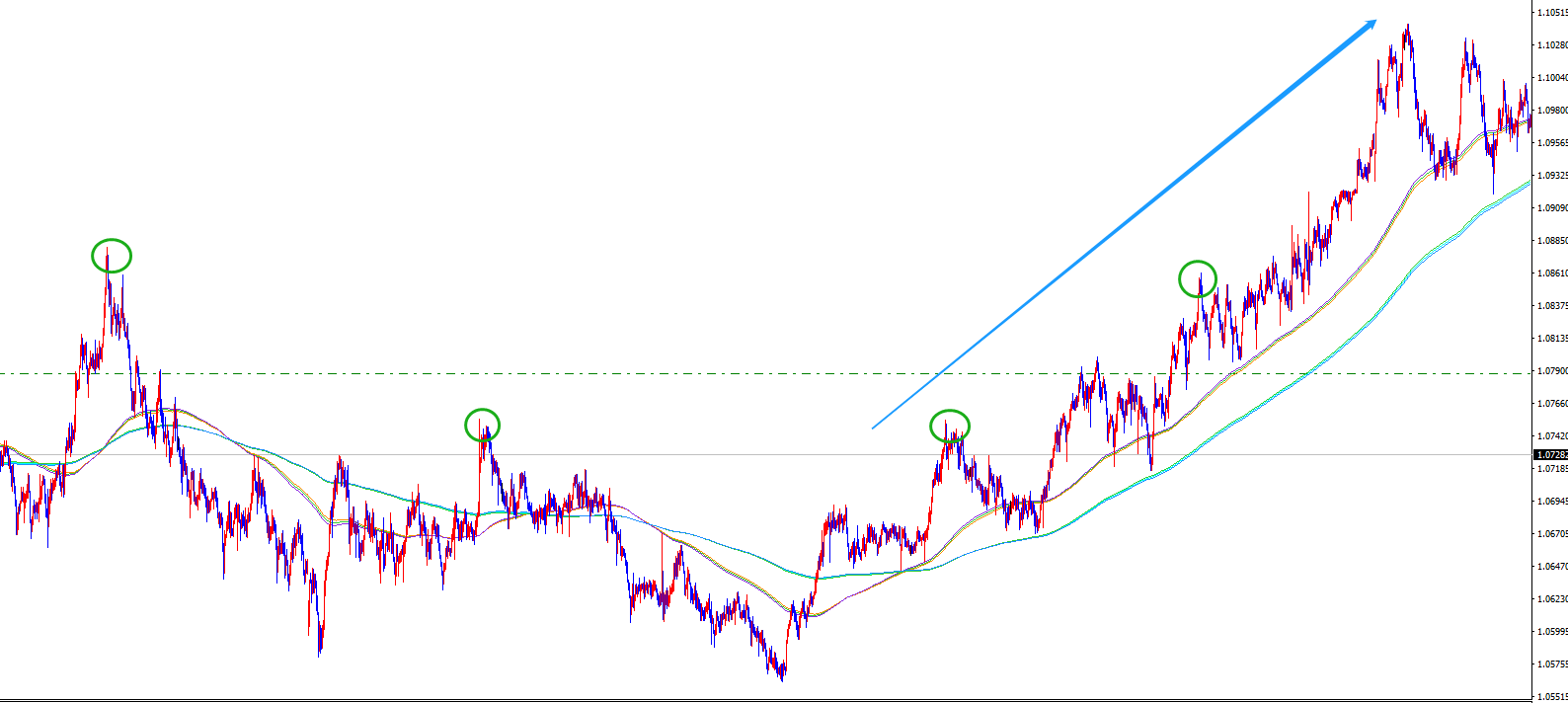
Above the moving average system, the market continues to develop and rise sharply all the way. If you continue to go short based on the so-called resistance during this process, the consequences will be disastrous.
Here you can also see a lot of crossing false signals, so you won't be afraid if you bring a stop loss. Of course, it can be further optimized, here is just an example.
I hope to be helpful.
Copyright reserved to the author
Last updated: 08/21/2023 00:24
Add

Enter the market and try and make mistakes, decisively stop losses, and take profits boldly.
If there is any secret in the trading industry, this sentence is a top secret, and this sentence expresses the hearts of traders.

1. Allow trial and error
Trial and error means that you are fully prepared to deal with uncertain market conditions for each transaction order, and you will not be desperate to lose your mind and end up with orders or even liquidate your position.
Decisive stop loss shows that you are aware of the unstable risk behind the uncertainty and have the ability to control risk. This ability is the key prerequisite for all profits.
All major losses are due to one reason, and I think I can never be wrong.
Decisive stop loss also means that you can overcome human nature - aversion to harm. Don't underestimate this point, many people are unwilling to decisively stop losses and find such ridiculous excuses for themselves. Defeating human instinct is simple, but not easy. Simple, it is a matter of clicking the mouse; not easy, when this action is performed, all kinds of thoughts in your mind are saying "no".
Letting profits fly means that after you realize that the trend is uncertain, your profits come from trends and are no longer short-term swings. The trend is in the wind, standing on the wind, and taking off is the real source of profit. Do this, and you're trading with positive return expectations.
Therefore, it is allowed to try and make mistakes when entering the market, stop losses decisively, and take positions boldly according to the trend. This is all the correct logic and core logic in trading.
2. Response to retracement
Position retracement is a common occurrence, and all strategies will encounter such things. Oscillations and trends both operate alternately and complement each other. To solve this problem, you can clearly recognize the reasonable retracement interval of each variety.
Some fund retracement is not reasonable, including interference, group effect, etc. There is no timely remedial position measure for such problems, so we can only stop the loss and exit the market.
Another situation is the market within a reasonable range, such as unilaterally greater than 100% of the extension line, within 50% of the retracement, and so on. This type of retracement requires you to have a complete trading system to deal with it.
If the withdrawal of funds does not reach your expected reasonable take-profit range, in fact, you don't need to do anything, and it is a common thing to keep the original planned position.
3. The key to fund management - control and control positions
Position size is a key factor in determining the risk of account funds. Many traders have been lacking in fund management, which is actually caused by insufficient ability to control the orders they hold. Based on these points:
(1) Pocket is safe
(2) Guaranteed capital
(3) Stop when you see the opportunity
Fund management is a multiple-choice question, not a judgment question. It is right to enter and exit flexibly when you see the opportunity.
In general, the trading core is nothing more than included in the trading system. Perfect appearance, there will be perfect profit!
Copyright reserved to the author
Last updated: 08/16/2023 10:24
Add

If you still can’t make a profit now; if you have started to make a profit now, but the loss is greater than the profit, I hope this article can give you new ideas.
The core of trading is "follow the trend, stop loss, point, no emotion"
1. When to enter
As a trader, you must have a very clear entry method, and try to make the entry point as close to perfect as possible. "The perfect position price is 50% of the perfect exit."
Some people will mistakenly think that it is buying the top and buying the bottom, no!
Of course, someone may have a way to buy the top and bottom.
The "close to perfect entry price" mentioned here is the starting moment of the third wave. Rely on three principles:
(1) Trend
(2) Timing
(3) breakthrough
2. Take it when you see it
When you close the position when you make a profit, you say that you are right, and when you close the position when you lose money, you say that you are wrong. This seems simple, but this way of thinking has disadvantages.
The disadvantage is that when you enter a trade, you may indeed have objective boundary conditions as we talked about before, but obviously, you don't know where your trade will be closed, whether you will make a profit or lose it (if Know, who would trade losing money?).
When looking at transactions, you should make a current judgment (long, short or flat) that is most beneficial to you based on known information, rather than based on whether the position was profitable or losing before.
Take it when you see it is good, "protect the immediate interests, and control the medium and long-term profits with a small gain"
3. Emotionless – Disciplinary Execution Strategy
Know one or several K-line patterns like the palm of your hand, determine the universe at a glance, make profits and losses reasonable, less analysis, and more disciplined execution.
Trading is a part of life, don't put the cart before the horse, or give up almost everything because of trading. Persistence is not the same as death. When the strategy does not adapt to market changes, you must not rest on your laurels. Believe that the market is always right, and adjust strategies flexibly.
Doing transactions is like being a human being, and life is always full of various decisions. In life, when you make a bad decision, the best thing is to be able to recognize the problem in time and reverse your thinking to change the course as soon as possible. And when you cling to every decision, waiting for your goals to go back and forth so you can justify yourself and get yourself out of office, that's not the way to think. And it is this kind of psychology that makes many traders lose their future. The author hopes that this article can save thousands of readers from such mistakes.
Copyright reserved to the author
Last updated: 08/19/2023 12:56
Add

Obtaining stable profits in the trading market is the ultimate goal pursued by every capital market. Of course, not everyone can become a master of investment. However, there are indeed some top trading masters and veteran traders in the trading market. I have summed up countless valuable experiences in my trading career for many years. How are these experiences used? Next, I will analyze it based on my own experience.

Trade when a multi-period moving average system is trending (resonance)
Whether you are operating the short-term or the long-term, use three different periods of multiples or the Fibonacci sequence arrangement of the moving average system, when the three moving averages and the current k-line form are in the long-term arrangement or the short-term arrangement of the average, this time When you enter the market and trade with the trend, as long as the k-line does not break through the longest period of the k-line, you can continue to keep the position.
Trading with Bollinger Bands in the short-term of the day (short-term)
The foreign exchange market is in a shock range most of the time, and the upper, middle and lower rails of the Bollinger Bands are similar to the box of a box, and the price moves between the top and the box body, so you only need to move according to the Bollinger Bands when they are in the shock range. Buying at the bottom of the box and selling at the top of the box can make a profit.
Trading when the market has gap after gap (Trading Tips)
A gap in the price is a signal of a strong market, so if you trade at this time, as long as you set the stop loss at the point of the gap, you can gain a relatively large profit with a small loss.
Do a good job in capital planning and management (fund management and risk control) before placing an order
When you just started trading, it is recommended that you familiarize yourself with the following small amount, so that the chance of loss is reduced. With the familiarity with the platform and the progress of technology, you can increase the order amount appropriately, but remember, it is an appropriate increase! But many people lose When I get red-eyed, I don't care about anything. I keep increasing the amount of orders and want to make a comeback. This kind of mentality of eager for quick success and quick profit must never appear.
Investment must afford to lose (trading mentality)
Many people want to make continuous profits, but it is very difficult to achieve. It must be difficult for even Warren Buffett to achieve absolute profits, but what we can do is to find experience from each loss and apply it to the next transaction. This is a sensible approach.

The above are the commonly used strategies and tools in the personal trading process. Of course, each trader may refer to them differently. For simple trading tools, you can choose the indicators that are common on the market and you are most familiar with as a reference, plus fund management and good As an aid, mentality cannot be said to guarantee stable profits for traders, but it can guarantee that it can be the birthday star of the market under strict implementation.
Copyright reserved to the author
Last updated: 08/24/2023 00:04
Add

Behind the profit is a difficult thing to determine. It may be difficult to judge who has the most weight. Even the trader himself may not have figured it out, or he may not have reviewed it in detail at all.
One thing I think is very important is to strictly implement the trading plan. Adhere to the execution of the trading system is the lifeline of the transaction.
According to survey data, among all financial investment participants, investors who can execute trading plans 10 times in a row account for 20%, investors who can execute trading plans 20 times in a row account for 10%, and investors who can execute trading plans 100 times in a row account for 20%. Investors account for less than 1%.
It is easy for an investor to execute a trading plan, but it is meaningless to execute a trading plan.
Chairman Mao once said, "It is not difficult for one person to do one good deed, but what is difficult is to do good deeds and not do bad things for a lifetime.".
For investors, it is not difficult for an investor to execute a trading plan once. What is difficult is that the plan has been executed for a lifetime of transactions. There are no transactions that change the plan, and there are no unplanned transactions.

Execution cannot be overemphasized in the dangerous futures market, it is the most critical link that determines our success or failure. The so-called "knowledge is easier than action", the difficulty lies in the choice between profit and loss, the duel between emotion and rationality, the balance between speed and reason, and the outcome and process. Bad execution will always find a reason, and knowing it and not doing it will make us often regret it, make us suffer, and lead us to failure.
According to statistics, when the signal appears, no more than 20% of them can execute correctly for 20 consecutive times, and no more than 1% of them can execute correctly one hundred times in a row.” Doing is the most important thing! Execution is the success or failure of the transaction The watershed is also the criterion for judging mediocrity and greatness! It is easy for a person to abide by the trading principles for a while, but the difficulty lies in adhering to the principles for a lifetime.
Why is it difficult to implement? Many failed traders lack extraordinary wisdom, but only a very small number of people who know how to execute can succeed. When the signal appears, we think about the consequences of failure; when losses become an inevitable reality, we take chances. Chasing opportunities without following the rules, tasting the bitterness of violations endlessly again and again, unprincipled and undisciplined operations can only make the holy grail in your heart farther and farther away from you as you make repeated mistakes.

In the investment market, those once again and again "this time is different" ideas have been blown away like clouds by the reality time and time again. But after a while, as the wonderful performances of the market gradually come into play, the holy grail of truth will gradually become blurred, and even be suspected and abandoned, and the absurd tragedy will start to repeat itself. human nature.
Copyright reserved to the author
Last updated: 08/09/2023 13:08
Add

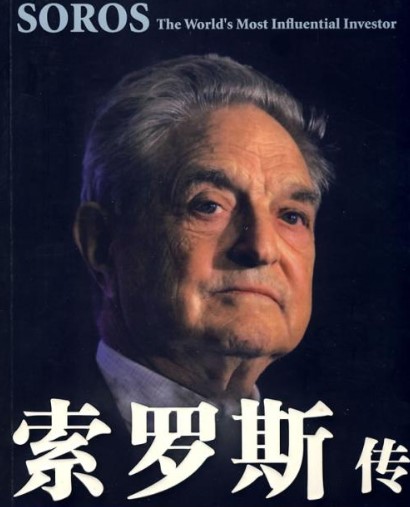
How can I have any core secrets in my small business? To talk about the core things, it is more appropriate to look at the experience of some trading masters. Here is a brief introduction to Soros's reflexive theory.
Soros's reflexivity (Reflexivity) theory is well known to almost everyone in the financial circles. The theory of reflexivity means that the person involved, his own thoughts and behaviors, will also affect the environment, so that the environment no longer maintains the state of his original thinking, but changes. The environment is in constant interaction with the individual participants.
There is a famous philosophical saying "We can never step into the same river", which has a similar meaning. However, the main emphasis is on the constant change of the environment, and there is no mention of the interaction between the participants on the environment.
But it is widely known in the financial world because of a book "Financial Alchemy" written by Soros.
Soros believes that using traditional economics to guide investment will only make mistakes again and again. First, the hypothetical "complete information" simply does not exist in reality. Second, because of reflexivity, the buying and selling behavior of participants further intensifies predictions.
For example, when buying a house, we think that the house price will rise, so we buy it. This decision to buy is also a driving force for increased demand. If more people think this way, housing prices will continue to rise. The people made money and were happy. Rising housing prices have stimulated us to continue to invest in buying houses. Banks that lend to the public, because housing prices have risen and their balance sheets are healthy, have made greater strides to continue to expand their loan scale and continue to make profits. The government is also very happy. The real estate industry is booming, which not only increases tax revenue, but also stimulates other industries, increases the employment rate, and the economy continues to grow. In this way, housing prices deviate more and more from the fundamentals until they reach a critical value and when our disposable income is not enough to pay bank interest, a crisis erupts. This is the course of the 2008 US subprime mortgage crisis.
Indeed, the price eventually returns to value. However, because of the existence of reflexivity, this time has been stretched for a very long time, can you persist in waiting?
In Soros' view, the real market has no equilibrium and always fluctuates back and forth before bubbles and crashes. Reflexivity is trying to explain why the market is always unbalanced, and it is a counterattack against the concept of equilibrium in traditional economics.
So, according to the principle of reflexivity, what enlightenment do we have?
First of all, if you are in the value genre, then, because of the existence of reflexivity, after you buy, the time to wait for the price to return to value will be much, much longer than you expected. Therefore, before investing, you must make a good capital plan, and do not use the money you need in the near future.
Secondly, when the first investment is successful, before each increase in position, it is necessary to re-evaluate the current market situation and not be affected by the previous success.
Third, by observing Soros' operations, we can experience the greatest application of the reflexive theory—applying the reflexive theory to a market that has systemic loopholes and will reinforce itself.
Copyright reserved to the author
Last updated: 08/09/2023 16:45
Add
In 2015, when I got married, I only had 38 yuan in my pocket. At that time, it was my third year of trading, the lowest period. I now have 10 million funds in my hand, and many of the funds here are commissioned by friends. I don’t have any diploma, so if I go out to work, I’m doomed to be mediocre, but I’m obsessed with trading. As long as you agree in life, as long as you don’t give up, success will always be in front of you.
The first liquidation was due to ignorance, and the second liquidation was just when they got married, and it was greed to make quick money. Afterwards, I set a goal of doubling it a year, and rested after I achieved it. After I got married, I borrowed 50,000 yuan from a friend and continued my trading life. The reason why friends can lend me money is because they believe, because they have seen me double. (It is recommended that everyone not borrow money to invest)
For me, this money is very hard-earned. My position is to control the 2% retracement of each risk point, which is the total capital, because I really can’t afford to lose. I am already penniless. It is debt. The preparation before each transaction is the arrangement of repeated scrutiny, repeated planning, and repeated calculation of the total position. Careful step by step, each transaction is a 2% maximum capital withdrawal. That's how a person who can't afford to lose has earned back the first doubling in 10 months. My friend witnessed my success and helped me organize a reward event. The first 1 million funds were given to me, all from relatives and friends around me. At that moment, I was so excited that I couldn’t tell. After a drop of tears, at that moment, I cried, and I knelt down and cried involuntarily.
Giving up all greed, the trust and burden of 1 million funds made me more cautious, and the control of fund withdrawal became my first focus. Every time I opened a position, I reduced it from the previous 1% position to 0.5 %, don't seek to make a quick profit, only seek stability. In this way, we accumulate day after day, year after year, and double the goal every year, and rest when we achieve it. The current capital has reached 10 million, and most of them are introduced by friends and entrusted to trade.
Up to now, the biggest emotion is that there is no so-called success in the transaction at all, it is all dignity in exchange for carefulness. Now the child is 3 years old and has started to go to kindergarten. When I pick up and drop off the child every day, I can always feel the pain of the past. Here again, I would like to remind everyone not to speculate in stocks with debts, the pressure is too TM.
Looking back, pay attention to the general core of your capital curve, control your retracement, find the reason for the retracement, improve it, and correctly see the profit and loss orders, and you will go well in the future.
Copyright reserved to the author
Last updated: 08/24/2023 21:02
Add

The stable profit of trading is often not the use of hype and superb skills as most people in the market imagine, but the repeated thinking, deliberation and mastery of basic concepts and basic logic. Only when you pack lightly can you go far, and only when you meditate can you travel for a long time. This light-packing and meditation, combined with our transaction, is aimed at the commonality of the two different stages.
Friends who are new to the trading world are still just starting to learn analysis, which means that they don’t have enough time and data experience and statistics. The instability of trading results is reasonable. But at the beginning of learning and trading, "doing" is the first priority. If you want to use trading as a means of investment and profit, remember that overthinking is the number one taboo.

The way to avoid detours is to pack lightly. Packing lightly means that after a period of study, you will concentrate on researching and applying a sensible valuation system or a technical indicator, and don’t put multiple indicators in the icon for reference. Different indicators have different original intentions, and different tools have their own application directions. If you look forward to a perfect signal by cross-referencing, you may miss a profit or a loss, but the essence is that you missed the opportunity to experience, missed the accumulation of statistical data, and missed The exercise of the psychological quality in actual combat has missed the feeling of writing that stroke.
For investors who have been trading for a period of time, if they have already understood and implemented the rise from analysis to statistics, meditation will become more important at this time. The specific performance is, don't look at Shu before you get it, concentrate on avoiding fiddling, and be patient when avoiding impetuosity. Concentrate on one model, system, direction, and target transactions and statistics, stick to it, and gradually through the accumulation of time and data, try to approach the set conditional assumptions, statistical probability results, and effective solutions to changes as much as possible to be more real and effective , the discussion on a new model can only be started when it is stabilized.
The work of analysis is always so complicated, but the transaction is so simple, but simple does not mean easy. Continuous practice, constant quantification of rules in practice, and constant cultivation of the habit of adhering to the rules in practice, all these are constantly contrary to normal human nature, and persistence to the end is a test of human nature. The simpler the conditions and rules, the more effective they are.
When you have really persisted in this trading game for 10 or 20 years, when you have completed the original accumulation, and when stable profits gradually become the path of least resistance, you will find that the conditions are no longer important, because they have been linked with You are integrated, and the only rule is stop loss, just like the two sides of money, the two sides of everything, only these simple two sides run through your trading career.
Copyright reserved to the author
Last updated: 08/24/2023 11:07
Add

To make long-term stable profits, you need to have your own stable trading system. Real trading system = clear entry signal + dynamic but clear exit signal + clear position management + verified correct profit-loss ratio + multi-scale and multi-market backtest support.
Next, let’s talk about the secret of stable profitability:
1. Stable profit depends on a stable operation mode, and a stable operation mode determines that there are only a few stable operation methods. At the end of the Qing Dynasty and the beginning of the Republic of China, Guo Yunshen, a master of Xingyiquan, really existed. He only relied on half-step Bengquan and had never met an opponent in his life. Spokesperson.
2. Trading is nothing more than buying and selling. A stable operation mode is some stable and reliable action specifications for buying and selling that can beat others and defend themselves.
3. Stable buying mode, a few fixed buying points, buy when you arrive, don’t buy if you don’t, celebrate when you make a profit and wait for the take-profit signal, use the stable cut position mode to cut it if you lose, and then Do it next time. In the final analysis, it is just a sentence, sit on the sidelines and wait for the pie to fall from the sky.
4. Stable take-profit mode, take-profit in a fixed buy mode, the rules are a bit messy, it has something to do with the opponent's physique, the same punch in the opponent's face, the result will be the front teeth flying around or smashing into the brain Concussion, hard to say. But there can also be a general standard and range, such as not playing when you see blood, such as the end/reversal of a certain price/signal. Fix it as the end point of making money every time, and the extra money will not be made. The advantage of this mode is that I earn less this time, but I will not take the elevator next time, and it is still balanced in general. But because as long as it is a fixed buying point and then moves in the right direction, then it can be guaranteed that there will be a profit. After a long time, it will be the accumulation of compound interest.
The secret of stable profit is like this, it is these few limited and fixed trading points, find it, believe in it, execute it, and everything will be OK naturally.
Copyright reserved to the author
Last updated: 08/17/2023 08:44
Add

single variety
I found that many people like to buy many varieties at one time. During the National Day communication in the group, a group friend posted a position map, probably in the hands of Europe and the United States, pounds and dollars, gold, crude oil, and pounds day, with a total fund of less than 2,000 US dollars. Europe, the United States and the pound are non-US varieties. Gold, crude oil, and the pound are basically not related to each other. Direct currencies and cross currencies are the most volatile commodities. Diversification of positions seems to be a smart choice. Don't put eggs in one basket, but it is stupid for trading, because you can't see through the laws of each variety. In my opinion, it is a manifestation of greed.
This method was learned from a 60-year-old aunt. She was an accountant before, and after retirement, she traded gold to pass the time. Regardless of her age, her income is doubled every month, and her profit is withdrawn every month. I am curious about the cause of the problem. She only makes gold, and other varieties have nothing to do with her. It has been the same for decades. When you keep watching the market for a variety, you will find that the rules of this variety can be well perceived by your heart naturally. The appearance of that kind of trading signal comes from inner feeling and intuition. On a variety, Repeatedly doing long and short, even after a period of time, you can keep only 1-2 mistakes in a month.
My aunt told me that there was once a little girl who lost 10,000 US dollars to only 2,000 US dollars, and asked her for help to help her earn back. The aunt saw her as a poor person, and helped her earn 10,000 US dollars in a month. She is a gold expert in the group, as long as she wants a gold strategy, she can directly ask her aunt, and the answers she gets are basically making money.
From then on, I learned to look at a single variety, and now I basically keep three varieties, gold, pound beauty, and other European and American varieties, and I don’t look at them at all. Since then earn money every week. When you focus on a variety, you don’t need any indicators, and there is no ups and downs on the K-line, you can perceive the very direct next signal, and you don’t even need to write any trading plans.
It's a pity that my aunt had eye surgery last year because of watching the market for a long time. After resting for more than a month, she slowly left the market. It's time to retire. I wish you a happy and happy old age.
Copyright reserved to the author
Last updated: 08/26/2023 17:14
Add

secret? If it was a secret, who would share it with you?
In my opinion, there are no secrets in this market at all, and there are open secrets everywhere. It's just that each person has a different attitude towards these "secrets", which creates different levels for each person.
If there is a secret, it may be headline party. For example: the secret of 100% success rate, XXX usage you don't know, etc., will you believe it?
If you want to talk about my profit secret, let me tell you, it is stop loss. Yes, it's that simple.
To be honest, I have been trading for six or seven years, but after this period of time, I can actually grasp the direction of the market more or less well. Therefore, admission or something can be said to be very simple.
But the most error-prone link is the control of risks after entering the market. You are an outsider before entering the market, and you will not have any expectations for the market. But once you have a position, you want the market to go in your direction. Once reversed, you will become nervous, and at the same time you will become arrogant, and you will not want to admit your mistakes.
This will lead to wrong risk control and liquidation. Liquidation is a common occurrence for most traders, and it is also the biggest disaster for accounts. And all of this actually originated from the fact that there will be no stop loss.
I believe that the winning rate of most traders is actually about the same. After all, they can achieve 50% winning rate with their eyes closed. Then you find that the space for mistakes has reached the lower limit set by yourself, then you should leave decisively. The correct position should allow the market to give you as many gifts as possible. That's right, cut off losses and let profits run, that's the same sentence again.
But that statement is indeed the truth of the trade. I have been talking about my winning percentage before, but in the end I always lose out. It will be clearly found in the review that every time I make a profit of 30 to 50 U.S. dollars and leave, while the loss is as high as 200 to 300 U.S. dollars. Therefore, even if my winning rate of more than 70% is useless.
Later, I forced myself to set a stop loss, not to stop the loss and not to be out, and not to do it after I was out. In this way, the number of orders has decreased, but it has gradually become profitable.
Of course, the stop loss is not set randomly, and there are also many methods of stop loss setting on the Internet. I just tell you that stop loss is one of the most important weapons for me to turn losses into profits.
Of course, this is no secret.
Copyright reserved to the author
Last updated: 08/20/2023 05:10
Add

The success of investment is to repeat the simple profit model, and to do it in large quantities. Only in this way can the high probability characteristics of this model be displayed and stable profits can be realized.
The whole secret to trading is this: stick to your trading system consistently.
Successful traders have a completely different way of thinking and trading attitude from ordinary traders, that is, all successful traders firmly believe that insisting on using a successful trading system is the best choice for a small person to achieve a big career. Doubting your own trading system is the beginning of investment ruin.
Almost all failed traders will be unable to accept losses in the system due to confusion in trading concepts and ignorance of the philosophical principles of trading profits, so they will not be able to enjoy the shock of large profits.
Just imagine, if we have the correct trading philosophy, we can deeply understand that successful trading is not about judging long and short trends, but about strictly observing discipline. Then will we still be vacillating about the long and short of the trend when the system sends out a long signal? If we can deeply understand that trading has nothing to do with trends, but only with trading signals, will we still look at the external market, listen to the news, and operate casually in the market?
Investing is a marathon, not a 100-meter race. In this protracted race, what is to be seen is not who runs the fastest, but who runs the most steadily.
Resolutely operate in accordance with the system, looking at the money that can be easily earned but not operating, this is contrary to the greed of human nature. Trading is like this, gradually growing in the constant struggle with one's own humanity. You can become a successful trader only if you make the originally uncomfortable trading gradually natural and smooth.
Copyright reserved to the author
Last updated: 08/20/2023 22:01
Add

0
work
0
subscriber