


Stay in touch!
Subscribe to our newsletter to get the latest updates on live market analysis, trading strategies and more. You can unsubscribe anytime.
By subscribing, you agree to Trading.live Privacy Policy.


Share the fund management method used in my trading - "Fix a position with a loss", it is simple and easy to use!
Traders who have done a little bit of trading will know the importance of fund management. All large funds in the world will have their own fund management models.
Fund management, together with trading technology and trading psychology, are called the three cornerstones of traders. Successful trading must be based on these three foundations.
However, among the traders I have contacted, there are very few who can correctly understand the importance of fund management, let alone use the correct method of fund management to make their accounts grow steadily.

The fund management formula shared today is called "determining a position by loss", that is, the position of the transaction is determined by the amount of loss that can be tolerated by each transaction. It is very suitable for ordinary individual traders to manage their own funds in daily transactions.
Before talking about specific operations, please allow me to start with the definition of fund management and explain this set of fund management methods step by step.
1. What is money management
A thousand readers have a thousand Hamlets, and a thousand traders have a thousand views on fund management. Everyone who makes stable profits in the market will have their own views and methods on fund management.
In comparison, I think Alexander Edel's point of view pointed out the essence of money management more comprehensively. In his trading book "Into My Trading Room", he mentioned: "Money management is the skill you use to manage your trading capital...the goal is to accumulate capital by reducing losses on failed trades and maximizing profits on successful trades. .”
That is to say, fund management has two goals: survival and development. Survival comes first, followed by striving for steady gains.
But novices generally reverse their priorities. After all, everyone comes to this market with the purpose of making money at the beginning, and no one hopes that their transactions will lose money.
It is precisely because of the illusion of making a lot of money easily through trading, coupled with the fact that some unscrupulous brokers hope to obtain high commissions (and even positions), to induce novices participating in trading to take heavy positions, so many traders ignore the principles of fund management. importance.
Maybe a lucky novice can taste the sweetness once or twice, and make a few profitable transactions, but if things go on like this, they will definitely be out of the game in the end.
I divided the ability to control funds management into the following levels, and summarized the psychological performance and characteristics of each level:
The first layer: Brand new beginners, have never experienced liquidation, and have no concept of fund management. Either attracted by the lucrative exchange, or lured by the broker with the bait of easy money, entered this market. The amazing thing is that almost every novice is profitable in the early stage of trading, just like people who don't know how to play cards are very lucky.
When I entered the market for the first time, I made a profit of 53% in two days. At that time, my mind was full of profit, and I didn’t think about the risk at all. I thought I had found a shortcut to make money easily, and I only wanted to increase my profit. Positions, imagining that I can earn xxx million yuan after one year at this profit rate, it seems that a good life is close at hand.
However, when the market trend moved in the opposite direction, the profit turned into a loss, but I stubbornly insisted on my position, expecting the market to move in the direction I hoped. The result is self-evident. After 2 weeks, I experienced It was the first liquidation.
The second layer: After a period of trading, I know the importance of risk control, but lack the correct stop loss method, so I can only set the stop loss position in a fixed point way, such as trading gold with a fixed 50 points Stop loss, fixed 30 pip stop loss for currency trading...
This is also the risk control method of most people in the market today.
This is much better than those who do not set a stop loss, at least there will be no situation where you will blow up your position in one transaction.
But at this time, an incredible thing happened. The market will run in the opposite direction just when it hits the stop loss point you set, as if the market is specifically against you. Many people doubt whether this is a black platform. Control the market price, and specifically scan your stop loss. After many occurrences, it will make people feel that it is better not to set a stop loss than to set a stop loss, and eventually the position will be liquidated.
In fact, few platforms will deliberately control the quotation for a certain retail investor. Most of the reasons for this situation are due to the lack of trading skills of traders and the inability to correctly judge the point of stop loss setting. This is also what many trading masters put forward, "The stop loss point should be set at a place where the market is difficult to reach. Once it is touched, it means a change in the trend, and the stop loss must be strictly controlled."
The third layer: I know how to set the stop loss point, but I don’t have strict risk control for each transaction. It often happens that I have worked hard for decades and returned to the pre-liberation overnight.
Traders at this level generally have a trading system that has been proven by the market, and the probability of making a profit is greater than the probability of a loss. There will be a period of continuous profit due to the strong market.
Under such circumstances, people will naturally magnify their expectations for future profits, feel that they have made profits so many times, and seem to have the Holy Grail of trading in their hands, so they expand their trading positions disproportionately.
But as long as there is a transaction, there must be a possibility of loss. When the loss comes, the disproportionate positions will give up all the previous profits.
The so-called doubling can happen many times, and only one bankruptcy is required, which refers to this situation.
The fourth level: Knowing how to set the stop loss point and how to control the position of a single transaction, it can be said that it is difficult for traders to liquidate their positions at this time, because each transaction has strict risk control. But it is still impossible to achieve sustainable profitability only by doing this.
This is because of the lack of overall control over your own account. When there are several consecutive stop losses, you will trade frequently because of your mentality out of control, resulting in a large retracement of the account. Once the retracement exceeds 50%, if you want to 100% profit is required to return the cost. But how can a trading system with a retracement of more than 50% expect to make a 100% profit, which in itself is unlikely to happen.
Traders at this level need to control the withdrawal of their monthly accounts, such as 10%. When the market does not go in the direction of your own judgment, you need to take a proper rest and wait for the market to return to the trend controlled by your trading system before trading.
There is a market proverb: "The one who will enter is the son, and the one who will exit is the fifth level of Lao Tzu: traders who can persist to this level are absolutely rare in the market. They have strict self-discipline and no longer trade against themselves. There are no illusions about profits outside the system, and some only have strict control over risks.
When the overall drawdown of the account exceeds a certain percentage, they will stop their trading, or rest and wait for the market to turn around, or concentrate on practicing and polishing their trading system.
If you meet such a trader, tell you that the current market is not suitable for trading, and tell you that you should strictly control your positions and risks.
Don't think he is a coward. This market has never lacked masters who have doubled, but those who can really make profits in the market are those conservatives who can stick to their own rules no matter how tempting the market is.
2. How to fix a position with a loss
1. The loss limit of a single transaction
Since survival is the first goal of fund management, how can this be achieved? I have summarized the following formula of "determining a position by loss".
Position formula: (total capital amount * acceptable loss percentage) / (fund change per 1 point fluctuation of 1 lot trading target * stop loss range) = position.
Let's explain a few parameters here:
Total amount of funds: refers to the total amount of funds in the account you participate in the transaction, excluding funds outside your transaction. If you have multiple accounts, the total amount of funds in each account needs to be calculated independently.
Tolerable loss percentage: It refers to the percentage of the maximum loss in your total funds if you have a loss in each transaction. (This article comes from: Huiyou.com) Different people have different preferences for risks and will have different ratios. I personally strongly recommend that this ratio should not exceed 2%. No matter how high the winning rate is in the trading system, as long as the single risk exceeds 2% , it can easily affect the mentality of traders.
The control of several famous traders on a single transaction is also below this ratio.
Bruce Covanner, a trader all over the world. The average annual return rate from 1978 to 1988 was 87%, and he controlled the loss of each transaction between 1% and 2% of the capital.
Larry Hyatt, mentioned in the interview of "Wall Street Master Trader", that his stop loss for each transaction will not exceed 1% of the total capital.
Eddie Seykota, a famous EA trader, he It is believed that the risk of each transaction should not exceed 5%, and it is best to control it below 2%.
Fund change per 1 point fluctuation of 1 lot of trading target: This varies with different trading varieties, such as international gold, Euro/dollar, Australian dollar/dollar, commodities priced in U.S. dollars and non-U.S. currency pairs, making 1 standard lot, each A fluctuation of 1 pip will cause a capital change of 10 dollars. And USD/JPY, according to the current exchange rate, is about 8-9 dollars per point.
Stop loss range: This is the stop loss range formulated according to the trader's trading system. For example, a trader's trading system is "in the upward trend of the 60-point chart, the price steps back on the 60MA line, and then the 60MA moving average Enter the market after closing a positive line, and the stop loss should be set at a place 20 points below the 60MA line", then the range of the stop loss is "the range of the current price from the 60MA line + 20 points", according to different trading systems, this The stop loss range is also different.
Calculated according to the above formula, it is the position that should be placed in each transaction.
To give a complete example: with a total asset of 10,000 US dollars, each order can bear 1% loss, that is, 100 US dollars. For gold, the capital change of 1 standard lot per 1 point is 10 US dollars, and the current price is 50 points away from the stop loss position, that is (10000 *0.01)/(10*50)=0.2 lots.
There are two constants in this formula, namely the total capital amount and the capital change per 1 point fluctuation of 1 lot of trading targets, which are fixed.
The acceptable loss percentage is determined by one's own risk preference, and the fluctuation of the current price from the stop loss position is determined by the trading system.
2. The overall risk control of the account
is not only determined by the loss-fixing formula for a single transaction, but also the overall risk of the account is also a matter for traders to consider.
Many people say that their trading drawdown should be controlled within 30%. I think this is too much. My personal suggestion is that the monthly drawdown should be controlled within 10% of the total funds. If the account loss of the month exceeds If you lose 10%, then you will either take a break, or trade in a simulated market, and no longer trade in a real position account.
Why 10%? If I insist on the single transaction control of the loss to determine the position, I limit the loss of each transaction within 2%, then I need to accumulate 5 losses to reach 10%, if the loss is limited to within 1%, then I need to accumulate continuously Losing 10 trades, the former means that my trading system has not even reached a 20% winning rate, and the latter, even less than a 10% winning rate.
If this happens, it means that there is a problem with the trading system, or the current market cannot be operated with your existing trading system. You need to re-polish the system or wait for the market to return to your understanding.
Regarding the polishing of the trading system, I will share another article with you, let us continue to return to the topic of fund management.
3. Benefits of fixing a position at a loss
1. Prevent the transaction
from getting out of control The first benefit of fixing a position at a loss is to prevent the transaction from getting out of control. Why do many people love EA trading? It is because trading will continuously magnify the weakness of human nature. Mechanized rules to control the inherent human weakness of human beings have become the only choice.
Each of my transactions will set an automatic stop loss point (this article comes from: Huiyou.com), once set, the stop loss range will not be expanded, and only when the market moves as I judge, I will stop the loss. The point moves to the break-even point or the profit point.
In this way, I can prevent me from carrying orders with a fluke mentality. As long as the loss control of a single transaction is strictly implemented, there will be no problems of carrying and locking orders.
Facts have proved that none of the carrying orders and locking orders can be untied or unlocked smoothly, and in most cases, you will lose more than strict stop loss. Because the market has proved your judgment wrong when you hit the stop loss position, so why do you think you will be right next time?
It's just luck at work.
2.
The second advantage of controlling the trading scale to fix the position at a loss is that it can control the trading scale. Some people may think that according to this formula, the positions that can be done are too small to make much money.
But if your trading system is a system that is looking forward to, then continuous profits will make your total funds continue to expand. Maybe you can only earn three or four hundred dollars a week at the beginning, but after two or three weeks, The position can be expanded with the expansion of the amount of funds.
And if your trading system is a system with negative expectations, the rule of determining positions by losses will also allow you to continuously reduce your trading volume and avoid being out of the market due to heavy positions.
There is a third benefit of fixing a position at a loss, which can help you choose and control the type and quantity of your own trading varieties. We will save this topic for next time.
4. Summary
Larry Williams said: "Although I firmly believe that I will make money in trading, I also firmly believe that every transaction I enter has the possibility of losing my account funds."
If life is like a journey, then trading is like driving on a high-speed road to a destination. Traders who are speeding on the road to wealth should always remember to fasten their seat belts at all times except for distant destinations.
Take your time, maybe it will be faster.
Copyright reserved to the author
Last updated: 08/15/2023 02:42
 Add
Add

This depends on everyone's habits, I can only talk about my management style (radical version)
Fund management mainly includes: position management (number of hands), order volume (daily trading volume/total position), stop loss (single/total loss amount/points)
⑴I am an aggressive short-term trader, and the stop loss is generally 30 points. Plus my principle that a single loss should not exceed 3%. The calculation is a 10,000-dollar account, each time a position is opened, the stop loss is 30 points (the amount is 300 U.S. dollars), and the profit target is 60-90 points (the amount is 600-900 U.S. dollars).
⑵ Order volume and position control
The number of new orders opened in a single day does not exceed 2, and the total open interest does not exceed 3 orders. If you hold 3 orders, then 3 lots is quite radical. This is my aggressive strategic plan. Individuals can reduce their positions according to their own habits. It is recommended The total number of positions does not exceed 1 lot (account of 10,000 US dollars)
Copyright reserved to the author
Last updated: 08/14/2023 19:15
Add

The function of the capital module is to control losses and improve stability, not to make profits.
1) Loss control: Control losses through the proportion of total positions to ensure that transactions can be repeated indefinitely.
Here, the correlation with the Kelly formula is relatively high. In the case of strong adaptability of the strategy (in the case of stable profit expectation), according to the loss expectation of the strategy, the capital position is used to ensure the greatest possibility of infinite repeated transactions.
2) Improve stability: Improve stability through dispersion as much as possible.
a. By dispersing funds as much as possible to enough products that the transaction results do not want to close (not product data, but transaction results), hedging reduces the risk of retracement through the profit and loss of different products
b. While dispersing, the trading positions of different varieties can be adjusted according to certain standards (the so-called standard is the basic principle of "as long as you are happy". For example, radical investors can put a large proportion of funds in varieties with strong trends , Conservative investors, equal proportion allocation on the sidelines, preference for investors, a larger proportion of funds for familiar varieties, statistics of investors, allocation ratios based on historical backtest results of different varieties, etc.)
c. If the transaction principal is very large, you can continue to study how to continue to disperse on a single product, such as dispersing in different periods, dispersing in different parameters, dispersing in the short and medium term, long-term + intraday combination, etc. The standard is "you are happy"
It can cover the above degree of dispersion, different cycles, different parameters of internal and external market stock index + internal and external market commodities + national debt, etc., basically one billion - ten billion capital combination problems can be solved.
Copyright reserved to the author
Last updated: 08/01/2023 04:00
Add


Fund management is one of the core contents of the trading system, and its essence is risk management. Potential returns are equal to risks, which is the core logic of the financial market. Pursuing a higher profit target will inevitably face greater risks. Trading is expensive for a long time, and trading traders should pursue a balance of offense and defense. All liquidation and heavy losses are the result of heavy offense and light defense. Fund management mainly involves opening positions, stopping losses and taking profits, increasing positions and reducing positions. Here is only a brief description of opening a position. Suppose you use a $1,000 account to do international gold (XAUUSD) margin trading, and the current market price is $1,390. You consider setting the stop loss at the position below the low of $1,381 after the new high, which is $1,380. The target price is Considering that the new high is below $1440, according to the single 2% loss rule (classic trading books usually recommend 1-2%, small funds can be adjusted up as appropriate), the amount of loss you can bear is $20 ($1000 × 0.02), so you only A long position of 0.02 lots (20÷10) can be established at a market price of $1390, with a profit-loss ratio of about 5:1. If you set a limit buy order at a price of $1385, the position can be set at 0.04 lots (20÷5), and the profit-loss ratio is about 1:10. Of course, you can also adopt the fixed position method, and use a safe fixed position for each order within a period of time.
Copyright reserved to the author
Last updated: 07/31/2023 20:51
Add

In a single operation, a percentage of the total funds is fixed as the maximum amount of stop loss. If there is 1 million total funds, the maximum stop loss is fixed at 2%, then the maximum stop loss is 20,000, that is, the loss per transaction cannot exceed this value. Then divide 20,000 by your stop loss points for one lot and then divide by the amount represented by each point, you can determine how many hands you can operate at a time. For example, one lot of futures thread is 10 yuan per point, and the stop loss point of one lot is 50 points, then the number of hands that can be operated at a time: 20000/50/10=40 lots. This is the basic idea. In specific transactions, factors such as gaps and slippage must be taken into consideration, that is, if you cannot trade at your stop loss point, your single loss may be much larger than expected, so you should be more conservative. 2% of the total capital in a single loss is an approximate number I said. The specific amount is related to your operating system. The key depends on the winning rate and the maximum number of consecutive losses of your system.
Copyright reserved to the author
Last updated: 08/01/2023 00:23
Add

The most troublesome thing in trading is risk control. Risk management and control is also a very important part of fund management. I have learned a lot about stop loss before. Let me summarize it roughly:
The first stop loss method is the moving average (5-day, 10-day, etc.) stop loss method. In the moving average strategy, there is a saying that the moving average has an attractive effect on the price. The role of support, when the currency price breaks through the support of the moving average downward or the suppression of the moving average upward, all long or short positions held by traders should be stopped out.
The second is the stop-loss method when the highest price falls (3%, 5%, etc.). When the long position held falls from a staged high point and the drop reaches 3% or 5%, choose to stop the loss and leave the market.
The third stop-loss method is the position-breaking stop-loss method (important support/pressure, trend line, strong line, etc.). When the market moves below the support level, rising trend line, strong line, etc., the long position established should leave the market immediately , to avoid loss expansion; on the contrary, when the market breaks through the pressure level, downward trend line, strength line, etc., the established short position should be left immediately.
The above are personal suggestions, for reference only!
Copyright reserved to the author
Last updated: 08/01/2023 09:36
Add


I saw a point of view on FB before, which is the 2% principle, and I am only willing to lose 2% every time I enter the market. See his explanation later, which means that if you have RM5000, you can only invest 2% of it, that is, RM100 is used for foreign exchange. After seeing the profit and loss, you can use his 2% to invest according to the total holdings. In fact, this method is relatively safe for Xiaosan.
Copyright reserved to the author
Last updated: 08/01/2023 04:32
Add

1. Maintain a consistent, quantifiable and scientific fund management strategy. For example, an account with 1,000 US dollars trades 0.1 lot, and an account with 10,000 US dollars trades 1 lot. This kind of lazy behavior may be the main reason for the loss greater than expected. In addition, not setting a stop loss should be the worst fund management, and there is also abuse of margin occupation. , which is also undesirable.
2. It is necessary to prevent the loss of a transaction from getting out of control. This out of control is generally considered to be out of control when the loss of each transaction reaches more than 10% of the account funds. To look at the transaction as a whole, not a one-shot deal.
3. Repeated review, write down your own fund management experience, accumulated over time, will produce qualitative changes.
4. Don’t add to the loss position. The market has proved that this is a loss, so this is wrong. If you continue to make mistakes, then I can’t stop you!
5. One more thing, don’t move your stop loss at will. When you set a stop loss, this is your bottom line, and this is your principle. The principles and the bottom line can be changed at will. If you do the same to the transaction, the result of the transaction will also do the same to you.
Copyright reserved to the author
Last updated: 08/14/2023 18:18
Add

First: risk control (small loss)
Consistency and strict risk control are the starting point of rational trading and the core and essence of trading activities. The most important thing in all business activities is to save your life (ability) before you are qualified to talk about development. Market transactions are no exception. The most knowledgeable copyists in the market "always" walk on eggshells and are cautious.
There are three ways to control risks: fund management means, time control/time stop loss means, space limitation/space stop loss means.
a. Fund management: If profit expectations are based on a large time perspective and large swings, it is necessary to adjust positions reasonably and increase and decrease positions in a timely manner, that is, the trading form of large swings and small positions (rollover trading). Take a small position to test, if it goes against the expectation, stop the loss in a small position, and the loss price is acceptable. Through continuous exploration at low cost, good luck comes, looking for opportunities to reduce and increase positions (positive pyramid) under the premise of staying away from bottom positions and normal trends. The structural form of long-term and large-swing trading has quite complicated and strict requirements for fund management. It is suitable for institutions with large funds and inefficient stock markets; while doing intraday trading in active, high-leverage, low-cost speculative markets, the importance and complexity of fund management are greatly weakened. This is a coping strategy adopted to adapt to the ultra-short trading period, that is, the trading mode of large positions and small bands. When doing intraday trading, you generally attack with heavy positions. There is no act of increasing positions in the transaction, but there is execution of reducing positions.
b. Time control/time stop loss: This element is mainly for short-term trading: it is especially used in the risk control of intraday trading, and the flexible time zone is used to control risks, which is imaginary and invisible and cannot be intuitive. This relies on experience and intuition to execute (ultra-short-term trading requires high sensitivity). It is the most critical means for daytime trading to control risks. Time stop loss is difficult and complicated. If it is used in the small position and large swing trading form, the time stop loss method will be greatly weakened (useful! But it becomes unimportant)
Time control: If the expected result in the established rules does not appear within a certain period of time (quick profit), prepare to liquidate (elasticity)
Time stop loss: It is an active behavior before the space stop loss is formed (Note: In day trading, the space stop loss is passive)
c. Space limit/space stop loss: This element is mainly to deal with the risk control strategy of the type of small position and large swing (rollover transaction) (also applicable to intraday trading-wide loss). Control your ego and strictly enforce space restrictions. Spatial risk control is an intuitive and tangible shared information in the market. Although the spatial stop loss is a passive behavior, it is more suitable for the trading form of small positions and large swings, because this form has light positions and long profit expectations, so a wider stop loss space (elasticity) should be set.
Conversely, if you apply time risk control tools to transactions with a large time structure, you will often miss out, and you will not be able to make long-term profits. This is clearly not the best strategy for a rollover trading format. Different risk control tools must be used in the right place, otherwise it will be counterproductive.
Space limitation: it is intangible, it is experience and intuition, such as heavy volume and stagflation (high heat pressure), timely stop profit (although the original profit expectation has not been met, but it feels dangerous)
Spatial Stop Loss: Tangible and intuitive market share information. The maximum stop loss limit and exit form defined by the established rules. Stop loss limit: exit bottom line; exit form: as long as the support level (pressure level) is broken, you will be out.
Second: Risk/Reward Potential (Big Win) and Win Rate
This concept is the starting point for formulating the best "trading techniques". The first article is about how to accept small losses (save your life), and now study how to win big. Strictly controlling risks under the premise of using the best trading technology is a complete rational transaction. "Mass" always makes small profits but big losses, while "alternative" makes big profits and small losses. The public pursues perfection and begs for a high winning rate. "Alternatives" pay more attention to the potential of income while focusing on the winning rate, because they know that the key to stable profits is the persistent pursuit of real success (big win and good luck), and accepting small losses calmly paves the way for the development of big wins. The basic guarantee of big wins. It is impossible to develop an optimal trading technical strategy without paying attention to the elements of the risk/reward ratio.
Most investors in the market consistently lose money. These investors are a super-huge group who consistently chase the market and make transactions. They naturally follow the path of least resistance of human nature, chasing ups and downs or buying bottoms against the trend (psychological comfort). They have been firmly imprisoned by the wrong way of thinking of "common sense and habit", and they are stuck in the quagmire from which they cannot extricate themselves! Why do the vast majority of people have consistent loss-making trading results? This obviously has nothing to do with IQ. What is in the way is human nature! It is common to humanity! It's human nature! Human nature in the natural state (playing) will act in violation of the "law of heaven". The market is a natural attribute, which is contrary to human nature. The depth of the spiritual realm has nothing to do with the level of education, status, geographical environment and ethnicity. High education does not mean high spiritual awareness, but people who do not have enough practice and professional knowledge accumulation will definitely not be able to "enlighten the Tao". Knowledge is not wisdom; but wisdom requires the accumulation of knowledge.
"Chasing the rise" or "buying the bottom against the trend" is the innate nature of human beings, and it is the expression of vanity and greed. Unable to resist the temptation, unable to self-restrain the excessive gambling, stemming from the mental state of too much ego, vanity and self-satisfaction-it will inevitably lead to emotional chasing the market (if you pull your teeth out, you will kill yourself); subjective prediction, greed for cheap, mentality of getting rich, and getting something for nothing Motives of counter-trend hunters. Passive "killing and falling" is a natural behavior of panic and fear. Chasing up, buying bottoms against the trend, and passively killing down are all natural amplifications of human nature, and they are consistent group behaviors. The combination of these two emotions is the dominant force in the market, and its combined force is huge beyond imagination. The energy generated by the masses cannot be reversed and changed by any institution or individual. The momentum of everyone pushing the wall down finally formed a trend. The surge is a collection of greed, and the decline is the resultant force of fear. From this, the market movement is born, it is full of charm and endless.
Alternative groups in the market: It is a very small number of "alternatives" who are opposed to most investors. They are extraordinary people who know themselves and the enemy. They have passed the test of purgatory and finally recognized themselves, surpassed themselves, and deeply realized the potential structure of the market. The complex and chaotic market was originally an aggregate (chaotic universe) built by common human nature, and the original self with continuous losses and disorder was actually the market itself.
Alternative Thinking (Lone Ranger)! It is against nature, a very small number of rational traders who do not chase ups and downs and buy bottoms against the trend. Most investors think that the market is an ugly and sinister place full of traps and wanton manipulation by institutions. They attribute the continuous losses to luck and the market, not themselves. Rational traders all believe that the market is extremely friendly. They treat themselves and the market with a humble, calm, and natural attitude. Neither arrogance nor impetuosity, modesty and no show, knowing the male and guarding the female. They pay great attention to the assessment of risk/benefit ratio, and constantly train their compliance ability.
Where are the opportunities with the best risk/reward potential? The contrarian turnback segment in the general trend. Specifically, it is a secondary potential rebound in a bear trend or a correction in a bull trend. Simple! But it will become extremely difficult to actually implement it, because this is a form of trading that violates human nature. You may have a stop loss, and at the same time, it cannot satisfy your vanity and cannot prove your intelligence. Those who have no way will definitely laugh. Only by chasing ups and downs can you show your personality and show your ability. Even fools know how to buy low and sell high. That's a good point! But you just can't. Dilute the self and return to the basics, the great wisdom is as stupid as the sage and abandon the wisdom, and the emptiness and tranquility return to the root and return to life. The curve is full, and the concave is full. The avenue is pure, the avenue is simple, and the avenue is simple!
Here comes the problem again, how to accurately open a position when looking for an opportunity to open a position in the secondary potential retracement? decision making.
For example: the bulls quickly break through the important resistance with an unstoppable move, then recover and stabilize in a certain area and repeatedly confirm the support (referring to the area that cannot be broken now), then I will look for opportunities to open long positions (suitable for any time structure) Trading, refusing to return to the super strong, looking for start-up volume to intervene) maintain a high level of vigilance after opening a position.
a. If the heavy volume is sluggish, consider taking a profit or taking a small loss to wait and see
b. If the support level is broken, you have to stop the loss. The most passive situation is to chase the loss (helpless). The usual rule is that if the support level is broken, there will be a rebound and take the opportunity to exit the market
c. If you are doing intraday trading, before breaking the position, first observe the change in the support volume of the buy one. If the accumulated volume of the buy one is quickly eaten up, immediately exit or continue to observe the size of the next support volume. If it is too large, slightly Stop, otherwise, don't hesitate to get out immediately
d. If the support level is overstretched (extended) or slightly downward sloping, go out and wait and see; if you get out of the position quickly and make a profit, follow up and add orders appropriately, and pay attention to stop winning; if the trend is normal (healthy), The peaks and valleys and the bottom of the peak are gradually raised, holding on to the broad!
Copyright reserved to the author
Last updated: 08/03/2023 06:36
Add

Now the most commonly used fund management method is the fixed ratio position management method!
The fixed stop loss capital ratio for each order is generally 1%-5%, and the risk will increase accordingly
For example, if your fund pool has 10,000 US dollars, and the fixed stop loss ratio is 3%, then the risk amount for the first time is 10,000x3%=300 US dollars. If you lose this time, then the fund pool will still have 9,700 US dollars, then the next time The amount at risk is 9700x3%=$291.
In addition, the number of orders placed can also be calculated according to the stop loss amount:
Order lot size = risk amount / stop loss points / point value
In this way, the number of orders placed this time can be calculated.
For example, in Europe and the United States, the risk amount is 300 US dollars, the stop loss point of this transaction is 50 points, and the transaction point value of Europe and the United States is 10 dollars, then the number of orders placed this time is: 300/50/10=0.6 lots.
Copyright reserved to the author
Last updated: 07/31/2023 16:07
Add

Risking 1% or 2% per trade is a great way to grow an account.
This is one of the most common money management myths I'm sure you've heard. While it sounds good in theory, the reality is that most traders start their trading accounts with $5,000 and less. Therefore, it is foolish to think that risking 1% or 2% per trade can effectively and relatively quickly build up account capital. If you lose 5 times in a row and risk 2% of your account each time, your father's account will drop to $4519.60. Now you still risk 2% of each transaction, but 2% at this time is higher than your account. 2% at $5,000 is even smaller, so it's easier for you to stop the loss.
So, a model where risk is defined in terms of percentages, where you automatically reduce your position size as you lose trades, is not the best way to go. Psychology shows that after a series of failed transactions, people become more risk-averse, on the contrary, after a series of successful transactions, people will become less vigilant about risks, which is human nature. But we cannot change our attitude towards any risk because of our previous profits or losses. As I said in the previous article, our trading results are actually randomly distributed, and your previous trading results will not have any logical impact on your next trading.
When a trader uses a percentage risk model, it may be good at first, they risk 1% or 2% on their first few trades, and they are likely to be successful. However, once they start experiencing a losing streak, they find that their previous gains disappear quickly and it takes a long time to make back the money they lost. Then they get overtraded and take some low quality entries because they now finally realize that risking just 1% or 2% is going to take them a long time to get back to breakeven.
So while this approach allows you to risk less per trade, thus theoretically limiting your emotional trading errors, most people's accounts are small and they don't have to risk 1 per trade. % or 2% risk, which eventually leads them to overtrade, which is the worst possible outcome. Recovering from a losing phase is a very difficult task. Remember, once you start losing money, using the 2% per trade method, you're actually risking less per trade, and as a result, return profits to your account more slowly, which prevents trading effort and progress.
The most important fact is that if you start with $10,000 and then lose $5,000, using the fixed percentage method, it will take you too long to get back to the original level, because your original 2% stop loss is $200, but When the account reaches the level of 5000 US dollars, your stop loss per transaction is 100 US dollars, so even if you have a very good chance of winning, you may be easily stopped loss, and use a fixed amount of risk method Allow your account to recover slowly.
Copyright reserved to the author
Last updated: 08/14/2023 16:07
Add
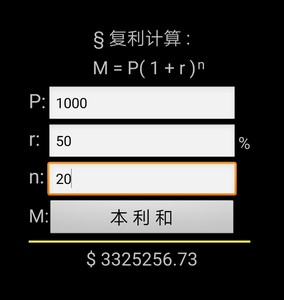
Everyone's money management is different, I decide according to my own situation. I open a 10% position, and the stop loss is 10% at a time. Every time I open a position, it is opened according to the equity of the account, and the stop loss is also calculated according to the equity. The maximum drawdown is controlled within 30%.
I am a big swing trader, and many intraday or high-frequency traders have much smaller positions and stop losses.
Copyright reserved to the author
Last updated: 07/31/2023 16:45
Add

I think the correct method of fund management should be to make big profits and small losses. This is common knowledge in the industry, but you must pay attention to managing funds according to your own system. As a result, self-defeating, according to your own system, the best method of fund management is to fully cooperate with your own system advantages, so that you can truly manage funds well. My own method is to lose no more than 2% of the total funds each time. Losing more than a hundred times, it is very difficult for ordinary people to lose so much money, and it is almost impossible to liquidate their positions. This is also one of my trump cards for not liquidating their positions for so many years.
Copyright reserved to the author
Last updated: 08/01/2023 00:21
Add

Thank you for the invitation. At the beginning, most of them are novices. They may be familiar with the market and indicators and adapt to their mentality and execution. During this process, it is recommended to only use the points that you can bear. As for whether it is 1 lot or 0.1 lot, it depends on your own price fluctuations. It is necessary to be able to feel the fluctuation of mentality and be within the tolerance range. For example, many people will not take it seriously when using 0.01. If they do not feel any fluctuations, they will not seriously analyze the market and watch the market, and find the position that they can bear.
When you have almost run in with technology, market conditions and mentality execution, you can try to trade with 1/3 of the full position you have invested in. If you feel that you can't bear it, you can reduce the position and find the one that suits you.
Of course, fund management may also be related to the setting of stop profit and stop loss. Take profit and stop loss are at least the same number of points. 50 points and a stop profit of 10 points is not an appropriate profit-loss ratio. Take profit is at least reaching the same point as the stop loss before you can leave the market, but it does not mean that you must take profit when you reach it. You can pay attention to the market. When the reversal K-line is reached, you can leave the market first.
Copyright reserved to the author
Last updated: 07/31/2023 16:12
Add

In the financial market, those who ultimately make profits do not rely on technical analysis, but those who ultimately make profits rely on fund management.
Fund management is a technology, a homework that every trader must learn, but in practice, many people ignore this part, so I think you have to pay attention to fund management first, even more than technology.
The second is to have a fixed investment risk ratio, which I believe many people have mentioned.
The third is to predict the trading results through asset curve trading. If the short-term moving average of the asset curve is above the long-term moving average, a position can be opened with a good chance of profit. If the short-term moving average is lower than the long-term one, then it is better to wait.
Copyright reserved to the author
Last updated: 08/01/2023 03:20
Add

1. Create an even-numbered order when opening a position. The reason: Assuming a profit of 200 points, a fixed stop profit is adopted, half of the position is reduced, and the remaining position continues to be held. For example: 2 hands, 4 hands, 6 hands, etc. to open a position.
2. You need to pay attention to risk control when opening a reverse position. After all, it is a counter-trend transaction, so the reverse opening position should be 0.5:1 or less of the remaining position in the previous period.
3. When the adjustment trend is over, the position should be increased according to the floating profit of the existing position, combined with the stop loss point of the increase, and the position should be increased by 1:1 or 0.5:1.
Copyright reserved to the author
Last updated: 07/31/2023 23:01
Add

My method is to put each loss around a fixed value, such as 1% or 2% of the capital, so that the risk is fixed, we only need to pay attention to the ratio of income higher than this, and the risk-reward ratio is no problem Yes, I also elaborated on the topic of risk control in my WeChat official account. You can search for Lao Xu’s transactions and read historical articles. This article has also been included in the magazine I am a trader. I believe it is still some reference
Copyright reserved to the author
Last updated: 08/02/2023 03:29
Add

Mine may not apply to you, just refer to it.
1. In the transaction, when making a profit, it is necessary to protect the profit earned. Because protecting profits is an important factor for long-term stability. When the transaction fails, you must divert your attention as soon as possible. No one can guarantee that every transaction is perfect, so when you lose money, you must divert your attention to the next transaction.
2. Keep the size of the transaction within your tolerance. Although many people know that it is a stupid thing to trade more than you can afford, many people still do it. The purpose of our investment is to improve the quality of life, so don't use the amount that you shouldn't use.
3. Set a feasible goal, don't mix money and emotion. Simply put, in every transaction, don't get emotionally involved because of losses, learn to accept losses, and trade in accordance with trading principles. Before placing an order, the most important thing is to stop the loss. Only by minimizing losses is the guarantee of long-term profits.
4. Don't overload your account. Because trading has the function of amplifying the amount of capital control, high returns also have high risks, so prudent investors usually control losses within 10%, so that profits are stable and long-term. The ratio of risk to profit is at least 1:1.5. When you want to place an order, you must think clearly about the possibility of loss and profit, because your purpose of placing an order is to make money, and if you make the profit less than the loss, then the order is meaningless.
Copyright reserved to the author
Last updated: 07/31/2023 21:43
Add

The trading market is like a mirror, which can magnify the weaknesses and strengths of human nature
Reduce profit expectations and reduce positions. If it is an intraday transaction, then change the frequent intraday transaction to once a week. If the order is profitable, it will increase the position in a pyramid style. For continuous retracement, just wait and see for a period of time, let the capital curve gradually flatten, or gradually stabilize the mentality, and then do swing trading with light positions. The market is never short of opportunities. Only by controlling the retracement can we maintain our strength and seize big opportunities!
Copyright reserved to the author
Last updated: 08/02/2023 09:51
Add

For example, a plate of 1 million usd, how to do fund management? Combined with the actual situation of the current domestic foreign exchange platform.
1. Put 700,000 in the bank card, deposit 300,000 to the foreign exchange account (you can choose 5-6 platforms), and each platform is 50,000-60,000 US dollars;
There are two advantages: save the exchange difference loss of deposit and withdrawal + the black swan will only lose the money in the foreign exchange account;
2. Each platform makes different varieties to diversify the risks of varieties, or to avoid the risks brought by black swans;
If a black swan occurs in a certain species, only one of the platform’s accounts will be liquidated, which is around 50,000-60,000 US dollars;
3. In terms of positions, use 300,000 funds to make a position of 1 million, and the high leverage of 200-400 times on the foreign exchange platform is enough;
However, if the loss of 300,000 is reduced to 200,000, then supplement funds from 700,000 to the foreign exchange account to maintain the trading capital at 300,000;
4. If the profit reaches 10%, the withdrawal will be lost, and the interest will be simple and not compounded;
Copyright reserved to the author
Last updated: 08/02/2023 14:27
Add

0
work
0
subscriber