


Stay in touch!
Subscribe to our newsletter to get the latest updates on live market analysis, trading strategies and more. You can unsubscribe anytime.
By subscribing, you agree to Trading.live Privacy Policy.


Thank you for your invitation. Analysts and traders are actually two completely different roles in the trading field. Although they all revolve around transactions, they have different functions, so the difference is still very big.
The good analyst mentioned by the subject, in fact, since I have been in business for so long, I have never come into contact with a good analyst, so that until now I don't know what the standard of a good analyst is.
First of all, the analysts we contact most often come from various social software, forums, and self-media. But these analysts basically talk by looking at pictures. What is picture talk? Just holding a trend chart, he can use a hundred ways to explain the rationality of this trend, no matter from the perspective of theory, shape, or basic information, there is absolutely no error, and it is 100% consistent with the trend. combine. This creates an illusion that he is God. He is invincible in the market, and you will never find a time when he makes a mistake. But this kind of flickering trading experience is actually not bad. Generally speaking, those who have been trading for a long time will gradually recognize this routine. So this type of analyst is definitely not a good standard.
What about the big names in the mainstream media? For example, a certain satellite TV financial consultant, or a well-known economic director, or a certain authoritative special analyst. Is this a good standard? I still find it hard to define. Because you can hear some things from their words, for example, a well-known celebrity said that "after analysis, the probability of gold will continue to rise in the future." or "The real estate industry may still be the main entrance of capital flow in the future" and so on. These words sound no problem at first, and roughly tell us that it is enough to be long on gold, and it is enough to hold real estate stocks. But what about when you think about it? These words contain some vague words such as "future", "high probability" and "possible". First of all, what time period is "future" after one month? one year later? Or ten years later, for example, gold is now 1800. According to him, as long as gold is higher than 1800 in the future, you can't say he is wrong, but what about the time? Ten years later, it will be higher than 1800. Wouldn't traders lose money in the tortuous market during this period? Then there are "big probability" and "possibility". He doesn't say dead. If gold falls in the future, he will at most say that the trend is not according to the analysis, but what can you do? People always say that this thing is not 100% , Therefore, these many ambiguous words are actually equivalent to saying nothing, and have no meaning for the judgment and reference of transactions. In fact, strictly speaking, they are meaningless in any aspect. So this type of analyst is not a good standard either. Then we have reason to doubt whether analysts have met this standard, or that this profession itself creates gimmicks and public opinion, and has no meaning in itself. Of course, this is just a personal opinion. Everyone has their own standards for what is good. Maybe I am a bit harsh.
Good traders, I have seen, at least by my standards, he is good, even very good. Let me share with you the appearance of this excellent trader I have seen. He is a futures commodity trader. I have seen his complete trading system, and then seen his complete six-year capital curve. In these six years He didn’t make money every year. He made a small loss in 2017 and kept his capital in 2018. The average annual profit in those four years was about 30%. This year, due to the trend of commodity futures, he has made a profit of 10% as of November. Sixty, the overall annualized rate for the past six years is 21%. This is the strongest trader I have ever seen in reality, and is currently a private equity fund manager.
When I mentioned this, many people were dissatisfied and made fun of me for being ignorant. I dare say that the profit rate is the strongest at this point. It is because I didn’t see my account, and it has increased five times a year, so you will be convinced. If you want to use this as a standard, I can only say that five times a year is too low. Not to mention, my colleague, with a transaction principal of 200,000 yuan, after one year, the account balance is more than 7 million yuan, which has increased by 30 Multiple times, this is 2015. But do you want to know the current situation of my colleague? I don’t know how much money he owes, but during the highest period of debt collection, there were more than ten calls a day, asking me where he was. These are the most real things that happened to me. matter.
So a good trader really has standards. First of all, the ability to control the risk of the account is by no means comparable to that of ordinary people, and the trader’s understanding of trading is also quite top-notch. It is written in the article that a trading system needs to have a positive expectation, and I am tired of talking about myself, but I still want to say it, because this is really the most basic threshold for a trader. An excellent trader told me a particularly vivid example. He said that a trading system is actually very basic for a trader. If trading is a war, then the trading system is the armor on the body and the weapon in the hand. A trader without a trading system is like a naked and unarmed person who is at the mercy of others. And even if you have a weapon, you can only say that you are a soldier. There is still a long way to go in terms of how to fight this war well, not to die in the war, to kill the enemy bravely, and to win the battle.
Finally, I would like to say one more thing. An analyst always claims to be the best analyst, but an excellent trader never easily says that he is a good trader. This may be the biggest difference.
Are you satisfied with this answer?
Copyright reserved to the author
Last updated: 08/23/2023 11:33
 Add
Add

A good trader is likely to be a good analyst, but a good analyst is not necessarily a good trader.
Analyst: Master one or several analysis methods proficiently after studying hard. Through careful analysis, the high probability trend of the market is obtained, so as to give investment advice, and then stop here.


Trader: After studying hard, master one or concentrated analysis method. Through careful analysis, the high probability trend of the market can be obtained, and positions can be opened, increased, closed and stopped according to their own trading system. Bear the result of this investment, or make money or lose money, adjust your mentality, and enter the next cycle.
So it seems that the essential difference is:
1. The responsibilities are different. The analyst's duty is to use what he has learned to give the best investment advice as much as possible. Traders not only have to analyze market conditions but also participate in the entire investment action.
2. There are different ways of making money. Analysts generally sign contracts with clients. The money earned from selling one's own investment knowledge, of course, if the accuracy rate is poor, some customers will generally turn to others. Income is relatively stable. It is different for traders, whose income level is directly linked to each transaction.
3. The mentality is different. Although the analyst's income is also linked to investment advice, he will pay more attention to market analysis. Since he does not have his own money to follow every point of the market, he becomes a bystander after investing. As the saying goes, the bystander is clear, and it is clear that he is a little farther away from the market. What needs to be done later may be to maintain the client after the investment advice fails. More attention will be put on the client. Good speech skills and strong interpersonal relationship handling ability can also lead a very chic life. However, traders cannot avoid being with the market all the time. The processing and digestion of a large amount of information generated by market conditions will consume more energy and patience of traders, and as the direct beneficiaries and losers, their emotions will fluctuate. This is why many experts advise novice traders to turn off the computer and stay away from the market after opening a position and setting a stop profit and stop loss. In this way, the psychological impact of the market on traders is reduced to a certain level, which may play a better role in trading.
It can be seen that traders need more energy and thought than analysts to spend on the market, mentality management, financial support, etc. because of their more sufficient participation in the market. There are many things to deal with after these things that will be far more difficult than just participating in the analysis of the market. So a good trader is probably a good analyst, but a good analyst is not necessarily a good trader.

Copyright reserved to the author
Last updated: 08/27/2023 17:23
Add


thank you
To distinguish between the two, there must be a definition first, because everyone has a different understanding of many things, so a consensus must be reached before we can continue to discuss.
Analyst: What is an Analyst? According to the meaning of the topic, it should only analyze the market and not participate in transactions. What about analysts who trade themselves? Naturally, it must be ruled out first.
Trader: It is easy to reach a consensus on this, that is, the people involved in the transaction. But everyone must analyze the market when doing transactions.
In this way, it is easy to see the difference. Analysts only analyze the market and do not trade, while traders analyze and trade.
What is the most essential difference between a good analyst and a good trader? It's one deal, one not deal.
Since he is a good analyst, it means that he has a certain ability to understand and analyze the market, and he can also formulate these into strategies.
And a good trader must have a certain ability to understand and analyze the market, and can also formulate these into strategies; then operate according to these strategies and strictly implement them.
And no matter what we do, we must first have a theory, then practice, and constantly summarize, adjust, and correct in practice in order to do things well.
Analyzing the market without making transactions is like "talking about war on paper". It is completely different when it is said, but it is completely different because of the lack of practice.
This is not to say that there is any prejudice against analysts, but an objective description. Of course, it's a different story for analysts who also trade themselves.
I don't have any prejudice against analysts, it's just a profession.
In fact, when we do transactions, it is an indisputable fact that psychological factors will affect transactions. Analysts do not do transactions themselves, but they will give more objective insights into market trends. We can treat analysts as indicators. After all Indicators are often not easy to use, but they are objective.
Copyright reserved to the author
Last updated: 08/26/2023 19:07
Add

There are essential differences between analysts and traders, but in fact they lead to the same goal by different routes.
We can compare analysts to "military advisers" and traders to "generals/soldiers". Obviously, military advisers never go to battle in person, but they are very good at analyzing the situation, arranging troops and planning strategies; and soldiers, who are used to fighting on the battlefield, basically disdain to talk about tactics and methods of fighting. Without the arrangement of the military division, the soldiers basically just adapt to the situation.
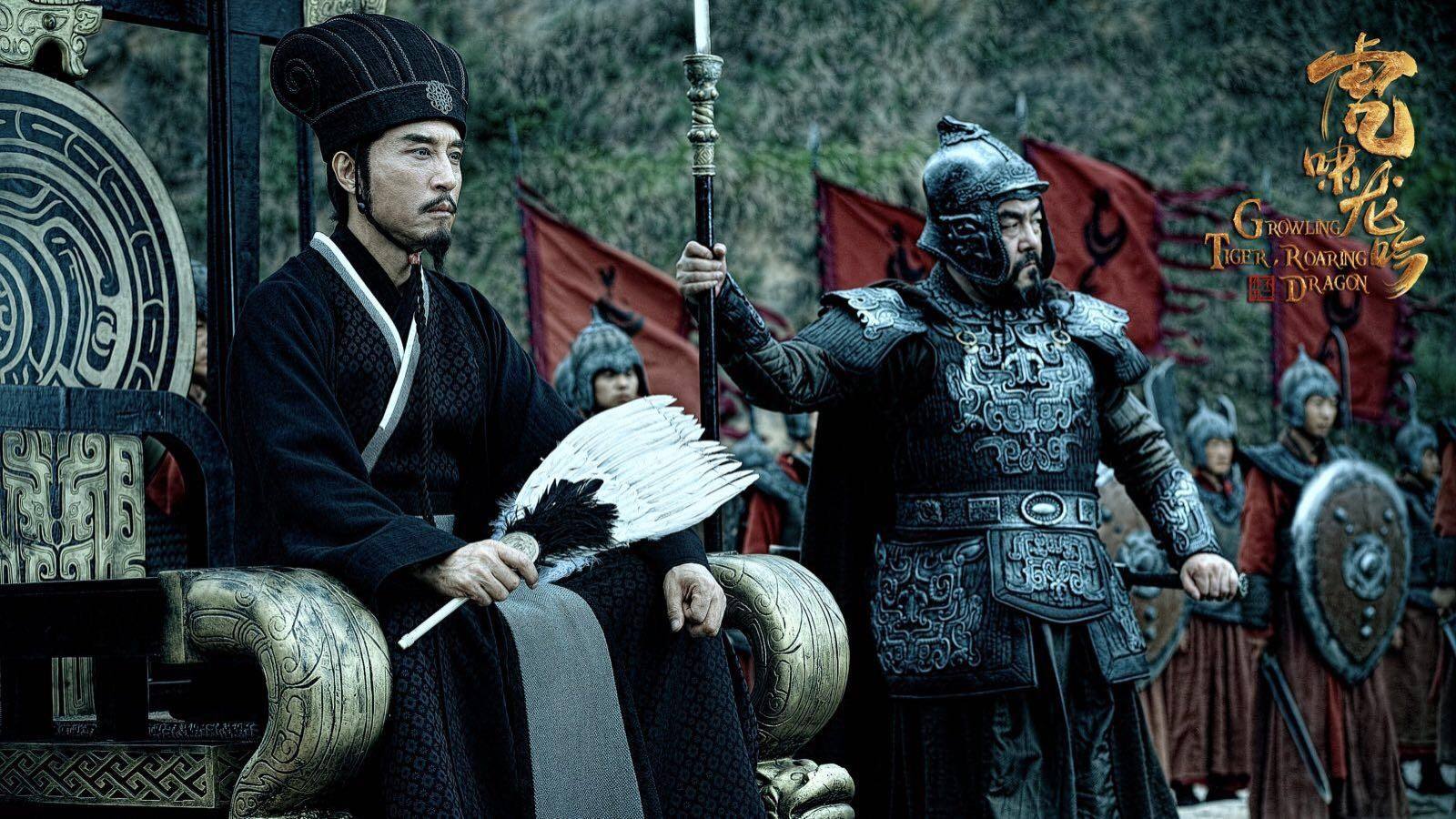
Although their respective roles are different, what they pursue in the end is nothing more than self-victory, so it is actually the same goal by different routes. What's more, the two are actually in the same battlefield.
Of course, in the world of trading, many people say that traders can actually analyze by themselves, but at the same time they can also trade by themselves, which is equivalent to being both a coach and a player, which is much better than ordinary analysts. I do not deny this, in fact, there is still a certain deviation in everyone's perception of analysts.
Good analysts are well versed in a series of complex basic theories such as economics and finance, statistics, and econometrics. At the same time, they are familiar with technical theories such as Dow theory, wave theory, and Gann. They can create models, Drawing diagrams and babbling about everything that was in his head. They create analysis reports, trading plans to those who need them, thus earning commissions for themselves.
And good traders don't even understand economics, and may only study a few indicators and systems, but relying on their understanding of the nature of the trading market and their strong control over their own human nature, they can advance and retreat freely in the market. Made a lot of money for himself. They don't talk about big theories to others, and they don't have any overall analysis or grasp of the economy. They focus on the market.
This is how good analysts and good traders actually have a clear way of making a living. And there is nothing to prove which of the two is higher, and it is unfair to compare the two.
But as the subject said, if some analysts become "mongers" with ulterior motives, it would be rather disgusting. This is not a good analyst, it can be said to be a dog-headed military division. However, due to the lack of clear supervision in the foreign exchange industry, the so-called "analysts" are not the professional analysts we discussed above, so the level is very limited.
In any case, analysts and traders are more based on their own personality. If you are good at expressing your thoughts and eloquence, then you can be a good analyst; if you have limited knowledge, are reserved, but study hard and have strong self-control, a trader is your best choice.
Copyright reserved to the author
Last updated: 08/28/2023 16:17
Add

I don't think the two are comparable. Because the nature of the work is completely different.
I also read some answers and feel that many people have a deep misunderstanding of analysts. Thinking that analysts just analyze a certain product or stock or fund is over. Of course, this is also considered an analyst, but it should be regarded as a relatively low-end analyst.
For a real analyst, the starting point should actually be a researcher in a domestic bank or securities firm. Well, the current recruitment for this position at least starts with a heavy capital, and the requirement for a master's degree is the norm. Well-known banks or brokerages even require 211, 985 graduates. Many finance masters from prestigious schools like to be researchers.
If the researcher is subdivided, it will be more complicated. Analysts in our impression can only be regarded as a branch of sell-side researchers at best. A real researcher, investment-oriented, focuses on revealing the economic, industry and company development status, as well as investment highlights, and has a wide range of research (especially macro and strategy research), which is equivalent to a behind-the-scenes military adviser.
Researchers are basically divided into two directions:
1. Aggregate research: including macro research, strategy research, bond research (fixed income research) and quantitative research.
2. Industry research: including but not limited to computer industry, electronics industry, media industry, banking industry, non-banking financial industry, real estate industry, chemical industry, environmental protection industry, agriculture, forestry, animal husbandry and fishery, food and beverage industry, pharmaceutical and biological industry, trade and retail business etc.
analyst? ? Don’t really think how high-ranking it is. If there is a chain of contempt, analysts are probably at the bottom.
I have seen many pretentious analysts believe that: the Fed's continued easing or quantification, or money printing, has led to a flood of dollars, and then concluded that the demand for dollars has decreased.
Exeuse me? ? ? Is that how you deduced it with your eyes closed? I really don't even have any financial knowledge. Compared with such an analyst, I really feel that the trader is invincible.
I have always believed that the real analyst is the researcher. And researchers and traders are engaged in two completely different things. If you have to compare, the upper limit is hard to say, after all, top traders are also very good. But in terms of the lower limit, traders are no match for researchers, because the threshold for researchers is higher than that of traders. Can't trade? ? After one or two years of learning, it is not too much, at least it can reach the level of the public. But if a trader studies by himself for a year or two, can he learn the professional skills of a researcher?
Analysts in the minds of most people in the market are actually just a variant of traders, who just move their mouths but not their hands. Such an analyst is completely useless. And real analysts are two different professions, and there is no need to compare them.
Copyright reserved to the author
Last updated: 08/25/2023 00:50
Add

A good analyst vs a good trader
To be an analyst is to predict the market, but as a trader, you cannot predict the market. You only rely on the rules and your own trading system to decide to place orders and close positions. Therefore, it is often said that these are two industries, but most of us are analysts. If you are a trader again, you cannot break through yourself. If you want to be a good analyst, you must get rid of the complex of being a trader.
the difference
1. Analysts pursue precise points
2. The range in which traders pursue profit
3. Analysts don’t admit they were wrong
4. Traders will stop losses
5. Analysts pay attention to how many points are earned
6. Traders pay attention to how much money they make
7. Analysts stop losses in points
8. The trader stops the loss with the amount
9. Analysts issue forecasts several times a day
10. The trader only operates once a few days
11. Analysts focus on when the market will end
12. Traders care about when the market starts
13. The avenues are connected, but the starting point is different, and the focus is different
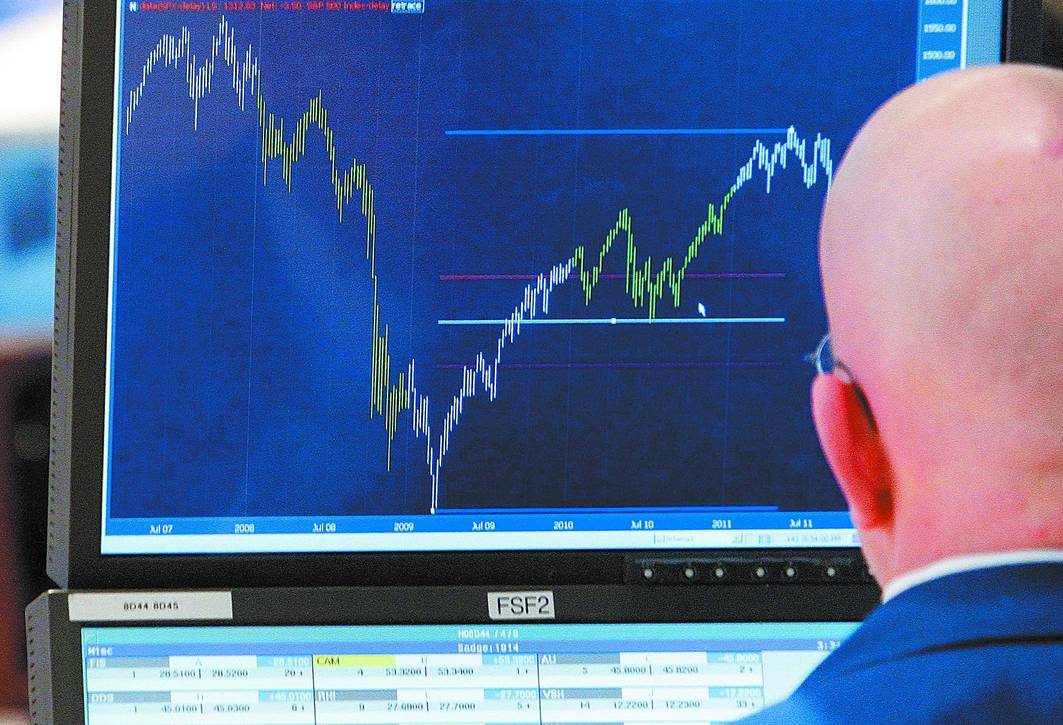
The definitions of analysts and traders mentioned here are not in terms of identity, but in terms of ideology. An investor, no matter what his status is, if he takes analysis as the core during the investment process and regards the accuracy of stock selection as the most important indicator for evaluating the success of the investment, he is an analyst. This kind of investor may be very hardworking and savvy, and some people were even brilliant at one time, but they still cannot escape the fate of failure in the end; The pros and cons of management (including risk control), as an important symbol of success, belong to the trader. This kind of investor belongs to the ivy in the market, the winner who laughs last. For investors who have reached this level, investing is no longer a stressful or thrilling gamble, but an indifferent attitude towards life. Although there are very few people who have reached this level, it is also in line with the reality that "successful people are always a minority". From another point of view, because they are a minority, many behaviors are not understood by others. This is probably what "Master of Lonely" means.
By the way, let me talk about my understanding of several influential books in the industry. "Principles of Professional Speculation" (author Victor Sporandi, a typical representative of traders) is the book that I think explains the most thoroughly about investment; and the book that misleads investors the most is "Memoirs of a Stock Operator" (Author Edwin Lefeffer), although known as a hand, is a typical representative of analysts, and finally ended in suicide.
Contrary to the market forecasts that analysts often make, good traders just follow the rules and never make any market forecasts. A good trader will not be a good analyst, and a good analyst will not be a good trader. Due to their different positions, the methods they use to deal with the market are also fundamentally different. , use analysis and use rules are strongly represented in these two types of people. The so-called "one who can talk can't do it, and one who can do it can't talk" is probably talking about this truth. When I was a newcomer, I noticed such a phenomenon: in the company, I talked about "main force" and "market". People who can publish "incisive analysis" usually operate very badly, but a customer who often makes profits in the company is always silent. When asked how he sees the market, he always answers: I don't know how it will go. When chatting with me, I always talk about some conceptual topics such as homeopathy, which is in stark contrast to other people's behavior. At that time, I thought he was unwilling to reveal his thoughts. Understand that he is not lying, he is telling the truth.
Most retail traders are between analysts and good traders. There are some rules in the operation, but at the same time, it is full of a lot of subjective analysis and "prediction" without correct logic at all. The conjecture of the trend of the "main force" and the "analysis" with extremely obvious subjective characteristics are the main root causes of contrarian operations, bad operations of bottom-hunting and top-hunting.
At present, most books on securities and futures investment methods are written by securities market analysts, and a few are written by investors or traders. The analysis methods or observation angles proposed by analysts often cannot reach the correct investment strategy.
There are three reasons:
1. Traders are under many times stronger psychological pressure than analysts.
2. The analysis method of traders tends to be more reactive, while the analysis method of analysts tends to be more predictive.
3. Traders base their decision-making on overall performance, while analysts focus more on individual performance.
At present, most investment books and periodicals focus on subjective text statements and even exaggerate the efficacy of the technical analysis techniques used. For investors or traders, it is more important to have a deep understanding of the defects and constraints of the techniques they use. It is possible to achieve correct investment decisions and correct risk control. The reason why we have satisfactory performance is not that our trading methods are higher than others, but that I can best understand where the defects of these methods are and can be effective. control it. , Without the practice of long-term investment operations, it is impossible to understand this. In the market, we tend to contact more analysts and fewer traders, especially traders with independent operating authority. In the eyes of public traders, there is no strict distinction between the two. They often think that the accuracy of analysis determines the success or failure of investment. In fact, for professional or semi-professional traders like us, market analysis only accounts for a part of it, and It is not the part with the largest proportion.
Analysts can be said to be the spokesmen of forecasters, who believe that future price movements can be predicted. Their focus is the relationship between past prices and future prices, and their goal is to predict future price trends or future price predictions. The philosophy pursued by analysts is to try to be as accurate as possible in every prediction, and they like to exaggerate their analytical skills. Those who belong to the theoretical school are often powerless when faced with the fact that the prediction does not match the reality. Analysts do not have a good psychological quality to withstand market pressure, and good analysts are often frightened by the fluctuations of the trend in actual operations. Moreover, analysts tend to selectively forget the parts that fail to predict, exaggerate the parts that happen to be accurate, and make the public feel like a god. Professional, incomprehensible terms to show their professionalism and mystery.
Traders are the spokespersons of the trading school. Traders never make predictions about future trends. The focus of traders is to study the distribution characteristics of prices and establish orderly trading rules from the disorderly market. The investment philosophy pursued by traders is: mistakes are inevitable, as long as risk prevention and capital control techniques are strengthened, trading mistakes can be reduced and mistakes can be controlled in a small range of losses. Traders seek to maximize profits while minimizing risk. Traders pay attention to analyzing technical defects and constraints, and can quickly implement favorable countermeasures according to price fluctuations in transactions. Traders have good psychological quality and are not surprised in the market. For a trader, he has his own analysis, and he also has his own coping strategies. What he will do if the market conforms to his own analysis, and what he will do if it does not meet his own analysis. They are in awe of the market, realize their own insignificance, and actively adjust their analysis and transactions to conform to the trend of the market as much as possible, rather than against the market.
Unfortunately, public traders would rather believe an analyst's analysis report than a trader's trading plan. They subjectively ignore the objective existence of market risks in their wish to make money, and they are like ostriches when they make mistakes. Burying their heads in the sand makes them miss valuable opportunities for error correction, and then sinks deeper and deeper in the mud, so there are only two endings for them, either to be our prey, or to withdraw from this market forever.
position
1. The difference between a trader and an analyst:
2. Not a position, but a position
3. These two are fundamentally different.
4. Traders start from the market. closer to the result
5. The analyst is correct from a subjective point of view
The analyst's point of view has continuity. Trader views have no continuity, respect the market. Because the analyst first needs to continue his point of view to convince others, this is only one aspect, and the analyst’s point of view is also continuous under the influence of psychology. For example, if a person is very bearish, it is very difficult to overcome his sudden strong bullishness the next day. And traders often need to slap themselves in the face.
A trader's only goal is to live and make money.
The goal of the analyst is to judge correctly
The trader is sure of nothing but account movements
In addition, as for the issue of the length of vision, different trading systems are different. Some trading systems do not need a macro long-term vision for their continuous success, while others do.
There are two positions in the financial world, analyst and trader, and their responsibilities are different. Analysts are responsible for analyzing the market and giving trading ranges and signals, but they will not participate in the trading process. The trader is responsible for accepting or rejecting the analyst's advice and entering the trade, what are they considering? It is the size of the position, risk control, planned exit and entry points, reasonable take-profit and stop-loss.
Individual investors act as both analysts and traders. In formal financial institutions, analysts and traders do support each other, but are independent of each other. It is easy to be an analyst, but it is difficult to be a trader. This can be seen from the income gap between analysts and traders.
It is easy to become an analyst with 90% accuracy in predicting the direction of the market, because bystanders can see clearly; but to become a real trader, it requires more different efforts, 99% of which is psychologically true self-cognition, self-adjustment, and self-realization affim. Contrary to popular opinion, analysts actually rely on IQ to make a living, while traders rely on EQ. Ordinary people have average IQ and logical analysis ability. As long as they conduct research over time, they will become an analyst with good analytical ability. But if you want to be a trader, even after long-term training, you have a high chance of becoming a bad trader without really understanding your own psychology. Why? Because once you enter the financial market, all your negative emotions will be magnified with your own expectations of the market and leverage. For example, you enter the financial market with the expectation of making a lot of money, but you find that you have a huge loss on your books, what should you do? Because expectations and results do not match, most people choose to hold on and hold on. This effect is magnified hundreds of times by leverage in the foreign exchange market, and eventually leads to liquidation. This is why so many people are still "caught" in the Chinese stock market even though the market has been defeated across the board from a technical analysis point of view.
How to be a successful trader? A thousand people have a thousand Hamlets. There is no fixed answer technically in trading and investment, and we are not qualified or necessary to laugh at others' seemingly dull trading systems. It sounds ugly, but I think it is difficult to train excellent traders in China's current environment. Under China's existing exam-oriented education system, 99% of people have become machines looking for "standard answers". It is inevitable to be too superstitious about a certain analysis master or a certain method, and eventually become a victim of the "standard answer". Chinese people like to fight among themselves and engage in internal divisions. To a large extent, it is because their brains are rigid. They only know how to look for "standard answers" and never accept diverse opinions. This is especially true when it comes to transactions. They always think that they are right. Even if you are not right, you still have to slap your face to pretend to be fat and feel that you are right. What kind of phenomenon does this lead to? What is reflected in the market is that you will not admit your mistakes. Even if the market is right, you will not stop losses and carry it to your death. The result can be imagined. Going back to the topic of how to become a successful trader, aside from technical diversity, trading and investment strategies are eternal, and there is only one answer: risk expectation, risk control, and psychological control.
Risk anticipation is to change your inertial thinking: before every time you enter the market, you think about how much you can earn, but now you change it to how much you can lose each time. How much you can lose each time is generally calculated through statistical calculations, but some people say, I don’t know how to do it, and I don’t want to spend effort. It’s easy to do, and the stop loss is fixed.
Risk control means light positions and stop losses. Why light storage? Because there is no need to reposition! ! ! If you have a capital of $10,000 and it grows by 10% every month, what will it be in 5 years? 3,044,816 US dollars (if you are interested, see for yourself 10,000 X (1+0.1)^5X12 ^ represents the power) I don’t want to talk about other things on this point. If you like to gamble, you should play how you want. The stop loss is mentioned in the risk expectation part. If you think about how much you can earn every time, the stop loss is just a display, and you will not execute it at all. Change your risk expectations, and stop loss becomes your life-saving tool.
Mind control: I have always believed that good traders are special products of special circumstances: single, family support, rich experience of failure in life. Why it is better to be single, this goes back to the issue of risk expectation. If you are single, you can arrange your time freely and control your income freely. Even if you trade badly, save money and eat something casually every day, no one cares about you. It’s different when you get married or have a girlfriend. You have financial goals and pressure, which will cause your risk expectations to change, and you will return to the mode of just making money. The results are evident. Ditto for family support, if your family doesn't support it, and you're in a rush to prove that you can make money through trading, you'll end up getting twice the result with half the effort. Rich life experience of failure, I personally think it is the most important one. Failure can make a person more tolerant, humble, and more able to persevere in the face of difficulties. Young people in China now have studied for more than 20 years and have no social experience at all, let alone failure. The ridiculous thing is that a trader is precisely a profession that faces failure every day, and it is a profession that needs to be persisted for many years. 80% of investors will disappear within 5 years, largely because they have lost confidence in the industry. Just imagine, if you face losses for 5 years in your life, but you don’t know how many years you will be able to make a stable profit, can you persevere? Therefore, the spirit of perseverance and the ability to constantly reflect on and summarize oneself are the most important.
An important difference between a trader and an analyst is the difference in their focus or analysis goals. Most analysts focus on the relationship between past prices and future prices, and their goal is to predict future price trends or future price forecasts. For traders, their focus is to study the distribution characteristics of prices, and their goal is to establish the statistical characteristics of the non-random part of price fluctuations. Since the intensity of randomness in price fluctuations is far greater than that of non-randomness, it makes the development of trading systems a very difficult task. At the same time, there is a considerable degree of instability in the statistical characteristics of the random or non-random parts of price fluctuations, making the maintenance of the trading system a very difficult task. Traders must constantly monitor the working status of the trading system used and modify the trading system used accordingly according to the fundamental changes in the statistical characteristics of the market data, and even research and develop new trading systems. Here is a huge psychological quality problem that any trader must face. On the one hand, a trader must have a strong psychological tolerance for partial or even continuous failures that occur according to the trading system; on the other hand, a trader must have the ability to modify the old trading system and even develop a new trading system. This is like the fact that military strategists are able to make necessary strategic shifts in the face of disadvantages while avoiding the mistakes of escapism in war.
Another requirement of a trading system or operating system for a trader is the ability to correctly handle the relationship between the part and the whole. This ability is necessary for a trader and not possessed by most analysts or commentators. For a trader, every failed (profitable) investment that conforms to his trading rules is right; every successful (profitable) investment that deviates from his trading rules is wrong. Due to the existence of random factors in price fluctuations, it is a random phenomenon for a trader to know how the result of each transaction he takes place according to the predetermined trading system. This is like an experiment in statistics: in the experiment of touching black and white balls, the possibility of touching a black or white ball is random each time, but the overall probability of touching a black or white ball is determined. Just like our national table tennis player, at the beginning, he won each ball at random (this is luck), but his ranking after playing for a year will never be random, but quite certain (this is luck). strength). If a trader cannot look at the success or failure of each transaction from this perspective of probability and statistics, he will not be successful at all. This is the quality that investment must possess. The ability to formulate and implement a trading system is the embodiment of an investor's strength. Here we have seen that the analysis concepts of traders and analysts are so completely different. For analysts, forecasting the future trend of the market is the focus and destination of their analysis; for traders, a comprehensive assessment of risk and return is the focus of their analysis.
In the eyes of traders, 1. It is impossible to avoid market risk at all. Risk-free investing is impossible. Therefore, profit is the reward for the risk taken. 2. Pursuing profit maximization under the premise of minimizing risk is the basic principle of investment. The essence of the trading system is not only the comprehensive evaluation system of risk and return mentioned here, but also the comprehensive execution system of risk and return.
For traders and analysts, the investment philosophies they pursue are also quite different. The philosophy pursued by analysts is to be "right" as much as possible, while the philosophy pursued by investors is to make "less mistakes" and "small mistakes" as much as possible. On the surface, the differences between the two may seem subtle, but the differences between the two are substantial in nature. If an investor cannot base his investment behavior on the investment philosophy of minimizing mistakes, it means that he has not yet grasped the true meaning of investment.
It is often heard that "the greater the risk, the greater the return, and the return is proportional to the risk". This is not quite right. There is both a positive correlation and a non-positive correlation between risk and return. This is because price fluctuations have a random component; there is also a non-random component.
Task
The task of the operator is to:
1. Determine your own investment objects based on the positive relationship between risk and return.
2. Find the non-correlated relationship between risk and return to determine your own investment operations. If there is no positive correlation between risk and return, investors will not have the motivation to take risks.
Similarly, if there is no non-positive correlation between risk and return, traders cannot use it to determine their own operating strategies.
Copyright reserved to the author
Last updated: 08/25/2023 09:48
Add

First of all, I think it is biased for you to kill all analysts with one stick, which means that you are disgusting yourself. Analysts or callers are nothing more than seeking survival, and their existence is needed by the market, which is reasonable.
Whether they do business or not is their own business, and it is not up to you to say whether others are disgusting or not. It is true that many analysts are not very good at trading by themselves, because everyone knows that trading requires strong self-control and psychology. If you are not strong enough in this area, is it wrong to stay away from trading decisively?
In addition, a good analyst must be very familiar with various theories of the market, and can achieve the purpose of "preaching and resolving doubts". And whether others follow, how to learn, and how well they learn are other people's business, and it is not up to the analyst to decide.
A trader may be able to achieve very good results by himself, but he may lack the knowledge system of a "teacher" or communication skills. Although the two can be combined into one, such talents are relatively rare. Therefore, analysts and traders have always been two different professions.
To talk about the essential difference between the two, it is natural that the state of real trading is very different. But this does not mean that one is better than the other, it is just a different way of survival.
Copyright reserved to the author
Last updated: 08/24/2023 11:40
Add

The essential difference between a good analyst and a good trader lies in the following three points
1. Good analysts will constantly emphasize light positions, while poor analysts will always emphasize heavy positions.
Some teachers don’t tell you to control your positions, but let you fight heavy positions. Here, I can tell you responsibly that you may earn more if you operate heavy positions correctly, but in the end it will definitely be a dead end.
Many people don't know what forced liquidation is even after liquidation, because their teachers won't tell you at all. According to industry information statistics, in terms of a certain success rate, there is not much difference in the handling fees created by heavy warehouse operations and light warehouse operations. In order to quickly obtain commission commissions, these analysts will continue to build positions and supervise the establishment of heavy warehouses.
But I have also seen many teachers who will constantly emphasize positions with investors and emphasize light storage operations. If you encounter such a teacher, you should cherish it.
2. Good analysts may have one strategy for one product a day, while poor analysts will trade frequently
As mentioned above, the analyst's commission also comes from the handling fee, so of course I hope that the more you operate, the better. So there will be some teachers who keep asking you to enter, leave, enter again, and leave again. lead to eventual losses. In fact, this is what many friends call "swiping orders".
A good teacher will tell you to "watch more and move less" when you are not sure about your own analysis, and will tell you to "operate carefully" before there is big data. Sometimes, sometimes even a day tells you to wait and see. In my opinion, this is a more responsible teacher.
3. Good analysts will prompt you to withdraw funds when you make money, while bad analysts will continue to urge you to increase funds
You may often see news about how long some investors lose hundreds of thousands or millions. Some teachers keep urging you to increase your funds after you have lost a lot of money, telling you to add another few hundred thousand, and another teacher will get back the money. Even when you say you have no money, they will encourage you to borrow. It is these scumbags in the industry that have caused so much negative news about spot investment.
A good analyst will tell you that the first-time investment funds should be controlled within the scope of one's ability as much as possible, and one cannot invest with one's own living expenses, let alone borrow money or use credit cards to invest. When you first enter the market, you will be given a lot of advice and learning materials, and even open classes to explain the operation methods and skills.
The above three points can fully show the excellence of an analyst.

Copyright reserved to the author
Last updated: 08/24/2023 19:14
Add

It is undeniable that there is a fundamental difference between analysts and traders.
An investor, no matter what his status is, if he takes analysis as the core during the investment process and regards the accuracy of judging the market as the most important indicator for evaluating the success of the investment, he is an analyst. An investor is a trader if he takes operation as the core during the investment process and regards the quality of fund management (including risk control) in the operation process as an important symbol of success.
Contrary to the market forecasts that analysts often make, good traders just follow the rules and never make any market forecasts. A good trader will not be a good analyst, and a good analyst will not be a good trader. Due to their different positions, the methods they use to deal with the market are also fundamentally different. , use analysis and use rules are strongly represented in these two types of people. The so-called "one who can talk will not do, and one who can do will not speak" is probably talking about this truth.
If you go into detail, it can be simply broken down into the following aspects:
1. Different positions
Analysts are the spokesmen of the forecasters, who believe that the future trend of stock prices can be predicted. Their focus is the relationship between past prices and future prices, and their goal is to predict future price trends or future price predictions. The trader is the spokesperson of the trading school. The trader never predicts the future trend of the stock price. The focus of the trader is to study the distribution characteristics of the price and establish orderly trading rules from the disorderly market.
2. Different investment philosophies
The philosophy pursued by analysts is to try to be as accurate as possible in every prediction, and they like to exaggerate their analytical skills. Those who belong to the theoretical school are often powerless when faced with the fact that the prediction does not match the reality.
The investment philosophy pursued by traders is: mistakes are inevitable, as long as risk prevention and capital control techniques are strengthened, trading mistakes can be reduced and mistakes can be controlled in a small range of losses. Traders are pursuing the maximization of profits on the premise of minimizing risks. Traders pay attention to analyzing technical defects and constraints, and can quickly implement countermeasures that are beneficial to transactions according to stock price fluctuations.
3. The content of work is different
Analyzing buying points has almost become the entire work of analysts, but this is only part of the work of traders. We often hear remarks like "Look, the XXXX stock I mentioned has risen, haha, I didn't buy it myself". This is the true portrayal of analysts. However, in order to conceal their lack of psychological quality, many analysts often show a "god" image in front of the public, often exaggerating the successful cases of prediction, and pursuing the failure of prediction cases. "Escapism" keeps silent, they need to maintain an "invincible" image in front of the public.
And traders dare to face mistakes and failures. In the eyes of traders: every transaction that conforms to the trading rules (even if you lose money) is correct, and every transaction that violates the trading rules (even if you make money) is wrong. Traders face the market with an objective attitude. Traders believe that market risks exist and are inevitable. Only by daring to face up to risks can they skillfully resolve risks and finally overcome risks. The experience of making money is not equal to the ability to make money. Similarly, having the experience of losing money does not necessarily mean that you have no ability to make money. Analysts often equate the experience of making money with the ability to make money, and analysts "can't leave their mouths" about the experience of making money to magnify their ability to make money.
Fourth, the risks taken are different
Analysts are only responsible for analyzing the market, the reasons for the rise and fall, and the possible path of the price in the future. As for whether investors will follow the advice and follow the operation, that is the investor's business. Even if the transaction produces a loss, it has nothing to do with the analyst, and they do not need to pay for their actions. This is why the words "operational recommendations are for reference only, not as a basis for trading" are added at the end of the analysis, in order to reduce risks. But traders are completely different, and need to be responsible for their own trading behavior. Whether it is a company or proprietary trading, the profit and loss directly affect their own income and trading curve.

5. Think differently
The main focus of analysts is forecasting. Analyzing historical market conditions and predicting future price trends based on historical market conditions are highly subjective. In the analyst's mind, no matter whether the price rises or falls, there are corresponding rhetoric. I really can't justify myself, I can only blame the probability.
Traders' thinking is more biased towards the present. What is the current position of the market, what to do if the price trend is within your trading expectations, and what to do if it is not, and so on.
Six, the steps are different
Before making a transaction, traders analyze and view data and reports for the next transaction; formulate a trading plan to clarify entry and exit rules; arrange and manage trading positions; how to operate after the transaction enters and exits; transaction summary; Improve the trading system and so on.
The analyst’s steps are nothing more than three aspects, one is to see if there are hot news and financial events that can attract investment, and comment on the data; the other is to predict the future trend; the third is to find today’s operating point and so on.
Seven, the mentality is different
In fact, in my opinion, the most essential difference between analysts and traders lies in the trading mentality. No one is perfect, especially when it comes to monetary interests, the difference in results is very obvious. Those who can analyze may not necessarily make good deals, but those who can do good deals can definitely do analysis. Although I also agree with the concept of no technology and no mentality. However, not everyone can withstand the drop in capital fluctuations, especially large funds. Here I sincerely admire those big manipulators who control tens of billions of funds, and they can truly achieve the collapse of Mount Tai without changing their faces.

The above is what I think the general difference between analysts and traders. After all, the process of trading is much more complicated than analysis.
What is achieved on paper is always shallow, and I know that this matter must be done. There is no distinction between high and low jobs as analysts and traders. Compared with analysts, traders focus more on how to use practical actions to achieve their trading expectations. Wealth is ultimately created by oneself.
Copyright reserved to the author
Last updated: 08/23/2023 19:07
Add

Although analysts and traders are both professions in the financial circle, they are completely different. Analysts are like military advisers who take care of the overall situation and do not participate in the battle, but traders have to experience the battle for themselves, so it is the difference between actual combat or not.
Good analysts are not the kind of people in the market who are fooling around and making people dizzy. Many Wall Street analysts are actually similar, but their methods are more sophisticated. In the movie The Big Short, it is said that the elites on Wall Street just speak words that you don’t understand, so that they appear to be more professional, so it is difficult to define a good analyst. Is it professional and solid or close to the market to guide investors? Aside from this question, a good analyst needs to have at least professional knowledge, not just to have insights on a certain sector or product, but to have a basic understanding of various types of asset relationships, influences, and fluctuations in the entire market. Policies and current events must be able to interpret and implement the impact on the market, instead of just talking about ambiguous words from the small circle that you know.
Good traders are easy to distinguish, and only those who can make money can be called good traders. This requires analysis and order placement. Of course, every link in this process, such as trend analysis, risk control, position management, and trader mentality, must be done well. These are all conditions related to whether the transaction can be done well, so good A good trader needs to be good at a lot of things. Trading actually requires accumulation of experience. The fluctuation of the market will be different, but the trend and method or the unique temperament of the variety can be summed up in long-term trading, but I don’t know much about it. How to express it.
Therefore, analysts are more academic research, but traders are required to be experienced in many battles. In my opinion, it is not easy for a good trader, because I still think it will be easier to learn knowledge and think logically.
Copyright reserved to the author
Last updated: 08/25/2023 13:04
Add

Analysts are still too generalized. Different industries and different platforms have different positions for analysts. And traders seem to be very simple, just buy and sell, and then see if they can make money.
So, there seems to be no need to compare the two, especially if analysts are not involved in the deal at all.
Of course, many trading brokers have created a lot of analysts in order to attract customers. Their direct purpose is not to make money, but to attract new customers or maintain customer relationships on a daily basis, so as to increase the activity of platform users and increase transaction volume. . In that case, there is no comparison between them, so it is superfluous to find out the so-called difference.
However, it is definitely important to talk about the unity of knowledge and action. Whether it is Buffett or Soros, these great gods are models of the unity of knowledge and action. However, they are masters after all. In reality, most traders do not have such great perseverance to do these things well. Even some well-known investors are not satisfactory, although they always call for the unity of knowledge and action.
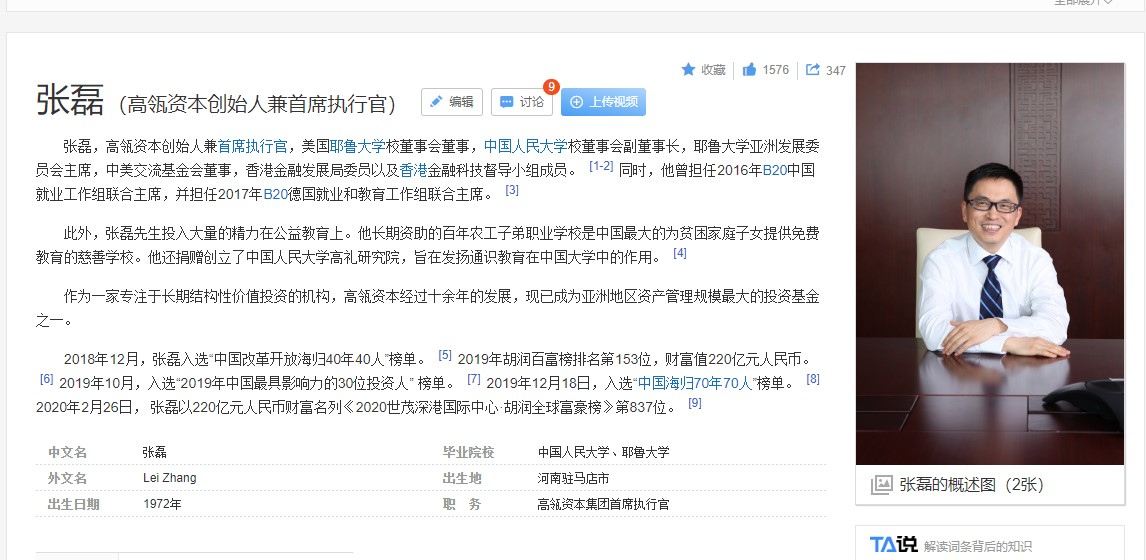
I remember that a few months ago, Zhang Lei from Hillhouse promoted his new book "Value", which caused quite a stir in the industry. Among them, the discussion on long-termism was used as an example. Zhang Lei said: "Long-termism is not only a methodology, but also a kind of value. There is no competition for the flow of water, but for the eloquence."
To be friends with time is the mantra of long-termists. But if you look at the past few years, Zhang Lei's actions in the secondary market will be confused about what long-termism is.
In 2010, Hillhouse invested nearly US$300 million in JD.com, which became the most important masterpiece in Zhang Lei's investment career. After JD.com went public in 2014, Hillhouse began to reduce its holdings rhythmically until the second quarter of 2018 when it reduced itself to retail investors;
At the same time, Hillhouse began to buy a large amount of Ali shares, but after a quarter, all positions were cleared, and then began to buy Pinduoduo. In the next year or two, Hillhouse successively bought JD.com and Ali at higher prices.
From 2014 to 2018, it was the ten-year period when Gao Ling insisted on JD stock the most, and the latter’s stock price has been hovering between 20 and 40 US dollars (most of Gao Ling’s reductions occurred below 30 US dollars). In the past year alone, JD.com’s stock price has more than tripled, and Hillhouse has made more than $5 billion less. This loss far exceeds the sum of the gains from changing hands with Ali and Pinduoduo.
Let’s talk about Weilai, which flew against the sky this year. When it went public in 2016, Gaoling Capital held 7.5% of the shares. In 2019, it further increased its holdings in the secondary market, with a maximum shareholding of 12%.
But at the end of 2019, when Weilai Automobile was at its lowest point, Hillhouse Capital liquidated all its shares. In the past six months, Weilai Automobile has risen more than 20 times.
There is also Apple. While reducing its holdings in JD.com in the second quarter of 2018, Hillhouse also bought Apple. Calculated according to the price after the stock split, Hillhouse’s buying price at that time was around US$40, and the selling price at the end of last year when it was liquidated was more than US$60. And now Apple's stock price has more than tripled. I earned 50% in more than a year, and I made 200% less in more than half a year.
But if Hillhouse keeps holding JD.com, what will happen?
At the time of JD.com’s IPO in 2014, Hillhouse owned 140 million shares. The issue price at that time was around US$20, and the book return was US$2.8 billion; if Hillhouse had never sold a stock in JD.com, the return would have reached US$11 billion today. .
After ten years of investing in JD.com, Hillhouse’s process of reducing its main shareholder status to retail investor status basically happened during the eight years when JD.com’s stock price was the most mediocre. In the end, it watched JD.com’s stock price completely counterattack in the remaining two years. I have to say this It's a huge regret.
In fact, regardless of the primary market or the secondary market, those who make a lot of money are the ones who persist until the end. Obviously, Zhang Lei can't help but do short-term while shouting about long-termism. This is really almost the same as the unity of knowledge and action.
This also shows that the unity of knowledge and action is not as simple as yelling. Whether it is an ordinary retail investor or an institutional boss, it is really not easy to fully achieve the unity of knowledge and action.
Copyright reserved to the author
Last updated: 08/30/2023 06:45
Add

Sex is similar, but habits are far away.
Analysts and traders are quite like two kinds of sports - bodybuilding and boxing. In the large scope of sports, they seem to be similar, but they are two fields with completely different systems.
Analysis is to show, and trading is to fight.
Bodybuilding needs to show the biggest muscles to others; while boxing has weight classes, the same strength needs to occupy the least muscles, and the boxer does not need the eyes of the audience to score, he needs to get more points, or knock down the opponent. If analysis is display, trading is fighting.
The most fundamental difference seems to be nonsense: "does not do the same thing at all". In fact, most people think they're about the same. However, the results quickly showed their difference.
In any case, most of the analysts continue to receive a salary; every time a trader trades, there must be a loser and a winner. Traders who fail in a row are quickly "eliminated" to death, and the winner faces the next life-and-death decision . As a result, one can imagine that those who passed half of the exams each time were eliminated. The elimination method determines the selection of people with different "genes", and also strengthens certain "gene" characteristics of people.
This fundamental difference leads to fundamental differences between the two in terms of composition, external environment, behavior patterns, and elimination selection methods. Let's look at some of the different "genes".
The four "genes" of the difference
1. Judging criteria. Traders are characterized as clear, direct, internal, and integrated; analysts are characterized as external, partial, and indeterminate.
Any trading action is nothing more than the result of buying and selling, and the result is profit and loss. Therefore, the evaluation criteria for each order is very clear, and the settlement sheet contains all the scores, including the entire internal system of the trader, which does not require evaluation by others; and the analysis results are based on the comments of others. There is a vague definition between the analysis conclusion and the result. Moreover, different readers may come to different conclusions in the same report, and the meaning of the report will include reader factors.
Second, the composition is divided into internalization and externalization. Every trader's trading system is his internal system. A trader's personality, emotions, and even morality are all part of his trading system. The boxer's body is the carrier of his response to hitting and being hit, and the two are one. For analysis, a certain standard needs to be installed to make it acceptable to outsiders.
Three, seek truth and find fault. Analysis is for others to see, so analysts need to find the correct data and methods to show others their "muscles". Traders are completely different. They must first find the trap, which is what they don't understand.
The overall result of the trading crowd is half wrong. It is also impossible for people to fully understand the objects of analysis. Analysts try to show they are right, and show they know where they don't. To operate in this way, they will inevitably fall into a black hole that they cannot know and cannot control. The role of a trader as an analyst may not be able to do it at all. A reader asks 10 questions, and he may say he doesn't know 9 of them, or even one of them. It is also true that his winning rate is much higher, because he excludes the parts he does not know.
Fourth, the composition of the operation is also different. Analysts need to find a large amount of data and analysis methods to prove a certain conclusion. To control the "risk-benefit ratio", traders need to configure capital ratios, stop losses, etc. in addition to judging "objective" changes. For the unknowable future, how much risk can be allocated to get benefits does not just depend on whether the future price trend is correct or not.
Of course, analysts and traders still overlap in many aspects. To be a good analyst also requires a lot of professional skills, such as data analysis skills. In this regard, highly educated talents of securities companies and futures company analysts have strong professional skills. Most traders still need to care about the background of fundamentals, and this is where traders need to learn from analysts. It's just that the result of investment is profit and loss. Therefore, the final result must be based on the trader's standard. In this regard, the trader has an advantage in the debate.
Copyright reserved to the author
Last updated: 08/25/2023 20:29
Add

The difference is huge!
Analysts are like talking on paper, pointing out the country with their mouths,
Blame Fang Qiu for being "irresponsible"
Often the market is like a vegetable seller in the rivers and lakes
After the game, after the game, the cannon
As far as the transaction itself is concerned, it is almost meaningless
What is a trader? It is a general who leads soldiers of different ranks. He arranges troops on the battlefield and will fight himself when necessary.
Advance when you should advance, retreat when you should retreat,
Rewards and punishments are clear, dare a strong man cut off his wrist
never sloppy
After all, there is a chance to become a small prince and have a little fiefdom of his own
While chatting and laughing, I watched the talkative "military division" bragging with the "leeks", talking about a past that did not belong to me
Copyright reserved to the author
Last updated: 08/23/2023 03:29
Add

There are two kinds of people in the financial industry: analysts and traders. So which of these two types of people are ordinary investors? What is the difference between the two?

The difference between an analyst and a trader
Analysts are the spokesmen of the forecasters, who believe that the future trend of stock prices can be predicted . Their focus is the relationship between past prices and future prices, and their goal is to predict future price trends or future price predictions. The philosophy pursued by analysts is to try to be as accurate as possible in every prediction, and they like to exaggerate their analytical skills. Those who belong to the theoretical school are often powerless when faced with the fact that the prediction does not match the reality. Analysts do not have a good psychological quality to withstand market pressure , and good analysts are often frightened by the fluctuations of the trend in actual operations.
The trader is the spokesperson of the trading school. The trader never predicts the future trend of the stock price. The focus of the trader is to study the distribution characteristics of the price and establish orderly trading rules from the disorderly market . The investment philosophy pursued by traders is: mistakes are inevitable, as long as risk prevention and capital control techniques are strengthened, trading mistakes can be reduced and mistakes can be controlled in a small range of losses. Traders are pursuing the maximization of profits on the premise of minimizing risks. Traders pay attention to analyzing technical defects and constraints, and can quickly implement countermeasures that are beneficial to transactions according to stock price fluctuations. Traders have a good psychological quality , and they will not be surprised in the transaction. Analyzing buying points has almost become the entire work of analysts, but this is only part of the work of traders .
We often hear remarks like "Look, the XXXX I said has risen, haha, I didn't buy it myself". This is the true portrayal of analysts. However, in order to conceal their lack of psychological quality, many analysts often show a "god" image in front of the public, often exaggerating the successful cases of prediction, and pursuing the failure of prediction cases. "Escapism" keeps silent, they need to maintain an "invincible" image in front of the public.
In the eyes of "God", there is no concept of losing money and no concept of risk. Now that you have reached the state of "invincible", of course you will not lose money. Just imagine, is this possible? In fact, anyone who has done transactions knows: Everyone All have the experience of making money, but also have the experience of losing money. "Invincibility" is simply not possible in financial markets. Having the experience of making money does not mean having the ability to make money, and having the experience of losing money does not necessarily mean that you have no ability to make money.
Analysts often equate the experience of making money with the ability to make money, and analysts "can't leave their mouths" about the experience of making money to magnify their ability to make money. And traders dare to face mistakes and failures. In the eyes of traders: every transaction that conforms to the trading rules (losing money) is correct, and every transaction that violates the trading rules (making money) is wrong. Traders face the market with an objective attitude. Traders believe that market risks exist and are inevitable. Only by daring to face up to risks can they skillfully resolve risks and finally overcome risks.
I often see such people around me. When there is a problem at work, the first thing to say is "I didn't do it!" The purpose is to shirk responsibility. But there are also such people around me. When there is a problem at work, they don't say anything, but immediately start to analyze the cause of the problem and find remedial measures. The two different attitudes correspond to the life philosophies of analysts and traders.
After understanding the difference between an analyst and a trader, shouldn’t you reflect on it? Are you an analyst now? The last signal sent by the market is what you must follow, not what you expect, and it will work s things.
Expectations don't work in this business, it's reality to follow the market action and react at any time. Once you learn to trade with reality instead of hope, you will break through the boundaries and become a successful trader. Come on, analysts! Being a trader is the only way for you!

Analysts and Traders
The capital market is full of charm, and there are so many words to describe the attractiveness: wealth, fanaticism, humanity and huge profits. And in the capital world, there are two roles that often fascinate "all beings": analysts and traders. There are also several words to describe them: mysterious, calm, intelligent and big money.
The Chinese capital market often imagines "analysts" as an important role that can lead investors to make a fortune, and is often "mythical". Should it be so? The answer I give is no.
So what exactly is the role of the analyst?
First of all, the role of analysts is definitely very important. Some people say that analysts are like the lubricant of the capital market, keeping it running at a high speed. The author thinks it is very appropriate. In addition, analysts also provide investors with investment information, thinking methods, and analysis methods, and play the role of educators and guides. Still, investors should not go to the other extreme. Using analysts as investment nanny, you cannot "invest on your own" without analysts. There are many investors who can't live without "calling orders" and don't know "what to do". This should not be the case. From analysts' articles and explanations, investors can understand the capital market, learn analytical ideas, interpret economic phenomena, master capital management, and control investment mentality. This is the value of analysts.
Let's talk about calling orders. After calling out an order, it may be very reasonable if it is based on the analyst's own operating cycle. For example: an analyst who pursues the medium-term trend may make a profit after 2 weeks for the order he calls. But in the middle, this order may be baptized by various market conditions. For example, it may lose 20%. But analysts themselves make money. Another example: an analyst is good at ultra-short-term, and after opening a position, he will close the position within 20 minutes. At this time, he has no time to tell you, or because you just went out to drink a cup of tea, and when you come back, you will be notified 5 minutes ago that you should close the position. Now The situation has already reversed to a disadvantaged loss.
All of the above situations are lessons like blood, sprinkled in every corner of the capital market. What's more, many analysts themselves are not profitable, and it is already very powerful to achieve 7 wins in 10 games. Even some profit systems may have to endure 7 losses and 3 wins in order to achieve overall profitability. It just so happens that you missed the 3 times you were supposed to win, and did not follow up.
In addition to analysts, traders are even more mysterious roles. A trader who uses large funds to do various lines is a legendary figure.
In fact, these are two different concepts. Some traders can be analysts, and some analysts can also be traders. However, traders may not understand macroeconomics or technical analysis, but they may make money; analysts may analyze everything with reason and evidence, but they are always talking about it on paper. Traders will not take on the role of educating investors, and may strangle ordinary retail investors in the capital market. Although analysts have an educational role, if you follow him to make orders, he does not care about the risks, so "traders" will not do it Too much introduction.

The main purpose of this short article is to help investors understand the roles of analysts and traders, and correctly position these two roles. Avoid blind investment and fuzzy financial management.
Copyright reserved to the author
Last updated: 08/30/2023 16:35
Add

There is no need to deliberately emphasize the difference between analysts and traders. There are specializations in the technology industry, and different roles do different things. Why do analysts have to do a good job in trading? Besides, the analysis of a master trader is not the same as that of an analyst. There is no need to deliberately emphasize who is more powerful.
As for the callers you mentioned, they are not in compliance with the regulations. They are generally hidden in gray areas such as spot goods and precious metals. Their analysts are also self-proclaimed, so don't take it seriously.
Of course, the unity of knowledge and action is still very learned. How to do it well is probably something that every trader should care about.
The relationship between knowledge and action is methodology, "knowledge" is a theoretical system, and "action" is a systematic practice. "Knowledge" comes from "action" and serves "action"; "action" is the purpose of "knowledge" and tests "knowledge".
Livermore said that if a person never let go of every day's trading, from the main trend, the secondary trend, to the daily trend, will he make a lot of money, or he will lose everything. The greatest pain in life is not getting it, and what is even more painful is getting it and losing it.
Every transaction you make reflects your thoughts. Thought is the soul, and trading is physical operation. When your thinking can completely control your physical body, that is, when your thinking (knowledge) and trading (action) can achieve perfect harmony and unity, thinking reflects knowledge, and operation reflects The most important thing is action, and the unity of knowledge and action, so that your transaction will definitely be successful. On the contrary, if your thinking and operation are not in harmony and out of touch, it will inevitably lead to the failure of the transaction.
Ideas are subjective, transactions correspond to the market, and the market is objective. When my subjective operating thinking caters to the objective market, profits will naturally occur. On the contrary, when my subjective operating thinking violates the objective market, losses will naturally occur. In order to make a profit, your subjectivity must conform to the objectiveness of the market unconditionally. This is the central idea of following the trend. Since the subjectivity unconditionally obeys the objective, prediction is superfluous.
Thought reflects an operating system, and the operating system and thought become an objective practice, that is, when operating transactions, there must be a specific method and method. This method is called trading rules. No one can change the trading principle, which is a specific method of operation.
The current trading principles are forged by the lives and blood, tears and sweat of the ancestors, with their love and affection throughout their lives. Trading criteria specifically refer to what we call "technicals" (trends, positions, patterns). Trendlines solve the problem of selling, patterns solve the problem of buying.

A famous quote from Livermore is still handed down to this day: "There is nothing new on Wall Street. Because speculation is as old as the mountains." He proved with his own experience that no one person can catch all the ups and downs, and only big fluctuations can make you big money . If the market moves sideways, it is meaningless to predict whether the next fluctuation will be up or down. What should be done is to observe the market, interpret the broader market, determine the upper and lower limits of the narrow oscillation price, and decide not to take any action until the price breaks through the limit in any direction. "Whenever I lose patience, instead of waiting for the key point to come, I always lose money when I trade randomly in an attempt to make a quick profit."
An operator is an operator, and he dares to face the bleak trading life.
So, knowing is easy or doing is easy, knowing is difficult or doing is difficult? It is difficult to really understand the law of market price changes! It is difficult to truly understand one's own thinking, emotions, and control of impulsive behaviors! It is difficult to really find a profitable investment system that suits your personality! With an investment system, it is really difficult to implement it in a long-term, firm and complete manner!
Because of this, most people in this market have not yet entered the stage of stable profitability. It is also because of this that as long as you and I can truly achieve the unity of knowledge and action, we will have core competitiveness in trading in this market.
Copyright reserved to the author
Last updated: 08/28/2023 23:48
Add

Thank you, a good trader is 100% a good analyst, and a so-called absolutely good analyst is not necessarily a good trader! Analysis and trading are two different things! A successful operator is the best analyst, and a successful operator will never do that kind of hard work! The rest is just to reason objectively, the so-called master of analysis is not a great figure! It's just the loser among the losers!
Copyright reserved to the author
Last updated: 08/25/2023 07:31
Add

There is a huge difference between a good analyst and a good trader. Many analysts analyze the market and talk about theories in a clear and logical way, and the accuracy rate is quite high.
But once on the battlefield, the real gold and silver were slaughtered in the market, and most of them returned in defeat. The truly powerful masters are consistent in analysis and transaction execution, which is what we often say is the unity of knowledge and action.
To become an excellent trader who combines analysis and actual combat, obviously, this goal is not easy. This also confirms the reason why there are so many callers who are quite accurate when you look at them, but you will lose money if you follow them.
Most theorists end up being a one-man, the kind who don't do it themselves.
This kind of person is also the most disgusting! Although the words are ugly, they are so!

For learning, especially for continuous learning, the higher the informatization, the more fragmented people's learning will be. This critical mode often makes it easy for people to fall into the trap of low diligence. (That is, I feel that I am very diligent, have read a lot of books, and learned a lot of techniques and indicators.)
Learning, for most people, is painful and intermittent. A small number of people will continue to upgrade their cognition and continuously input and output their self-worth. Of course, the most important thing is to practice, to trade That's it.
Anyone who understands this truth understands it! Those who don't understand will never understand......
The financial market is even more incisively and vividly demonstrated this!
Copyright reserved to the author
Last updated: 08/09/2023 15:51
Add

Analysts and traders, one is a talker and the other is a doer. Although they are both in the trading field, they represent different divisions of labor. This is the biggest difference between them. What is there to talk about?
To use an analogy, analysts are like strategists in ancient times, and traders are just generals.
If you insist on letting an analyst who is an empty talker go to the trading field to touch real guys, it is like asking Kong Ming to go into battle in person, let alone fighting with strongmen such as Guan and Zhang, even if you are fighting with second-rate generals such as Xu Huang One hit and one loser!
Although they are also facing the battlefield, the advantage of a military division lies in their strategic planning and decisive victory thousands of miles away. In the same way, although they are also facing the trading market, the strength of analysts is to analyze the market context in every way, so that everyone can know why it is rising and why it is falling; and the duty of traders is to be responsible for the appreciation of account assets. Buy and sell transactions under the suggested premise. Therefore, the two not only perform their own duties, but also cooperate with each other, so why bother to compete?

Have you ever seen the analyst rankings and fund manager rankings every year? How can analysts and fund managers be ranked together?
Of course, if you insist that every analyst is an excellent trader at the same time, it is like asking every famous general to be able to march and fight, but also to be able to strategize like Xu Da. A man of integrity.
Copyright reserved to the author
Last updated: 09/01/2023 14:35
Add

There are many types of analysts.
The first category is the researcher/analyst of the securities, fund or futures company who researches the market as the result. As we all know, the securities and futures industry has existed for decades and is the main means of investment for ordinary people in our country. Practitioners must pass the fund/securities/futures qualification examination launched by the state. Analysts in this category have a high level of professionalism and a relatively high threshold, and generally have a master's degree or above. These practitioners are often not allowed to open accounts for transactions by themselves, so it fundamentally eliminates the possibility of drawing research results with personal tendencies due to their own transactions.
The second category is what we often call analysts who are result-oriented in terms of marketing, deposits, and orders. Many analysts in this category are from sales background or have been trading for many years and have not been able to make stable profits. There are even many who read a book or two, and the level of half a bucket of water comes out to fool people. The main purpose of this type of analyst is to call orders for customers and generate income. The quality is often uneven, and professionalism also needs to be considered.
There are two kinds of analysts mentioned above, let's talk about traders. Traders are all transaction-oriented, and their salaries and commissions all come from their trading accounts. All their professional abilities serve only one thing, and that is trading. Therefore, this type of people has rich practical experience, and everyone has their own trading system. Those who can survive in this cruel market and make a living by trading are often one-in-a-million talents, and this type of people generally look down on analysts in the market.
Analysts generally talk about the market and are good at analysis, and their words are often tight and tight. Traders, on the other hand, have a lot of "reality". If you can do it, you can do it, and if you don't do it, you can't do it. They don't know as many trading concepts and systems as analysts do. What they uphold is the idea that if you can make money, it's good if you can make money.
Going back to the original question of the subject, the essential difference between analysts and traders lies in the core result orientation. Analysts focus on research results, market analysis and company business, while traders focus only on account results.
Copyright reserved to the author
Last updated: 09/02/2023 20:39
Add

I think the essential difference between the two lies in execution.
In the eyes of most people, the analysts everyone sees are eloquent, or writing long speeches; or the analysis charts are beautiful, but the trading accounts are unsightly.
Traders, on the other hand, are taciturn, withdrawn and even withdrawn. They have a strategy in their hearts and take the lead in the trading market. Never brag to the outside world about the accuracy of analyzing the market, and the account is often growing steadily.
The reason for this difference lies in execution. Are you saying that analysts don't know how to trade? That's impossible. Analysts are pretty much right when they teach trading. They even have a higher winning rate and more accurate points than traders. However, due to their lack of systematic training in trading, or too little trading and not fully awakened, they lack execution ability.
Most analysts are also doing transactions themselves. They may have good entry points, but they will not consider stop loss. Because winning percentage is so important to an analyst, he was already a trader when he made a deal, but he has not yet been able to change his role. Therefore, when most analysts trade, you will see that the winning rate may be as high as 70%, but they all make small profits and big losses.
Traders are different. They have been baptized in too many markets and are well aware of the risks in the market. Therefore, every transaction will have a complete risk control strategy, and there will be no hesitation when it is time to stop losses. At the same time, they formulate a reasonable profit-loss ratio and implement it resolutely. The winning rate is often not the primary factor they consider.
Therefore, many analysts seem to be accurate in calling orders and analyzing, but they are completely different when they do it. Because they lack the link of execution, this includes the most important factors in transactions such as position management, profit-loss ratio, and risk control.
Copyright reserved to the author
Last updated: 08/31/2023 06:41
Add

0
work
0
subscriber