


Stay in touch!
Subscribe to our newsletter to get the latest updates on live market analysis, trading strategies and more. You can unsubscribe anytime.
By subscribing, you agree to Trading.live Privacy Policy.


Thank you.
What I am using now is a set of momentum-moving average system indicators . Momentum refers to the driving energy generated by the kinetic energy at the initial stage of the big market launch. It is represented by the bar of the MACD indicator, that is, the difference between the long-term average and the short-term average, which represents the development situation of the short-term market deviating from the long-term market. The greater the deviation, it means The more intense the market changes, the more likely it is to start a new trend; the moving average system is used to judge the direction of market development. In fact, both of them belong to trend indicators, and MACD indicator can be regarded as a comparison indicator of long and short moving averages.
1. Preparation stage. A trending market is definitely not started from the turning point. When the previous market starts to fail, a new trend has already been born, which is the so-called "yin and yang". If you combine MACD and price patterns, you can use the so-called " divergence pattern " to judge whether a market has reached the end of its development. Taking the bulls as an example, when the bulls develop to a certain height, the shorts will inevitably enter the market, resulting in a decline in the speed of the bulls’ attack. Although the price can reach a new high, the bulls’ market develops more slowly. Although the MACD column can also produce a peak , but it must be much smaller than the peak in the previous period. At this time, it is time to start preparing for short orders.
2. Momentum breakthrough. In hindsight, every trending market starts from a specific turning point, and the market will not cross the turning point in reverse before the trend is broken. But in actual operation, you can't judge whether the current turning point is the starting point of another trend. You can only rely on other means to determine whether the trend has begun to reverse or continue, which requires the use of momentum breakthrough indicators . In a bull market, the moving average acts as a support line, and when the bear market begins, every moving average in the early stage will become the resistance of the short market. The force that initiates the short market must be strong enough to break through these resistances before a new trend can be formed. . So we have to wait until the reverse market breaks through a certain moving average before entering the market. In order to prevent short-term false breakthroughs, we must use the momentum breakthrough method to judge whether it is a real breakthrough, that is, when the price breaks through the moving average, the MACD line also turns from positive to negative. In this case, the possibility of a real breakthrough is very high up. When we follow the market trend, the momentum breakthrough method also works. The price breaks through the previous high point, and the height of the MACD column line also breaks through the previous high point. This kind of breakthrough is also likely to be an effective breakthrough. If the MACD column line does not rise On the contrary, it is lower, which is the "deviation from the form" mentioned above.
3. Breakthrough confirmation. When we use the "momentum breakthrough method" to open a position and enter the market, we must consider whether to increase the position, whether we can continue to hold it, when to take a profit, when to accept the loss and stop the loss, etc., which requires the ability to confirm the breakthrough Methods. Still take short selling as an example. When the MACD column line turns negative and continues to expand, it means that the short market continues to develop and you must continue to hold orders. If there is a negative valley that is larger than the previous positive peak, we can basically be sure that the market has indeed reversed, and we should strengthen our confidence in holding orders. If the short market rebounds, at a certain point the negative number of the MACD bar line shrinks to the shortest and then the side lengthens, or after it becomes positive but the value is very small and then turns negative again, it can be judged that the short market has been confirmed. At this time, it can be considered Increase position. When the short market continues to develop and breaks through the low point at the beginning of the previous rebound, and the length of the MACD bar line exceeds the valley value, a second increase in position can be considered. Conversely, if after you enter the market, the MACD histogram does not continue to grow, or even turns back to the straight line, or the price breaks through the moving average and then quickly returns to the moving average, this situation is the confirmation of the original bullish market. You must stop loss and leave the market.
Fourth, take profit and leave the market. You can use the "divergence pattern" of the MACD column in the reverse direction to take profit and leave the market. If you are short, when the short market appears "deviation pattern", you have to consider understanding the order to leave the market, or look at the MACD column of the freshman level market When the line starts to get shorter, you should also consider leaving the market. This is a very simple indicator.
Copyright reserved to the author
Last updated: 08/16/2023 19:24
 Add
Add

At the beginning of the article: The central point of the whole article is that when choosing an indicator, you must choose the one that suits you, and at the same time, you must know why you choose this indicator. Knowing this is far better than you playing an indicator!
Indicators are derivatives of price, they are just telling you what happened, not what happened! Therefore, no matter how many different combinations of indicators you try, you will never be profitable if you only rely on trading indicators to make decisions.
As shown below:
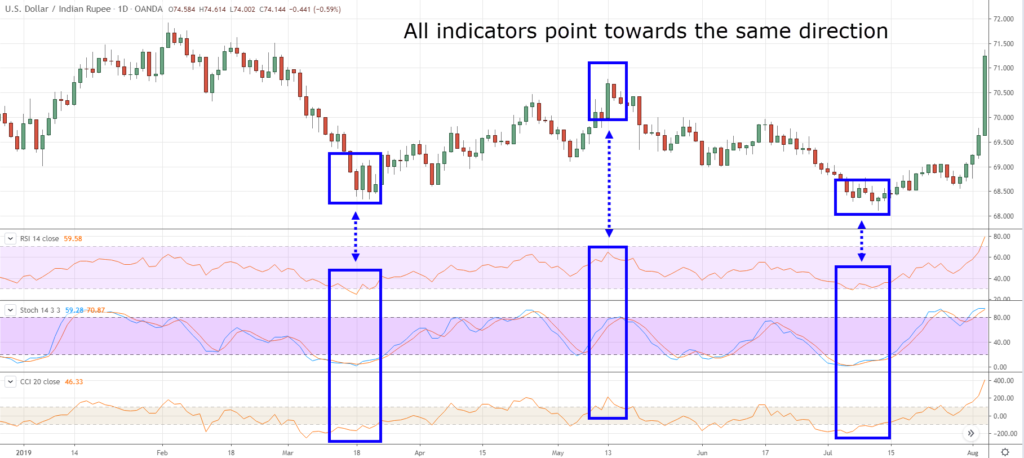
It can be seen that all three indicators are pointing in the same direction. Does this mean that the market is about to rise? The fact is not, because RSI/CCI/stochastic indicators are all oscillating indicators, they are the same type of indicators, so they all point to the same. So how to use indicators reasonably?
1. Use trading indicators and filter market conditions
Typical representative - moving average
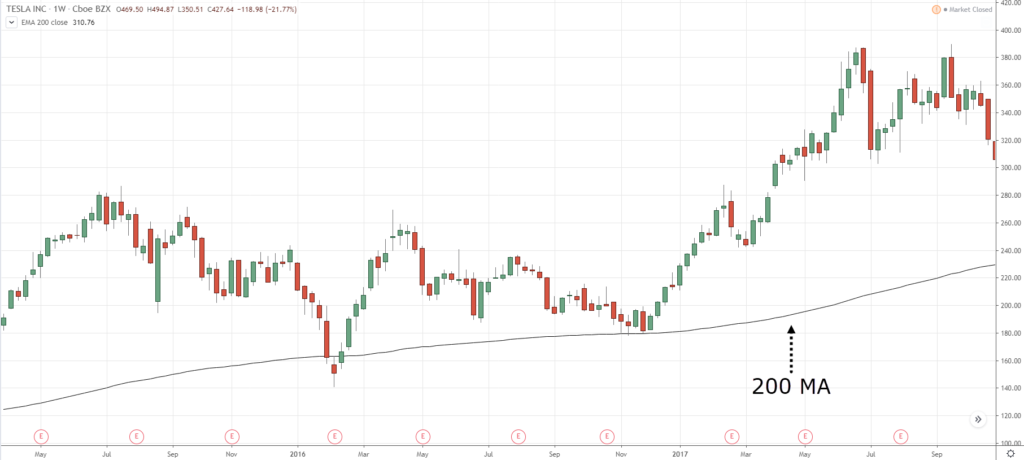
The moving average is a trend-following indicator that can be used to filter market trends, for example, if the price is above the 200MA, the market is in a long-term upward trend (as shown below)
Representative indicator - ATR
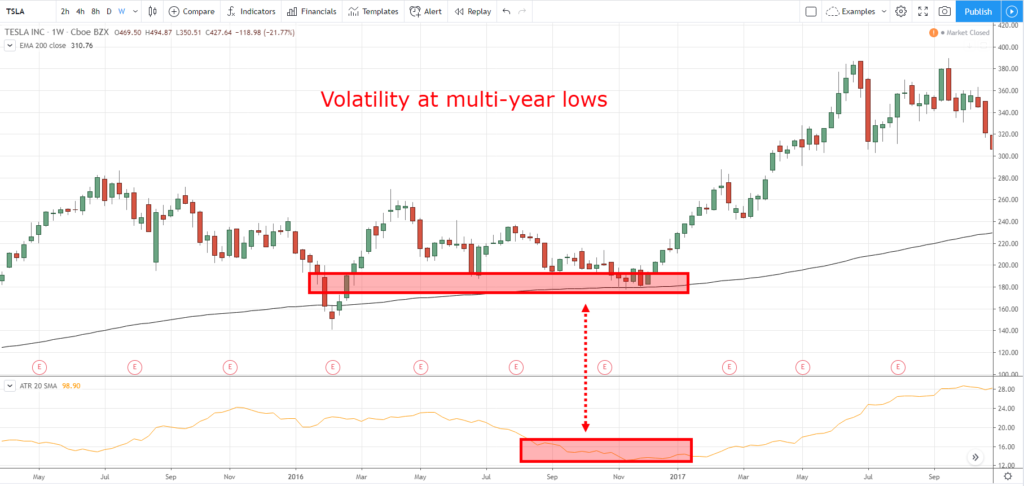
ATR (Average True Range) is a measure of market volatility and can be used to identify low or high volatility market conditions
As shown in the figure below, the price works well in a low volatility environment, then you can look for the low point of this range to trade.
2. Use Trading Indicators to Determine Value Areas
The value area is a potential buying or selling area. Naked K traders like to use support and resistance lines, trend lines, etc. to determine it, so how to use indicators to determine it?
Relative Strength Indicator – RSI
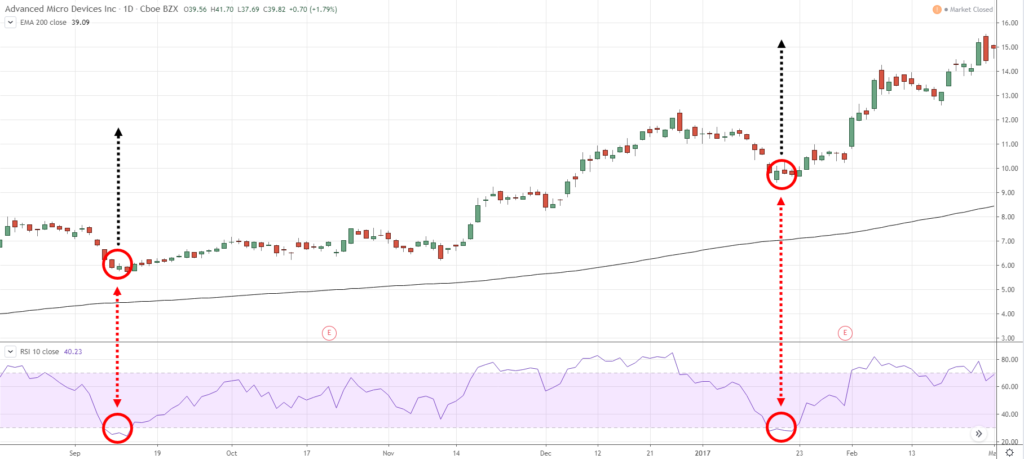
RSI is a momentum indicator that measures average profit and loss over a period of time, useful as markets identify areas of value with mean reverting behavior. As shown in the figure below, the RSI indicator fell below 30 within 10 days, and at this time it entered the overbought zone, which means that the price has a "rebound" and continues to rise.
Warning: This indicator is not available for all markets.
moving average
The moving average is a multi-purpose indicator, it can be used both to filter market conditions and to identify areas of value, because in a trending market, the price rarely retests previous support and resistance, as shown below, in a healthy trend In the above, the price will find a price area around the 50MA, which means that the price will return.
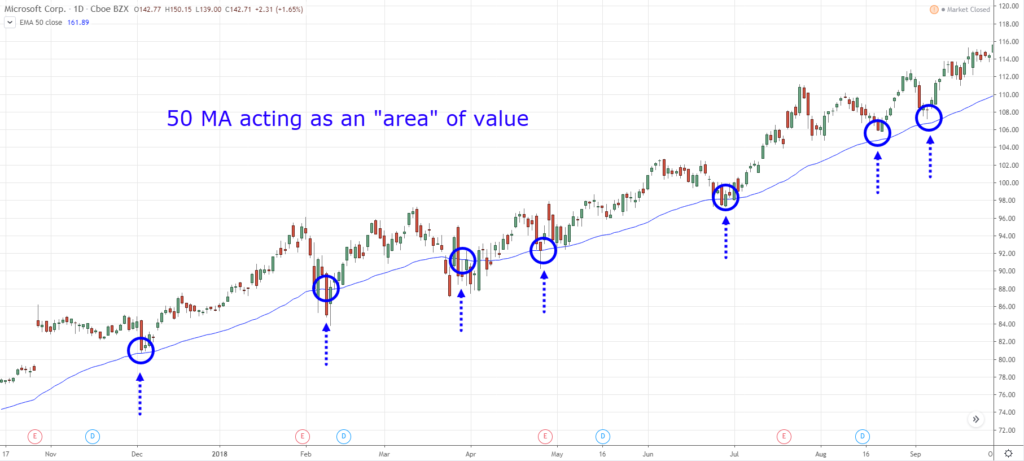
Note: In a strong trend, the market tends to find a price area around the 20MA
In a weak trend, tend to find a value area around the 200MA.
3. Use indicators to determine entry time
Stochastic
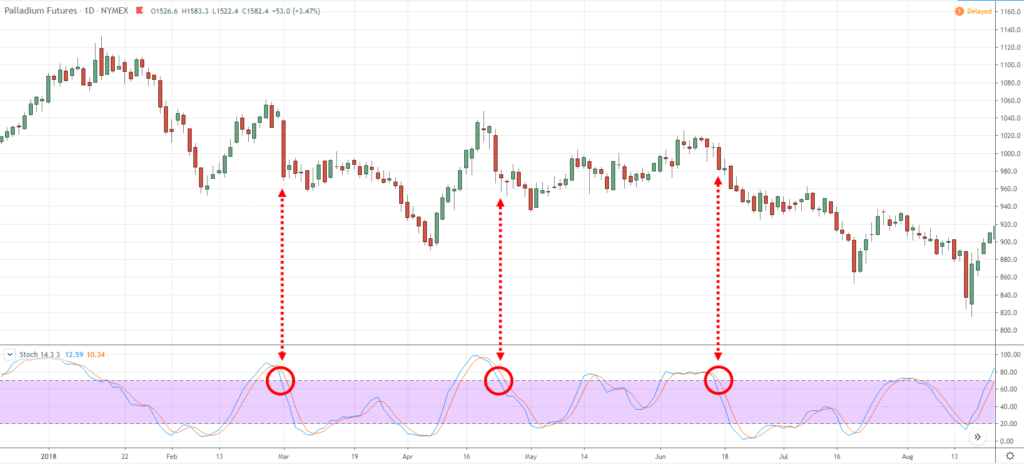
Stochastic is a momentum indicator and when the price crosses 30, it indicates that a bullish momentum is entering at this time and can act as a bullish entry trigger.
When the price breaks below 70, then a bearish trend is intervening and could be a bearish entry trigger. As shown below:
Donchian Passage
Donchian Channel By default he plots the 20 day highs and lows because you can easily identify the highs and lows of the past time, this works great for breakout trading as you can trade when the price is in the lower channel when selling.
Summarize
Indicators are derivatives of prices. They only indicate what has happened, but not what will happen in the future. Therefore, when we choose indicators, we should not trust other people's indicators that they are easy to use, and then use them. Others think they are easy to use. The indicator is for him, not for you.
In addition, do not appear multiple indicators of the same type on the K-line chart, because they indicate the same direction and are likely to cause interference to traders.
The last point, you must understand what your indicator is used for, whether you choose this indicator to find a good entry point, or to filter market conditions, these are things that traders must think clearly before using indicators!
Copyright reserved to the author
Last updated: 08/04/2023 05:11
Add


I am a naked k-trader, and my usual work almost revolves around k-line charts. Based on so many years of trading experience, I mainly rely on six simple and effective buying and selling signals to make profits, including three candle patterns, namely pin bar, engulfing pattern and inside line, and three chart patterns, namely head and shoulders Shapes, channels and wedges. Below I will introduce in turn how I profited from these six buy and sell signals.
candle pattern
I usually look for the three candle patterns mentioned above on daily and weekly charts because while pin bars can work on 4-hour and daily charts, engulfing patterns and inside bars are better on daily charts or higher time frames.
(1) Pin bar
My favorite candlestick pattern is the pin bar. A pin bar pattern with an up or down tail indicates a reversal of support and resistance on the chart. Arguably, a pin bar means nothing to us if there are no key support and resistance areas near it.
Here is an example of a bearish pin bar on the AUDUSD daily chart:
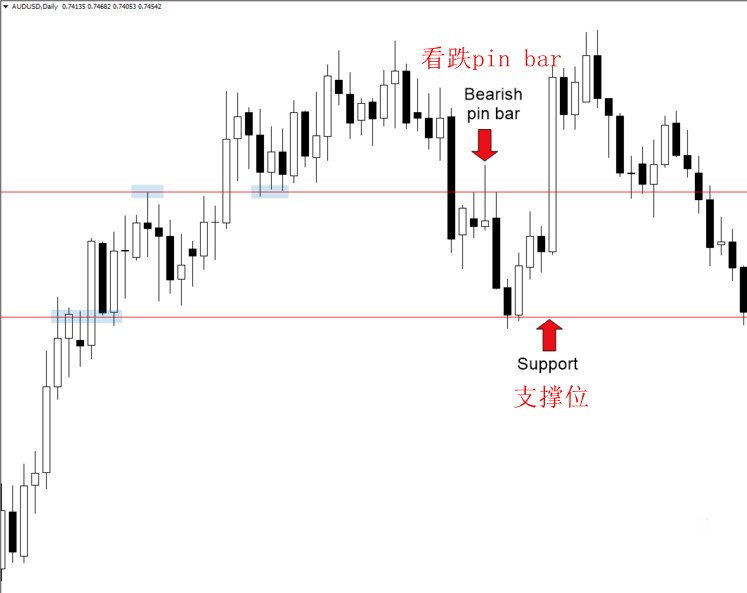
Note that what is shown in the chart above is that after a close below a key level, the pair retested the area and saw it as new resistance, forming a bearish pin bar. A short entry on a 50% retracement would generate handsome profits in less than 48 hours.
(2) Engulfing form
The engulfing pattern is a reversal pattern . As the name suggests, it refers to a candle line that completely engulfs the previous candle line. It usually indicates a game of buyer and seller power.
It is important to note that only engulfing patterns on daily charts or higher time frames are reliable, not any signals on other shorter time frames.
Furthermore, the engulfing pattern must consist of a swing high or low, otherwise it is not enough to form a valid reversal signal.
Here is an example of an engulfing pattern on the AUDUSD daily chart:
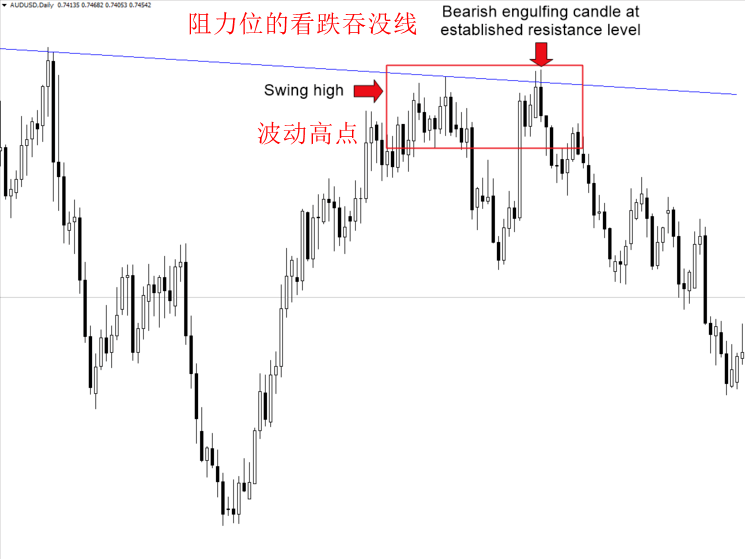
In the chart above, the bearish engulfing pattern formed between a swing high and a resistance level that lasted for several months.
(3) Inner wire
When I first traded naked K, the first thing I learned was the pin bar and the inside line. I think that for naked K traders, it is the most basic requirement to fully grasp these two signals, and then learn other more complex forms.
The inner envelope means that the fluctuation range of a k-line is limited to the fluctuation range of the previous one, that is, the high point of this k-line is lower than the previous high point, but its low point is lower than the previous one point higher. Inside bars are usually formed after a strong trend in the market, so they are especially suitable for trend traders. It should be noted that the inside line is only applicable to the daily chart.
Below are three bullish inside bars that formed on the USDJPY daily chart during the strong rally:
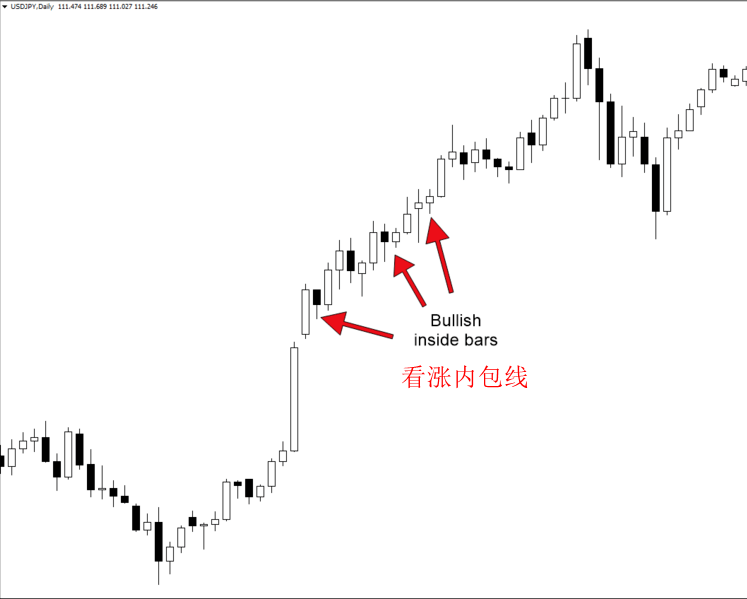
The key element for the inside bar to be effective is the price trend . In addition, traders also need to pay close attention to the location of support and resistance levels before deciding to execute a trade.
(4) Chart shape
A chart pattern is a pattern that forms over a long period of time on a chart and consists of multiple candlesticks. In fact, most of the chart patterns I currently use take weeks, months, or even years to form, but thankfully, with dozens of currency pairs available to trade now, we don't have to wait that long on a single chart.
Let me introduce three chart patterns that I often use: head and shoulders, channel and wedge.
Head and Shoulders (Inverted Head and Shoulders)
The head and shoulders is the most effective chart pattern. It is usually formed after a prolonged uptrend, indicating that buying power has run out.
The inverted head and shoulders pattern also represents a potential reversal and usually occurs after a prolonged downtrend, indicating that sellers have exhausted their strength.
Trading on the head and shoulders pattern, the target price can be estimated by measuring the height of the pattern, which is the height from the shoulders to the head, usually yields a profit of several hundred points.
Here is the head and shoulders pattern forming on the NZDJPY weekly chart:
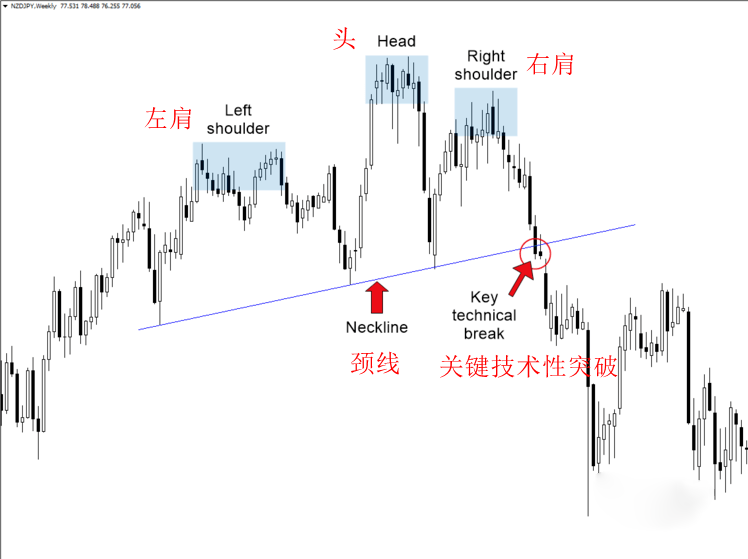
In the chart above, the NZDJPY price action reversed, with the sell-off totaling more than 1,200 points.
channels (ascending and descending channels)
Most traders don't know that there are actually many channels, especially when the k-line rises or falls rapidly. These channels are also seen as rising and falling flags.
Personally, I judge price action on charts on a weekly basis based on channels. Additionally, channels can help us identify periods of consolidation that provide opportunities for subsequent breakouts.
Here is an example of an ascending channel on the NZDUSD daily chart:
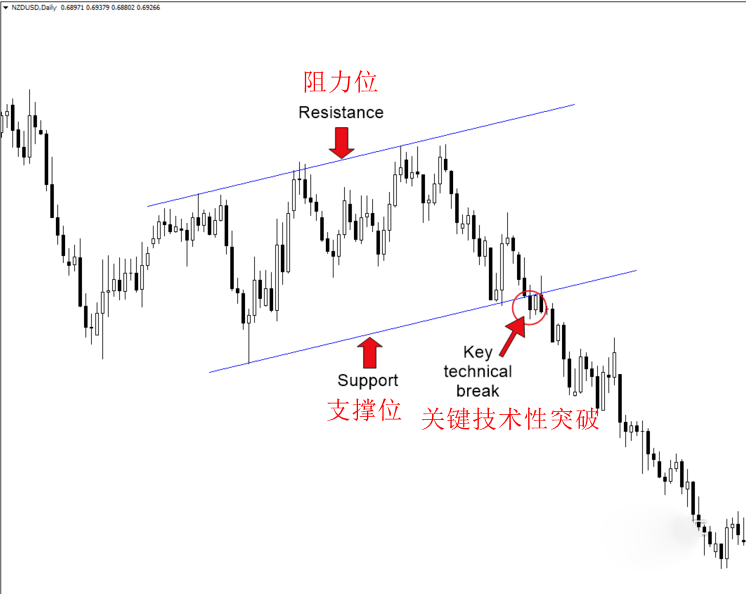
Notice how the ascending channel in the chart above entered into a rapid downtrend. This situation can also be called a descending flag and usually indicates that the current trend will continue for a period of time.
Channels can also be used to judge a wider trend or cycle , the following is an example of an ascending channel on the NZDJPY monthly chart:
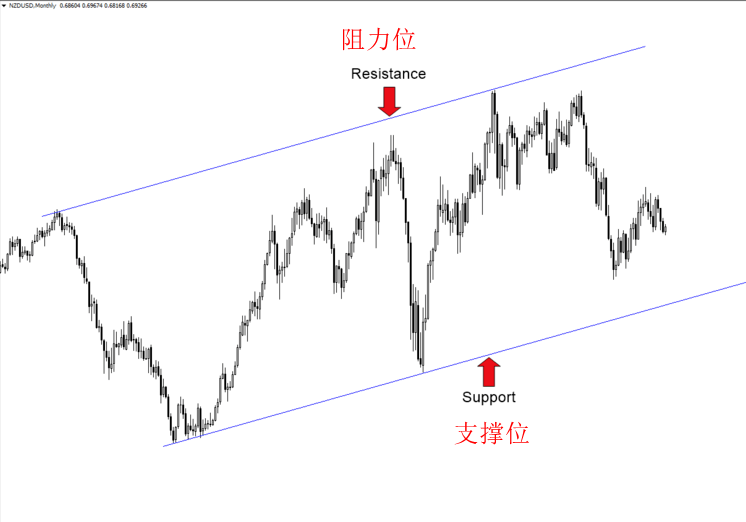
In fact, I wouldn't use a channel in the chart above to identify a breakout (which can take decades), but rather use such a channel to capture the long-term performance of a currency pair.
Wedge (contracted and expanded configuration)
The most common wedge patterns are rising wedge and falling wedge. Like channels, wedges often represent consolidation. The difference is that a rising wedge has a closing pattern, while a channel does not.
Below is the contracting pattern of the rising wedge on the GBPJPY 4-hour chart:
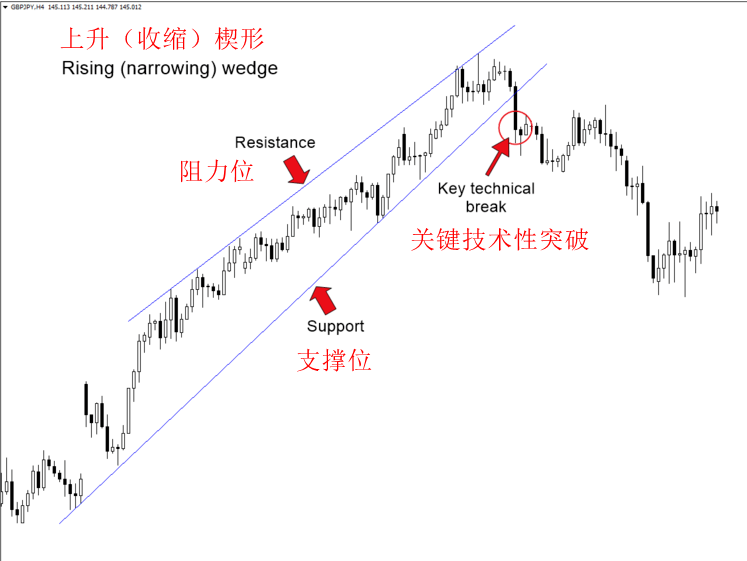
The picture above is a contraction pattern. The contracting pattern of the rising wedge occurs when price action is "squeezed" by support and resistance, indicating that the pair will eventually form a breakout, hence the term terminal pattern.
Below is the expanding pattern of the rising wedge on the GBPJPY 4-hour chart:
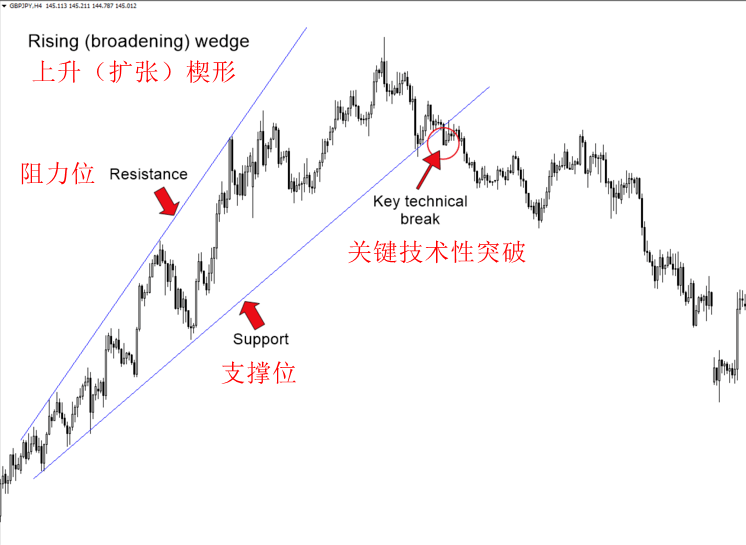
Unlike a contracting pattern, the rising wedge in the chart above "fans out" over time, expanding. Theoretically, a currency pair that is in an expansionary pattern will never break support or resistance, so no terminal pattern will occur.
Of course, the reality shows that the expansion pattern will eventually develop into a contraction pattern, forming a breakthrough.
epilogue
If you are new to naked K trading, or looking for other effective buying and selling signals, you can study the six signals introduced above carefully. Of course, nothing can be done overnight. I suggest that traders choose one or two signals first, learn the characteristics of these signals, entry and exit methods, etc., and then learn other signals until they are fully mastered.
Finally, the most important point is that you must persist in trading the 4-hour chart or daily chart, take notes and accumulate experience during the transaction. Before you know it, you can also spot pin bars and channels at a glance.
Copyright reserved to the author
Last updated: 08/03/2023 07:49
Add

I was looking at the Naked K capital flow game, such as the picture below
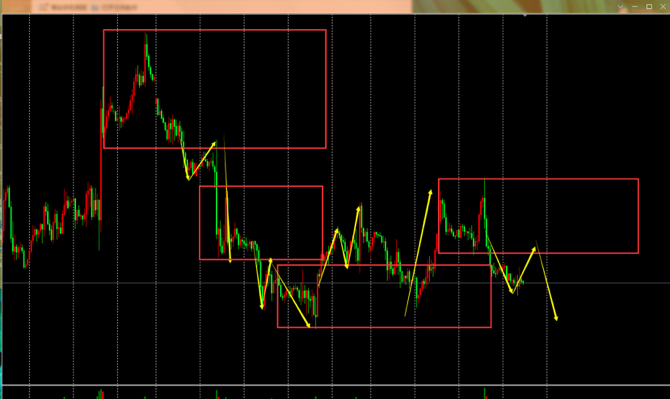
After going through a wave of market, new funds flowed into the game with the old funds, and finally the result came out, then the market returned to their game range again, and the direction of the order could be made
Copyright reserved to the author
Last updated: 08/05/2023 06:53
Add

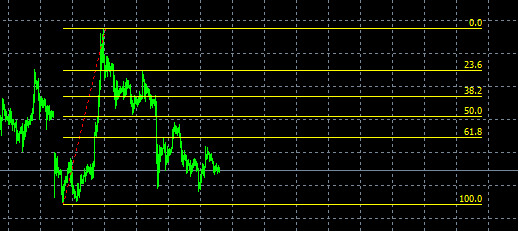
I recommend Fibonacci!
The use of Fibonacci is mainly to apply the Fibonacci retracement line. This retracement line is divided according to the golden section ratio. It is also very simple to use. In the latest cycle, select the highest point and the lowest point to draw the line.
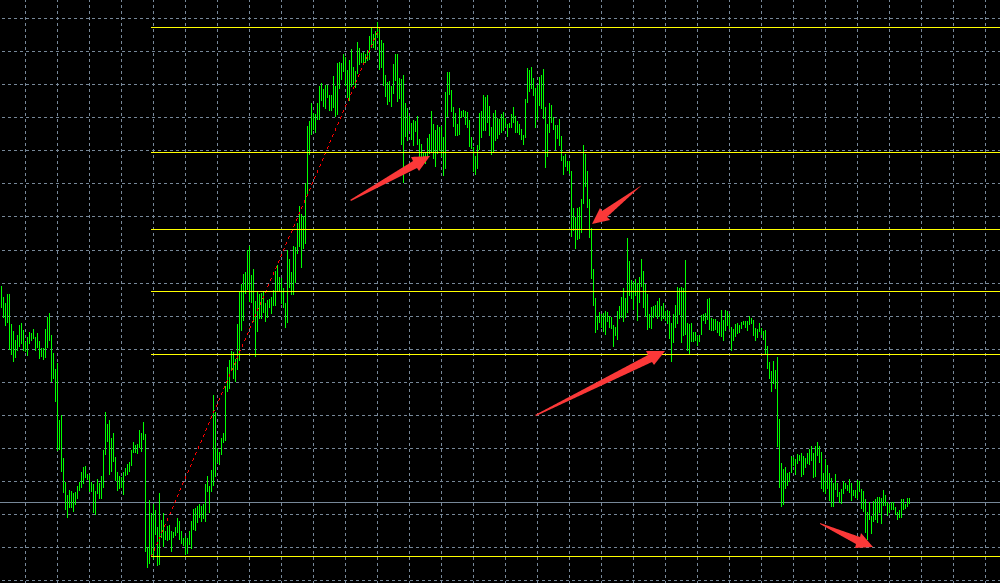
Fibonacci is to help find the position of support and pressure during the decline process after the market is formed, and divides the corresponding interval for us. Everyone can draw it when they have time. The golden ratio is very interesting.
Copyright reserved to the author
Last updated: 08/07/2023 21:16
Add

Some things are true when you figure them out by yourself. Relying on yourself, believing in yourself, believing in your own vision, and believing in your own judgment is the best combination.
Copyright reserved to the author
Last updated: 08/24/2023 06:54
Add

I have always relied on MACD and moving averages to trade, but recently I am studying K-line combination patterns, and I am also constantly learning, and I will live and learn!
Let me first take you to understand the histogram in the MACD indicator. Usually, the DIF value minus the DEA (ie MACD, DEM) value is used to draw a histogram. The red column indicates a positive value, and the green column indicates a negative value.
1. When the red column continues to enlarge, it indicates that the market is in a bull market and the market will continue to rise. At this time, you should wait for the rise or buy in the short term, and consider selling until the red column can no longer enlarge.
2. When the green column continues to enlarge, it indicates that the market is in a bear market and the market will continue to fall. At this time, one should wait and see or sell the currency, and only consider buying a small amount when the green column begins to shrink.
3. When the red column begins to shrink, it indicates that the trend is about to end (or enter an adjustment period), and the variety will fall sharply. At this time, most of the stocks should be sold
4. When the green column starts to shrink, it indicates that the market's big drop is about to end, and it will stop falling and go up (or enter a consolidation). At this time, you can build a small amount of long-term strategic positions instead of selling easily
5. When the red column starts to disappear and the green column starts to release, this is one of the market turning signals, indicating that the rising market (or high-level consolidation market) is about to end, and the variety will begin to accelerate its decline. At this time, most of the stocks should be sold
6. When the green column starts to disappear and the red column starts to release, this is also one of the market transfer signals, indicating that the downtrend (or low level consolidation) has ended and will start to accelerate upwards. At this time, you should start to increase your position and buy
MACD divergence signal (one of the practical indicators)


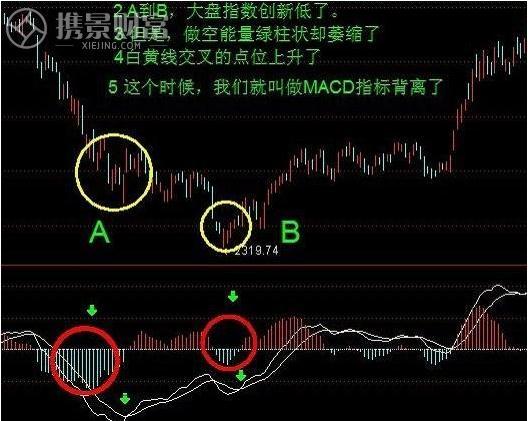
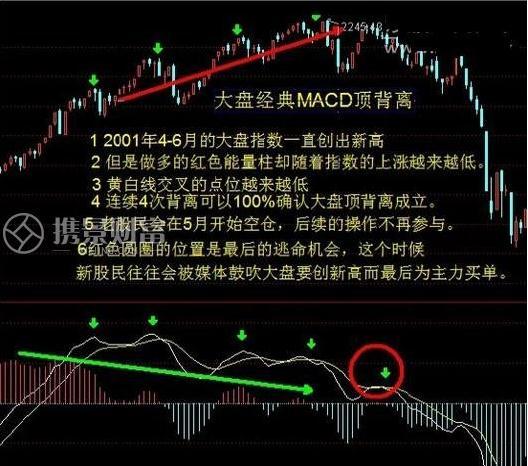
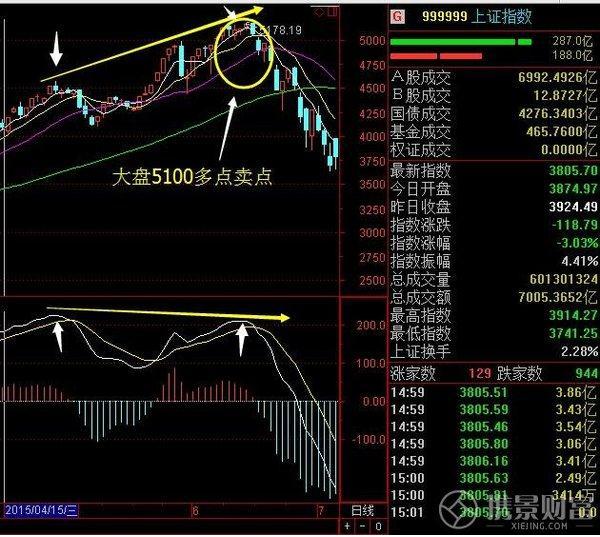
The K line at the top has been in an upward trend, and the MACD energy column has narrowed and diverged greatly. The DEA and DIF lines are also moving down. This is an extremely obvious top divergence. Skillful use of MACD top divergence may not necessarily allow you to sell at the highest position, but it can avoid most risks for you.
MACD bottom divergence signal: MACD bottom divergence, K-line began to hit a new low, but the MACD technical index did not go to a new low with the market's new low, indicating that the energy of the green energy column has begun to be insufficient, and listed companies have begun to secretly buy Enter Jiancang. In the same theory, the longer the period, the more valuable the operation is. We look at the red energy column at the top, and at the bottom we look at the green energy column.
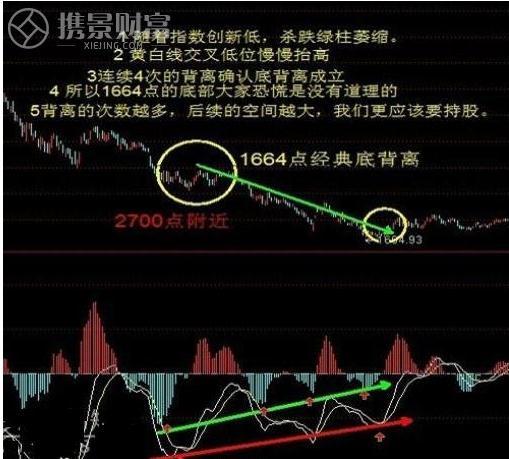
There are three comparison methods for using MACD to judge divergence:
One is to look at the MACD indicator, the first is to look at the MACD indicator, the price hits a new high (low) but the yellow and white line does not hit a new high (low),
The second is to compare the MACD areas before and after the two periods. The price hits a new high or new low, but the MACD area is smaller than the previous one.
The third is to look at the red and green columns. If the price is new high or new low, the red and green columns will not stretch but shorten.
These are all signs of divergence. Usually one of these three situations occurs, and it can be judged that there is a divergence. Of course, if these three situations occur at the same time, the judgment is more accurate, but this judgment is always on the MACD yellow and white line twice. It appears after the zero axis is reversed, which is the key to judgment.
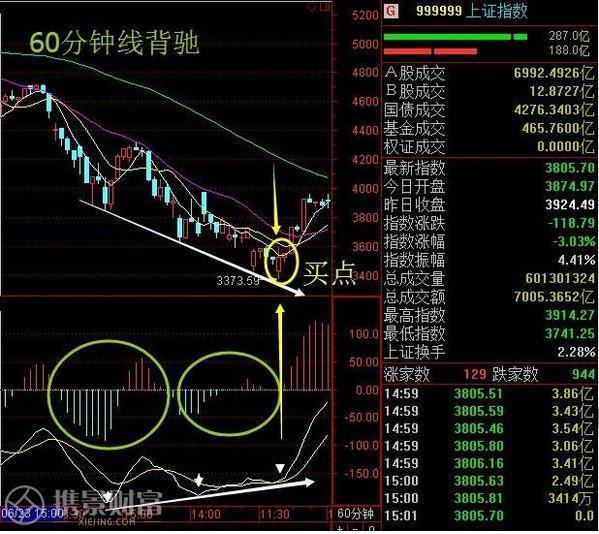
The selling point MACD diverged before the market crash
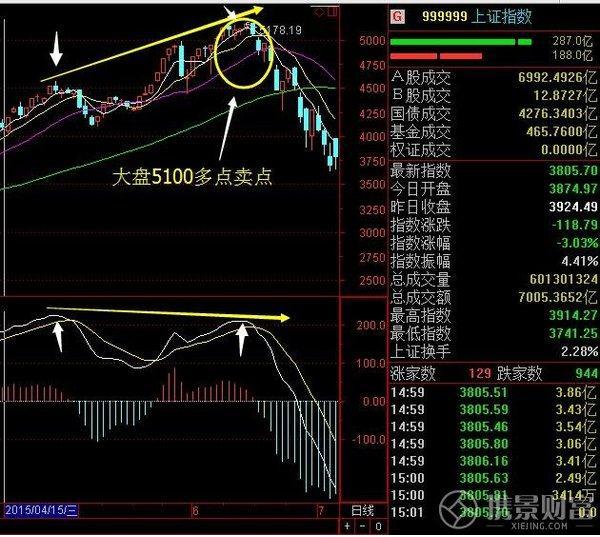
MACD Divergence
Above all, thank you for your support and reading.
Copyright reserved to the author
Last updated: 08/06/2023 07:38
Add

I always think that the foreign exchange indicators that suit me are good. Today I will talk about the indicators that I used more before:
My favorite is the two-line MACD, and it will be better with a few moving averages, directly on the picture:
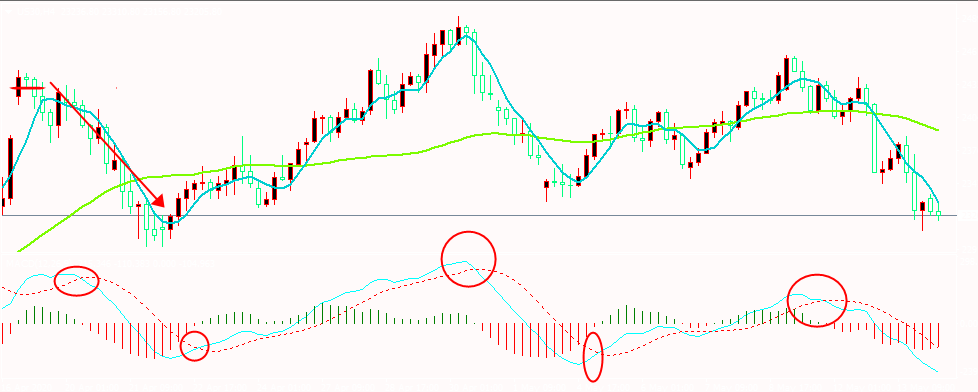
Indicators do have a lag, so in terms of cycle, I choose a period of more than 4 hours. When the MACD dead cross, the K line is below the 5-day moving average and I choose to go short. I believe that most people who do foreign exchange know that the MACD dead cross and golden cross diverge. Here I don’t want to focus on it, the dead cross of the moving average is almost the same as the MACD principle. The key lies in the cycle selection and how to solve the lag problem. Therefore, I usually consider the entry and exit of the market in combination with the K-line morphological reaction and the indicator is about to form. , Easier said than done, people who use indicators will enter and exit the market strictly according to the system signals.
Copyright reserved to the author
Last updated: 08/06/2023 06:59
Add

From the road to the simplicity, I personally think that 2 points are the most important: 1, to measure the current trend, 2, to measure the current volatility.
I am used to using the Guppy moving average to measure the trend, and the K-line itself can reflect the volatility (don’t be too ambitious, understanding the K-line is the most important thing, many masters only look at the naked K in the later stage), and add a KD to measure the short-term overbought and oversold Emotions should be enough.
The trend is clear, the long and short are self-evident, the volatility is high and low, knowing when to enter the market, entering the market when the volatility is low, and setting a stop loss is easy.
Copyright reserved to the author
Last updated: 08/06/2023 17:22
Add

What is the best combination of forex technical indicators? This is a question often asked by many traders who are keen on the analysis of foreign exchange technical indicators. In fact, there is no such thing as the best combination of foreign exchange technical indicators, and the one that suits the trader himself is the best.
The first one is the combination of KDJ+DMI technical indicators.
The KDJ indicator is characterized by fast and sensitive, can capture small market changes in the market, and is often used in short-term operations. The DMI indicator can help traders analyze the timing of placing orders while grasping the changing trend of market trends. The combination of these two technical indicators can help traders reduce the risk of placing orders and find the best order point.
The second is the combination of KDJ+RSI+MACD technical indicators.
This is an indicator combination composed of three technical indicators, which is relatively complicated, but these three technical indicators are common foreign exchange indicators in the foreign exchange market. Traders can use KDJ indicators to judge market trends, and then use RSI indicators to judge market signals, while MACD indicators are used to further distinguish and screen false signals. Therefore, the success rate of this combination of technical indicators is extremely high, and at the same time, it can effectively protect traders from reducing losses.
The third type is the combination of DMI+MA+VOL technical indicators.
Among them, MA is what we often call the moving average indicator. The moving average is widely used in the foreign exchange market and can send long and short signals in a timely and accurate manner. If the moving average is used in combination with the DMI indicator and the VOL indicator, unexpected results can often be achieved. However, traders need to pay attention to that only when these three technical indicators are mutually verified and unified can they be used as the basis for decision-making and order making.
The role of the foreign exchange technical indicator combination is to help traders achieve stable profits. It is more laborious to use than a single technical indicator, and requires traders to spend time and patience to study. But using it well can also allow traders to greatly increase the success rate of transactions.
Copyright reserved to the author
Last updated: 08/21/2023 02:02
Add

Naked K, that is, do not look at other various technical indicators, but only look at the K line to trade.
There are many kinds of technical indicators in the market, and they are basically composed of price, trading volume, etc., and the user population is large, but more considerations need to be considered in analysis. The limitation of bare K line is also very large.
However, the rumors in the market that the king of naked K are actually exaggerated, because there are too many kings in the market, some who master the wave theory can be invincible, some say that MACD is the king of indicators, and there are also those who know the Ichimoku balance chart. The originator of technical analysis in the world and so on. What I want to say here is that the trading system that suits you and the changing rules of the product are the best.
If you have to talk about naked K, here are some suggestions from Zhang Yaoxi:
The upper lead is not necessarily the top, it may become the bottom after some adjustments; the lower lead is not necessarily the bottom, it may also become the top after some adjustments. If you only look at the K-line and it is difficult to grasp the next trend, and you don't know where to start the analysis.
Therefore, first of all, you need to understand the composition of the K-line and the specific representatives of each node. You should understand this. Secondly, you need to master the names, analysis and viewpoints of the 300 K-line forms at the entry level, because you only touch the K-line with bare K. Therefore, it is necessary to master 300 K-line combination forms at the entry level. Finally, we must pay close attention to the trend near the important nodes while combining the technical form. Concerned about breaking through nodes? Will it be called back if it breaks through? In the case of a callback, what is the magnitude of the callback, the amount of energy, etc.? By looking at these performances, we can comprehensively analyze the strength of pressure or support strength. Then judge the long and short direction.
Copyright reserved to the author
Last updated: 08/15/2023 11:03
Add

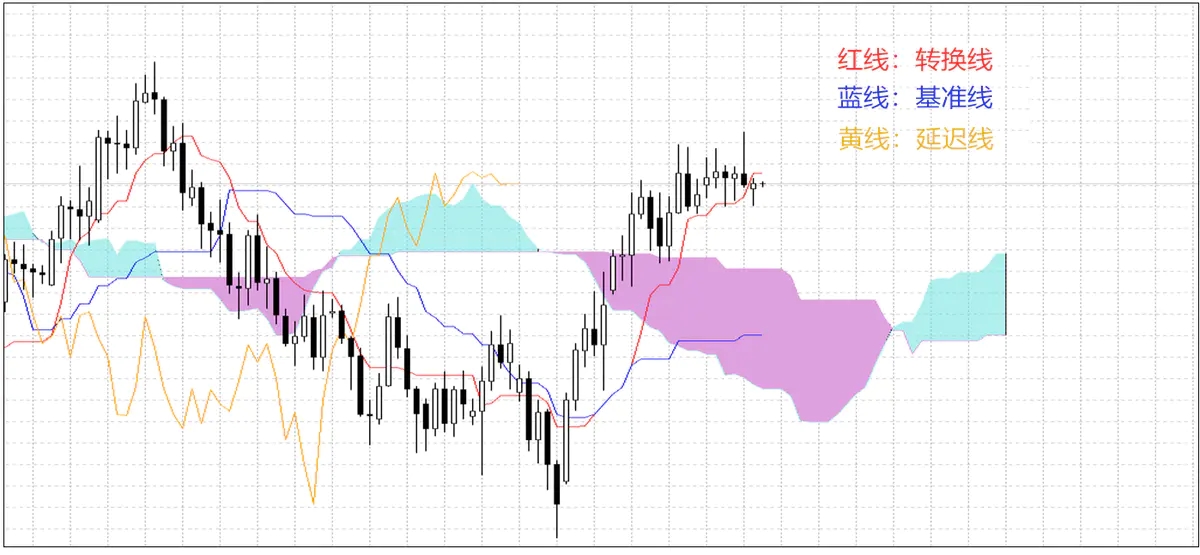
The Ichimoku balance table is a technical indicator that I am learning recently. I think it is not bad, so I would like to share it with you. 1) In addition to the conversion line and the baseline, the two color blocks on the chart are called the leading band A and the leading band B, and the delay line is actually a delay indicator that moves the current price forward for a period of time. 2) When the conversion line crosses the base line downward, it is an uptrend and a buy signal. When the conversion line crosses the base line downward, it is a downtrend and a sell signal. At the same time, the conversion line will also become a support line to support the price and a resistance line to block the price when the trend occurs. 3) The leading zone is actually an area surrounded by two lines on the upper line, usually called the cloud zone. When the cloud band becomes thicker, it means that the price support resistance is gradually increasing. The thin cloud band is easy to be broken through, and the probability of market trend reversal at the thin cloud band will become higher. Under different K-line cycles, the shape of the Ichimoku balance will be very different. In practical application, it needs to be combined with one's own trading strategy to learn and use it flexibly, and I am still in the process of getting familiar with it.
Copyright reserved to the author
Last updated: 08/15/2023 17:33
Add

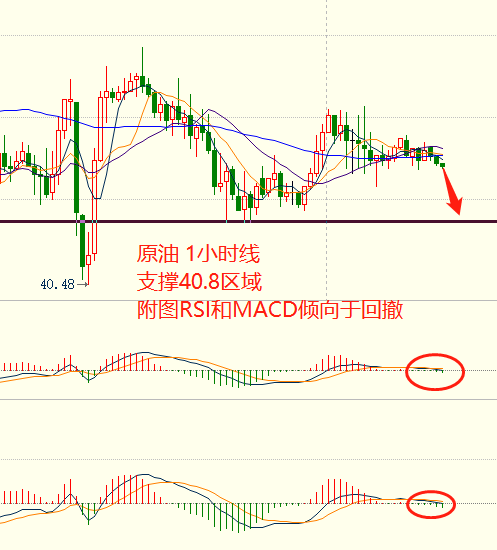
Based on the author's trading experience and experience for so many years, I personally prefer to look at the disk with naked K and attached indicators. Mainly naked K+RSI+MACD, naked K refers to the pressure support area, RSI+MACD refers to the short-term trend trend, but RSI has a certain lag, so pay attention to this when watching and analyzing.
Copyright reserved to the author
Last updated: 08/10/2023 10:03
Add

I recommend the combination of KDJ+DMI technical indicators. The KDJ indicator is characterized by quickness and sensitivity, which can capture small changes in the market and is often used in short-term operations. The DMI indicator can help traders analyze the timing of placing orders while grasping the changing trend of market trends. The combination of these two technical indicators can help traders reduce the risk of placing orders and find the best order point. Its usage: If after a round of decline or adjustment, the J line of the KDJ indicator rises up shortly after bottoming out, and the KDJ has a golden cross at a low position. This is a buy signal. Of course, if you only rely on this indicator, there is a certain risk. At this time, if the DI of the DMI indicator goes from bottom to top, and -DI goes from top to bottom to form a golden cross, it means that there are new funds intervention. The future direction of the trend indicator is clear, thus verifying the effectiveness of KDJ Jincha. KDJ+DMI combination, double golden cross, is the most ideal buying signal. After the golden cross of DI and -DI, continue to cross the two lines of ADX and ADXR upwards. ADX and ADXR also have a golden cross within 3-4 days, which should be regarded as a signal to increase positions.
Copyright reserved to the author
Last updated: 08/19/2023 18:41
Add

The indicators I use are relatively small, mainly the combination of DMI+MA+VOL. MA is the moving average, which not only helps investment to judge the change of the trend, but also can accurately identify long and short signals. However, there are often false signals caused by the hysteresis of the average line. Therefore, the combination of DMI and VOL indicators can be mutually verified, and decisions can be made when a unified signal is issued, which can effectively eliminate false signals.
Copyright reserved to the author
Last updated: 08/06/2023 22:28
Add

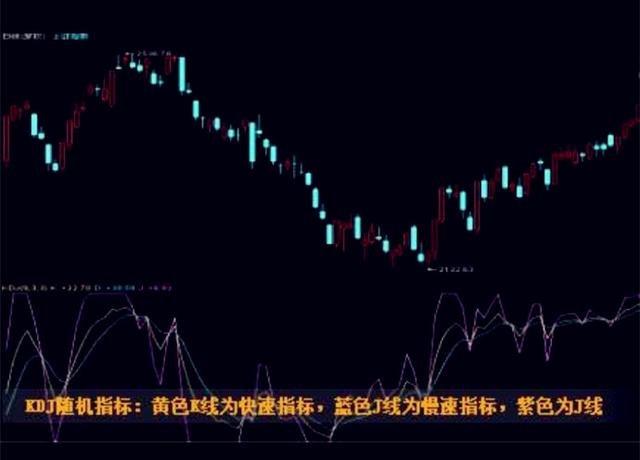
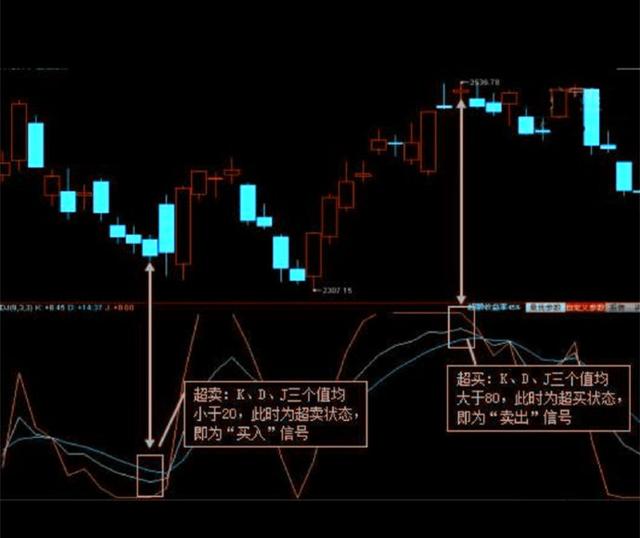
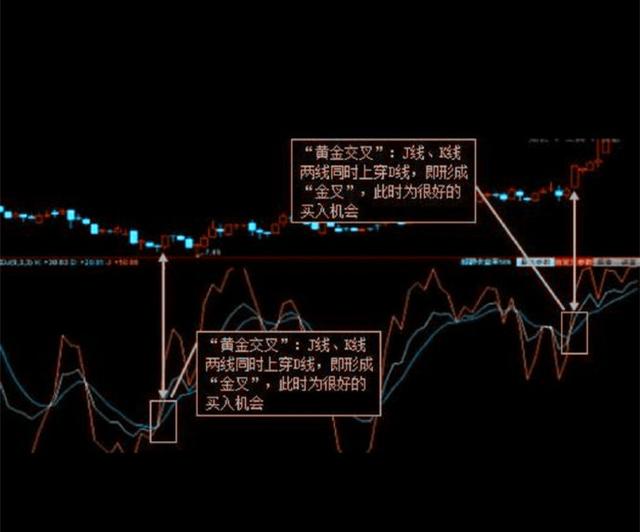
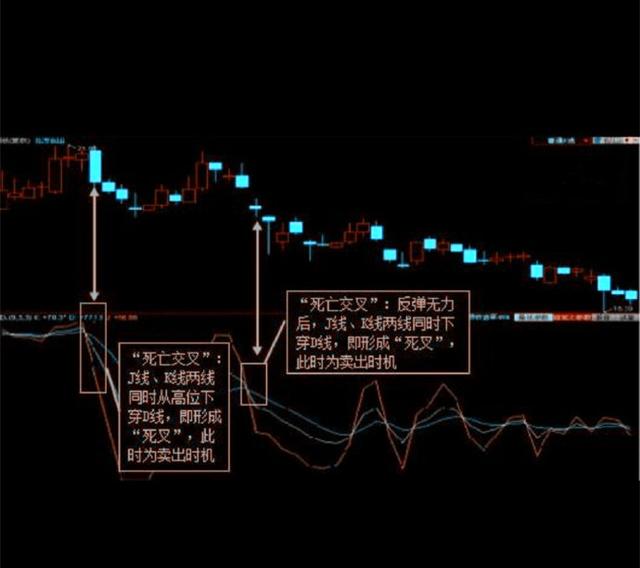
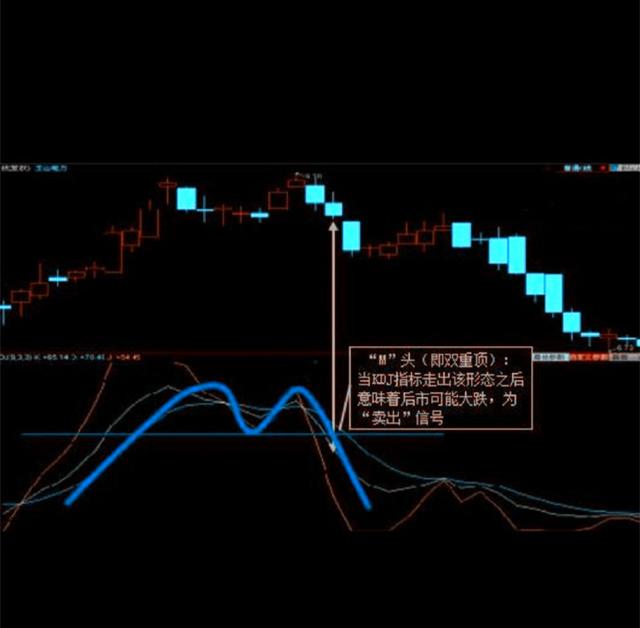
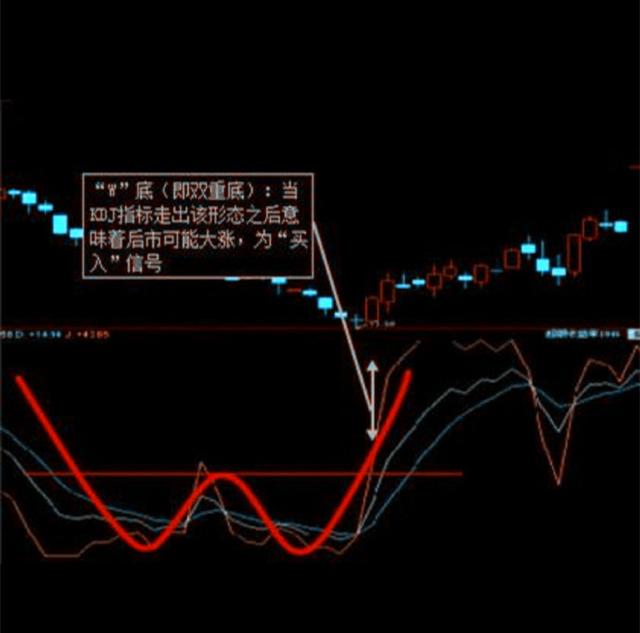
The KDJ indicator is recommended, directly explained in the picture above:
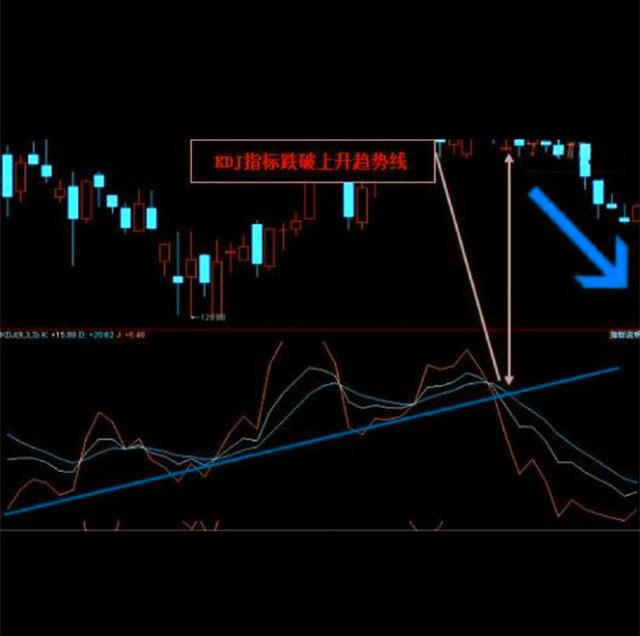
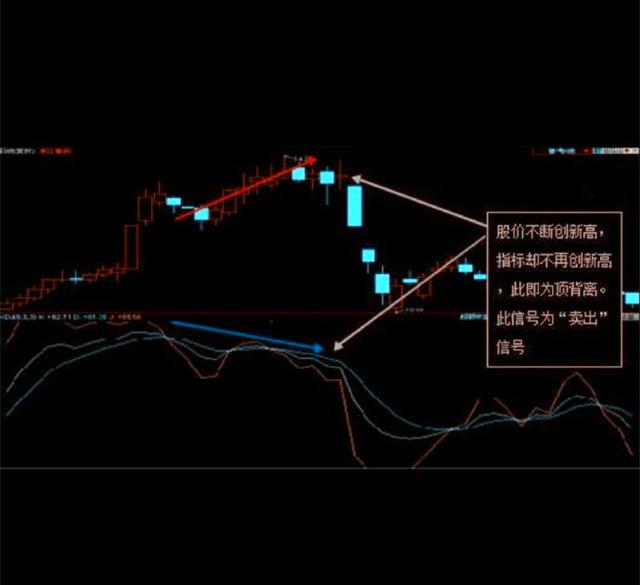
Copyright reserved to the author
Last updated: 08/06/2023 18:37
Add

Trending market uses moving average, wave theory, macd mainly depends on whether the kinetic energy deviates, oscillating market can use kdj, but it needs to be used with a period of less than 1 hour, and then combined with k-line. The correct rate of multi-index resonance will be higher
Copyright reserved to the author
Last updated: 08/22/2023 07:11
Add

I generally use KDJ indicators more, so let me share them briefly, hoping to help more Huiyou.
The KDJ stochastic indicator, like the MACD smoothing moving average of similarities and differences and other technical indicators, is an afterthought indicator, so in actual combat, the error probability of the buying and selling signals provided is still high. Therefore, the application method of KDJ indicators explained in this article is also only a point, and it is for reference only. You only need to understand the simple usage of KDJ indicators. As for the simple definition, I won’t talk nonsense here. You can use Baidu yourself, and let’s talk about the specific application.
1. KDJ overbought signal
When the k-line value is higher than 90, while the D-line value is higher than 80, and the J-line value is higher than 100 for three consecutive days, it is called KDJ overbought, indicating that the market has entered the overbought area, and the short-term callback probability is relatively low. big. Those who hold positions should temporarily consider reducing their positions to avoid risks, and those with short positions should continue to wait and see with short positions to avoid blindly chasing higher.
2. KDJ oversold signal
Conversely, when the K-line value is below 10, while the D-line value is below 20, and the J-line value is below 0 for three consecutive days, it is called KDJ oversold, prompting investors that the market has entered the oversold zone , The market's short-term downward momentum has weakened, and the probability of a rebound is relatively high. Position holders can continue to hold positions and wait for the rebound.
3. KDJ Jincha
When the K value of the fast line crosses the D value of the slow line from the lower direction of the D value of the slow line to form a cross, and the J value of the ultra-fast confirmation line crosses the KD line once from the bottom of the KD value, that is, when the three lines cross and diverge upward at the same time, it is called It is called KDJ Jincha, which is a signal of stock price strengthening. If the golden cross of KDJ third line belongs to the golden cross with K value less than 10, D value less than 20, J value less than 0, and the third line is in the oversold area, the possibility of the market successfully rebounding is higher.
I hope to be helpful.
Copyright reserved to the author
Last updated: 08/06/2023 20:18
Add

Thank you. The foreign exchange indicator recognizes MACD, which is a simple and accurate common foreign exchange indicator.
MACD has single-line and double-line, which are collectively referred to as exponential smoothing moving average. Most MT4 trading software automatically has single-line MACD technical indicators, which can be easily inserted and used. As the market trend becomes more and more complicated, most users The two-line MACD is used, and different colors can be used to distinguish periods according to personal preference.
So how to use it? as follows:
1. DIFF crosses DEA to form a golden cross, and the red column releases MACD. The change from negative to positive means that the price has stopped falling and rebounded after DIFF crosses DEA below, and the MACD has turned from positive to negative. The green column is released, indicating that after the price rises, there is a request for price adjustment.
2. Another important line of the MACD indicator is the 0-axis. The price starts to strengthen after a long-term decline, and the DIFF value crosses the 0-axis. Note that when crossing the 0-axis, it must cross the 5-day moving average or have crossed the 30-day moving average. After the 0 axis, it will step back on the moving average the next day, and DIFF crosses the 0 axis, indicating that the price has entered a long market.
3. MACD deviation, MACD deviation is divided into DIFF deviation and MACD (red column and green column) deviation. Let me talk about DIFF divergence first, which means that the stock price has hit a new high but the DIFF value has not hit a new high. At this time, the price will fall back at any time. MACD (red column and green column) divergence means that the price hits a new high and the red column of MACD is shrinking or the green column has been released, indicating that the bulls are at the end of their strength and should be sold.
It is very suitable for novices. You can try your hand in the simulation market before the official transaction. Maybe you can get the most suitable indicator for you!
Copyright reserved to the author
Last updated: 08/06/2023 00:00
Add

I want to speak for Bollinger Bands. Bollinger Bands use statistics to get away from the standard deviation to find its confidence interval. It is even more difficult to adjust its variability in shorthand. The range of upper and lower limits is not fixed and changes with stock price changes. I often use it technical indicators. Usage: 1) The stock price crosses the support line upwards, a buy signal; 2) the stock price crosses the resistance line downwards, a sell signal.
Copyright reserved to the author
Last updated: 08/16/2023 00:04
Add

0
work
0
subscriber