


Stay in touch!
Subscribe to our newsletter to get the latest updates on live market analysis, trading strategies and more. You can unsubscribe anytime.
By subscribing, you agree to Trading.live Privacy Policy.


Thank you. Hanhan said that the high profit-loss ratio is nonsense, hehe, in fact, the transaction itself is quite nonsense, obviously a lot of people are losing money and going bankrupt here, and there are so many rising stars rushing in, can you not be nonsense? However, in trading, a high profit-loss ratio is really not nonsense, please see the sleepy home for your analysis.
To evaluate a trading system, there are four key parameters, and I can’t think of anything else, listed as follows:
First: position ratio
Second: transaction frequency
Third: Holding time
Fourth: Winning rate and profit-loss ratio
Traders can't pursue getting rich overnight, that kind of opportunity is similar to winning the lottery, and there are no good results. Our ultimate goal is to avoid risks and stabilize profits, and to capture only "huge profits" relative to other industries. A trading system that can avoid risks and make stable profits must be as follows:
1. Avoid heavy losses and liquidation
2. Stable account growth rate
3. The number of account retracements and retracement ratio as few as possible
To achieve these three goals, let's examine what the above four parameters should look like. First of all, it is not allowed to operate heavy positions, which can easily cause heavy losses or liquidation. As long as you place heavy positions, everything becomes a gamble, which is out of the question. The remaining trading frequency, holding time, profit-loss ratio and winning rate are mutually affected.
If you trade at high frequency, then your order holding time must be short, and your profit target must also be small. Although the profit of each order is very small, it can be compensated by a high number of transactions, and an ideal can also be achieved. account growth rate. The shorter your trading time period, the more obvious the characteristics of disorderly shocks in the market, and your stop loss must be large, which ultimately leads to a small profit-loss ratio. Because your profit-loss ratio is very small, you are required to have a high winning rate. The reason is simple, if your profit-loss ratio is one, you must have a winning rate of 50% to keep even. If your profit-loss ratio is less than one, your winning rate must exceed 50%.
If you are going to do long-term, then your trading frequency will not be too high, and your profit target must be relatively large, because if you don’t have a big profit expectation, it is impossible to bring you a profit with your small number of transactions. Ideal account growth rate. The longer your trading time period, the more obvious the characteristics of market trend development, the clearer your stop loss space is, and the stop loss amount is relatively small compared to your profit space, so your profit-loss ratio will be large. At this time, you don’t need to pursue a high winning rate, because one or two profitable orders are enough for you to stop losses many times. The winning rate of many trading masters is only more than ten percent. After a year, let’s talk about the profits of a few orders. You can get very high returns.
To sum up, whether to focus on the winning rate or the profit-loss ratio in trading mainly depends on the trading style of the trader. If you are doing ultra-short-term trading, one of your stop losses can make you several or even dozens of profitable transactions in vain. Short-term traders must repeatedly hone your trading signals to increase your trading winning rate as much as possible. If you are a long-term trader, your goal is to capture daily or even weekly-level trends. There are only 52 weeks in a year. Long-term traders only need to capture two or three weekly-level trends each year. You must enter with a reasonable position in the early stage of its launch. In most cases, you will not succeed once, and a large number of trial and error orders must be stopped, so don't worry about it at all.
Copyright reserved to the author
Last updated: 08/22/2023 01:34
 Add
Add

The profit-loss ratio is calculated artificially and is part of the trading system. It is related to the trading style of personal ideas and has nothing to do with the nature of the market.
For example, when you encounter a good strong fund, the strength of long and short positions in the current market has been determined, you need to use this strong fund as a basis to make an order, but the stop loss is 100 points, the determined profit target 80 points, after exceeding 80 points, you will encounter new reverse funds, and there will be uncertain factors. The question now is, do you want the 80 points of profit that you can definitely get?
If in order to reduce the stop loss, you may have to restrict the entry or restrict the stop loss, so you will face two problems, restricting the entry may cause a short-term behavior, the order cannot enter the market, restricting the stop loss, and may be swept Once the stop loss is stopped, the price will go in your original direction again. This kind of loss will be larger than your normal stop loss once. A high profit-loss ratio can be achieved at certain times, but not every time.
If you must have a high profit-loss ratio to place orders, and all these orders conform to your trading system, then your winning rate will decrease. If the winning rate does not decrease, then the trading volume will decrease. The two cannot coexist at the same time. Sexual opportunities exist, but not many. For a single product, the daily deterministic trading opportunities are usually 1-2 times. In this 1-2 opportunity, the profit-loss ratio is not necessarily guaranteed. This is a difficult decision in trading. The main problem depends on your own trading system. If your trading system is stable enough, such as our logic Trading science, the winning rate can be stabilized at more than 90%, and some people can not stop loss for several months, (in the case of no anti-order, and each order has a strict stop loss) Under such a premise, the profit and loss The ratio is not very important, and of course it will not be too outrageous. For example, if the profit is 10 points, the stop loss needs to be 100 points. This does not exist, but the stop loss is 50 points, and the profit is 40 points. Yes, this brings us back to the original question, whether you want such a profit or not, it just depends on your personal thoughts and has nothing to do with the trading system.
To sum up, the profit-loss ratio is a personal idea, and has nothing to do with the principle of the market itself. You can understand it, and the determined profit may need to be greater than the stop loss space you need. When the trading logic you use conforms to the market principle, Don't add human nature issues to the trading rules, it will only bind you
Copyright reserved to the author
Last updated: 08/22/2023 08:42
Add

Trading is also nonsense, welcome to spray.
Copyright reserved to the author
Last updated: 08/17/2023 18:27
Add

Let's communicate together, why spray it, haha.
I don't think this question can be taken too seriously. The winning percentages of the financial big names we know are not very high (that’s all said, as for the winning rate, who knows, haha), the financial big names should have their own reasons for choosing this method.
Behind the high profit-loss ratio I understand is actually the understanding of the market by trend traders.
Simply put, a high profit-loss ratio is the trading style of a trend trader. We know that once a trend appears in the market, it is difficult to change it in a short period of time, and the trend lasts for a long time, which means that your trading profit margin may be very large while the position period is long. Compared with the stop loss space at the original point, the profit space may be much larger. In this case, can the profit and loss ratio not be large?
Therefore, whether it is a high winning rate or a high profit-loss ratio, these two methods have their own characteristics, and you can decide your own choice according to your own trading style. Anyway, the one that suits you is the best.
Copyright reserved to the author
Last updated: 08/18/2023 03:03
Add

Each has its own way, why should I spray you? The pursuit of trading is nothing more than profit, no matter how you operate, the final profit is NB!
Copyright reserved to the author
Last updated: 08/18/2023 08:22
Add
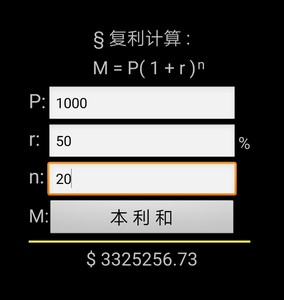
How high is the profit-loss ratio? Some people have a high profit-loss ratio and a low winning rate, while others have a high winning rate and a low profit-loss ratio, neither of which will prevent them from making money. The key is to find the one that suits them.
Copyright reserved to the author
Last updated: 08/17/2023 14:03
Add

You're right, just be happy
Copyright reserved to the author
Last updated: 08/30/2023 17:10
Add

not absolute
Copyright reserved to the author
Last updated: 08/30/2023 04:33
Add

My friend, what you said is nonsense.
Why are you talking nonsense? Can you talk about it in detail? I think you might as well modify it. It should be nonsense to blindly pursue the profit-loss ratio, what do you think?
Copyright reserved to the author
Last updated: 08/24/2023 03:17
Add

This question, first of all, you have to be clear, what is your loss-making ability? In other words, the maximum loss you can afford. Let me tell you a case. This boy is doing gold products. He spends 15 minutes each time to set a stop loss of 20 points, thinking of making a profit of 100 points. The trading habits are very bad, and the trading psychology is not healthy. Every time I want to buy the bottom and buy the top, but I don’t have a feasible strategy to actually buy the bottom and the top. Often lose money, often complain, but do not reflect on themselves, and have been walking alone in their own wrong trading thinking.
So, seeing your question, I can know that you are not a person with trading qualities, your temperament is impatient, and you are not suitable for trading.
Copyright reserved to the author
Last updated: 08/17/2023 06:41
Add

Spray, no need, it's just a different idea.
A high profit-loss ratio sounds beautiful, but it is not suitable for everyone. A trading system that really suits you will be reflected in your delivery order.
The correct way of thinking is to adapt the trading system to a person's personality, not to adapt the personality to the trading system, so it is particularly important to find a trading system that suits you.
If the size of the pattern is used to express the flaws of the trader's personality:
People with a small pattern are characterized by: impatient personality, lack of consideration when operating, hands always running in front of the brain, regret when making a shot, and slapping the thigh. (Fear of heights and timidity are in the category of small layout)
People with a larger pattern show that they are not surprised by honors and disgraces, not panicked by ups and downs, relatively greedy, don't know how to sell when the price rises, and only think of cutting the meat to leave the market when it falls.
The above is the purest side of streaking in the market regardless of the trading system. The size of the pattern is not good or bad, but reflects the direction a person should choose in the trading market.
As far as I am concerned, it is the type with a small structure, so my trading system is more inclined to high frequency and high winning rate, and abandons high profit-loss ratio.
If it is a large pattern, you must first abandon the first two, and to achieve a high profit-loss ratio, you must leave the market as soon as you make a mistake. The reduction of the wrong position time means lowering the ratio, and the right time Infinitely extended, don't leave the market if you are not sure if it is weak, this is the direction of high profit-loss ratio.
In addition, don’t set limits on yourself. There are two points in your question that put the cart before the horse. The first is to pursue a high profit-loss ratio, and the second is not to require a high winning rate. A kind of self-limitation is entangled in it.
If you don’t know how to build a system, you can learn from others. If you don’t know how to build a system, you can learn from ten. If you find something that feels similar, you can dig deep, correct it, and fine-tune it. Traders who can make money basically come here in this way, and it is almost the only way to go.
Finally, don’t be overly scientific in trading. Anything like 1:5 or 5:1 is nonsense. You will be dumbfounded if you practice in the market. Trading is alive and dynamic, and most of the time the capital is in the Vote with your feet, where the hot money goes. There is no holy grail of trading, and if there is, everyone is different.
Copyright reserved to the author
Last updated: 09/03/2023 14:09
Add
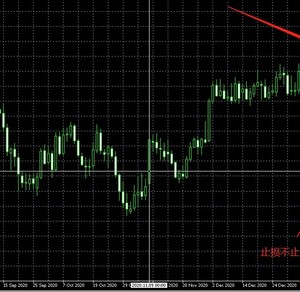
If the high profit and loss ratio does not pursue the goal, then it is nonsense
Copyright reserved to the author
Last updated: 08/30/2023 16:19
Add

My point of view may be more extreme, I don't think there is such a thing as "high profit and loss ratio"...
It is still necessary to popularize the concept of high profit-loss ratio. "High profit-loss ratio" is determined by two things, one is the amount of loss, and the other is the amount of profit. The profit-loss ratio is the ratio of profit to loss.
Do you see the problem?
We can control the loss, and it is the only amount we can control. We can control how much we can lose in this transaction.
The problem lies in profitability. Profit is an amount beyond our control, and how much we can ultimately earn from this transaction cannot be controlled subjectively by us. The market is changeable, and we can't just set the stop loss and take profit and leave it alone. This is not the right way to trade.
Therefore, the subjectively set profit cannot be used as the final profit of the market.
Profit is fluctuating, a concept that needs to be constantly changed according to market trends, and is unknown. The loss is something we can control and is known. Two quantities, one unknown and one known, the final result is unknown. Therefore, thinking from this perspective, the concept of high profit-loss ratio is untenable, at best it is a subjective high profit-loss ratio.
Copyright reserved to the author
Last updated: 09/03/2023 03:29
Add

0
work
0
subscriber