


Stay in touch!
Subscribe to our newsletter to get the latest updates on live market analysis, trading strategies and more. You can unsubscribe anytime.
By subscribing, you agree to Trading.live Privacy Policy.


thank you
In my opinion, the stupidity of trading is not only reflected in the trading methods, but more in-depth analysis of the problems behind it.
So I sublimate the basis of this article and define the eight felonies of stupidity in trading!
One: Important index of the group who regard trading as gambling : ★★★★★★★★
This kind of group has been divorced from the essence of trading. Don’t treat trading as gambling. We have to get rid of gambling to win a high probability of success. If you treat trading as a tool for gambling, then your trading over the years must be It is a loss, and without exception, so we use the transaction to gamble tomorrow, and we must also give ourselves a bright future with a high probability, because nine out of ten bets lose, and if you bet seriously, you will lose.
Two: Trading without a plan Important Index: ★★★★★★★
When doing transactions, there is no complete trading plan, which leads to not knowing how to proceed to the next step when there are unknowns in the transaction. This will lead to a high error rate, and the overall loss of the book will be quite stable. It can be said that there is no plan. Trading is difficult to survive in this market, so you must have your own plan when trading, and trade rhythmically instead of following your heart.
Three: Not trading important indices with a learning attitude : ★★★★★★
If trading is just for you to play for a while, it doesn’t matter if you feel happy. If you get stuck in the quagmire and can’t get out, please always keep the mentality of learning and summing up to trade. You must not lose money and don’t know where you lost. A relatively stable trading environment, a stable trading environment is mainly to allow oneself to have room for improvement, otherwise the result will be the same no matter how much money is used to play.
Four: Persistent Loss Trader Important Index: ★★★★★
This point is about brainless traders. Such traders do not understand the core of trading, think that persistence can achieve success, and they are not suitable for trading at all, but they still fight on the front line without hesitation. For this kind of fearless Sacrifice, out of good intentions, I advise you to quit trading as soon as possible, or take some money every month to play lightly, don't continue to be cannon fodder, bet on the sea without boundaries, and turn around!
Five: Always thinking about getting rich in trading Important index: ★★★★
We all know that there is no shortage of stars or birthday stars in the trading market. Even if you are lucky in the short term, it will bring you huge returns in the short term. Based on the reality, 99.99% of traders continue to invest in trading after obtaining huge profits. The result is There is nothing left in the loss, so remember that stable and safe transactions are the long-term way, and don't trade with the mentality of getting rich.
Six: Fragile traders without the ability to withstand stress Important index: ★★★
Although trading can make a person's heart stronger, we must know that there are not many excellent traders who can come out of trading itself. If you have these trading weaknesses at the beginning, then at least there is a high probability that you are not very suitable Doing transactions, because there are too many variables in the transaction, and any inattention can put you in deep trouble, and your mentality will explode, unless you have perfect points in other places that can cover up this.
Seven: Do trading without principal. Important index: ★★
If you do trading when your own economy is not sufficient, it will lead to unstable mentality, because it completely cuts off your own way out. Trading is different from doing business. Sometimes it’s not that the more you study, the more you earn. , It may be counterproductive more often, so the funds for trading must be your own spare funds, an investment choice made on the premise of not affecting your life.
Eight: Uninformed investment rashly enters the important index:★
Because it needs to correspond to the subject of the topic, this point explains that if you don’t understand the rules of this type of transaction, you will rashly trade. For example, crude oil futures will be delivered every month. If you do not make corresponding preparations before delivery, it will also give investors A lot of losses are caused, for example, after a liquidation or forced liquidation caused by point expansion in extreme cases, there will not be enough funds to open the same position when opening the position next month.
I hope that the eight deadly sins of trading I defined can bring you new enlightenment, and I also hope that the judges can better examine themselves and give themselves a certain future.
If you are interested in my answers, please follow my Huihu account. I will regularly answer some industry-related questions every week. I don’t seek the most professional, but the most authentic.
Copyright reserved to the author
Last updated: 08/26/2023 20:12
 Add
Add

There are many traders who still have a lot of common sense or conceptual misunderstandings after trading for a long time. Some common misconceptions are also spread as "trading common sense". It is no accident that many successful traders also frequently mention the following trading misunderstandings. So I summarized the following 5 most common wrong ideas and stupid behaviors.
1. It is better not to set a stop loss in the transaction
Trading without a stop loss is a disaster on every level. Without a stop loss, traders will have three performances that are most likely to lead to losses: being unable to control the size of the position, not having sound risk management, and one transaction can empty the account.
Some traders don't use stops, thinking that the broker will hunt them down. In fact, a formal regulated broker will not do this. More likely, your stops are about the same as most people's, which can be easily exploited by professional traders. Never forget to set a stop loss. In addition, don't temporarily move the stop loss. Temporarily changing the stop loss setting shows that the trader's risk management plan is not solid enough and will only increase losses.
2. Short scalping trading time, suitable for amateur traders
The trading time of scalping is usually very short, and it is considered to be one of the ways to make quick profits. But the actual situation will be different. Despite the short time spent trading, traders spend a significant amount of time analyzing charts to identify multiple different trade setups. Therefore, scalping requires more effort than long-term trading strategies.

3. The profit rate is 50%, this is all gambling
It is wrong to understand the risk-reward ratio or profitability ratio in isolation. If you only look at the risk-reward ratio of 1:1, you ignore the possible number of profitable trades. Even if it is 1:1, you can make a profit of 60 out of 100 traders, and the result is profitable.
Traders look at the profit rate one-sidedly, and ignore the amount of profitable funds. If the amount of profit can exceed the loss, then even at a 50% profit rate, the result is still positive.
Deciding on stop loss levels is part of a good trading strategy. But many traders ignore exit setups. The correct exit criteria depend on the trader's risk appetite and goals.
4. A high-return profit can balance other loss-making transactions
Many traders have encountered this situation: this transaction does not fully meet the transaction conditions, but its return ratio looks particularly attractive, and it is worth a try. It is very common to hope that a potentially high-return trade can balance many previous losses, and it is really a bad trading habit. For transactions, traders should get used to that they can only control the risks and potential losses invested in them, so they need to set stop losses and reasonable positions. No matter how high the return looks, as long as it does not meet your trading conditions, it is not a good trading opportunity.
5. The support/resistance level is just a line
Support and resistance levels are shown as lines, but they act more like a range. Some traders may be skeptical. In fact, the greater the volatility during trading, the larger the support/resistance range should be considered. This can effectively help to set a stop loss.
Additionally, price changes decelerate as they approach a support or resistance zone. Sometimes you will see the trend slow down. Is the price fluctuation clearly approaching the support or resistance level? Is there a phenomenon of traders closing positions in large numbers? If you want to set a take profit, it is better to be before the support or resistance zone. If you have any questions in the future, you can communicate through private messages. I would like to remind you again that investment in futures and foreign exchange markets is a double-edged sword. Reasonable investment can increase the value of one's wealth, while irrational speculation has a high probability of losing money.

Copyright reserved to the author
Last updated: 08/12/2023 11:41
Add

In the financial market, the term liquidation is often heard. Looking at the accounts of all liquidators in the market and their trading process, you will come to a conclusion-the stupid behavior in the trading process led to their final liquidation. All liquidation is the most intuitive display of all stupid trading behaviors.
Then we can't help but ask, what behaviors lead to liquidation? How can we avoid liquidation after knowing the reasons? Next, let's take a look at the six major causes of liquidation and their solutions.
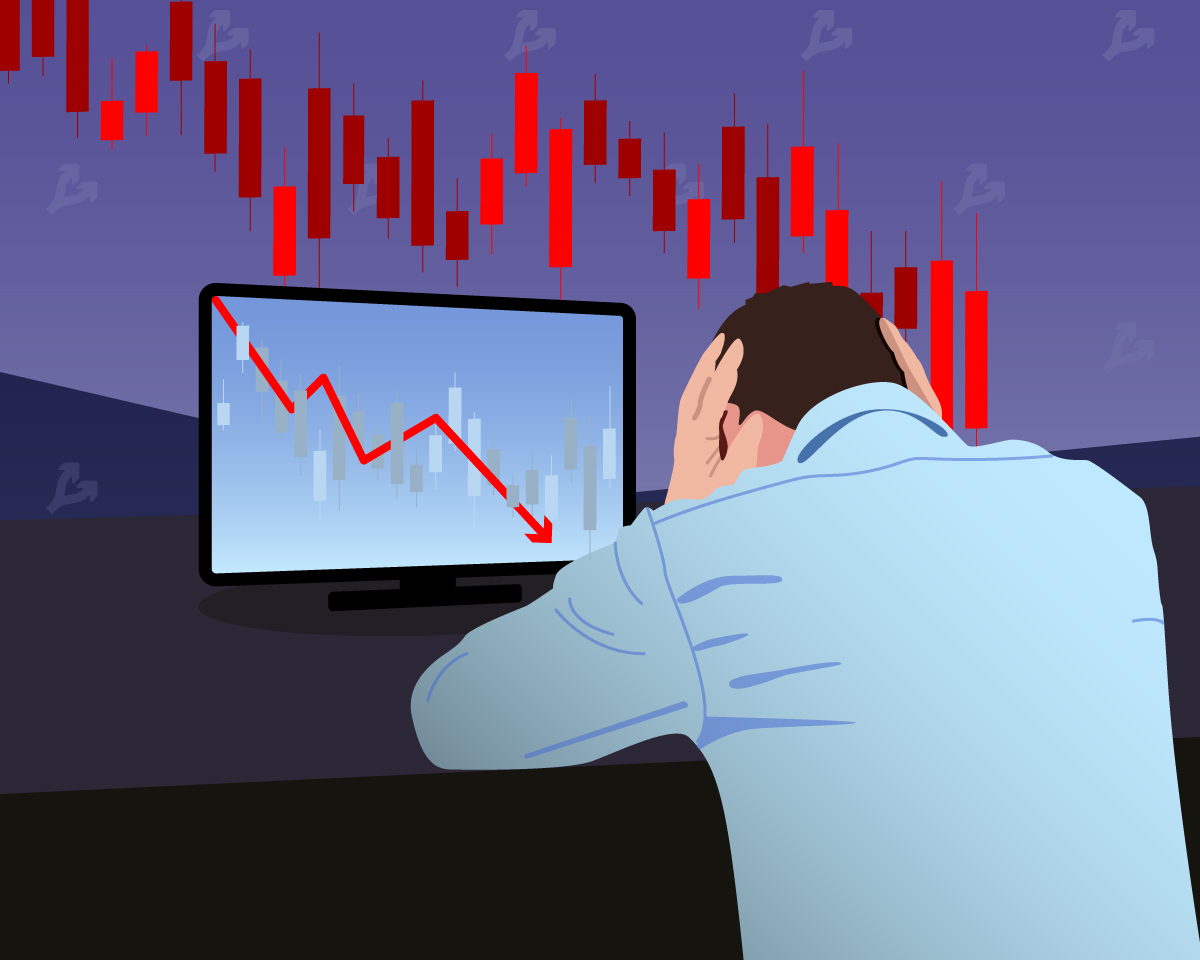
1. The position is too heavy
Placing heavy orders with a large proportion of leverage has a poor anti-risk ability, which belongs to excessive trading, and is the main reason for liquidation. The way to avoid it is to have a small amount of light storage and a constant flow of fine water. For example: in the "mini account", if you have a principal of 10,000 US dollars, use 10 times the leverage, and open a position at most no more than 1 lot each time, so the anti-risk ability is more than 900 points, and the risk degree is about 10%; if the position is full Open 10 lots, then the anti-risk ability is less than 100 points, and the risk degree is more than 90%. As long as the trading currency moves in the opposite direction by 100 points, it will be blown up. Some people may think that positions are too light and making money is too slow. In fact, the essence of making money from trading is to make money with compound interest, not with explosive interest. Regarding the mode of making money with compound interest, everyone is different, and investors can summarize it in practice.
The solution: light storage and small quantities, follow the trend;
2. Frequent transactions.
Frequent entry and exit, excessive trading, some people have their positions liquidated because their positions are too heavy, but some people's positions are also liquidated due to light positions and small amounts. The reason is "frequent entry and exit, excessive trading". From a psychological point of view, there is no plan, eager to make money, placing random orders, placing emotional orders, and finally the mentality is very bad, the odds are high, like a blunt knife cutting flesh, cutting it bit by bit, bursting warehouse.
Solution: After 3 failed transactions, resolutely exit the market.
3. No stop loss
In addition to the word "order" in everyone's words, stop loss is the most talked about, but many people still lose their positions because there is no stop loss. The reasons are psychological obstacles and technical factors. Psychological obstacles are mainly reflected in the existence of luck. Once a position is opened, there is no stop loss, and waiting tremblingly is like tying yourself to a car that has no brake system and is about to overturn at any time, hoping that the price will move in the direction where you opened the position. But speculation is not gambling, and luck and luck cannot be with you forever. If you want to make stable profits, you still have to rely on your own real strength. The market has its own rules of operation, which are independent of anyone's will. Therefore, the bad trading habit of fluke psychology must be eradicated early in one's own trading behavior, otherwise there will be endless troubles.
Solution: keep in mind the iron law "stop loss is necessary for your survival".
4. Blind copying
There are many friends who blindly follow other people's "orders" to operate, and there are quite a few who have no own opinions and lead to liquidation. The reasons: one is that they are not confident in themselves and have a bad trading habit of listening to news, and the other is that they have blind thoughts of worshiping masters. The masters are market forecasters. Due to the uncertainty of the speculative market, no one can stably predict every important market turning point or market fluctuation, and the masters are no exception.
Solution: You can refer to it, but you must have your own operation ideas and follow the trend.
5. Against the trend
Whenever there is a "squeeze short" market or "kill long" market in the market, many people's accounts will be blown up. The reason is that investors blindly "dead long" or "dead short" will not be flexible and adapt to the situation ;And the more you make mistakes, the more you increase the price, and you increase the dead price, imagining that one day the price will turn around and you can turn defeat into victory; as a result, the "bullets" are fired early, and the "death" is in the middle. You must know that there are neither longs nor shorts in the market, only slippery ones can survive for a long time.
The solution: practice hard and follow the trend.
6. Obsessed with obsession.
Due to personal personality reasons, many traders did not close their positions in time when they were in danger. Instead, they took a fluke attitude and knew that there were tigers in the mountain and went to the tiger mountain. This kind of obsessive attitude is stupid in the foreign exchange market. It’s nothing more than wanting to make money in the foreign exchange market. If it doesn’t work this time, you can wait until the next time. This is undoubtedly a waste of funds.
Solution: Keep in mind the famous saying "The market is always right, and you can only be wrong." ,

In fact, sometimes the truth in the financial market is very simple. Although many people have read a lot of great experience, but do not implement it, or do not review and summarize after execution, in the end they still cannot avoid the ending of loss and liquidation.
If you want to survive and develop in the financial market and improve your abilities in all aspects, you must also restrain or even eliminate a series of stupid behaviors that can cause account liquidation, so that you can remain invincible in the market and go ahead of others. The further you go, the more wealth you will have.
Copyright reserved to the author
Last updated: 08/24/2023 22:15
Add

In the investment process, there are several common erroneous psychology, resulting in stupid behaviors, let me introduce them in detail:
One: Greed
"The prosperity of the world is for profit, and the hustle and bustle of the world is for profit"; for more than 90% of investors, the purpose of investing is to make money and satisfy their desire and demand for money;
But if this kind of psychology cannot be controlled well, it will become greedy. Money is endless. When you earn one million, you will have a small goal of earning ten million, and then there will be one hundred million, one billion...
In our Chinese dictionary, greed is explained like this: desire without satisfaction.
Foreign definitions are more detailed, and foreigners believe that greed is an excessive or unrestrained, usually reprehensible, possessive desire for wealth or profit.
In contrast, Chinese people have a broader definition of greed, such as money, beauty, and power.
Foreigners limit the definition of greed to wealth or profit, and it is a completely derogatory term, while the Chinese define greed as a neutral term, such as the desire for money is also the driving force for the operation of the economic machine.
In the material world, money is an important criterion for measuring a person's success. If you are not satisfied with money and lose your rationality, it will lead to greed and become an important factor in investment mistakes.
Many people want to get a return immediately when investing, and want to earn more after earning; they can't restrain their inner greed, and often drive investors to join the profit-seeking crowd, and finally pay the price.
Greed is the nature of human beings. Even the great men in history can hardly restrain their greedy nature.
In 1720, the British physicist Newton bought the shares of the British South Sea Company with 7,000 pounds, which doubled in two months, and the stock rose to 1,000 pounds. But in the end, with the burst of the bubble, Newton finally lost 20,000 pounds.
In great pain, Newton couldn't help feeling, I can calculate the trajectory of celestial bodies, but I can't calculate the madness of human nature!
Two: frequent transactions
In terms of frequent trading, Buffett once thought: "Money flows here from active investors to patient investors. The wealth of many energetic and aggressive investors is gradually disappearing." What he said is that frequent trading brings negative impact. For example, it leads to high transaction costs and eats up most of the profits!
Long-term monitoring and frequent trading, in addition to causing high transaction costs, what problems will it cause?
Uninterrupted staring at the market, seeing the ups and downs of the income, will inevitably feel uneasy in the heart, want to escape when seeing the decline, and want to stop the profit when encountering the rise, which will lead to a series of irrational investment behaviors.
In addition, frequent trading is also very "tiring", and one's mood will also be affected by trading.
People's emotions are easily affected by the market. When the market falls, people tend to turn pessimistic; when the market rises, people tend to be too optimistic. Emotions are greatly affected by market fluctuations, so it is easy to "chasing up and down".
When I was in college, several roommates in the dormitory were also speculating in stocks, and they also traded frequently. I just wanted to earn a living fee every day, so basically buy today and sell tomorrow.
It is found that their mood is more easily affected by investment. If they make money today, they will laugh from ear to ear and go to the cafeteria for extra food.
If you lose money, you will lie on the bed depressed, depressed, and less active than usual. There are also some changes in personality, easy to be happy and easy to be sad.
Frequent trading, investors may indeed earn the price difference from the band and T due to factors such as luck, but the question is, have you seriously considered whether the starting point of such an operation is to satisfy a momentary pleasure, or is it really for you? investment income help? Frequent trading will be addictive, making you keep thinking about trading and unable to control your hands!
Reducing frequent transactions that are not for the purpose of adjusting positions, and returning to fundamental factors is the kingly way to improve investment returns.
Three: Overconfident
Confidence is a good thing, but excessive self-confidence is conceit. In investment, conceit is obviously not a good thing.
After a few successes at the beginning, many people start to fantasize and inflate their confidence; they attribute their success to their personal skills and abilities, so they will trade and gamble frequently.
This behavior is more pronounced in bull markets than in bear markets. Because in the bull market, everyone is a stock god, so that they are blinded by the victory, and finally fail.
Overconfidence can cause investors to make bad decisions such as overtrading, risky trades, and ultimately lead to investment losses because they are overconfident in their views.
Around them, male investors are more overconfident than female investors, and female investors have greater risk awareness, so the return on investment is better. If it is family financial investment, you might as well let female friends participate.
In short, overconfidence is not advisable. Only by fearing the market and doing transactions with a sense of risk can you be more thoughtful.
Four: Conformity
In investment, herd behavior is very common, and it is a phenomenon common to most individuals. It refers to the individual being influenced by the behavior of the outside crowd, and in his own perception, judgment, and cognition, he shows a behavior that conforms to public opinion or the majority of people.
Only a few people have maintained their independence and have not been conformed to.
After consulting the article "Research on the Behavior of Chinese Securities Investors" issued by the Shanghai Stock Exchange, I found that Chinese securities investors have three distinctive features in their investment behavior, and herd behavior is one of them.
Herd behavior brings group effect and herd effect, which makes investors give up their independent thinking, resulting in systematic cognitive bias and emotional bias, which leads to investment decision-making bias and becomes an unconscious investment behavior, which has huge hidden dangers. risk.
In last year's "big blue chip" market, the blue chip stocks in the large market were "outstanding". From the data on the change in the number of shareholders, it can be clearly found that retail investors are getting in together. More and more people buy, leading to herd behavior.
If there are too many retail investors, it will be easy to have a group effect, which will easily lead to a stampede. For example, the main board has weakened recently, while the GEM has been strong, and some star blue-chip stocks have continued to pull back, which is related to the collective flight of funds inside and to the GEM.
Stocks that everyone pays attention to, stocks that are too hot, are actually not a good thing, and they are prone to group effects and affect stock prices.
Buffett's first teacher, Benjamin Graham, said a very interesting sentence: "The bull market is the main reason why ordinary investors lose money." Because whenever there is a bull market, many investors blindly chase the rise under the influence of the herd mentality, and finally get caught on the top of the mountain.

The stupid behaviors in investment are far more than the above four, but these four are more typical and common. If you can pay attention to these when investing, it will be very helpful for your investment.
Once human nature is formed, it is difficult to change. Pay attention, it is very good to be able to restrain yourself. It is very difficult to completely get rid of these weaknesses of human nature.
Greed, frequent trading, overconfidence, herd behavior, learning to say no to them is the first lesson of investing!
Copyright reserved to the author
Last updated: 08/11/2023 00:35
Add

When it comes to stupid behaviors in trading, there are so many, as many as three days and three nights, so many that every loss, after every big loss, has a reason for loss. But so many stupid behaviors, summed up, there is only one: that is, there is no basic understanding of whether you can make a profit. Most people subconsciously know that they lack profitability, but they just don't want to admit it.

When luck is good, if you make profits occasionally or even for a long time, it is easy to be high-spirited and confident, giving yourself a strong hint: I am already a master. And once you lose money, you will look for various reasons, such as position, discipline, mentality, technology, dealer, black swan... In the final analysis, you have not thought about how to walk on the right learning path.
This analogy may not be very appropriate, but it is roughly similar. For example, let an ordinary person summarize and analyze why fish can live in water. Will find out such things as: has protective color; the body is streamlined; the body surface is covered with scales to protect the body and can reduce the resistance of the water; the lateral line can determine the direction and sense the water flow; there are water movement organs such as fins; breathe with gills; regulate the body in the body The specific gravity of the swim bladder... In short, a large number of favorable factors for fish to live in water can be found.
Even if ordinary people know this, you still can't live in water. But fish don't know this, let alone think about it, but they live well in the water, because they naturally coincide with the benefits of all these things. The same is true for trading. Under the guidance of the correct way of thinking, the so-called learning, summarization, analysis, and operation will automatically be upgraded to the level or conditions required by the transaction, and those factors or shortcomings that are unfavorable to the transaction will be naturally discarded.
The so-called stupid behavior is not mastering the correct way of thinking, the right way of thinking required for trading. Therefore, under the wrong way of thinking, what is the point of deliberately summarizing those so-called mistakes, no matter how comprehensive, profound, and clear the summary is? Even if you know all these mistakes, even if you try your best to avoid all these mistakes, these mistakes are still just past mistakes, and new mistakes will still emerge in endlessly. Mistakes seem to have the ability to reproduce. The more they are corrected, the more they will be corrected.
But a person's way of thinking is formed in the process of years of subtle influence, so how can it be easily denied? Buddha said: When you know you are you, you are no longer you. Therefore, to find the correct way of thinking needed for trading, and then change your own way of thinking, start from knowing yourself. It is also because "when you know you are you, you are no longer you", so when you really have the correct way of thinking, you don't need to know, and your way of thinking is also unknowable. It is to return all dharmas to one, to return to the dharma that has no definite dharma. So what you really need is the way of thinking to master the correct way of thinking, not a specific way of thinking itself.
Copyright reserved to the author
Last updated: 08/24/2023 22:01
Add

Speaking of stupid behaviors in trading, there are so many, as many as three days and three nights, so many that every loss, after every big loss, has a reason for loss. But so many stupid behaviors, summed up, there is only one: that is, there is no basic understanding of whether you can make a profit. Most people subconsciously know that they lack profitability, but they just don't want to admit it.
"The most stupid behavior - I am always right".
When luck is good, if you make profits occasionally or even for a long time, it is easy to be high-spirited and confident, giving yourself a strong hint: I am already a master. And once you lose money, you will look for various reasons, such as position, discipline, mentality, technology, dealer, black swan... In the final analysis, you have not thought about how to walk on the right learning path.

This analogy may not be very appropriate, but it is roughly similar. For example, let an ordinary person summarize and analyze why fish can live in water, and find out such things as: protective color; streamlined body; body surface covered with scales to protect the body and reduce water resistance; lateral line can determine direction and sense water flow; There are aquatic movement organs such as fins; gills are used to breathe; the swim bladder that regulates the body's specific gravity in the body... In short, a lot of favorable factors for fish to live in water can be found.
Even if ordinary people know this, you still can't live in water. But fish don't know this, let alone think about it, but they live well in the water, because they naturally coincide with the benefits of all these things.
The same is true for trading. Under the guidance of the correct way of thinking, the so-called learning, summarization, analysis, and operation will automatically be upgraded to the level or conditions required by the transaction, and those factors or shortcomings that are unfavorable to the transaction will be naturally discarded.
Not mastering the right way of thinking, the right way of thinking required for trading. Therefore, under the wrong way of thinking, what is the point of deliberately summarizing those so-called mistakes, no matter how comprehensive, profound, and clear the summary is? Even if you know all these mistakes, even if you try your best to avoid all these mistakes, these mistakes are still just past mistakes, and new mistakes will still emerge in endlessly.
Mistakes seem to have the ability to reproduce. The more they are corrected, the more they will be corrected.
But a person's way of thinking is formed in the process of years of subtle influence, how can it be easily denied?
Buddha said: When you know you are you, you are no longer you. Therefore, to find the correct way of thinking needed for trading, and then change your own way of thinking, start from knowing yourself.
It is also because "when you know you are you, you are no longer you", so when you really have the correct way of thinking, you don't need to know, and your way of thinking is also unknowable. It is to return all dharmas to one, to return to the dharma that has no definite dharma. So what you really need is the way of thinking to master the correct way of thinking, not a specific way of thinking itself.
Copyright reserved to the author
Last updated: 08/22/2023 12:52
Add

As far as I am concerned, the most stupid behavior in trading is to go against the trend and die.
I believe that anyone who has done futures knows the saying that "according to the trend, you will lose money sooner or later; if you fight against the trend, you will create brilliance"! In reality, we also know that Wanqun, who took advantage of the trend to increase their positions, lost tens of thousands of accounts with more than 10 million yuan, while Fu Haitang and others achieved the title of "four futures masters" by relying on death. Therefore, when many people enter the futures market, the first thing they do is to fight against the trend.
As everyone knows, "Follow the trend to increase positions, and sooner or later you will lose everything; if you fight against the trend, you will surely create brilliance", in these 16 short words, of course some people climbed out of it and became "profiteers and lucky ones" in the futures market! But more often than not, the corpses of "one will succeed and all will die" are strewn all over the field.
The same 16 words, why did some people succeed but you didn't? Is this accidental or inevitable?
In fact, the biggest reason why Fu Haitangs were able to "go against the trend and create brilliance" is that they are purposeful dead bars, which is what we usually call left-handed transactions; and many blindly follow the trend to die The people who carried it were dead carrying without purpose, and some of them simply applied Martin's strategy to carry heavy positions against the trend, so it is not surprising that their positions were blown.
The reason is actually very simple: heavy warehouses reflect the greedy nature of people, contrarianism reflects the nature of anger and anger, and carrying orders reflects the nature of ignorance. Traders with heavy positions hope to make a lot of money in one transaction, but they don't know that stable profits are huge profits. Traders who go against the trend think that the market is wrong and like to fight against the trend, but they don't know that doing nothing with the trend is the last word. Traders who carry orders lost themselves under the illusion of making a lot of money with heavy positions and the reality of losing a lot of money against the trend, and chose to stick to the end, which resulted in liquidation.
Regardless of whether a trader uses fundamental analysis or technical analysis, as long as he often takes heavy positions, goes against the trend, and carries orders, he may be liquidated at any time. This has no direct relationship with the analysis method the trader himself adopts.
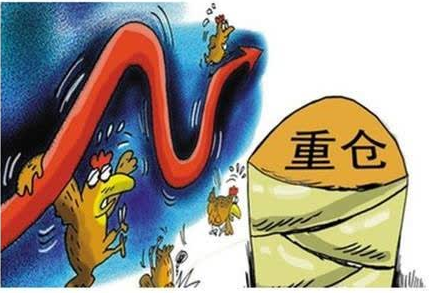
The biggest risk in investment transactions does not lie in the market and disk, but in the traders themselves. Many traders have a long time trading experience, but little trading experience. They are losing money day after day, but they never know how to change their trading methods and methods, and they don't know how to improve their trading concepts and systems. Such traders are not speculating, but gambling. The core of speculation is to discover opportunities, wait for opportunities, and intervene in opportunities. In my opinion, many traders are just gambling under the guise of speculation.
Therefore, I hope that futures noobs will no longer be confused by the sixteen words "according to the trend to increase positions, and sooner or later; if you fight against the trend, you will create brilliance". Probabilistic events, which is why there are only "four unique futures" in such a large futures industry. When we do transactions, what we want to do is events with high probability, and establish our own trading system instead of blindly carrying it to death. This is the right way.
Copyright reserved to the author
Last updated: 08/18/2023 10:12
Add

It is obviously inappropriate to forcibly define the so-called stupidity. It may be stupid for you to do the same behavior, but others can do it very correctly. This still depends on the person.
That said, a lot of behavior in trading is a back and forth between stupidity and wisdom. For some people, if they are stupid, they probably shouldn't get into the pit of trading. Trading itself is the biggest stupidity. Even if you can't give up transactions, it is very important to reduce the number of transactions.
No one will die if you leave the speculative market, so don't take this too seriously. There is no difference in the length of time to do trading. Some people can't understand it in a lifetime, and some people can understand it in a month. There may be 10,000 ways to make money for 10,000 people in the world, but the methods that can make me money may not necessarily make you money.
Trading is a kind of life, a sketch of life, which can experience the ups and downs, punishments and achievements of life in a short period of time.
Napoleon Hill said about the meaning of mentality: "There is only a small difference between people, but this small difference makes a huge difference! The small difference is the mentality that you have. Positive or negative, the big difference is success and failure."
Mentality decides success or failure! If you have not adjusted your investment mentality, don't enter the market lightly. Because in this market, emotions will affect your judgment on the market, profits and losses will change your original investment plan, and your mentality will influence your reason. This is the weakness of human nature. Only by overcoming these can we finally gain a firm foothold in the tide of the market!

Trading is not an exact science, but an exercise of mentality and a cultivation of gambling skills. Successful investors find a trace of inevitability in a market that is completely uninevitable to achieve ultimate profits! Often this kind of inevitability does not come from the market, but from your own gambling skills!
There are no masters in this market. Masters are the biggest lie in this market. There are only people who make money here, but they still can’t be called masters, even if your profits are multiplied by 10,000 times.
In a certain market, both bulls and bears are gamblers. The only difference between them is winning and losing. The real winner is the slicker. They don’t have the concept of long and short in their minds. .
The so-called long-term and short-term are also misunderstandings. There is no long-term and short-term in this market, because you can never know how long the market will last until the market is over. Only a slicker can be long and long, and short and short, and there will never be a distinction between long and short.
For anyone entering the market, the most difficult thing to grasp is not the intricate factors inside and outside the market, but his own mentality. Having a position in your hand but no position in your heart is easy to say but hard to do. Only after experiencing great ups and downs, will the mind be fully enlightened, and the attitude towards winning or losing will become calm.
Success in the market is not accidental, there is absolutely a reason for failure. In this place where miracles and dreams are created, we can give full play to our free will. But if you don't have a correct and peaceful investment mentality, even if you make money by accident, you will still have to return the money after a while!
There are often people who create miracles of huge profits in a short period of time, but countless facts prove that most of them are short-lived. At this time, the vast majority of traders will lose their minds about trading due to impetuousness, frivolity and fluke.
History does not repeat itself, but human nature is always the same. Treat trading as part of your overall life, coordinate with each other, and avoid dissonance. This is probably the attitude that most traders should have.
Copyright reserved to the author
Last updated: 08/18/2023 05:47
Add

When the floating loss exceeds your tolerance, you still have illusions and never stop the loss
Each participant has a different amount of funds, expectations, wealth, and pattern, so his tolerance for actual losses is different. Those with low endurance cannot tolerate a little loss. If there is a slight loss, they will suddenly panic, speak incoherently, deform their movements, cannot sit still, have random thoughts, and move their hands randomly.
The so-called those with more financial resources and greater tolerance, don't care, carelessly, pretend to be rich, and let the bills fly.
These two extremes are very typical representatives in the industry, and may account for more than 80% of the losers. Especially the latter, who are overconfident and try to find all reasons to insist on the rationality of their list.
There are also traders who fantasize instead of reason, always expecting a reversal. These traders do not have their own trading strategies at all, and they trade entirely based on their subjective wishes. The outcome of these funds will all serve as the denominator of the market, and the outcome of failure is inevitable.
"It is the first stupid behavior to bear losses." Among these people is Ah Q: If he persists, he can make a lot of money, but the futures will not give him a chance, because his capital has already been deprived!
Fantasy gold panning in small fluctuations, but backfired
Looking at the past market trends, they have developed a rich imagination there, trying to catch every small fluctuation, even a few points, and buy and sell like exhausted every day. Those who can brush orders may have the know-how, such as quantitative trading, etc., I don't completely deny it. But this is by no means something that ordinary Xiaosan can do.
These people came in batch after batch, and soon disappeared batch by batch. I call this stupid trading behavior, not to make fun of this kind of trading, nor to promote how good swing trading is, but to remind them from the perspective of "old comrades in this trip": this kind of gameplay is not something inherent in trading, They are confused by T+0, and by the so-called zero handling fee for daily trading within the day.
trade with partiality
There are many who believe in fundamental analysis to determine traders. They study all kinds of analysis, data, and reports all day, and shout plausibly at every turn: demand is stronger than supply, open long orders! In the end, the trend didn't give him face, and he said inexplicably, how could this happen? Was the analysis wrong or the data inaccurate? Time and time again, I was beaten by the reverse trend.
This type of traders also has a larger group characteristic: extreme stubbornness and firmness, clinging to those fundamental analyzes and shaking their heads while firmly believing that if they refuse to admit their mistakes in the face of a reverse trend, the death will be even worse.
what reason? Let me tell you: Fundamental analysis is a very gorgeous and quality proposition, but the premise is that it must be true, comprehensive, and timely analysis to be quality, can it be realized? None of the three words and six characters can be realized!
Copyright reserved to the author
Last updated: 08/10/2023 19:53
Add

For this problem, the first thing that must be said is stop loss, without stop loss, to stop loss and resist orders. It's been like this a few times, I know it's a stupid act, but I can't avoid it every time I encounter it.
Sometimes the reason for not stopping losses at the beginning is simply because the losses are not enough. Small losses seem to be insignificant, but many big losses come from small losses. Many people stop losses because they are small losses at the beginning and disdain to stop losses , Then it turned into a big loss, panicked again, and carried on without stopping the loss. It will become that I have lost so much, what is the point of stopping the loss, maybe I will come back after waiting? To put it bluntly, this is numbness and broken cans. If you can look back at too many market conditions, you will know how stupid you are. Once a trend is over, the direction will be reversed. If you don't stop the loss, you may really have nothing.
The other is that some traders can't control themselves after they have tasted the sweetness of profits several times, and start to invest all their funds in large transactions, always dreaming of high investment and high returns. In fact, their profits are always temporary, and they will lose back one day. A transaction that loses most or even all of its funds due to one transaction is obviously a failure and stupid. Because we are not professionals, we have no professional training, and we don’t have so much time and energy to spend on it, so all bets are equivalent to heavy trading, and once we make a mistake, we will explode.
There are also some traders who are superstitious, do not do any homework and preparation before trading, and get crazy when they see others making money. Only rely on "intuition" to start trading, and really smart traders rely on trading systems, trading strategies, risk control and rational minds to trade.
There are still many points that make people feel ridiculous, and some people always think that any of their transactions will not fail, which is the most stupid. In fact, it seems that the most important thing is not to be superstitious, do your homework, and enter the market rationally instead of with a gambling mentality. This is the ability we must have if we want to survive longer.
Copyright reserved to the author
Last updated: 08/13/2023 02:05
Add

In fact, I think the essence of this problem lies in how to restrain one's trading behavior, how to regulate one's own trading, and let oneself do less "stupid things"
In order to strictly enforce the trading rules in the transaction, two situations need to be met: completely submit to the trading rules, and be strictly enforced by the outside world.
Since the vast majority of traders are individual traders, they do not have the constraints of external coercive forces. Every trader is basically unrestrained, and unrestrained means no discipline.
Therefore, if a trader wants to strictly implement the trading rules, he can only rely on his own control. How is this self-control formed?
Many people have given many so-called methods of self-cultivation and mind-cultivation in order to obtain such inner control. What is the effect? Different people have different opinions.
Things can be a lot easier if you treat your own trading rules as a totally reliable confidant.
If you want to treat your trading rules as a completely reliable close friend, you have to spend a lot of time with it, and being with it is a kind of more and deeper understanding and understanding.
Only on the basis of more and deeper understanding and understanding can you become a close friend with it, and can you completely trust it, obey it, and act according to it in transactions.
Therefore, kung fu is outside the market. After the trading hours are over, you still have to spend a lot of time with your trading rules, which is reviewing -- carefully observe its changing structure in those changing areas, design a coping formula based on the statistics of large samples, and repeat it over and over again. Practice doing it over and over until it becomes instinctive.
Copyright reserved to the author
Last updated: 08/11/2023 21:26
Add

Go ahead to dangers.
I think the most stupid way in trading is to increase positions against the trend without losing money, and have unrealistic illusions about returning capital or even making profits.
This approach obviously has no risk control and trading plan, or there is before the transaction, but after you encounter losses after the transaction, all this is left behind. The trader becomes an emotional animal, overwhelmed by the desire to fight the trend of the market.
In this situation, traders have become very restless. Fully expose your positions to high risks. Once the trend strengthens, your positions may be liquidated at any time.

This is the easiest way to blow up a position, and it is also the stupidest and most wrong way. Always remember that the market is always right. If there is a loss in your position, let the stop loss help you confirm whether the direction has changed; once you stop the loss, you must re-examine the market and your own transactions.
Don't increase your position against the trend, don't stop loss!
The lesson of blood and tears calls everyone to remember the above two points!
Copyright reserved to the author
Last updated: 08/24/2023 02:31
Add

"Foolish Behavior in Trading"
Recalls a lot, stupid behavior.
I think everything should be trial and error. Mistakes are part of success. 99 times of effort and 1 luck, 99 times of effort, there are wrong methods, there are correct methods, wrong methods need to be tried and eliminated, and success requires multiple attempts to increase the probability of approaching a successful method.
We need to leave space and time for trial and error.
What is stupid?
"Stop Losses Are Not Accepted"
"Do not admit that I am not suitable for this industry"
"You can't concentrate on your own research"
"Unwilling to take advice from others"
...

I think the above ideas will be there, but "denying the value of the market, any views on the market are based on personal cognition, this is the most stupid."
This is related to our education, don't admit defeat, don't accept fate, I feel that I will win the day. In the capital market, it is a place where you can only make money by "resigning your fate at all times". If you look at it from your own point of view, it often ends badly.
The big waves wash the sand, the tide ebbs and flows, and you often walk on the beach, and your shoes will definitely get wet. The best way to get wet shoes is to always prepare a pair of clean shoes and change them when you go back to the shore.
There is a saying in Buddhism that greed, ignorance and hatred are all wrong. Between persistence and obsession, being too persistent is obsession, and obsession restrains oneself and others. Walking on the beach is an obsession, entangled that the shoes should not be wet is an obsession, and going to the shore to change into new shoes is a workaround.
The same is true for trading. It is an obsession to always think that you cannot lose money; strictly implementing the strategy and keeping the total amount of the account growing continuously is a workaround.
There is no need to go with yourself, no need to reason with the market, and no need to care about whether the fundamental analysis is right or wrong.
In doing transactions, you follow through with the goal of "making money". "Make money" is your only varsity criterion.
Copyright reserved to the author
Last updated: 08/17/2023 22:37
Add

If there is a deviation, it means that the order can be reversed
We often encounter such a situation in the trading process: the price chooses to run upwards and the index has a divergent trend. At this time, we are eager to sell the long positions in our hands and start to try short operations, but the actual situation is often the opposite. The price will either continue to rise, or continue to rise after a small adjustment, and when it is not believed, it will fall back due to divergence. So no longer trust the indicators.
Small probability event as inevitable
The biggest change in the market is constant change, but these changes can be traced. As a trader, we must discover and implement these laws. In the process, there will inevitably be some changes that we are not familiar with. If these small Changes that do not bring about "excessive" quotes (that is, no deep impression) will naturally be ignored by us, but how to leave us with "trauma" will be deeply remembered, and then we will find ways to make up for it , the result is picking up the small and losing the big.
excessive high frequency trading
For high-frequency trading, it is not unacceptable, but whether it is advisable for individuals. It does not mean that the higher the trading frequency, the easier it is to make profits. There is no necessary connection between the two. The key to making a profit is to see what the result of each transaction is, just like saying that a person is very hardworking, but doing things is not efficient.
Always think that the market will develop in a direction that is beneficial to you
When you have a position in your hand, you always think that the market will develop in the direction you hold, and even blindly bullish and bullish after intervening, and keep adding positions, which will lead to a contrarian all the way, increase positions all the way, and eventually lead to deep set or burst warehouse.
Knowing where the mistakes are is the best way to correct them. People often don't know how to work hard, or don't know that they should make themselves more perfect. The key is that they don't know what's wrong with them.
Copyright reserved to the author
Last updated: 08/24/2023 08:21
Add

Thank you.
In the investment industry, no matter how good a person is, there are always people whose wealth grows faster than him. If investors can't bear this, they will often lose money in a mess.
"Focusing on the idea that someone else is making money faster than you is a deadly crime. Envy really is a stupid thing to do."

In fact, the stupid behavior in investment is not the only one mentioned above.
Suppose: You clearly perceive that the upside space in the market band is limited, but you can't bear the impulse pull of some stocks you have paid attention to during the day, so you can't help but enter the market. Then congratulations, you have become addicted to frequent operations. And it is precisely this hasty decision that makes you lose the initiative to succeed in the next transaction. The "initiative" I refer to is the effective funds that you can flexibly mobilize. Then congratulations, you have been tricked again.
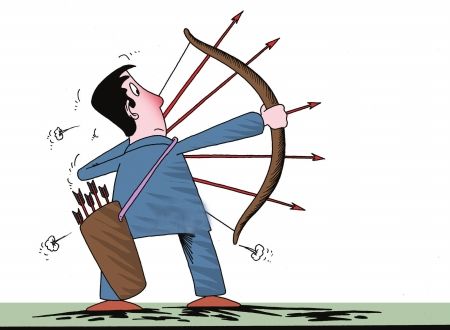
This is also a kind of stupidity in my opinion, and if you learn to avoid this stupidity, you will naturally become a successful investor, but there are only two ways to achieve it:
1. Constant introspection and trimming, a lot of reading, and finally metamorphosis.
Two, find someone who has learned to stay away from stupidity to stop you at all times.
Copyright reserved to the author
Last updated: 08/24/2023 11:09
Add

It is better to trade without a stop loss
Trading without a stop loss is a disaster on every level. Without a stop loss, traders will have three performances that are most likely to lead to losses: being unable to control the size of the position, not having sound risk management, and one transaction can empty your account.
Never forget to set a stop loss. In addition, don't temporarily move the stop loss. Temporarily changing the stop loss setting shows that the trader's risk management plan is not solid enough and will only increase losses.
Trade several currency pairs at the same time
For example, go long EUR/USD and GBP/USD at the same time. But no matter how the USD changes, the probability that the results of these two transactions will be profitable is very small. The most likely situation is that the profit and loss of the two transactions will be even or all losses will be lost. Unfortunately, I do this a lot.
heavy warehouse
A high-return profit can balance other loss-making transactions. I think people with heavy positions have this idea. I want to recover the previous loss through a transaction. Have to say, this should be the most stupid behavior.
fantasy panning for gold in small fluctuations
Looking at the past market trends, I have developed a rich imagination there, trying to catch every small fluctuation, even a few points, and buying and selling like exhausted every day. There are quite a few people like this, coming in batch after batch, and soon disappearing batch by batch. I used to be one of them. I call this stupid trading behavior, not to make fun of such trades, nor to promote swing trading.
This kind of gameplay is not something inherent in foreign exchange. They are confused by T+0, and they are confused by the so-called zero handling fee in the day.
Rigid and dogmatic stop loss
The saying in the market is not shallow: no matter how wrong the stop loss is, it is correct. What is wrong is wrong, how can it be said to be right? Why is the right to gradually reduce the rights and interests? What is the essential meaning of setting a stop loss? Haven't really figured it out yet. Stop loss is to stop the inner fear! Stop loss is to stop more losses! Mechanically setting the stop loss at a fixed amount, fixed range, fixed format, and fixed thinking is rigid and dogmatic.
Copyright reserved to the author
Last updated: 08/02/2023 21:28
Add

Trading is like being a human being. A mature trader who has stuck to the market for many years must be a prudent, decisive, low-key and rigorous executor. In this market, you can see friends who are full of confidence and ambition everywhere. They are all believers in technical analysis, that is, speculators in trading. Their appeal to technical analysis is to find ways to make quick profits. All to no avail. A large number of traders choose to do transactions in order to buy luxury cars, yachts, and luxury houses. They always dream of making a fortune and becoming famous one day. These traders do transactions with too much utilitarianism, and their mentality is more exaggerated It can be said that it is superficial and restless, so it is difficult to profit from the transaction. Such behavior is obviously stupid.

Copyright reserved to the author
Last updated: 08/25/2023 07:57
Add

Let’s talk about a failed transaction I had today. I didn’t stop the loss in time, so the account exploded directly. This happened in the first half of 2014. The exchange rate of the euro against the U.S. dollar rose slowly from 1.27 in March 2013 to 1.39 in May 2014, still one step away from the integer mark of 1.4 yuan. This integer mark is also the focus of market sentiment. If the European Central Bank lets it go, the exchange rate of the euro against the U.S. dollar will continue to rise after breaking through 1.4. A rise in the exchange rate will have a negative impact on the euro economy.
After the exchange rate of the euro against the dollar tested a high of 1.399, the European Central Bank held an interest rate meeting. After the meeting, Draghi's very tough attitude suppressed the exchange rate of the euro against the dollar. The euro fell against the dollar in response.
On the day Draghi spoke, I entered the market when the price plummeted. The position was not heavy, but I did not set a stop loss. As the price fell more and more, the original psychology of strict stop loss changed, "the price has fallen so much, there will definitely be a callback, cover up the position and wait for a callback." The position was covered that night, and the position was covered that night. . At this time, the loss has exceeded the expectation, and the stop loss is no longer available. I also know that the market will continue to fall with a high probability, but I always tell myself that even if the market falls, there will always be a pullback during the fall. If you make a pullback, your account will not lose or you will lose money. The account can be closed with a small loss. Keep covering up positions, waiting for a callback, but the market does not have a deep correction; in the only few callbacks, there are a lot of people who want to close their positions but are always entangled in losses. They want to find the best opportunity, but the opportunity is always fleeting. I believe everyone can also see that the account exploded as expected.
Stop loss is absolutely right at any time, only non-loss is wrong!
Copyright reserved to the author
Last updated: 08/09/2023 04:58
Add

Rely on indicators or other "magic" tools to trade. Many traders, especially novices, mistakenly believe that indicators must be used to determine price fluctuations, or that indicators can help them profit in some way. This is a very stupid behavior, which causes many traders to only study indicators and trade according to indicators, and the results are often counterproductive.
Don't understand position and stop loss control. Many investors who devote themselves to the spot trading market do not know how much stop loss should be set in the transaction, and setting a smaller stop loss size may not necessarily reduce the risk of trading. A trading mistake that investors often make is that they often adjust the size of the stop loss according to the size of their trading volume. Generally, the stop loss position cannot be changed casually, which is of great significance to the entire transaction. There are also full-position transactions, looking forward to liquidation, but most of them are the result of liquidation.
There is no trading plan. The vast majority of novice traders have the common problem of not having a trading plan. At the same time, investors also have the misunderstanding that "investment success does not require a trading plan". Any investment requires careful planning, so formulating a trading plan in a transaction is a necessity for an investor's growth and success. A trading plan can keep you calm in trading because the plan is known in advance. The vast majority of investors have experienced thinking about how much money they can make, but they forgot the actual risks of trading, and were finally "fixed" by the market. Looking at your trading plan every day can keep you in the right trading direction and say goodbye to illusions.

Copyright reserved to the author
Last updated: 08/22/2023 08:10
Add

Let's say something unflattering, stupidity is still very subjective. After all, most people don't know what they don't know at many times, which means that blind self-confidence is human nature. Similarly, it is difficult for them to perceive their own stupidity. Many people who are engaged in trading just enter the market at will, do not have basic investment knowledge, and fantasize about achieving their small goals through trading.
The stupidity of some people here is the blind worship of technical analysis.
From the perspective of theoretical basis, technical analysis was born in the belly of epistemology and has to serve the chaotic market. It has inherent defects and shortcomings.
Technical analysis has never changed the probability of winning or losing in the market. Mastering technical analysis has not increased the chances of winning and making money for traders. So why everyone is still obsessed with technology is that it seems to reduce the risk of traders and get rid of the shackles of fund management.
Traders naively think that if they have mastered technical analysis, they can act lawlessly and recklessly in the market and in any market.
For example, we often hear stockholders say that when the stock price reaches the K-line shape, I will buy all positions; some investors will say that if the price falls below the 20-day moving average, I will buy all positions. What's this? This is the fearless fox pretending to be a tiger. The trader is a fox, but the technical analysis he relies on is a paper tiger. In any market, at any price, and under any circumstances, you cannot enter your entire position.
If there is no technical analysis in the market and only rely on the concept of trading, there may be more winners, but the market is no longer the unusually prosperous style it is today, it will be abnormally cold and depressed.
The real function of technical analysis is that it refines, matches, and classifies the market conditions of the trading market and the traders participating in the transaction. Technical analysis has this magical function and effect, and it is completed by traders willingly and tirelessly to classify, match, and actively and well-trained. For example, trader A reads the Dow Theory and thinks that trending reflects value investment, and since then he has been doing trends, and he falls into the category of trend operation; trader B sees that the indicator tactics are suitable for short-term, and he is young Sheng prefers short-term speculation, so he falls into the category of short-term speculation...
Whether it is Wave Theory, Dow Theory, K-line Theory, Trend Patterns, Technical Indicators, etc. There are too many categories of technical analysis, like a vast and incomparable big shelf. After reading the relevant technical analysis books, readers will be willing and happy I climbed onto this shelf, drilled into the grid suitable for displaying and placing myself, and completed the independent classification. Band, short, high frequency, trend, etc., and so on, and so on.

Technical analysis not only refines and classifies the trading market for traders, but also cuts into extremely fine pieces from the time unit, which makes the transaction more sufficient and convenient. What kind of traders are suitable for the opening market, what kind of traders are suitable for intraday trading, what kind of traders are suitable for time-sharing, what kind of traders are suitable for bottom hunting and top escape, and what kind of traders are suitable for the millisecond level. Shelves and corresponding grids.
Markets and traders are continuously refined, classified, branched, and matched by the invisible magic hand of technical analysis, and the cycle goes on endlessly. Make transactions more delicate, even, smooth, and fully active in each time period. Make the transaction more colorful, more operable, more simple and convenient, and the public has more sense of participation. Even a novice in trading can do it with ease and ease.
On the other hand, if we give up technical analysis and surrender to fund management, risk control, and trading strategies, traders will have a greater chance of winning, but the prosperity of the market and trading will be greatly damaged.
But it is foreseeable that without technical analysis, the connotation of fund management, risk control and trading strategies will become more abundant, substantial and full.
Copyright reserved to the author
Last updated: 08/18/2023 11:07
Add

0
work
0
subscriber