


Stay in touch!
Subscribe to our newsletter to get the latest updates on live market analysis, trading strategies and more. You can unsubscribe anytime.
By subscribing, you agree to Trading.live Privacy Policy.


Trading is right and wrong.
To say this, we have to start from just entering the transaction. When we are interested, to deposit, from opening the first order to being educated by the market, all transactions during this period are regardless of right and wrong. Even if you doubled or lost all your capital. Most of these transactions are based on one or two indicators or a little advice from the person who led you into the pit, or even simply opening positions with your temper. There is no right or wrong in these.
After being educated by the market, I learned from the pain. After starting the learning process, from simple indicators to the masterpieces of Wave, Dow, Gann, Turtle, Livermore, etc., it is only at this time that there is a distinction between right and wrong.
These have been learned to a certain extent, and when doing transactions, they must be mixed with the strengths of various companies, their own understanding, and a small part of random behavior.
This is the time to learn, and the transaction has slowly started to get on the right track from a casual start.
The trading system is also formed from here. It is only here that the transaction is officially divided into right and wrong. All trades made according to the system think it is correct, and all trades done not according to the system are invariably wrong.
At this time, the transaction that made mistakes but made money is the biggest killer. Just like the stop loss in the system, when the market is about to reach the stop loss position, you extend the stop loss line by a certain distance, and the market just turns around. In the end, the transaction not only has no stop loss, but also makes a profit. Then this transaction is a wrong transaction for you. It makes you feel distrustful of the whole system, and all the core of the transaction, all your reliance is the trading system and system that you have worked hard to read, think day and night, and summarize and slowly solidify. However, this transaction at this time has reduced your trust in the system, which is a mockery of countless previous thoughts. If things go on like this, this sense of trust will be lost, and the transaction will return to the chaotic state of the novice period, and the account will shrink accordingly or be taken away by the market.
So what's the right deal?
Of course, according to what you have learned, sum up the essence and refine it into your own trading system, which is your ultimate understanding of the market. But the system at this time may indeed not make money or even lose money. If you follow its guidance and lose money for a long time with a set of systems, is the transaction at this time still correct? The answer is still correct. A trade that loses money allows you to examine the system again, to recognize its shortcomings and modify it, which is also correcting your own understanding of the market.
Slowly, when to open a position, when to stop loss, when to take profit, and when to increase position. Transactions within the rules have a probability of making money and losing money. At this time, the trade that loses money is also correct. Although I lose money, the system has already calculated how many times I can bear such a loss, and how many more times my funds will be safe. My roots are still there.
Therefore, what the subject said is that a profit order may be a wrong transaction, and a loss order may also be a correct transaction, which is completely correct. When in the "wrong trade", close the trade as soon as possible if you realize it. If it makes a profit, it should give itself a slap in the face. As the price to pay for doing something wrong. If you lose money, you don’t need it, the market has already educated you.
Copyright reserved to the author
Last updated: 08/12/2023 17:37
 Add
Add


What you said "a profitable order may be a wrong transaction, and a losing order may be a correct transaction" is very correct.
But many novices don't understand, and some people still sneer, saying that a profit order is still a wrong transaction? Are you hypocritical? !
This involves how to define "wrong transactions". Generally speaking, it means that transactions that do not conform to the trading principles are wrong, whether it is profit or loss!
If a novice trader has not even built a complete trading system and trading principles, it does not matter whether the transaction is correct or wrong. For them, as long as they make a profit, it is correct, and if they lose, it is wrong.
Veteran traders know that the profit and loss of a single transaction can't explain anything at all. The important thing is to grasp the probability advantage and keep the transaction consistent. The profit and loss results of a single transaction may be random, but in the long run, if you trade with a consistent probability advantage, the combination of random single results will lead to an inevitable overall profit result!
Therefore, it is very important to keep transactions consistent, which requires the formulation of transaction principles to ensure the consistency of transactions.
Because when you have a trading system with positive expectations, you also understand that if you trade according to the trading principles, profit will come sooner or later.
And for some traders, they haven't built a trading system that achieves positive expectations, so do they still need to formulate trading principles? The answer is yes, because only through the consistency principle of transactions, can we discover the pros and cons, continuously optimize and finally build this system.
So what should trading principles contain?
This varies from person to person. Everyone has different trading concepts, systems, personalities, and habits, and they must formulate their own trading principles.
However, position and stop loss are necessary .
I myself have four trading principles that I can share with you:
1. Stop loss (ratio of 70 points), position (2.5%-3.5%), profit-loss ratio (3:1);
2. Trading with the trend (special case: high winning rate against the trend trading position is halved);
3. Waiting for the market invitation to enter the market (in line with technical analysis, based on the facts you see, not imagination);
Fourth, meet expectations, have a complete strategy, and make no mistakes.
I will not participate in opportunities that do not meet these principles.
Sometimes the market is very sure, but the entry is not safe, or the stop loss is too large, then I will resolutely not participate; sometimes the winning rate is high, but the profit-loss ratio is 2:1, I will definitely not participate; sometimes I feel There is an opportunity, but the trend of the market is different from what I predicted before, and I am determined not to participate.
If there are some special circumstances and a "wrong transaction" is made, it depends on the specific error. If the stop loss is too large and you realize the mistake, then immediately reduce the position to make the single loss consistent with the principle; if you find that the profit-loss ratio is not appropriate, but you have already made a floating profit, then immediately set up a capital loss. If so, immediately stop the loss and exit the market.
In short, as long as you realize that you have made a "wrong transaction", you should withdraw as soon as possible .
One of the most impressive mistakes I made was two years ago when I bought the bottom of the euro. I was very confident that it was the bottom, so when the market finally broke the entry basis, I selectively enlarged the stop loss. The more confident you are, the less willing you are to admit your mistakes, so when you finally admit your mistakes, you lost 10% of your total funds in a single transaction.
To some people, a 10% loss may not be a very big deal, but for me it is an unforgivable mistake. Usually I have a little hobby, that is, I often drink a little wine. In order to punish myself, I don’t drink a drop for a month.
There were no revelations about subsequent trades, but I have never made a stop loss mistake since that day.
Copyright reserved to the author
Last updated: 08/18/2023 10:10
Add

We all know that nine times out of ten we lose in trading, but leek traders win out of nine times out of ten. In the end, one loses and loses in the end. It is because leek traders use the profit and loss of each order as the judgment standard, and as long as the loss-making order wins, it is correct. This idea is extremely naive. After you open an order, as long as the market does not develop according to your idea, regardless of profit or loss, you can judge that your order is wrong. For example, if you think that the market will pull back at the pressure level, so you place an empty order here, but the market breaks through the pressure level and there is no meaning of callback, then you are wrong and you must stop the loss immediately. Another example is that you think that the market will break through in a short period of time, and you place a long order, but the market will enter a state of shock adjustment after a slight breakthrough, then you are also wrong. Even if there is a small profit, you should leave the market immediately, even if it is really large in the future If you break through, you don't hesitate.
Trading is nothing more than buying and selling. When you hold the correct order, you must be good at buying. Not only must you continue to hold the bottom order, but also look for opportunities to increase your position. When you hold the wrong order, you must be good at selling. All possible hidden dangers of loss must be eliminated before the account suffers a large loss. "Wall Street Ghost" said that before the market judges that our order is correct, we have to assume that it is wrong. Judging whether the list is correct or not should be evaluated from two perspectives of time and space, to see if the market conditions have gone out of the form you imagined within the time you imagined. If not, your list is wrong and must be continuously reduced or even completely cut. Lose. In addition, give up all illusions, the only way to ensure that your account can survive in the market for a long time.
There is an important watershed in the trading philosophy, that is, the priority of expected profit or risk control. The former is aimed at quick and large profits, losses and risks are accidents, and I am unlucky if I encounter them; the latter aims to ensure the survival of the account in the market, only pursues relatively low expected profits, and strictly controls the stop loss , Huge profits are accidents, I am lucky to meet them. The former is easy to hold heavy positions, carry orders, and trade frequently. When it is profitable, it is like a flood, and when it is liquidated, it is like a midnight thunder; the latter operates light positions, strictly stops losses, and the number of transactions is limited. It hurts muscles and bones, it doesn't hurt or itch.
Copyright reserved to the author
Last updated: 08/13/2023 11:15
Add

In the trading market, what is lacking is never a star, but a birthday star. Therefore, how to survive in the trading market is the first goal that every trader must pursue, and it is actually a stable income. However, in the process of trading, there are often many mistakes that are easy to make, which become obstacles to this goal. Today, I will list some common mistakes and solutions for those who are interested.
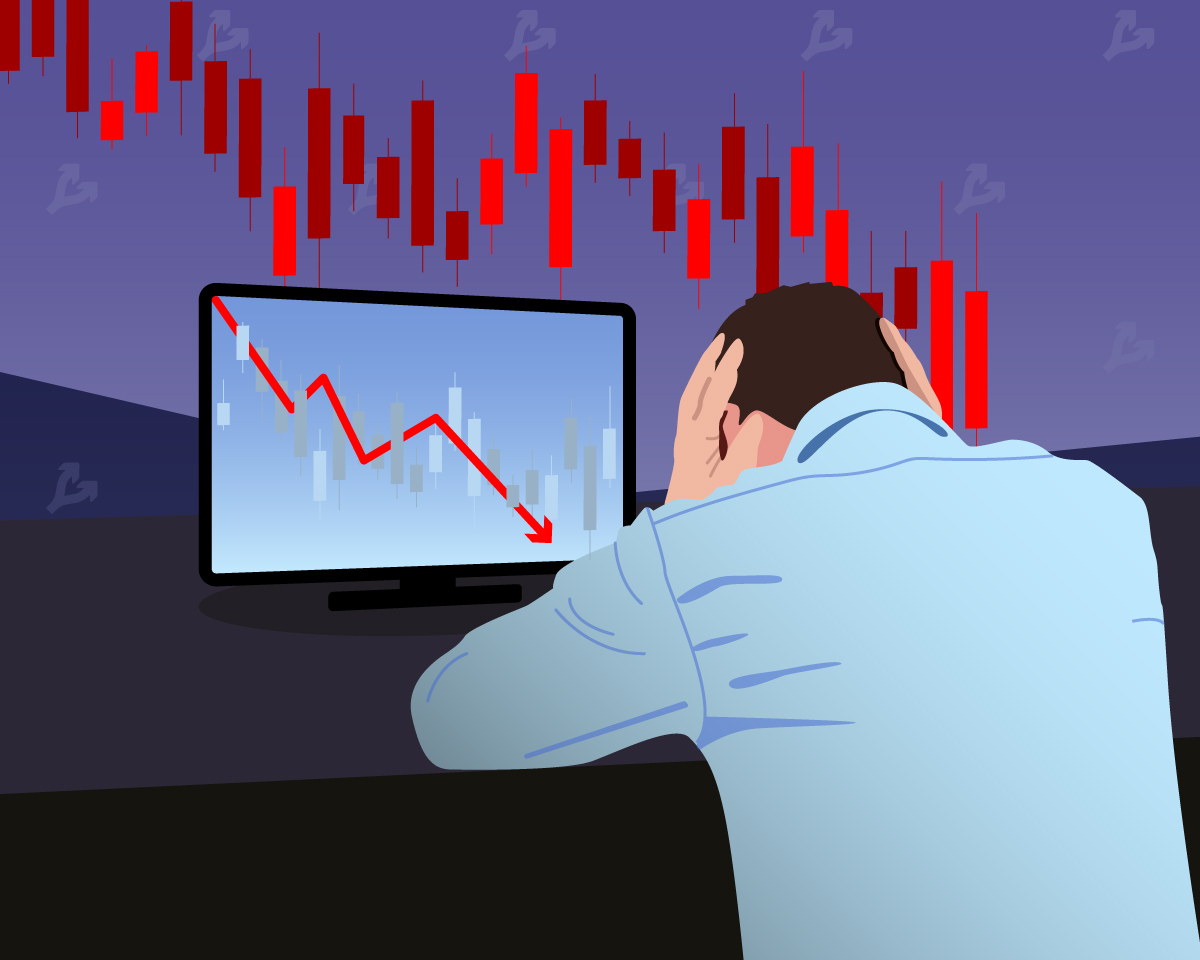
Mistake 1: Overthinking
This is definitely the most common mistake of traders, especially novice traders - thinking too much. Many people tend to think about trading too hard, always worrying about the timing of their entry.
The solution: don't think too much about it
When your trading level reaches a certain level, you can start to build your own trading plan and start trading.
What you have to do at this time is very simple, that is to stick to your own method, shield all external influences, and don't have doubts about your transactions.
Mistake 2: Trading too much
Trading too much is the opposite of thinking too much, and thinking too much usually means being too timid to trade. Too much trading usually comes from thinking too little.
This means that you have not spent enough time learning how to trade, have not learned how to build a proper trading plan, or you are too greedy and impatient to wait for your trading advantage to appear in the market.
Solution: Understand that making money does not mean trading more
The best way to solve this problem is to understand the possible problems of too much trading, and to understand that too much trading does not equal more profits.
Mistake 3: Risking too much
Taking more risks than you can mentally take is fatal to trading.
Because if the risk you take is too high, your mental pressure will also be very high, and the impact on your trading emotions cannot be ignored.
The greater the fluctuation of trading emotions, the less likely it is to make correct trading judgments, and eventually enter an endless loop, and the trading results can be imagined.
Solution: Carefully assess your own financial strength
Especially for novice traders, it is enough to invest a small amount of money at the beginning of trading, so that you can get a more relaxed trading experience, so that you can familiarize yourself with and correct your trading strategies, and you must not act recklessly and chew too much.
Mistake 4: Chasing up/down after missing a trading signal
This is a common mistake many traders make. They will rush into the market after a certain trading signal has been fully digested by the market, always wanting to catch the "last train".
The reason for doing this is mostly because they regret not making a timely trading decision and want to make up for the regret in their hearts.
The Solution: Wait for Second Chances
We all know the proverb "A good horse never turns back". The same is true for trading. The regret brought by missing a trading opportunity is just a feeling of discomfort, but the regret brought by chasing the market at this time will be a real loss.
Which is good and which is bad, the judgment is made now. Therefore, what we should do after missing the trading signal is to calmly analyze why we failed to seize this trading opportunity, sum up experience, and calmly deal with it when the next trading opportunity comes.
Mistake 5: Focusing too much on messages and other external data
Some top traders believe that too much attention should not be paid to the news.
Because as long as you are willing, you can always find information and even evidence that can refute your trading views in the developed Internet.
However, a truly successful trader will shield the influence of external factors and put them one by one on their own trading advantages
Workaround: ignore most messages
The more news, the more influence it has on your trading decisions. Therefore, what you have to do is to stick to your own trading strategy, find your own trading advantage and execute it. Don't think too much about the impact of the message.
If you are a lender who gives all kinds of indicators, news and feelings to trade, then you are really more of a gambler.
Mistake 6: Not Gaining Enough Knowledge/Education Before Real Trading
All lenders who don't take the time to gain knowledge of the type of trade they want to trade are really nothing more than speculators.
Please believe that it is a high probability event that the pay is directly proportional to the return. If you are not willing to invest energy in learning trading, it can only show that you treat the market as a casino. Even if you make some money, it is just luck.
Solution: Lend yourself, lend trading learning
In my personal opinion, you need to learn from the most basic knowledge. Learn how to read charts, understand basic entry/exit rules, and learn basic trading strategies.
Only after you have enough trading knowledge can you get the ticket to build your own trading strategy. "Live and learn", knowledge will prove its importance to you at the critical moment.
Copyright reserved to the author
Last updated: 08/12/2023 11:51
Add
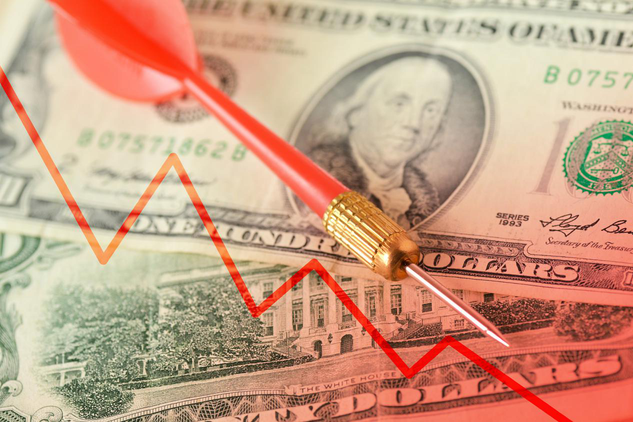
Right and wrong often mean the relationship between truth and fallacy. When extended to the trading market, being right means making a profit, and being wrong means losing money. Therefore, investors even worship and yearn for correctness in trading, and try their best to avoid mistakes, even a small mistake. Therefore, it is very popular in the futures market to evaluate the level of trading by the ratio of the number of right and wrong transactions. However, the author believes that it is meaningless and very wrong to understand right and wrong transactions in this way. A correct understanding of right and wrong should be considered from the following aspects:


Copyright reserved to the author
Last updated: 08/11/2023 01:19
Add

thank you
First of all, we need to define what kind of transaction is wrong, let's summarize!
It is wrong to place an order not in accordance with one's own order-making standards, and it is right to place an order in accordance with one's own standards even if it is wrong.
Because the definition of wrong order is not only the profit and loss of this order transaction, but whether your transaction execution can make you stable.
why do you say that
Planned orders do not rule out losses caused by imperfect systems. This is also normal. There is no summary optimization where losses come from.
But if the losses caused by unplanned transactions are useless no matter how many skills you learn, because the problems of wrong transactions are variable, and the way to deal with wrong orders is quantitative , which will be very difficult. Contradictions, it is difficult to get out. I hope everyone can understand!
Then let's go back to the topic and talk about how you deal with it when you are in a "wrong trade". Experienced traders will try to avoid putting themselves in the "wrong trade" situation.
Players with real execution ability must cut off the "wrong deal" as soon as they find it. How to deal with it is also difficult to teach, because some players themselves have not realized this problem, they just think that profit is right, loss is wrong, and they do not have the awareness of account consistency. Then this needs to be understood by the trading players who do not understand it slowly in the trading.
So some listeners may not understand my answer this time, but you remember my definition of wrong trading, and if you understand it slowly, you will know what to do.
If you are interested in my answer, please follow my Huihu account. I will answer some industry-related questions regularly every week. I don’t seek the most professional, but the most authentic.
Copyright reserved to the author
Last updated: 08/12/2023 07:39
Add

Simply put, the direct purpose of trading is to make money.
We all know that money can be earned in honest and honest ways as well as in dishonest and shameful ways. The end result may be the same, but the means of obtaining the money may be very different. This is like whether a heart surgeon and a drug dealer both earn a lot of money and are equally respected. Of course not.
The same is true in the trading world. Many novice traders do not realize that it is possible to profit in the markets the wrong way.

Just say someone who doesn't stick to a protective stop on a position, and doing so may end up making money on the trade; these people don't know they've sinned against themselves, and punishment will follow. These people get a false taste of success, and sooner or later the market will recoup these unearned profits. What do you think these guys will do the next time they are in a trade that triggers a protective stop? Of course, ignoring the stop loss again.
Making money the wrong way reinforces bad habits and irresponsible behavior. Once traders get a taste of success that came the wrong way, they almost always repeat the mistake until the wrong way robs them and takes back the money they got wrong and more.
Master traders are not interested in getting lucky in the markets, they don't pursue, hope or even enjoy the gains that come to them despite their mistakes and wrong trades they took. A truly profitable trader knows that there is no ultimate gift giving in the market.
The right actions and the right approach will not always produce profits for the honest trader, but one thing is for sure, repeated wrong actions many times will eventually lead to the demise of a lazy trader.
That's why we say that money earned by luck is always lost by skill.

How to view "luck" is important because it is a hurdle that no investor can avoid, and it will even directly determine the strategy investors will adopt.
So much so that whether it is a super investor like Howard Marks or a short-selling wizard like Nassim Nicholas Taleb, one thing that is very important-how to look at luck.
In "The Most Important Thing in Investing", Howard Marx divided investors into two categories: one is the "I know" group: they believe that the future can be predicted, so they build investment portfolios according to the future they predict, and they are full of confidence Waiting for the result of betting.
The other is the "I don't know" faction: they believe that it is difficult to predict the future, and believe that investment success is greatly affected by luck. Because of this, they feel that a single bet is not predictable at all. They go all out to seize local advantages and strive for multiple betting opportunities.
Max and Taleb are typical "I don't know" factions, and both have achieved very successful investment performance.
It is precisely because of this that Buffett said the famous saying: The most important thing in investment is not to lose the principal, and the second is to remember the first rule. Yes, Buffett is also an "I don't know" type.
Although a good investor cannot guarantee that they will succeed with one bet, they can always seize local advantages. As long as they are guaranteed not to die, they can guarantee enough opportunities to bet. After all, the principal is gone. Note?
So how to eliminate the mistake of "making money in the wrong way" with the attitude of "I don't know" is the key.
1. After every profitable trade, review every aspect of the trade: entry, initial stop loss placement, waiting, money management, exit, etc., to find mistakes and violations of the rules.
2. Be aware of two evil habits—hoping and holding. They are the two offenders that lead to profiting in the wrong way.
Copyright reserved to the author
Last updated: 08/09/2023 04:34
Add

I have been in the financial market for more than ten years, and I have made many mistakes in the transaction process, and some wrong transactions are often fatal. With the help of today's topic, let's summarize it, for yourself or Set an example to others.

a frequent transaction
The book "The Futures Game" states: "The best way for a trader to self-destruct is to invest so much money (or frequent and unrestrained trading) that he can't get out of the predicament caused by one or a series of bad trades. come out."
Chasing ups and downs in an oscillating market, especially in the middle and late stages of the trend, traders are hesitant about whether the market trend can continue, and they always think that every short-term upsurge or decline is the beginning of a new trend, so they make mistakes Frequent buying and selling when the market fluctuates and beats.
Frequent trading is most likely to be committed by novices, and the danger is that the principal will be exhausted bit by bit. If you want to get rid of this mistake, you must establish your own trading system and then follow the system. Wait more, shoot less.
Two carry single
Most traders have the experience of carrying orders, and few carry them back. Most of them pay heavy losses as the price. The reason for carrying the order is that you can't accept the loss, have a fluke mentality, and then break the pot. The final result is a liquidation or a big loss. If you want to not carry orders, you need to strictly stop losses and completely get rid of this mistake. There are too many people who have paid the price for carrying orders in the trading market, and some even paid their lives. The mistake of carrying orders is a mistake that cannot be repeated once it is corrected, and sometimes it can end you once.
Three losses increase positions
After doing the wrong direction, many traders still increase their positions against the trend. Most of the final results end in liquidation. There is a saying in the stock market that waits for the stock price to fall a little before adding more to reduce costs. Many people use it in futures or foreign exchange, but they don't know how harmful it is to increase positions against the trend by adding leverage. The loss itself already shows that your previous judgment was wrong or has not been proved to be correct. In this case, adding more positions is tantamount to speeding up the speed of liquidation.
Four shots are heavy positions
It is not a mistake to take a heavy position when you make a move, but a huge potential threat. I agree with heavy positions, but the premise of heavy positions is that you have a good understanding of the market or a certain wave of market conditions. To put it bluntly, it means that if you are a novice or have an average level, then don't make a move and take a heavy position. It is suitable for masters to make a move that means heavy positions. Of course, masters also miss when they miss, and a miss is a heavy loss. Therefore, no matter who takes a heavy position when you make a move, you have to take it easy, and the market doesn't care if you are a novice or an expert. Every trader in the market should be in awe.
Copy top and bottom over and over again
Trial and error in the market cannot be said to be a kind of mistake. The repeated top-hunting and bottom-buying I am talking about here refers to the kind of dead-copying in one direction. Even if the copy is correct, the profit earned may not be as much as the loss of the top and bottom copy.
The fatal mistakes in the five transactions mentioned above are also mistakes that I made early and paid the price. Mistakes in trading will not be the same as mistakes made in other aspects. Once you correct it, you will not make it again in the future. It is quite difficult to completely correct the above mistakes and not make them again. First of all, you have to find out where your mistakes are, then list them one by one, and then correct them one by one. The most difficult thing to do is to strictly stop loss, and strictly stop loss in every transaction. In fact, if you can strictly stop the loss, you will be far away from liquidation.
Mistakes on the road to trading can only be corrected by yourself, and others cannot help you.
Only by making continuous progress and making breakthroughs can the road of trading lead to success.
Copyright reserved to the author
Last updated: 08/09/2023 07:22
Add

Just as everything in the world has pros and cons, there are right and wrong; we also have right and wrong statements when trading. So, how to define this "wrong transaction"?
I believe that when many people see this topic, their first reaction is to define all loss-making transactions as mistakes, but in fact this is wrong.
What is a transaction? Transaction refers to the exchange of value between two parties through the medium of currency and services.
Why invest? Investment means that investors invest a certain amount of funds in the current period and expect to get returns in the future.
In our financial investment transactions, the transaction is actually only a part of the investment activity, not the investment itself. This is very important. If you don't understand it, you are likely to be troubled by whether the transaction is correct or not and how to improve it for a long time. The most important reason for the trouble is that the two concepts of transaction and investment are confused, which brings about the diversity of purposes, and the diversity of purposes brings about the diversity of judgment standards, and the variety, change, Uncertainty often makes it impossible to judge whether the transaction is right or wrong.
No matter how simple the investment activity is, it is not just a transaction. I roughly divide a complete investment activity into four stages: analysis, strategy formulation, transaction execution, feedback and summary. The combination of these four stages is what we often call the trading system; and the different stages in the trading system have different purposes, and also correspond to different standards for judging whether it is correct or not; but in general, it violates the trading system The rules are all wrong!

Therefore, to define whether a transaction is correct or wrong, the measure is whether it violates your trading system, not whether it brings benefits!
Maybe you will refute: No matter black cat or white cat, a cat is a good cat if it catches mice! As long as it can make a profit, of course it is the correct transaction!
In fact, we can look at it from another perspective. If we do not have entry and exit rules, although a certain transaction is profitable, but because there are no entry and exit rules, then it will be difficult to repeat this success, because we have no rules to follow next time. Therefore, in such a transaction without entry and exit rules, it is certainly wrong to lose money, and it is wrong even to make a profit!
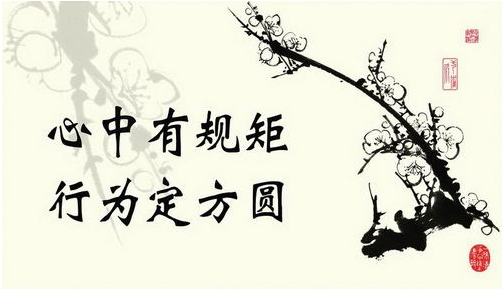
Understand that market behavior is something we can predict, but not control, using technical and fundamental analysis. Only if we define mistakes as failure to follow trading rules, rather than individual trading results; then, when the market trend is inconsistent with what we predicted, we can execute transactions according to some rules that will help us minimize losses. Moreover, since the rules are visible and tangible, you can continuously optimize it according to the trading log to finally become a positive-yielding trading system. Then, even if you lose one or two correct trades once in a while, it can't stop you from making profits!
Copyright reserved to the author
Last updated: 08/04/2023 09:42
Add

How to understand mistakes, most of the time we may be able to distinguish between right and wrong. But many times, the error may be just a subjective judgment.
As a trader, you only need to determine what kind of product to choose, when to intervene, the time point of intervention, and whether the price is reasonable, and what is the next space, that's all.
Most of the time, we really cannot accurately predict the trend of the market. But we must actively verify our own judgments. Correct judgments will be of great value to individuals and will guide you to do more correct operations.

In actual transactions, there are actually not many criteria for judgment. For example, if you are buying and selling stocks, you basically look at the price of the stock, as well as the changes in trading volume, plus the unique properties of some stocks. Under the relevant technical indicators, which ones are more useful, those will be repeated by me. use.
Many trading varieties are very unique, and the main funds also like to operate various reverse indicators in reverse. Obviously, the K-line, moving average, or MACD all send out better buying point reminders, but its price will fall, and there may be a sharp drop in the intraday.
Individual stocks, futures, and even foreign exchange currency pairs all have their own tempers. Of course, this is not formed in a day or two, but is caused by the accumulated retail investors and institutions, including the most powerful main forces.
Every trader has his own reasons for operating, but no one can accurately know everyone's thoughts, I just need to judge the price and the future trend.
By the way, then continue to predict and continue to verify. If you're wrong, get out of the way. Instead of giving an opponent I can't win more opportunities to insult me, I'm going to find an opponent I can win, and I need to win his money.
The same is true for trend investment and resonance theory. When the rising conditions are ripe, the rising becomes the direction of least resistance, and it will naturally rise. But if the conditions for the decline are ripe, the decline will naturally become the direction of least resistance, and the decline will become a natural thing.
When you are analyzing conditions, observing the market, and digesting and understanding news events, when the result is contrary to your own judgment, you really can only leave the market.
What needs to be understood is that mistakes must be something that will happen again and again in trading.
For the trading of individual stocks, because we are not the actual operators of the company, we cannot accurately predict the future direction of the company, the changes that are taking place now, the internal management problems of the company, and the myriad results of market changes. , Of course, even the operators themselves may not have the ability to make accurate predictions. So you can only earn more when you are right, and lose less when you are wrong.
If you participate in more speculative varieties such as international futures and foreign exchange gold, the uncertainty is even more elusive. We simply do not have the conditions to perceive the attitude of market participants, let alone all the factors behind the flow of funds.
Of course, these are objective difficulties, and it is true for all parties involved. The reality is that behind every failed investment, as long as we reflect on the reasons, we will find that most of the time the mistakes are not caused by others, but by ourselves.

In many cases, the cause of mistakes is actually right, because if you are right all the time, you will start to be blindly confident if you are right, forgetting that one failure can embezzle all your profits. Forgetting failure and being numb to mistakes is the root cause of your loss expansion.
Neither fear nor worry can help us earn real profits. Only by summarizing and reflecting, and constantly recording the reasons for our mistakes can we have the opportunity to obtain steady income. Every time you are right and right, you ensure that you will not be dazzled by the victory, and you will respond calmly when you are wrong. Only when the loss really comes, can we have the determination to leave the market decisively.
Copyright reserved to the author
Last updated: 08/04/2023 06:29
Add

How do you handle when you're in the "wrong trade"?
For traders, all the way to grow is to mature in the process of correcting themselves and recognizing the market bit by bit in failure.
In this process, mistakes are inevitable, and I think the most common mistake we make is to stare at the market for a long time.
Constantly monitoring how a trade goes up or down is a destructive activity that can rob a trader of years of profit. This process, often called "counting money," not only heightens fear but heightens The uncertainty of every moment makes it impossible to focus on the correct technology. And the correct technology ultimately determines how much profit we can make.

Too much focus on "where are you" instead of doing what you should be doing can lead to unwise, unwarranted knee-jerk and over-the-top reactions. Instead, traders must be confident that their technique is correct every step of the way Yes, and if the technique is followed correctly, profits will follow.
"Counting money" is usually the fault of traders who are not accustomed to regular profits. It not only robs traders of considerable profits, but also promotes a sense of chronic uncertainty, fear of loss and a sense of loss that can lead to destruction. Emotional imbalance in sexual behavior.
I used the following three methods to overcome the problem of staring at the market
For each trade, set two protective sell prices and sell your entire position. Every trade you make should have an entry point and two exit points, a stop loss and a target. The loss is for protection, and the goal is for profit.
Sell only when a position you hold hits a stop or target, whichever comes first. Adhering to this principle, traders place the fate of each trade on their trading strategy, and Not on their own greed or fear.
When the desire to sell before any selling point cannot be restrained, only sell half, and keep the remaining half until the selling point permitted by the strategy. In this way, you can satisfy your desire to sell, While preserving the integrity of your trading strategy.
Making money the wrong way reinforces bad habits and irresponsible behavior. Once traders have tasted the success that came from the wrong way, they almost always have to repeat the mistake until the wrong way impresses them and takes them back. Even more money was lost due to the money obtained in the wrong way.
The right actions and the right approach will not always produce profits for the honest trader, but one thing is for sure, repeated wrong actions many times, will eventually lead to the demise of a lazy trader.
Copyright reserved to the author
Last updated: 08/13/2023 21:38
Add

This is a real problem because traders think they are right and want to make money on every trade they make. But unfortunately, a profitable trade is not necessarily right, and a losing trade is not necessarily wrong.
Of course, if you make mistakes and add mistakes, you must lose money, and you will lose badly. Right and wrong, this needs to be clearly defined. But the market cannot be defined by you, so we can only define ourselves.
I just made a big mistake in the past two days, and my account is now very ugly. This is a very wrong transaction. Let me restore the situation at that time, and hope everyone can take it as a warning.
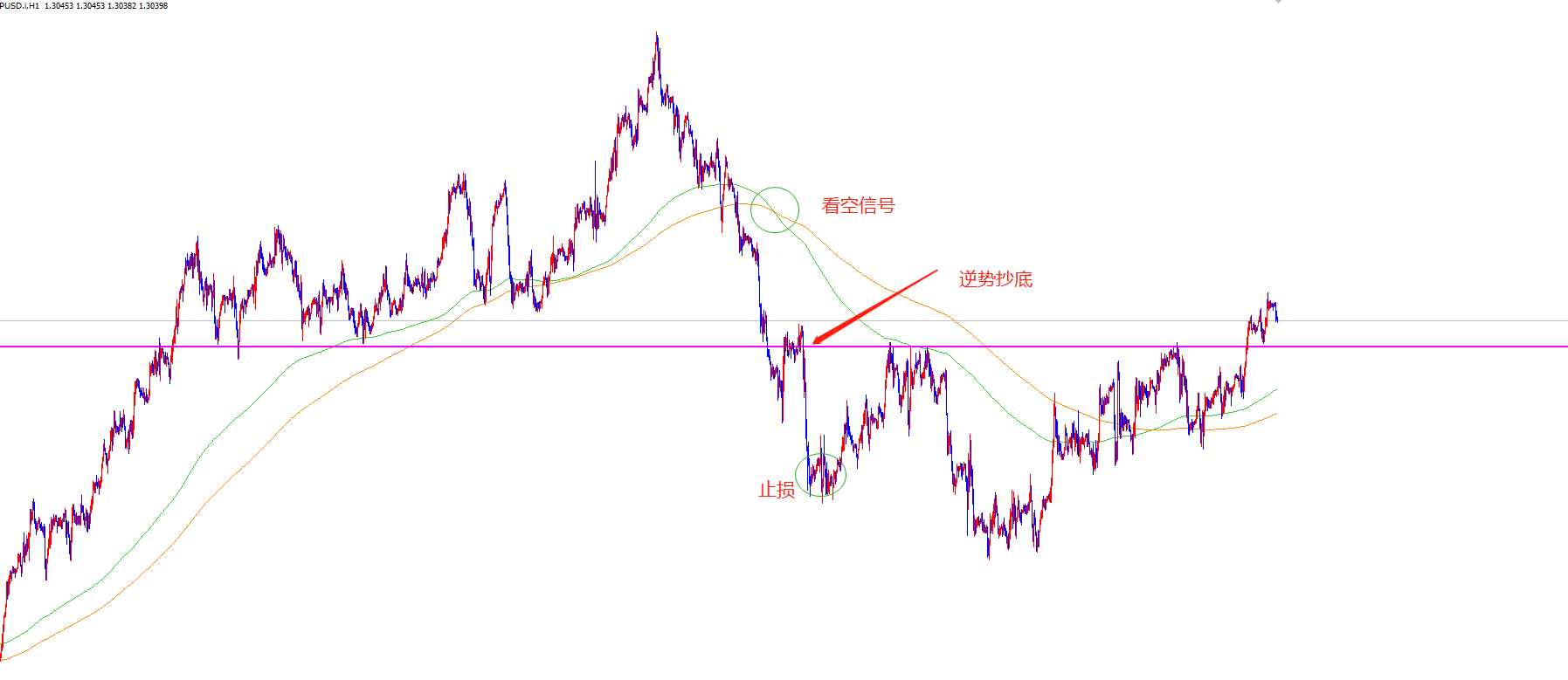
This is the GBP/USD chart of the past few days. As the negotiations stalled again, the GBP/USD ended its previous upward momentum and fell below the 1.30 mark. After my trading system sent out a bearish signal, I became overwhelmed, thinking that there would be strong support in the previous low area, that is, around the integer mark of 1.30, so I bought bottoms here against the trend, and the position was still relatively heavy. After buying the bottom, it lost money for a while, but then rebounded and returned to above 1.30. But I didn't realize it was my escape and still thought the price would buck the trend after the bearish signal. Then it fell again by more than 200 points, and the stop loss was triggered helplessly. But then the exchange rate rebounded to 1.30. At this time, because I regretted the previous operation very much, I didn't seize the opportunity to short, so I didn't recover the loss.
This wrong transaction is obvious. First, I did not follow the system signals, but subjectively believed that certain positions were supported and traded blindly; second, I was no longer calm after the stop loss, and missed the opportunity to follow the signal to short to recover the loss.
It can be said that many times when I am in a wrong transaction, I don't know it, or I don't want to admit it. This is also the biggest problem, which is the subjective error caused by human nature. Therefore, I still suggest that when you place an order, although subjective analysis is required, it is best to analyze based on the signal sent by the system, trade if you agree with the signal, and wait if you don’t agree, instead of subjectively chaotic trading.
Copyright reserved to the author
Last updated: 08/04/2023 18:50
Add

The reason for many trading losses is actually the immature trading strategy.
A mature trader is well aware of the ups and downs of capital market prices, and has mastered and formulated strategies sufficient to deal with emergencies.
Of course, when developing a trading strategy, it is not an easy process.
When specifying a trading strategy, we all make the following three mistakes:
1. Time frame conversion. Selection and buying are based on a complete intraday basis, from an intraday entry point and a strict intraday stop loss point, to a daily chart and adjusting the stop loss based on the daily line. The original completely changed Trading is where the initial risk/reward ratio tilts against the trader.
2. Planning a trade, but not executing the trading plan. Sticking to the original plan, no matter what the time frame, is absolutely essential. Failure to execute the trading plan puts you in the favor of the market and erodes the confidence necessary to trade effectively .
3. Rationalization. The psychological basis of the other two mistakes, rationalizing changes in time frames and plans is a form of denial, a denial of the fact that it is happening. Honesty - real honesty - no matter how ugly the truth is - will make You place yourself above the majority of market participants who cannot summon strength from within and instead prefer to remain comfortable, blaming something or someone other than them for their losses.

By shifting from one time frame to another, traders postpone the ultimate feeling of being a loser. Covering their failure with a flimsy plan, paralyzing themselves into a deadly state of denial by cultivating false hopes. Committing to this Traders who make this mistake are in fact unsuitable for trading, and the market will not tolerate them pretending for too long. Ultimately, the mistake of switching time frames will erode a trader's resolve, rob them of their ability to think and act freely, and forever relegate them to misery. of victims.
Planning each of your trades is a must if you wish to approach the markets with intelligence. Most unsuccessful traders drive by feel without even an iota of knowledge about how to develop a trading plan. However, planning your Trading and not trading as planned is a far greater sin. Those who know how to do it, but don't do it, are the most undeserving of that knowledge, and the market usually takes care to get them what they deserve: losses. Rationalization is the culprit that lurks behind this and many other deadly mistakes. Because most people are overly optimistic by nature, they have a hard time putting an end to events that have caused them loss and pain. When the time to act comes When it comes to trading, it can be said that many people cannot muster enough determination and courage to take the leap. Instead, they start a process of rationalization. This process of convincing themselves not to do the right thing will eventually take the trader out of the game altogether.
Copyright reserved to the author
Last updated: 08/05/2023 13:57
Add

I don't think the transaction should be that complicated. What is profitable may be wrong, and what is losing may be right. It is nothing more than considering future factors or operating habits. But a deal is a deal, and just a deal.
As for my own wrong trade. . . I was most impressed when I first entered the market.
In fact, when I entered foreign exchange, I was cheated into it. When I was looking for a job, I somehow found a job in foreign exchange. At that time, I just entered the society and had little experience. The recruitment said it was sales. I thought it should be similar to stock sales, so I went there happily.
After successfully joining the company, I found that they did not have strict requirements for sales. They did not require leaflets to be handed out, nor were they required to make phone calls. Well, anyone who has had a similar experience should already know that applicants like us are their potential targets. He Nai was too young at the time to understand.
First, we opened a demo account for us to familiarize ourselves with it. After a fierce operation, hehe~~ Anyone who bought randomly has made a profit. This money is exaggerated, and it feels much higher than the return on stocks. Well, successfully hooked.
As for them, they didn't push too hard, they helped us train related things while seducing us. He also told us that if the customer is pulled down, we can get a commission of about US$7 for every lot the customer trades, and then give various hints. As a young man who has just stepped into society, who can resist this. My mind became active. If I open an account by myself, I can earn commissions while making money. It’s as small as 40 yuan per lot. If I do more transactions, my life will be happy. I'm just too smart.
Yes, I thought I was smart and opened an account with $5,000. Thinking that even if you go in and come out immediately, you won't lose much, so it should still be possible to earn a commission. A good life is about to begin, and I feel that I am about to develop.
Then there are various operations. Facts have proved that I was completely overthinking and overestimating myself. The account I opened went to the street within a month. And I was trembling with a commission of 5,000 RMB. . . Well, I spent 30,000 RMB to enter, and in less than a month, I got 5,000 ocean commissions. . . I'm so fucking smart.
As for how to deal with it, as you have seen, there is no chance to deal with it at all, so the position is directly liquidated. But it is precisely because of this experience that I have deeply realized the dangers of frequent trading. Of course, frequent trading is just a method, there is no distinction between good and bad, and I lost money here, which does not mean that other masters did not make money by frequent trading. I have no doubts about this, and I can only say that it is not suitable for me at all. So, I am now a low frequency trader. No more than 2 orders are placed in one day, and both profit and loss are set goals. When it arrives, it will no longer be traded. It feels so good now. Don't spend too much experience on trading, after all, trading is not the whole of life.
Copyright reserved to the author
Last updated: 08/04/2023 22:06
Add

"Wrong deal" is a pretty broad statement.
There are many reasons for a "wrong transaction", including:
wrong direction
wrong species
Choosing the wrong trading system
heavy warehouse
missed the best time to play
The entry point is not ideal, etc.
...
All of the above are wrong transactions.
Therefore, if there is a situation such as a wrong transaction, it is still necessary to analyze specific issues!
Summarize the above six error lists, which can be classified into three categories:
1. Errors in trading operations
2. Mistakes in trading strategies
3. Mismanagement of funds
Next, we will deal with the above three situations one by one.
1. Errors in trading operations
1.1 Going down the wrong direction
It is common to place an order in the wrong direction, so there is no need to panic.
Usually within 10 pips of loss, stop loss exit
The market is very urgent, stop the loss immediately
The market fluctuates, looking back at the K-line pattern of the 5-minute and 15-minute charts, the capital loss has been established
1.2 Wrong species
There is linkage between varieties. If you place an order for the wrong variety, there is a high probability of capital preservation and loss, and sometimes you will exit the market with a slight profit.
(1) First, place an order for the correct variety
(2) Finally, analyze the product market of the wrong order to determine whether the product has linkage. If there is linkage, you can exit the market with guaranteed loss or even floating profit; if not, then manually close the position within the acceptable loss range.
2. Mistakes in trading strategies
Under normal circumstances, the trading strategy error will be "one-sided shocks or shocks one-sided". The way to deal with it is easier, no matter unilateral or shock, the direction is the same in a short period of time, so there can be appropriate profits.
2.1 Unilateral shock
In the volatile market, the market take-profit price is often made by selling high and buying low. Therefore, when there is a floating profit in the account, first reduce the position to the position layout of the shock strategy. Next, change the take profit, it is best to target the previous high and the previous low.
2.2 Oscillation as unilateral
This is the easiest of all error tickets to deal with. If the price is close to the position point, just increase the position; if the price is far away, it is recommended not to increase the position, and expand the take-profit range of the position order.
3. Mismanagement of funds
Generally, the wrong number of trading hands results in heavy positions.
I will first calculate the profit rate of the transaction. If the success rate is high, I will choose to increase the principal to reduce the risk of the position. If I estimate that the success rate of this transaction is not high, I will choose to close the position and protect the principal in the hope that there will be another chance to make a profit.
The above are the wrong order handling methods I have experienced in the past few years, I hope it will be helpful to the subject owner.
Copyright reserved to the author
Last updated: 08/05/2023 11:29
Add

Trading is a lonely game.
When formulating and implementing your own trading plan, you must keep a distance from the outside world. You can't tell others about your trading plan while a trade is still in progress, you need to be alone with your trade, learn what you can, make decisions, document the plan, and implement the plan silently. You can discuss previous transactions with someone you trust after closing a transaction, but you must keep quiet about ongoing transactions.
Almost everyone has a profit record, but no matter how good the profit is, it will not make you a winner in the market. After all, no matter how big the profit is, as long as there is a loss, all previous results will be meaningless. So you need to build a model that will be profitable in the long run.
Only when assets continue to grow can one prove a person's trading ability. People tend to become complacent and complacent after a big profit or a series of profits. In fact, trading is a matter of walking on eggshells, and complacency will sooner or later make profits aftertaste.
Everyone gets it right sometimes, even if a monkey throws darts at a blackboard full of stocks, the selected stocks are likely to make a good profit. A single profit does not explain anything. What is really difficult is to make a profit consistently.
As Oscar Wilde said more than 100 years ago: behind every real ideal is money, because money means more freedom and ultimately means a way of life. My desire to spend more time with the kids, my desire to live in a big house, my desire to vacation in the Caribbean during the northern winter, and my desire to not be in the hospital and be called on call all drove me to work hard to make money.
Knowing how to get satisfied and when to jump off the merry-go-round is important when you start making money. People's pursuit is endless, such as a healthy horse, a villa, an interesting plaything, etc. If you don't get out during the good times, you're chasing money you can't spend, and your life is going to go from bad to worse. Remember, the goal is freedom not endless money.
Possible independence is a great solution to this problem of greed.
Greed and fear are twins. If you trade smaller positions, you control greed, and fear is less likely to invade you at this time, and your thinking will become clear; conversely, if you increase positions greedily, Fear will always be with you, too. Low levels of fear lead to good decisions and big profits, high levels of fear lead to bad decisions and big losses.
One of the great attractions of trading is that it sets people free, and another huge attraction is that it can become a lifelong pursuit. The longer you trade, the more experienced you are. Memory, patience and experience (the advantage of age) are the most basic and useful things in trading. But first, in order to make money from the experience, you need to survive and stay in the game long enough that you set your bankroll management rules so that you don't have a big loss or a string of losses to overwhelm you.
You won't lose when you're not afraid of losing, and you won't win when you just want to win!
There are two treasures in the stock market, and a good horse speeds up the knife. Run fast to make a profit, use a sharp knife to cut meat. Not easy to be covered!
When doing market analysis, the trading volume is the first important, the price is the second important, the shareholder style is the third important, the bottom line of risk is the fourth important, and the stimulus of the subject matter is the fifth important of.
Take advantage of the trend-the sea wind and high waves meet the sky, and the small boat steers steadily to avoid the abyss. Follow the beginning of the tide, and sing proudly beside the Big Dipper.
Technical indicators do not look at themselves, but at the market's reaction to and deviation from the indicators.
Don't easily fill up your positions at any time. Doing so will help you maintain a normal attitude, and it will allow you to attack and retreat in operation.
Constantly absorbing stock nature and constantly forgetting human nature, only in this way can we integrate with the market.
There is an essential difference between shrinkage and infinity. The former is a normal requirement for the healthy development of stock prices, while the latter is a manifestation of weak stock prices.
There are five rules for the stock market: first, be steady, second, be accurate, third, be patient, fourth, be ruthless, and fifth, be patient.
There are five conditions for investing in the stock market: knowledge, patience, courage, health and capital.
Don't try your best to buy bottoms and escape tops. Tops and bottoms are formed naturally, not artificially set. Being able to reach the middle section is considered a success.
Greed, fear, hesitation, luck, overconfidence, etc. are relatively common human weaknesses. You must never underestimate your own weaknesses, and you must never overestimate your abilities. Almost every mistake is caused by your own weaknesses. In a sense, the amount of human weakness determines the amount of profit and loss.
The safety ticket when the market pulls back: the long-term growth is not large in the early stage, the world is liberated sideways, and the center of gravity is quietly climbing.
No matter what method, as long as you master one, it is enough. By superimposing the K-line charts of the market and individual stocks, we can judge whether the stock has a main force and whether the main force is strong or weak.
When the main force really attracts money, it is silent. If you're zooming in, it's grabbing your attention.
Only by clarifying the reasons for heavy volume can we come to the safest judgment. I prefer to buy high and buy clearly, but I don’t want to buy low and buy muddleheadedly.
Don't get carried away when you are at your fingertips; veterans wait more, but novices are more helpless.
The overall market is the product of the resonance between the national policy and the main force of the market, while the market of individual stocks is the one-man show of the dealer.
When buying and selling are not going well, you should withdraw immediately, and then look for opportunities after adjusting the state.
Learning to be a traitor to retail investors is to work with dealers.
Buying and selling should be flexible and don't haggle over every detail.
Market behavior digests everything! The best way to judge whether the news is true or false is to compare it with the disk, the Prophet of Spring River Plumbing Duck. Whether the news is true or not depends on the reaction of the main market forces.
In the stock market, those who speak do not know, and those who know do not speak.
A real investor must be like a tumbler, able to stand up quickly in the face of any setbacks.
If buying stocks is only to work hard on the "numbers" of buying and selling stocks, it is standard speculation rather than investment.
The delusion of stocks lies not in the value on which the stock is based, but in the fantasy it provides to speculators.
If you look backward, you must look forward; if you look upward, you must look downward.
For most investors, the important thing is not what he knows, but knowing what he doesn't know.
Don't go against the market, don't speculate for specific needs.
Investors make money from other people's mistakes and lose money from their own
People who find excuses for failure in the investment process will eventually pay for the excuses themselves.
The market is sometimes like a drunkard who cries when he hears good news and laughs when he hears bad news.
Don't complain about missing out, the stock market always contains opportunities.
The stock market didn't beat you, you beat yourself.
There is nothing new in the market, it just keeps repeating itself.
Fluke and hesitation: luck is the culprit of increasing risks, while hesitation is the culprit of missed opportunities.
Fist out, arms bent in. Only when the arms are bent inwards and the fists are punched outwards can there be space and power. The decline in stock prices is actually to make room and accumulate energy for future rises.
Take the market as a teacher, practice learning without regret, be sensitive to learning, and learn modestly without slack.
One of the characteristics of a mature investor is that he does not fight openly.
Laughter is the best when you laugh at the end, and you will know when you make a profit or not at the final settlement.
Sour, disappointed, angry, crazy, bought--and finally stuck.
Quantity is the spirit of stock price, and stock price is the expression of quantity energy!
You can be a band when talking and laughing, but you can only play short-term when you are nervous.
Don't go to work without a plan, don't place an order without a plan!
The essence of trading is: using troops while talking and laughing is better than winning while nervous!
Regardless of whether it is a bull market or a bear market, shorting always loses money, because only by doing long can you make money, but if you refuse to short, you will lose a lot of money!
You have to buy a broken car when you go uphill, and you can sell a good car when you go downhill. When the stock market continues to rise, stocks that are not popular will also rise.
Most of the large quantities are locked up, and the small quantities are short-squeezed!
The large and small volume in the fall is decided by the long side; the large and small volume in the rise is decided by the short side!
Don't use your own financial resources to estimate the market, and your determination should not be affected by how much you lose!
All the gold and silver treasures in the stock market are all hidden in the turning point!
Injuries need to be recuperated, so don't hang up for the time being. Don't rush to make a comeback after taking a loss in trading, wait for the next opportunity!
When the stock market is falling, the trading volume does not need to be enlarged, but when the stock market is rising, the trading volume must be enlarged.
A word of advice, when you enter the market, think about whether you can find someone stupider than you.
The constant weaknesses of stockholders: one is fear, the other is greed. Hesitate when it is time to buy, and not give up when it is time to sell.
Do not ignore the index environment, while paying attention to trading volume. Technical aspects and fundamental aspects complement each other properly.
If you are decisive, you will be subject to chaos, if you are indecisive, you will miss the opportunity, and if you see it correctly, you must act decisively.
Smell, feeling and vigilance: Before the market starts, you should have a keen sense of smell; when the market is developing, you should have a good feeling; when the market sends out dangerous signals, you should maintain a high degree of vigilance.
You must pay attention to momentum in the process of rising and falling, no matter whether it is essential or not in the process of falling and falling!
Quantity is the spirit of stock price, and stock price is the expression of quantity energy!
If you read the right market, you will never be absent, and if you read the wrong market, you will cultivate your mind and rest!
Skyrocketing prices are out of reach. Trying to wait until prices skyrocket to make a fortune is often a waste of time!
The way of the stock market is as simple as it is easy, and the magic of using it is all in one mind. Take the market as a teacher, practice learning without regret, be sensitive to learning, and learn modestly without slack.
The back volume covers the front volume, and the market outlook is hopeful.
Drawing K-line charts of individual stocks in your hands every day will make your thinking fluctuate in line with the main force!
If you can "drive to the end of the wind, dive to the bottom of the sea without wind", then you will find that, in fact, it is very easy to do stocks!
Only those who are not greedy can become the final winners in the stock market, and only those with strong opinions can gain a long-term foothold in the stock market!
There must be a trading plan before the market, and don't listen to people's gestures during the market!
A master trader washes his hands, somersaults in the market, lies say nine thousand and nine, small fish run into the mouth of big fish; ups and downs are traded every day, he is led by the nose, his eyes are bright when it rises, and sad when it falls Don't jump off the building.
Use the stock price trend to study and judge the dealer's intention, and use the market changes to grasp the dealer's trend.
There is no trick to win and there is a trick: the most important thing to do technical analysis is to adapt to the situation. Analytical tools can help you grasp the pulse of stock price changes, but in the end, you still have to jump out of the rules of the analytical tools to find a natural and smooth flow. No move is not really no move, it means forgetting the fixed move, integrating the self into it, and combining the two into one, this is the highest state.
Different operating strategies are determined according to the different stock properties of individual stocks, which is called "prescribing the right medicine to the case". This is the highest state.
Feel it with your heart and understand it with God. The graphics are only the appearance of stock price changes, and what is hidden behind the graphics is the real intention of the dealer. Only when you truly understand the dealer's intentions can you dance with the dealer.
If the market always depends on good news to feed oxygen to sustain life, then please leave this market as soon as possible, because it is already dying, and once it lacks oxygen (without good news), it will be in danger.
There are three types of people in the stock market: those who are foresight and foresight eat meat, those who are late and late can still chew some bones, and those who do not know it will have to pay for it.
The overall market is the product of the resonance between the national policy and the main force of the market, while the market of individual stocks is the one-man show of the dealer.
Stock trading is like growing grain, sowing in spring, harvesting in autumn and storing in winter!
Those who make money have courage, those who lose money will be cold!
To me, having an investment philosophy and sticking to it is all I have to say, and if you do your homework, be patient, and isolate yourself from popular opinions, you'll probably do better. And when you're in trouble, it's often when you get out of your circle of competence and start to deviate from your investment philosophy. No one can be a universal trader, but many poor traders think so. Every super trader has his own area of expertise, and never rushes to other areas. Buffett has Buffett's principles, no matter how much the Nasdaq has risen, he will not go. Soros has the principles of Soros, and he seems to be very uninterested in holding one or two stocks for a long time. Dennis Crocosta and others only study the price pattern, use the trend trading system to capture the long-term price trend, and seem to pay little attention to the fundamental economic situation. William focused entirely on the short-term price strength, regardless of the long-term trend, and only operated short-term ones, reaching hundreds of times the rate of return in one year, which has never been seen before or since. O'Neill only cares about the industry growth stocks that have performed the strongest in the past two years, and made a fortune from such stocks. Every super player has his own field of expertise and his own set of principles. The fundamental principle is to let profits run, cut losses, and seize opportunities with low risks and high returns. If we feel like we're still falling short of the winner's bandwagon, should we be thinking about focusing on one or two things? And do those two things best.
Irreplaceable trading experience
The critical moment in the market is often better handled and resolved with experience, not knowledge! Trading experience is irreplaceable, and it is difficult to skip the process of trading experience through learning. Trading experience is the key link between trading knowledge and specific transactions. The vast majority of investors in the market have a solid foundation in trading theory, are familiar with various trading theories and technical analysis tools, and have various trading concepts and principles in mind, but they lack rich trading experience and rich trading experience. Experience is an irreplaceable and irreplaceable basis for doing a good deal.
From the perspective of trading knowledge, because there is so much knowledge in the market, as long as you are willing to learn, you can quickly read and understand the books on the market, but you will never be able to understand them in a short period of time. Accumulating rich practical trading experience is the most essential difference between ordinary investors and trading veterans, and it is also the fundamental reason why you can often think and see but cannot do it.
What kind of trading experience you have will have what kind of trading style, just like what kind of life experience you have will have what kind of personality. Personality is difficult to imitate, and so is trading style, which you cannot learn by reading books.
Successful traders have distinct personalities. They form their own individualized trading theories by summarizing their transactions, and all the theories of successful traders in history have finally gathered to form a theory on the trading market. At this stage , the theory has more common characteristics, while the individual characteristics are relatively unclear. But as far as investors are concerned, what they learn is common theories. Common theories are good for learning and understanding, but not very operable. The operability can only be supported by trading experience. Because the transaction is a personalized behavior.
Therefore, we can master stock market knowledge through hard work, but we cannot gain trading experience through hard work, because trading experience needs to be accumulated over time, and time can never be jumped.
This is a relatively mechanical trading system, but its profitability is related to the ability of the trader itself. Indeed. Many people try to find a profitable trading system, but they often ignore the accumulation of their own trading experience, or do not realize the importance of trading experience at all. Such a person will never be successful. Any trading system is worthless without matching trading experience.
At critical moments, moments of life and death, only rich trading experience can help you. Many customers complain that the market is too fast and there is no time to get out. In fact, it is not that the market is too fast to come out in time, but that the thinking and reaction of investors cannot keep up with the speed of market changes. At such a critical moment, it is impossible for you to decide whether to leave or stay by normal thinking, but rely on your first reaction to decide whether to leave or stay.
And the first reaction comes from rich trading experience. Investors without trading experience will not have such a quick and instinctive reaction. You can never learn such a reaction from books! Just like on-the-spot performances and flashes of inspiration in the arena, such reactions are often decisive and inimitable, as well as unlearnable, all of which require rich experience to achieve this state of selflessness .
Trading experience includes: trading mentality, decisiveness in entering and exiting the market, attitude towards stop loss, degree of objectivity to the market, and whether to make different or the same decision in the face of the same trading signal, etc., especially intraday shocks, almost only can be handled with experience. Any trading system will often send out wrong trading signals, and this is the most important reason why almost no one can stick to system trading.
I think it is impossible to have a system that does not send wrong trading signals. The weakness of the trading system can only be made up by the rich trading experience of the user itself, because we really cannot find a strict trading model that does not require people from a mathematical point of view. The system can only adapt to a certain state of the market, not all states, which requires traders to make up for the weaknesses of the system.
The trading signal sent by the system itself needs to be evaluated by traders to see how valuable the signal is and how much money we should invest in trading. In a trend state, the system will naturally tell you how to deal with it. In this case, the trader's own experience sometimes becomes a factor that affects the trading effect, but in a state of shock, how to protect yourself requires a lot of experience to complete , because the identification of the oscillating state itself requires traders to identify it by themselves. It is not too difficult to make a profit in a trending market, but how to reduce losses in a volatile market is very, very difficult.
The difficulty in doing business is not how to make money, but how to protect profits! It is indeed possible to make profits with the trading system, but how to protect profits is closely related to trading experience. Similar trading signals appear, and on different varieties, do you execute or not? To what extent? On which species is it executed? How are funds allocated? Sometimes, because of choosing different contracts of the same product or giving up a certain product, another product is traded. Although they are all done according to the trading system, the final trading results will be very different. This is the use of the same system. would lead to completely different trading results. A person with rich trading experience is like a well-trained hunting dog, who has a keen sense of the most valuable varieties or contracts, and he can catch the most valuable targets with almost his own instinctive reaction , and will give up relatively minor contracts. This kind of ability cannot be obtained through learning at all. Another situation is that a new trading opportunity appears in the market, and the original position is still in the operation of the trading system. At this time, should you end the original transaction and start a new transaction, or give up the new opportunity and continue to hold the original position? position? It's hard to choose! In this case, to a large extent *experience will help you make decisions.
In short, we first understand the importance of trading experience, and secondly, we should be very clear: trading experience is irreplaceable and jumping, and can only be accumulated for a long time, so you must not blindly use other people's methods to trade. The importance of trading experience runs through every link of the transaction, but because everyone's trading experience is different, there are ever-changing combinations in the transaction. In this ever-changing combination, you should find your own one and use your own experience to form your own style. Anyone is irreplaceable, and so is trading experience.
If you must win, you must be right, and if you must not lose or be wrong, you will find it painful to define and interpret market information. In other words, you will see the information that the market generates as something that prevents you from being happy.
If you focus on and try not to make mistakes, then the harder you try, the more mistakes you will make. Learning more and more about the market to avoid pain creates complications because the more you learn, the more you expect from the market, and if the market doesn't, you will be miserable. You unknowingly create a dangerous cycle in which the more you learn, the more you become exhausted; the more exhausted you become, the more you feel the need to learn. The cycle only stops when you get out of trading out of disgust, or when you realize that the source of your trading problems is your opinion, not a lack of market knowledge.
Eventually when you escape, you're dazed, disillusioned, feeling betrayed, and you wonder how this could have happened. You are actually being betrayed by your emotions.
Your attitude and thoughts are not created by the market, the market just reflects your heart. If you are confident, it is not the market that makes you confident, it is because you are in tune with your beliefs and attitudes, allowing you to experience, be responsible for the results, and gain a deep understanding. You can maintain a state of confidence because you are always learning.
On the contrary, if you are angry and afraid, it is because you believe that what the market creates is the result, not other reasons. If you don't take responsibility for your results, then you can also assume that there is nothing to learn and you can stay the way you are. You don't grow, you don't change. The result is that your perspective on things has not changed, and therefore your reactions have not changed, and the results of your dissatisfaction have not changed.
While learning is always a good thing, if you don't take responsibility for your attitudes and perspectives, you're learning for the wrong reasons and will allow you to use what you've learned inappropriately. If you don't realize it, you use knowledge to avoid responsibility for taking risks. In the process, you create what you've been avoiding, keeping you in a cycle of pain and dissatisfaction.
If you blame something else to avoid punishing yourself for your painful feelings, you're putting an infected Bundy on the wound. You may think you have solved the problem, but the problem is only delayed and will get worse. The result has to be like this, because you don't learn enough, and you don't know how to interpret it to get a more satisfactory result.
If you don't have a winning attitude, no amount of market analysis will make up for not having a winning attitude. The market can give you some profitable trading edges, but if you don't have a winning attitude, that edge won't make you a consistent winner.
If you take responsibility and don't expect what the market will give you or do, the market will never be your enemy again. If you stop fighting the market, which means stop fighting the market, you will be amazed how quickly you learn what you have to learn and how quickly you learn it. Taking responsibility is the cornerstone of a winning attitude.
Just because you are trading does not mean that you have learned the proper way of thinking. What you have to learn is not trading behavior or motivation, but how to think about behavior and how to think about behavior motivation. The solution is in the mind, not in the market. Consistency is a kind of thinking, and its core basic thinking strategy is unique in trading.
Very few people start trading with the right beliefs and attitudes about responsibility and risk. Many of us have irrational fears, and because we don't want to work through them, we simply live in conflict.
You must look at the market with an objective attitude, and you must not misinterpret the market. You must trade without pressure or hesitation, and you must use a positive attitude to overcome the negative consequences of overconfidence or excitement. Your goal is to form a trader's mind. When you've done that, every aspect of the deal will fall into place.
Trading starts with seeing an opportunity. If we don't see an opportunity, there's no reason to trade. Any feature of market behavior reflects an opportunity to satisfy someone's needs, goals, or desires. Each feature has some significance, has a certain degree of significance or importance.
Copyright reserved to the author
Last updated: 08/22/2023 12:19
Add

In the trading market, most investors are in a stage of struggle. Few people can achieve stable profits. They keep making mistakes but don’t know the summary. In the end, they start to doubt whether they can make money. It may be that the method is wrong. I'm making some bad deals. In fact, the so-called wrong transaction is the wrong judgment of the right time, and entering the market rashly at the wrong time. To sum up, it is nothing more than the following reasons:
Lack of direction: Lack of the ability to judge the macro trend of specific trading varieties, unable to read monthly charts, weekly charts and daily charts. Trade against the trend on specific operating varieties, that is, go long in a downtrend or short in an uptrend. The correct approach should be: go long in an uptrend, short in a downtrend, and short in a no-trend market. Note that the trend here is at least the trend indicated by the daily chart, and the direction must be consistent with the medium-term trend indicated by the weekly chart and the long-term trend indicated by the monthly chart.
Lack of patience: Violation of the "rule of holding profit", that is, "long-term positions cannot be closed if the large-cycle trading system does not send out a signal to close positions, and short-term positions cannot be closed if the small-cycle trading system does not send out a signal to close positions." Although they can identify major trends, they lack the ability to move like a mountain, and lack enough patience and confidence. They always end profitable positions prematurely and deprive them of the opportunity to fully develop. Traders must establish a large-cycle trading system based on the large-cycle K-line chart (such as the daily chart) as the basis for medium and long-term entry and exit.
Not refined enough: Lack of the ability to judge the microscopic trend of specific trading varieties, unable to read 1/15/30/60 minute K-line charts, lack of ability to correctly grasp the timing of buying and selling, always chasing long and short, chasing ups and downs, losing ground in advance and retreat ,full of mistakes. Although this situation has little effect on medium and long-term positions with the right direction, it will cause large losses in margin trading. Traders must establish a small-cycle trading system based on the small-cycle K-line chart as the basis for short-term entry and exit.
Forced trading: Lack of wisdom to distinguish "where does the profit come from", and does not understand that all profits come from the gift of the market. Winning is known but not done. It is impossible for anyone to try to force a profit regardless of the market. Traders can only follow the trend, and should wait patiently for all the conditions to become favorable to them, find the critical point of price change with the greatest chance of winning, and then follow the "law of certainty" to start.
Frequent trading: Lack of ability to distinguish between temptation and opportunity, fear of missing opportunities, even thinking that opportunities are everywhere, lack of ability to get out of the evil temptation of "day clutter", leading to "frequent trading" under the guidance of unrestrained and no general direction ". The result of frequent trading is the same as that of forced trading, that is, multiple small losses turn into big losses.
Excessive trading: Because of greed or being dominated by the idea of getting rich quickly, it violates the law of heaven that haste makes waste, and tries to get rich overnight by putting everything in one basket. Do not understand the trading rule that the position is directly proportional to the probability of winning, lack the correct fund management system, and always use heavy positions or high leverage coefficients to "excessively trade", and eventually either because of excessive pressure and distorted operations, it will be futile, or because of mistakes or Unexpectedly, all games are lost.
Of course, after knowing the mistakes, the most important thing is to correct them in time. Trading plans and execution are very important.
Copyright reserved to the author
Last updated: 08/10/2023 00:02
Add

How to say wrong and right in trading, sometimes the market is right, but you don’t make money, and you may be left early. At this time, you will say that you see me right. In fact, you can say that you are right, but the transaction is indeed done. It was wrong because it was out of season.
I used to do trading for a while, and I especially liked to make rebounds or pullbacks. Because I am a short-term trader, I don't think it matters. This kind of trading method is wrong for the mainstream to follow the trend, but what you can't deny is that a market will definitely be accompanied by callbacks and rebounds, so why can't you do it? Every trader does not agree with the trading method. Finding the one that suits you is the best, and you can also catch a lot of swings in such short-term trading, but it is still dangerous to do such a thing, after all, it is a contrarian trade. So you must not be blind, and stop the loss in time if you make a mistake.
Therefore, there is no absolute right or wrong in trading. Doing what you are good at in an appropriate way is the key. Keeping calm and rational is the key. Complying with the market is the kingly way.
Copyright reserved to the author
Last updated: 09/06/2023 01:53
Add

I think there are many kinds of mistakes. Junior traders generally think that mistakes come from analysis mistakes. In fact, they have already given the blame to the market in their subconscious. Because the market is unpredictable, every analysis may be wrong, which is not the answer we want.
In my opinion, any unsystematic error is the result of a wrong transaction. And systemic issues are beyond the scope of our discussion. So, if you are in a wrong trade, you must get out of the trade as quickly as possible. Because you're challenging your own system, the rules you've made right. Once you get away with a few victories, the bloat will only get bigger and bigger, eventually leading to your failure.
The reason why we trade in this uncertain market is to seek a higher probability of winning in an uncertain market through deterministic operations. So, do what you want to do, and that's it. Although sometimes extreme fluctuations in the market may cause you to suffer losses, but a profitable system will eventually be profitable after repeated operations.
When I first entered the market, I didn't understand what was the right trade and what was the wrong trade, but now I only do the right trade. This is a set of iron rules that every trader must abide by, namely strategy system, position management, and risk control. Only with the escort of these correct things can we not be afraid to travel in Huihai. I can say that after realizing this, I have not made a single wrong trade so far. Although losses often occur, positions are opened and losses are stopped according to the system.
Although doing so will not increase your winning rate or make you profit, it can give you peace of mind. People hate uncertainty the most, but we have to face uncertainty every day, so what a luxury is peace of mind. Only with the things mentioned above can we have peace of mind and calmly face the disorderly fluctuations of the market.
Copyright reserved to the author
Last updated: 09/06/2023 07:25
Add

We generally have 2 ways of doing things: doing the right thing and doing things right. It may be difficult to define what is right and wrong in many cases, but in trading, the boundary is actually very clear.
So what is the right thing to do in trading? In my opinion, things that are 100% certain are correct; things that are illusory and have no certainty are incorrect.
For example, the market, it is defined by me as an incorrect thing. Because I can't predict where the market will go in the next second, I can't do it right. But things outside the market, such as my position, stop loss, profit-loss ratio and a series of actions, are things that I can control 100%, so it is the right thing.
So the main question is very clear. Why lose money, but is the correct transaction? Because I opened positions according to my system, stop loss, profit and loss were all planned, I did all the right things in trading. The development of the market cannot be predicted, although it is a temporary loss, or it is not a mistake to stop the loss. But open a position casually with your eyes closed, even if you make a profit, because it cannot be called a correct transaction. Because you didn't do the right deterministic things, but without a plan and basis.
Therefore, in trading (or even in life), doing the right thing is always more important than doing it right. Many times, we have no way to do the uncertain things right.

Therefore, in the highly uncertain industry of financial transactions, the only thing we can control is what we can control. But if we can't do well in the things we can control, then we are destined to become victims of the market.
Copyright reserved to the author
Last updated: 08/09/2023 03:08
Add

0
work
0
subscriber