


Stay in touch!
Subscribe to our newsletter to get the latest updates on live market analysis, trading strategies and more. You can unsubscribe anytime.
By subscribing, you agree to Trading.live Privacy Policy.


Finance is a veritable battlefield where you can’t see the smoke of gunpowder. The so-called success is the essence of the financial market. What we see is often the carnival of capital, and more is the tragic truth behind the carnival.
To know why trading is anti-human, we must first know what our human nature is.
1. Seek advantages and avoid disadvantages, aversion to risks. I can say responsibly that no one in this world really likes risks. Those so-called risk lovers are formed based on certain reasons and personal experiences. The same goes for extreme sports. Traders in the trading market are also the same, they all like to choose low-risk positions. The death of a heavy warehouse is not only because of the inability to escape the vicious circle of probability, but also because of the inability to bear the upcoming risks.
2. Sunk costs. Sunk costs refer to costs incurred or promised that cannot be recovered, such as irrecoverable investments caused by mistakes. A sunk cost is a historical cost that is uncontrollable for existing decisions and does not affect current behavior or future decisions. In this sense, rational decision makers should exclude the interference of sunk costs when making investment decisions. Suppose one of your transactions enters the market, but the market is in a shock adjustment, and the price has been swinging back and forth around your cost price. The trend you think has not changed, and your system shows that you can still continue to hold positions. At this time, the market trend suddenly runs in the direction opposite to your position. At this time, you may not follow the established path to stop the loss and close the position. Because you have already paid too much cost, and we collectively call this cost sunk cost. This is exactly the same as working hard for so long without paying off.
3. Hate uncertainty. Everyone knows the game of Russian roulette. Why is it so exciting? In addition to getting money, the greater charm lies in its uncertainty. You never know whether the next shot will have a bullet or not, and no one knows. If you were not an audience but a participant, would you embrace the uncertainty? Obviously, basically no one will actively play this kind of uncertain game because of stimulation. The market is also an uncertain market. Although the current gold breaks through 1880, where will it end up? No one knows, and no one ever will. In the movie "The Richest Man in Xihong City", if the number of bets in the movie increases from 10 million to 1 billion, between a certain 1 billion and an uncertain 30 billion, how would you choose?
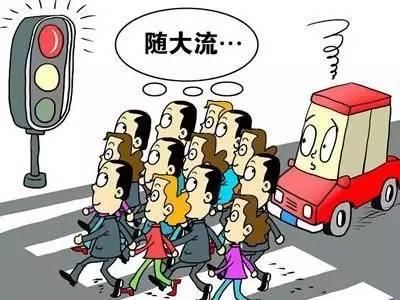
4. Conformity thinking. Not only humans, but also creatures in nature will have the same choice. The most obvious is nothing more than the migrating animal populations. As long as the leader is there, the group will be there. A qualified trader will not follow other people's operation suggestions, nor will he actively ask others for operation suggestions. If your trading thinking is opposite to that of most people, will you insist on your own opposite? Don't say that the road to success is always lonely, just think about gold a few days ago, and you will know what you dare to do against traders who are bullish on gold?
5. I want to see positive results as soon as I enter the market. Every trading teacher will tell us that we must be patient in trading, because the market takes time to come out. However, given the choice, I believe no one would want to wait. Just think of a gambler who goes to a casino.
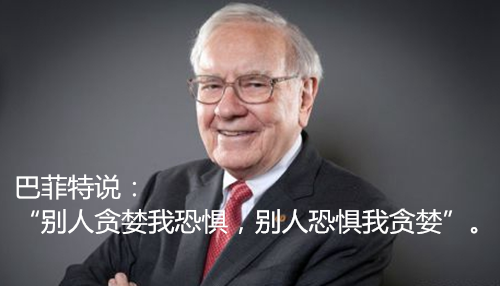
6. Greed and fear. "Be fearful when others are greedy, and be greedy when others are fearful", Warren Buffett's words are still in my ears, but few people do it. After all, there is only one stock god. Greed and fear are eternal topics in human history. As long as there are people, there will be human nature of greed and fear. If a fire breaks out in the building you are in, you will definitely run for the door and run away desperately. This is an instinctive reaction of fear. Why do stock market rises usually start with a slow bull market, while bear markets always start with a sharp drop? You are afraid of taking more losses on your own, so you want to play at a high position and can't wait.
7. Reluctance to admit defeat. As the ancients said, people need face, and trees need bark. When a person can put down his face to make money, he may be successful; when a trader puts down his face to admit his mistakes, he is one step closer to stable and profitable trading. Every year, a large number of traders lose their positions because of carrying orders. Isn’t the essence of carrying orders just that they are unwilling to admit their failures?
8. Laziness. Needless to say, this is also the weakness of human nature. The irony is that the major reforms of human beings all started because of laziness. Because they did not want to use manpower, machines appeared and triggered the industrial revolution, etc. It is also because of laziness that new trading models such as EA and documentary community have emerged .
Knowing the weakness of human nature, you can prescribe the right medicine when doing transactions. Of course, the weakness of human nature is far more than that, and everyone is welcome to add it.
So what is the ultimate meaning of the transaction?
Money, to satisfy one's own material life, this is of course the purpose of the transaction. But I think wealth growth is the result of transactions. The ultimate significance of trading lies in the outlook on life and trading that is slowly formed during the trading process.
Copyright reserved to the author
Last updated: 08/25/2023 03:46
 Add
Add


The purpose of trading is human nature... If you can be anti-human, why trade? This proposition is too difficult for people. Since human beings are greedy, angry, and ignorant, they must have weaknesses. No one is perfect... So if trading, I recommend automated trading, quantitative passive trading, at least to avoid many negative effects of human nature
Copyright reserved to the author
Last updated: 08/24/2023 18:49
Add

For traders, besides making money in the market, what is its ultimate significance?
It lies in the realization of the value of life and the satisfaction of things that cannot be obtained in real life. Once you have made money, you can do what you like and put more energy into your hobbies. You can leave more time for your loved ones, and give double compensation to those who have neglected their debts because of learning to trade these years.
To be a person who contributes to society, to help those who can help those who deserve help, and to gain recognition from more people may be the so-called social welfare.
Copyright reserved to the author
Last updated: 08/24/2023 14:20
Add

0
work
0
subscriber