

Chapter 21 10/04 USDCAD: "Head and Shoulders Bottom" Pattern Appears to be Taking Shape, but the Adjustment Per
The USDCAD strengthened because of the Fed's tough attitude towards the interest rate path. Nevertheless, depressed crude oil prices put pressure on the CAD.
Fundamentals
On Wednesday, the USDCAD continued to fluctuate in the recent resistance level of 1.3700. CAD assets are trying to find a decisive direction as investors are waiting for the U.S. non-farm payrolls report released on Friday.
Whether the recent strong rise of the USD will continue may depend on Friday's employment report. The market now predicts that the number of non-farm payrolls in the U.S. is expected to drop from 187,000 to 163,000 in September, but the unemployment rate is expected to drop from 3.8% to 3.7%, which is supported by a slight decline in the four-week SMA of initial jobless claims.
Nevertheless, although the initial reaction of the USD may come from unexpected changes in non-farm payroll data or the unemployment rate, whether this reaction will continue may depend on wage growth, which may give people a glimpse of the trend of inflation in the coming months. It is estimated that the average hourly wage will increase slightly on a monthly basis, with a year-on-year growth rate of 4.3%.
Combined with the upward trend of oil prices, the rebound of overall inflation, and the forecast that the performance of the U.S. economy in the third quarter may be better than that in the second quarter, the increase in wage growth may increase the risk of potential price pressure in the coming months.
Since investors still expect the interest rate path to be lower than that of the Federal Reserve, the possibility of raising interest rates again is only about 50%, and it is expected that the interest rate will drop to 4.7% by the end of next year. If the employment data on Friday improves, it seems that there is still enough room for upward adjustment, which may push up the yield and encourage investors to buy more USD.
It is true that the U.S. Dollar Index (USDX) fell sharply from an 11-month high of around 107.20 before the non-farm payroll report, and the USDCAD did not follow, which indicates that CAD assets are trying to find a decisive direction. The latter is still at a disadvantage because of the fall in oil prices. It is worth noting that Canada is a major oil exporter of the U.S., and the decline in oil prices has a negative impact on the CAD.
Technical Analysis
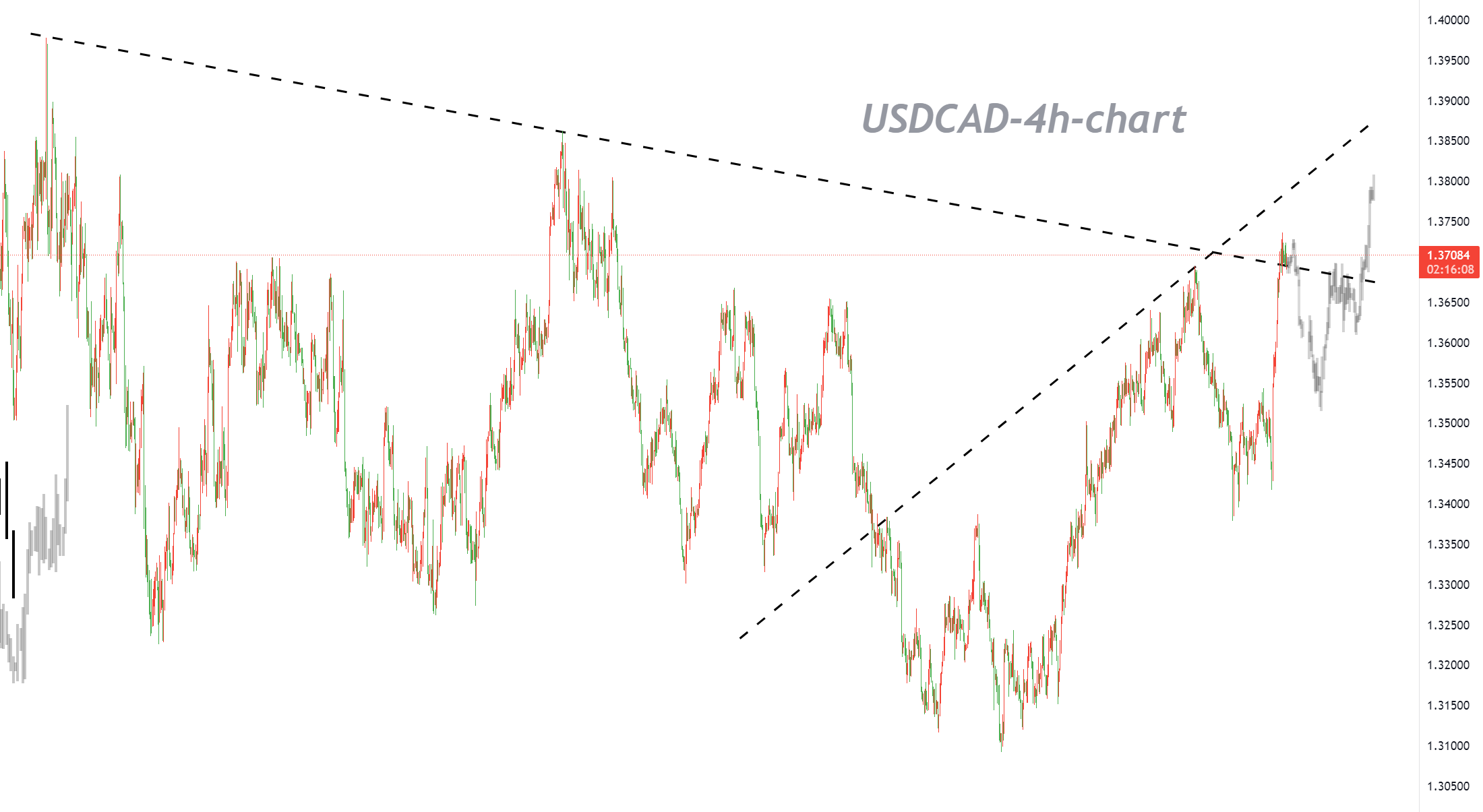
The USDCAD has broken through the inverted head and shoulders bottom pattern formed in the 1D timeframe, and such a structure will push the price to appear in bullish reversal mode after a long-term consolidation. At the same time, the Relative Strength Index entered the bullish range of 60.00-80.00, which indicates that the bullish impulse has been activated.
If the bulls break decisively above the October 3 high of 1.3736, the USDCAD will face primary resistance around the March 24 high of 1.3800, followed by the March 10 high of 1.3860.
In another case, because the period is too crowded, there is not enough time to adjust the upward structure. The USDCAD also faces the risk of retracement. In that case, the USDCAD may initially return to the 1.3513 range and then accelerate its rise. If it falls below the level near the September 25 low of 1.3450, it will drag the USDCAD down to the September 20 low of 1.3400. If it falls further, the USDCAD may fall to a six-week low of 1.3356.
Overall, we believe that the USDCAD's recent strong rally seems to have reached an inflection point, with a slight lack of momentum for further gains and a risk of a pullback. It is recommended to buy low and sell high.
Trading Recommendations
Trading direction: Long
Entry price: 1.3580
Target price: 1.3987
Stop loss: 1.3410
Deadline: 2023-10-18 23:55:00
Support: 1.3700, 1.3629, 1.3578
Resistance: 1.3740, 1.3802, 1.3864


