

Chapter 35 10/17 XAUUSD: Buy the Dips as the Bulls Remain in Absolute Control
Abstract: Retail sales in the U.S. increased for six consecutive months in September, indicating that consumers have not reduced their consumption because of rising interest rates. Continued strong consumer demand could prompt the Fed to raise interest rates again before the end of the year to boost the USD and suppress gold.
Fundamentals
U.S. retail sales in September increased by 0.7% to US$70.49 billion, which is 0.3% higher than expected. Excluding automobile sales, sales increased by 0.6% to US$ 46.97 billion, which was 0.2% higher than expected. Sales excluding gasoline increased by 0.7% to US$64.82 billion. Excluding cars, gasoline sales increased by 0.7% to US$51.30 billion.
Total sales from July to September increased by 3.1% compared with the same period of last year.
Market observation: The retail sales in the U.S. increased by 0.7% in September, which exceeded expectations, because families increased their car purchases and increased their consumption in restaurants and bars, showing lasting family demand. This shows that the U.S. economy still performed strongly at the end of the third quarter.
Despite this, most of the growth in retail sales is concentrated in car dealers and gas stations, and some other retailers have also performed poorly. In addition, September is between the busy back-to-school season and the holiday shopping season, which often does not reflect the consumption situation of consumers.
Overall, although the inflation rate has rebounded recently driven by energy factors, the growth of retail sales shows that consumers' enthusiasm is still high. Although wage growth has begun to lose momentum, the labor market is still generally strong, providing Americans with room to continue spending. In the case that the price data in September shows that inflation is stubborn, the continued strong consumer demand may prompt the Fed to raise interest rates again before the end of the year.
Technical Analysis
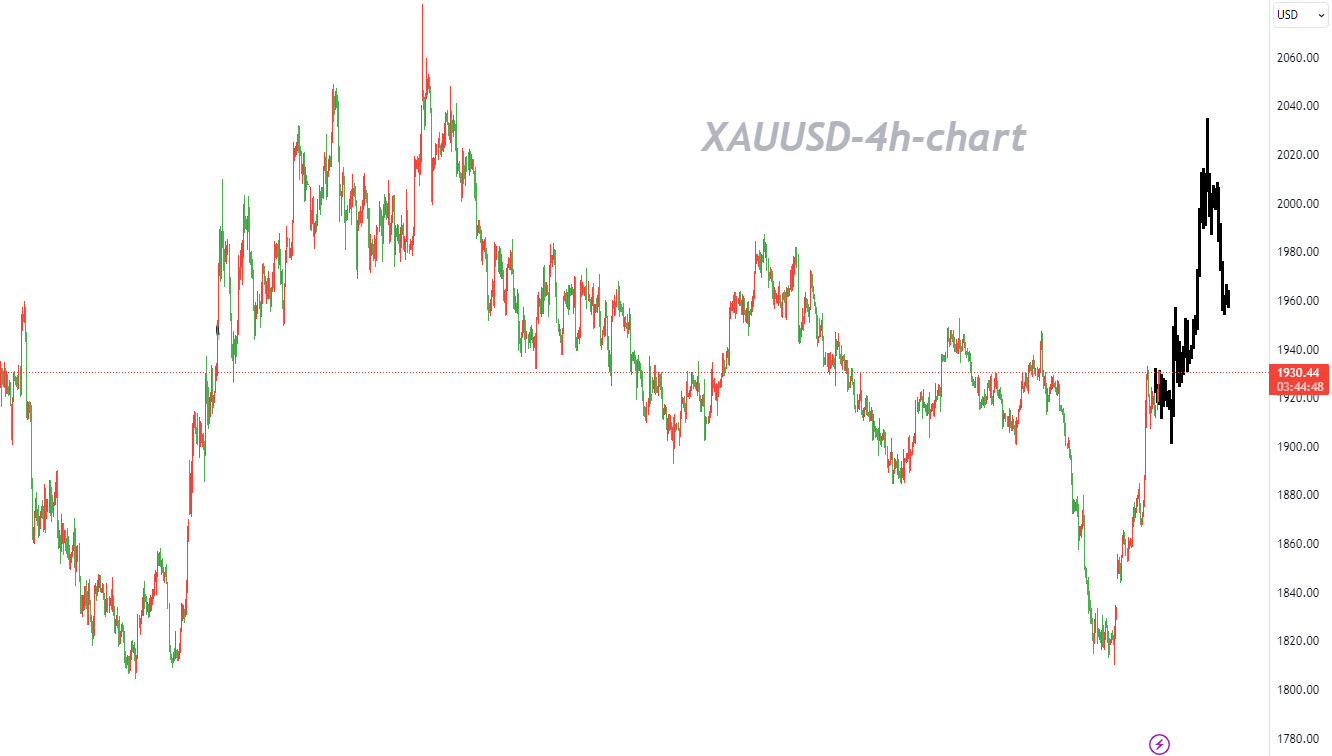
Affected by the higher-than-expected retail sales growth in the U.S. in September, the bulls regained control after a brief decline in gold prices. The price of gold rose to its highest level in more than two weeks on Tuesday.
The general view of the market is that the tightening cycle of the Fed is coming to an end, which offsets the potential impact of consumer prices in September and provides new support for gold prices. Recently, the uncertainty of the Middle East crisis has been increasing, and the increase in safe-haven demand has provided new support for gold prices.
The bullish structure in the 1D timeframe also supports the recovery of gold. Last week's trend (the biggest weekly increase since mid-March) formed a long weekly bullish white body and built a reversal pattern in the 1W timeframe, which brought initial positive signals to the bearish market of the previous week. At the same time, the Momentum Oscillator has moved into the bullish zone, which suggests an increasing likelihood of higher prices.
However, for trading, it is very risky to continue buying during the uptrend at the current price; After all, the stop-loss space is too broad. If the price can fall and the bulls remain intact, buying the dips will be a very reasonable choice. It is recommended to buy the dips.
Trading Recommendations
Trading direction: Long
Entry price: 1905.50
Target price: 1975
Stop loss: 1884
Deadline: 2023-10-31 23:55:00
Support: 1884, 1878, 1869
Resistance: 1933, 1947, 1953


