

Chapter 91 11/15 GBPUSD: Beware of Bull Profit-taking as It Doesn't Rise All the Time
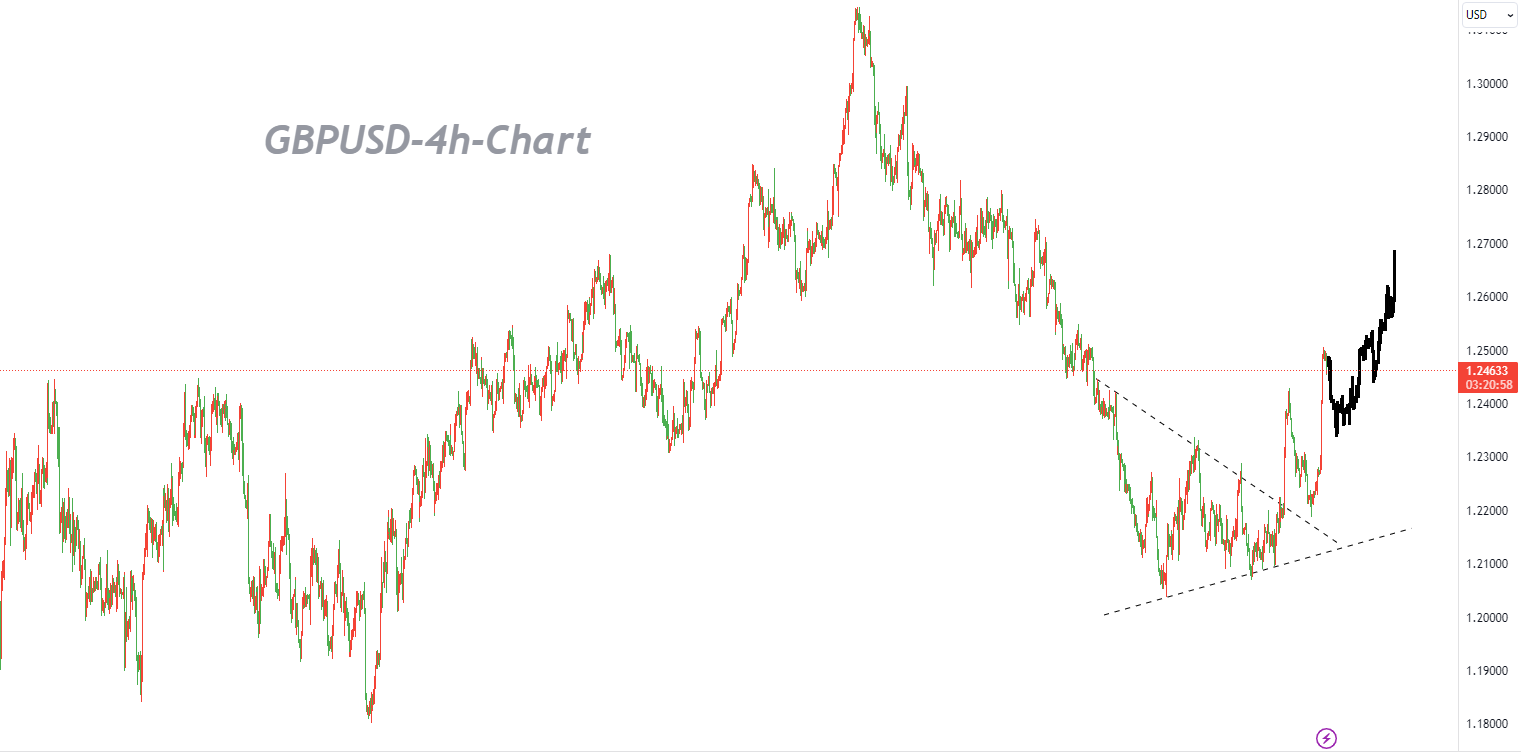
Abstract: The GBP weakened on Wednesday, so the previously released data showed that the inflation in the UK dropped more than expected in October, which strengthened the expectation that the Bank of England (BOE) would cut interest rates in the middle of next year. The GBPUSD is currently seeing a strong rebound after testing the breakout of a symmetrical triangle formed in the 1D timeframe, which suggests that demand has turned optimistic in the near term.
Fundamentals
The CPI in the UK slowed down significantly in October, which was lower than market expectations. The annual CPI growth rate dropped from 6.7% to 4.6%, which was lower than the expected 4.7%. This decline reflects the broader trend of easing inflationary pressure, as evidenced by the flat monthly CPI rate of 0.0%, which is lower than the expected 0.2%.
The core consumer price index (excluding volatile items such as energy, food, alcohol, and tobacco) reflects this downward trend. The annual growth rate slowed down from 6.1% to 5.7%, which was lower than the expected 5.8% again.
One notable aspect of the report was the sharp decline in the annual rate of CPI, which plummeted from 6.2% to 2.9%. Meanwhile, the services sector also declined, but to a lesser extent, with the annualized rate of the services CPI falling from 6.9% year-over-year to 6.6%.
The greatest downward pressure on annual rates came from the housing and household services sector. Notably, the CPI annual rate for this category hit its lowest level since January 1950, when records began. Additionally, the food and non-alcoholic beverages sector also drove the downward trend, hitting its lowest annual rate since June 2022.
Market observation: The annual rate of CPI in the UK dropped from 6.7% in September to 4.6% in October. This is the lowest level in two years, and it is also lower than the market expectation of 4.8%. This is a sharp drop in the overall CPI, but it is generally expected due to the year-on-year impact and the decline in energy prices; However, this is also good news, which confirms the downward trend of inflation. This probably means that the BOE is in a favorable position to start cutting interest rates in late 2024, but it depends largely on the strength of the labor market and economy.
Technical Analysis
The gains in GBPUSD have now risen to a two-month high of 1.2504. The broader appeal remains optimistic as market sentiment improves. For now, the intraday bias remains to the upside.
The continued trading above the 38.2% Fibonacci retracement at 1.2458 from 1.3141 to 1.2036 will pave the way for testing the 1.2716 level. However, the rise needs structure; This means that prices will not go up blindly. The market may need to take some profits, which will lead to a fall in prices.
On the downside, the secondary support level below 1.2443 will make the intraday bias neutral and bring about a pullback. However, the downside should be limited above the support level of 1.2185 to bring another rebound to the bulls.
From a broader perspective, the price trend from 1.3141 is seen as a correction for the rise from 1.0351. Although there may be further rebound, the upside space should be limited by 1.3141 to bring the upward tilt rate of the correction. It is recommended to go short at the highs in the short term.
Trading Recommendations
Trading direction: Short
Entry price: 1.2470
Target price: 1.2281
Stop loss: 1.2550
Deadline: 2023-11-29 23:55:00
Support: 1.2429, 1.2399, 1.2309
Resistance: 1.2505, 1.2546, 1.2600


