

Chapter 24 10 /05 WTI: Explaining Why the Market Experienced a Sudden Plunge
With the prospect of long-term global interest rate hikes, market sentiment continues to deteriorate, overwhelming concerns about actual supply shortages. Technical selling and algorithm-driven traders are eager to exit, causing a complete collapse in crude oil prices.
Fundamentals
International oil prices continued to plunge on Wednesday, with the settlement price of WTI crude oil futures for the November contract at $84.22, down over 6%, and Brent crude oil futures settlement price at $85.81, also down over 6%. Both marked the largest single-day decline since September of last year.
From mid-June to late September, crude oil staged a rebound of approximately 40%. However, over the past few days, amid the prospect of long-term global interest rate hikes, market sentiment has deteriorated continuously. This sentiment has overshadowed concerns about actual supply shortages, even though Saudi Arabia and Russia have reiterated their commitment to limit production until the end of this year. Despite signs indicating that the current market supply remains tight, the outlook for increased supply in the future, along with technical selling and algorithm-driven traders eager to exit, has caused a comprehensive collapse in crude oil prices.
The sharp drop in oil prices has also led the Bloomberg Commodity Spot Index to record its largest decline since the turmoil in the US banking sector in March. Now, the market's focus has shifted from short-term supply shortages to the impact of higher interest rates over an extended period. The resulting subdued macroeconomic environment, along with OPEC+ plans on how to respond at their meeting on November 26, continues to bring adjustments to the organization.
On the market side, overnight oil prices saw a significant drop, with WTI crude oil currently trading more than $10 below last week's peak of $93.98 per barrel. Given the lack of a clear triggering event, this sell-off has left traders particularly perplexed.
After a strong rebound in the third quarter, WTI crude oil prices surpassed $90 per barrel at the end of September. Despite the ongoing speculation that prices might return to $100 per barrel, we have maintained a cautious stance, as the significant decline in oil prices (as described in recent strategy releases) aligns with our expectations.
Meanwhile, the sharp decline in oil prices has occurred against the backdrop of growing concerns about rising interest rates and the global economy, which have unsettled stock and bond markets in recent weeks. It is precisely this sense of unease that has driven technical selling and algorithm-driven traders to exit, causing a comprehensive collapse in crude oil prices.
Furthermore, OPEC+'s decision to maintain production cuts is typically seen as a bullish signal in the market. However, the rapid and deep decline has raised discussions about demand disruption caused by the surging oil prices in the third quarter.
Technical Analysis
Firstly, it is necessary to further elaborate on why the significant price drop aligns with our expectations. In fact, not only does it align with our expectations, but it is somewhat regrettable that the magnitude of the price correction has exceeded our forecasts. Why did the price experience a remarkable $10 drop? Previously, we mentioned that technical selling and algorithm-driven trading were the main factors, with institutional holding costs being the root cause. This implies that the recent price surge from the $79.00-$81.00 range was entirely driven by institutional trading, and a significant pullback was a high-probability event once production cut expectations played out. However, what caught us by surprise was the rapidity of the price correction, which left us without an opportunity to participate.
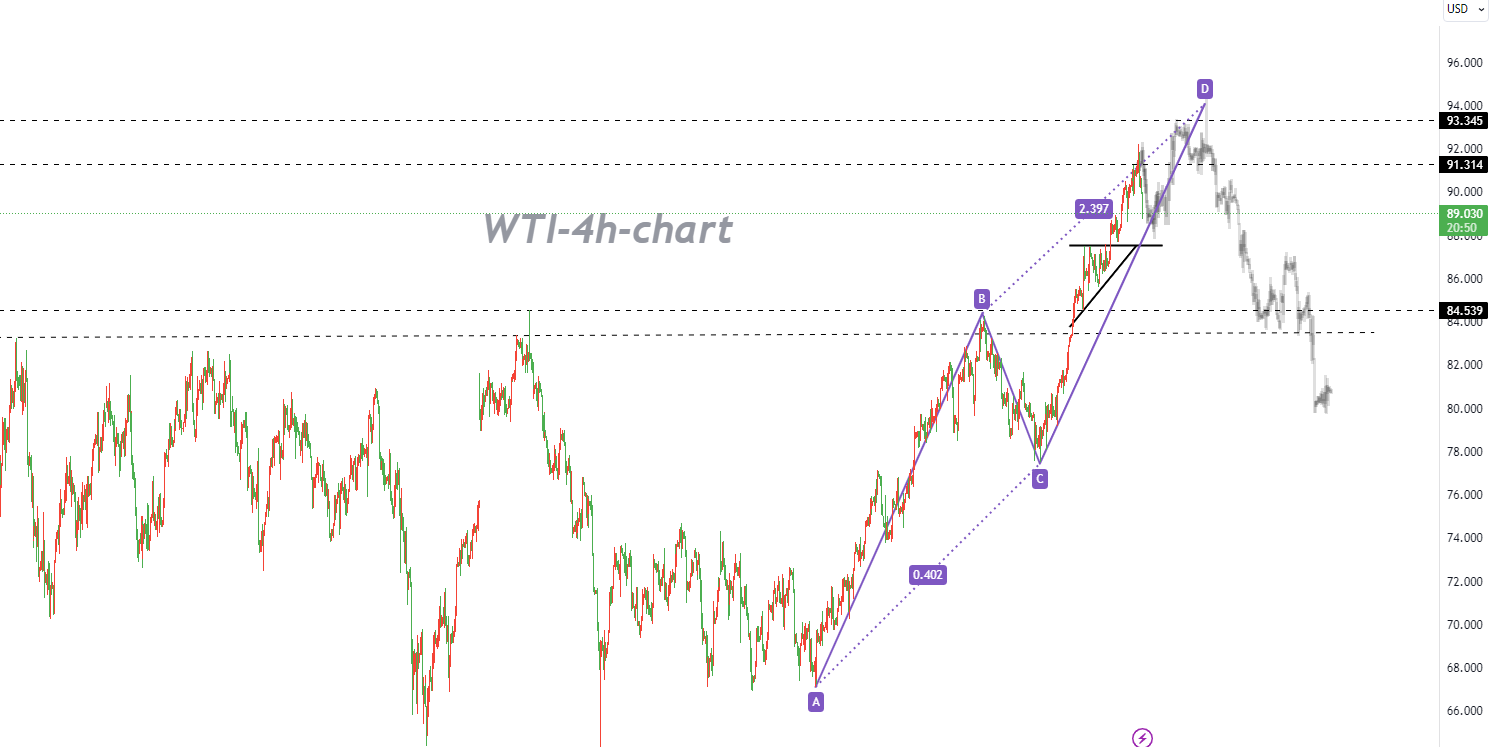
Currently, the market has retraced back to the holding cost level of $81.26, indicating that the bearish sentiment has dissipated, and the market may now enter a corrective phase. However, there remains a downside risk impact even after the retracement ends, and it is expected that selling pressure will accelerate once the price tests the $85.00 level. In terms of strategy, a short-term approach focusing on selling at higher levels and buying at lower levels is recommended.
Trading Recommendations
Trading Direction: Short
Entry Price: 84.30
Target Price: 75.50
Stop Loss: 88.00
Valid Until: 2023-10-19 23:55:00
Support: 81.26, 80.28, 78.41
Resistance: 83.00, 84.33, 85.64


