

Chapter 27 10/10 WTI: Gap Will Definitely Be Recovered, But It's Not Imminent
Geopolitical risks still exist in the global financial market in the fourth quarter. OPEC+ is optimistic about the supply and demand prospects of crude oil, and oil prices are expected to run at high levels in the short term. The Palestinian-Israeli conflict has resumed, and the Middle East may be widely affected. A new round of Palestinian-Israeli conflict may affect the stability of the Middle East, thus affecting the crude oil supply side.
Fundamentals
The possibility of a new unstable situation in the Middle East is increasing. WTI crude oil rose more than 4% on Monday and fell 0.38% today. Conflicts have exacerbated the volatility of oil prices.
In the past month, oil prices fluctuated sharply because economic concerns suppressed the rebound of oil prices supported by Saudi Arabia and Russia's production cuts. The conflict between Palestine and Israel has not yet spread to neighboring oil-producing countries, which has a limited impact on crude oil supply and demand, but risk aversion may give a short-term boost to crude oil prices. The extent and duration of the ensuing impact will continue to require continued attention to the progress of the conflict.
Throughout history, military conflicts related to oil-producing countries usually lead to impulse hedging transactions. At the beginning of the conflict, crude oil and gold rose sharply as geopolitics-safe assets, while stocks fell as risky assets. After the risk subsided, crude oil and gold fell back and stock prices rebounded. During the Gulf War in 1990, the Iraq War in 2003, and the Libyan War in 2011, the highest increase in oil prices reached about 240%, 45%, and 40%, lasting about 3, 4, and 5 months. In the later period, the oil price basically returned to the pre-conflict level.
Although Israel's role in global crude oil supply is limited, this conflict may involve the U.S. and Iran. Any retaliation against Iran may endanger the passage of ships in the Strait of Hormuz, and the Strait of Hormuz is an important channel for transporting most of the world's crude oil. When we see the conflict between Palestine and Israel, the premium in oil prices is quite short-lived, because the impact on supply is limited, but there is indeed a supply interruption at present.
In addition, Saudi Arabia's efforts to reduce production may slow down, and supply-side easing is expected to increase. Saudi Arabia revealed its intention to produce crude oil to the White House, saying that if the price of crude oil rises, it is willing to increase crude oil production early next year. Before this, the implementation of production reduction plans in Saudi Arabia and Russia has been strong. If Saudi Arabia slows down its production reduction in early 2024, it may lead to the complete end of the current tight supply and demand pattern of crude oil caused by its production reduction, thus providing power for the downtrend of oil prices on the supply side.
Technical Analysis
On Monday, WTI crude oil opened US$2 higher and rose further by US$2.5, now running at higher levels, as concerns about global supply deepened due to the Israeli-Palestinian conflict.
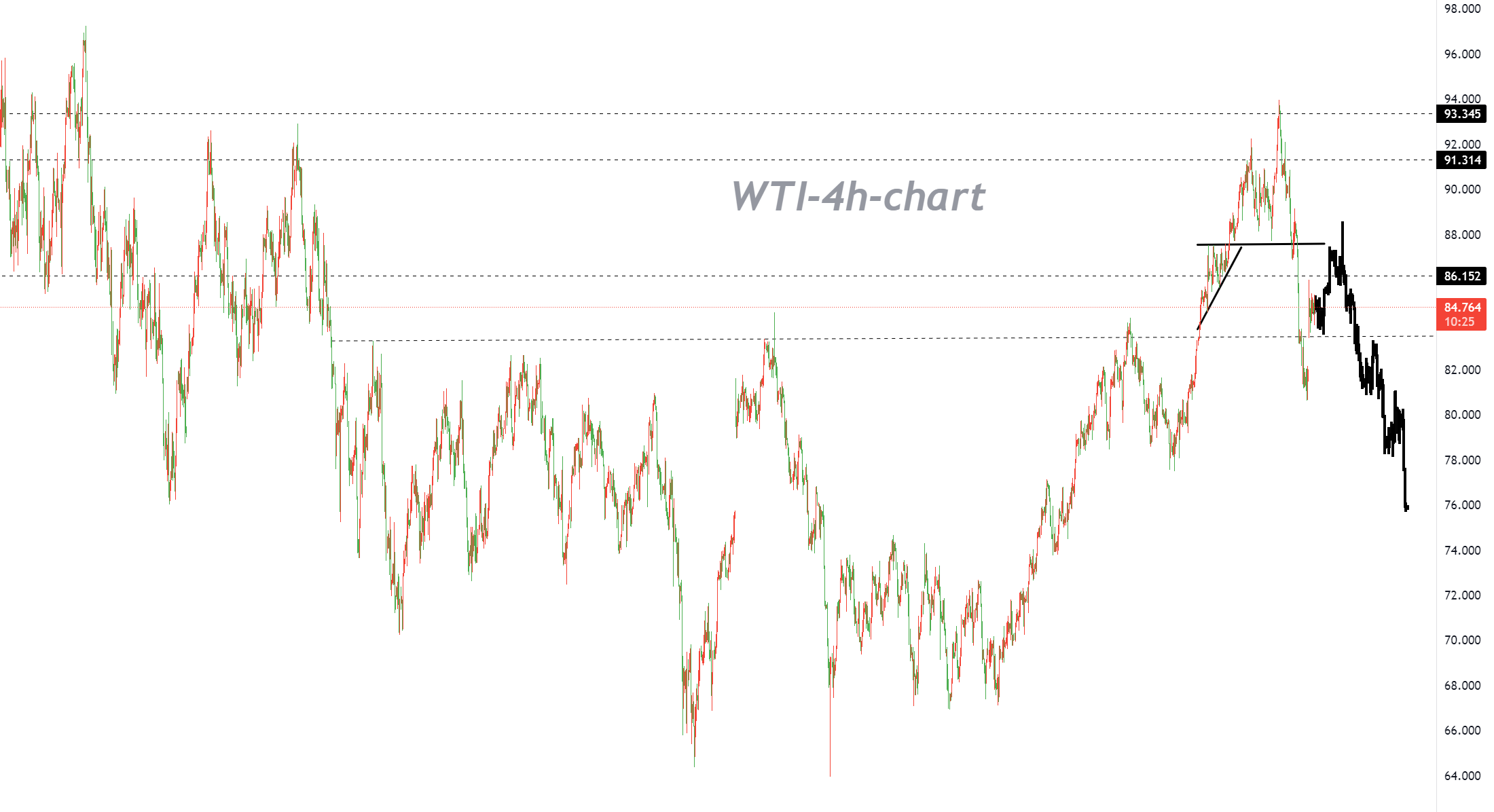
So far, the new strength has reversed the recent 38.2% Fibonacci decline of US$93.98 - 80.63 and the nearly 9% decline last week, increasing the rising prospect.
The rebound reversed the decline in the 1D timeframe, which provided solid support for the recent trend. Bulls need to close above the 38.2% Fibonacci above US$86.67 (93.89 - 80.63) to strengthen the reversal signal and provide a solid foundation for bulls to test US$88.00 and challenge the psychological threshold of US$90.
On the other hand, the failure to clearly break through the resistance of US$86.67 will make bulls suspicious, but the recent widespread bullish bias is expected to continue to work, while the trend remains above the 55-day SMA (US$84.70).
The Relative Strength Index in the 1D timeframe is strengthening but still needs more rallies to validate the bullish signal.
Finally, as our technical chart depicts, the market is bound to recover the gap however unpredictable the situation in the Middle East is, but it does not appear imminent at the moment.
Trading Recommendations
Trading direction: Long
Entry price: 83.73
Target price: 88.49
Stop loss: 80.60
Deadline: 2023-10-24 23:55:00
Support: 84.70, 83.24, 81.52, 80.00
Resistance: 86.67, 87.21, 88.26, 88.94


