

Chapter 36 10/18 WTI: Further Rises Look Unwelcome Despite Escalating Conflict
Abstract: WTI crude oil prices continued to rise on Wednesday. The attack on a hospital in Gaza killed hundreds of people. On the eve of U.S. President Biden's visit to the Middle East, this incident suddenly raised regional tensions. However, a further rise in crude oil prices looks unwelcome.
Fundamentals
The crude oil market fluctuated greatly in this week's trading. Some buyers quickly returned to the market, reflecting widespread supply concerns and serious geopolitical tensions.
On Tuesday night, the Central Bank of the Russian Federation said that if the global shortage of crude oil worsens, OPEC+ will discuss the possibility of increasing crude oil production in early 2024. For a time, the price of WTI crude oil plunged briefly.
However, due to the escalation of the Israeli-Hamas conflict, WTI crude oil prices resumed their upward trend at the end of Tuesday, getting rid of the daily correction at the beginning of the week. The daily rebound occurs against the background of the decrease of open contracts, which implies that the market does not seem to want to continue to rise, but the peak of crude oil price near US$95.00 before the end of the year is still the bulls' next goal.
WTI crude oil rose above US$88.00/barrel in Europe on Wednesday. After hundreds of people were killed in an attack on a hospital in Gaza, the leaders of Jordan, Egypt, and Palestine canceled their planned summit with Biden, which complicated Biden's efforts to ensure that the Israeli-Hamas conflict would not spread to the whole Middle East.
Traders are wary of the spread of war outside Gaza and the possible involvement of Iran, which supports Hamas. If the scope of the conflict expands, the flow of crude oil supply may be impacted, and the crude oil market, which is already tight due to OPEC+ production cuts, may be further under pressure.
Finally, the weekly EIA inventory report released later today may also affect the trend of crude oil. Rising inventory indicates that demand has been weak, which may mean that crude oil prices will face more downside, while falling inventory indicates that consumption is still at a high level, supporting the current price.
Technical Analysis
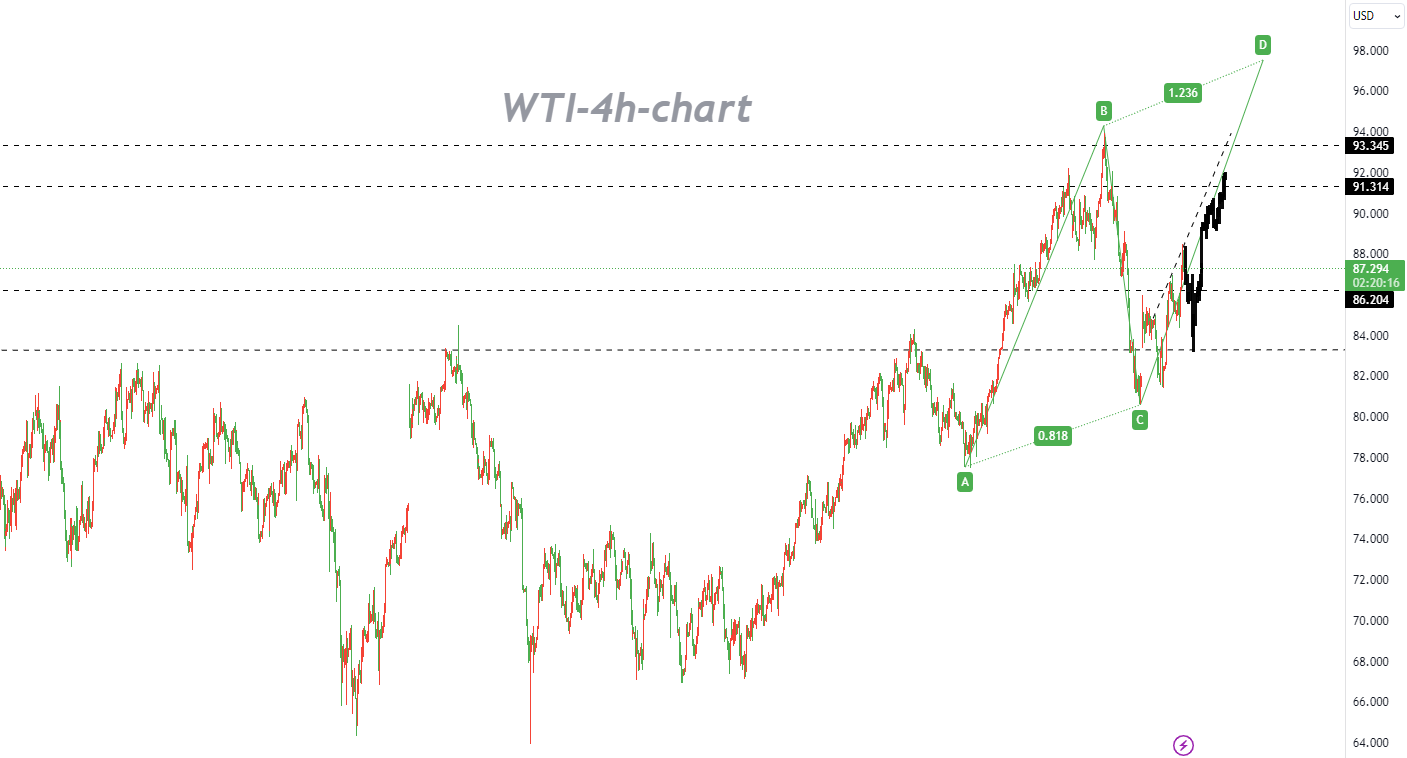
WTI crude oil price rose above US$88.00/barrel on Wednesday, breaking through the 50% Fibonacci retracement drawn from the high of US$94.00 on September 28 to the low of US$80.36 on October 6. The 50-cycle SMA is at US$85.65, which continues to support oil price bulls.
WTI crude oil is rising as the price completes the retest of the front neckline resistance level of around US$85.50. The next resistance level is 61.8% or US$89.30/barrel. Stronger upward pressure may push the crude oil price to 76.4% of US$90.19, or extend it to US$91.63/barrel.
The 100 SMA sits above the 200 SMA, confirming that the path of least resistance is to the upside, or likely to continue rising. The price is also above both SMAs, so these may act as dynamic support for the downside.
However, the stochastic indicator already indicates oversold conditions; therefore, a lower move would indicate a return of bearish momentum. The oscillator has enough room to fall before reaching oversold conditions.
Similarly, the Relative Strength Index starts falling from the overbought zone, suggesting that the bears are taking over. There is still plenty of room for this oscillator to cover before it reflects sellers' exhaustion, so crude oil prices may continue to follow suit. It is recommended to go short at the highs.
Trading Recommendations
Trading direction: Short
Entry price: 87.70
Target price: 82.00
Stop loss: 90.30
Deadline: 2023-11-01 23:55:00
Support: 86.97, 85.72, 84.37
Resistance: 88.45, 89.14, 90.07


