


Stay in touch!
Subscribe to our newsletter to get the latest updates on live market analysis, trading strategies and more. You can unsubscribe anytime.
By subscribing, you agree to Trading.live Privacy Policy.


Before answering this question, I suggest the subject to watch a TV series called "Don't Call Me Brother". There is a plot in it. I think it can answer your question. Simply upload a screenshot first.
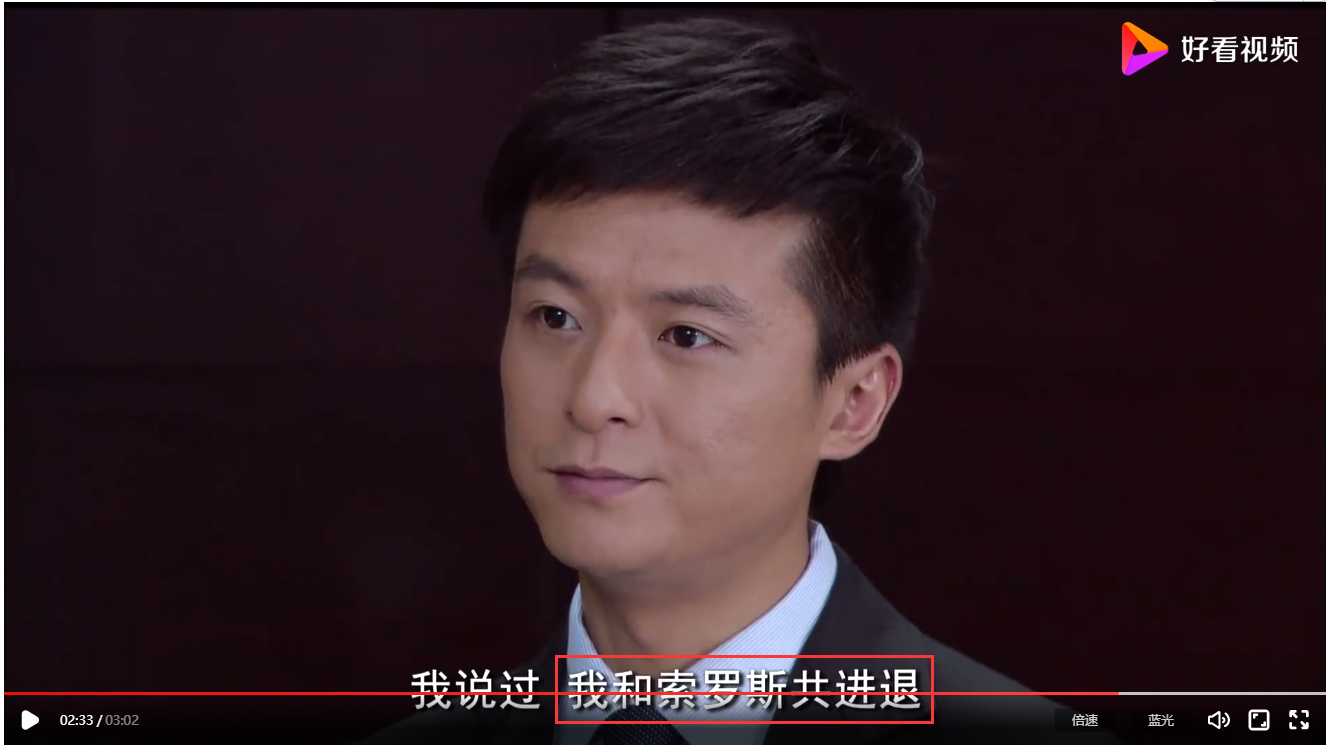
This story is about the time when Soros attacked Hong Kong, the second man followed Soros to short the Hang Seng Index, and could have earned 1.5 billion, but because of greed on the one hand and wanting to earn more money, on the other hand On the one hand, the trust of Soros, the representative of large institutions, has been followed. But it is very regrettable that Soros failed to attack Hong Kong back then, which eventually led to the bankruptcy of the male number two. There are still many underground banks and usury money to be repaid, and finally ended the battle by jumping off a building.
Through the above statement, what I want to say is that whether it is to imitate the large-scale structure's single-handling method, or follow the large-scale structure's joint operation, it can be done, but first of all, there must be enough capital to deal with all unknown risks. , Secondly, don't be greedy. The most important thing is that you have to know how the organization works.
In a certain period of time, the exchange rate trend of a specific currency pair may be affected by the buying and selling behavior of a certain type of investors. In fact, market trends are often initiated by some large investment institutions. Dissecting the investment behavior of some large investment institutions in the foreign exchange market will help investors grasp the market trend and follow the main institutions to obtain profits.
Behavioral characteristics of the main players (institutions) in the market
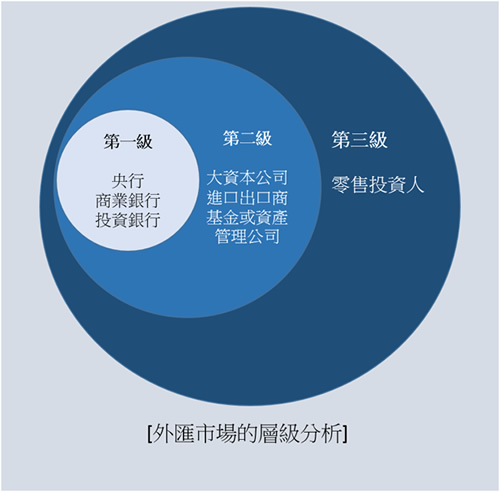
1. large commercial bank
Commercial bank accounts account for a very large proportion of the transaction volume in the foreign exchange market, and about one-third of the daily foreign exchange transactions occur between banks. Large commercial banks may conduct transactions for their customers and only charge commissions, not for the purpose of earning exchange rate differences. They may also invest in the foreign exchange market through their own investment departments to obtain profits from the bid-ask spread. In the interbank market, you can see the flow of all funds, and you can see at a glance the market entry of institutions including the central bank and hedge funds.
2. central bank
Central banks are one of the major players in the money market. They occupy a very important position in the spot price. The central bank is not a foreign exchange speculator. Their main purpose of entering the foreign exchange market is to observe the market and control the money supply and exchange rate trend. A government often monitors economic activity through a central bank in order to maintain an appropriate money supply to achieve economic goals.
3. investment fund
As global fund managers investing in securities, trust funds, pension and arbitrage funds and other foreign financial instruments are constantly repositioning and adjusting their fixed income portfolios of foreign exchange assets, these transactions usually involve considerable capital flows, so They have a great influence on the market exchange rate movement.
Generally speaking, many foreign exchange investment funds invest in a country's financial assets, and only affect the exchange rate trend by adjusting the position of the assets. For example, due to Japan's zero interest rate policy, its domestic bonds are not very attractive to Japanese investors. Many Japanese institutional investors, as well as trust funds purchased by individual investors, will use part of their funds for overseas securities Investing, for example in German bonds. These investment funds tend to adjust their positions in response to price movements in overseas financial assets. When the market expects the European Central Bank to raise interest rates, German bond yields will rise, which will attract Japanese investors to increase their investment in German bonds. Thus forming the buying of EUR/JPY, pushing up the trend of this currency against the exchange rate.
Operation traces left by the mechanism on the disk
These institutions have the best technical analysts, they know how retail investors analyze and trade the market, know where your stop loss and profit targets are, and they can manipulate the market and take profits from you if they want. This is the truth no one will tell you.
Give an example to show you how market makers know how you trade the market and how they take money out of your pocket.
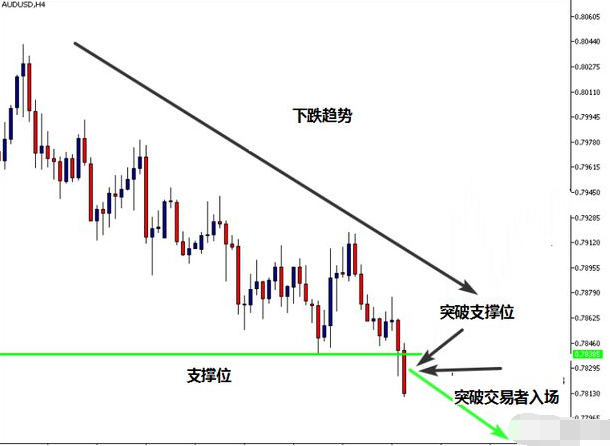
As shown in the figure above, the market is on a downward trend in the short term. After breaking through an important support level, some breakthrough traders enter the market. The reason for entering the market is to take advantage of the trend, break through the support level, and enter the market to short. Feel confident. So what happens next?
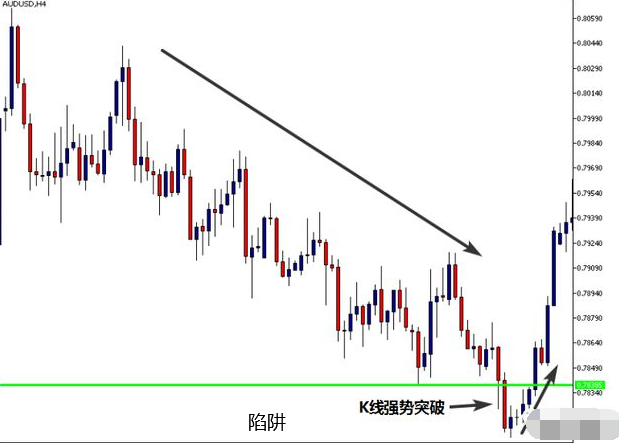
You have to know that if banks and large institutions want to do more in the future, they must have a large number of sellers to provide them with chips. Therefore, they usually create a lot of traps in the market to induce retail investors to go short in order to obtain enough chips. At the same time get lower cost.
As shown in the chart above, a strong breakout immediately started to reverse.
Banks and financial institutions will conduct buying and selling operations in certain areas of the market. If you can effectively identify them, you can do the same operations with them and make money with them instead of becoming their opposite.
How Large Institutions Use Supply and Demand to Trade
Markets are governed by supply and demand. Prices rise and fall due to supply and demand imbalances.
If supply exceeds demand, prices will fall; if demand exceeds supply, prices will rise.
The market is dominated by large investors such as central banks, hedge funds, market makers and other financial institutions. These big investors are also influenced by some factors that affect their trading decisions, such as daily news affecting the world economy, economic data of some countries. And, when they make a trading decision, they move the price drastically and create an imbalance between supply and demand. The greater the imbalance, the greater the price movement.
I don't know if you often find it when you look at the chart. When the market fell back to the level at which it last started a sharp move, it immediately started another violent move in the same direction. This phenomenon often occurs in the market.
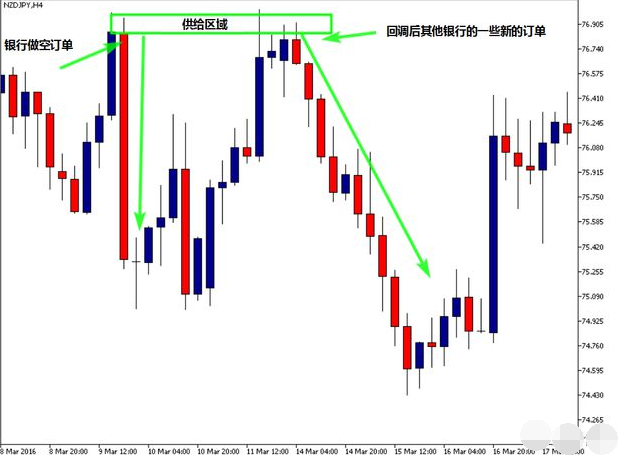
As shown in the chart above, the large red candle represents a sell order from a large bank whose decision to sell was influenced by major economic news.
We don't care about news, we only care about big moves like this because it's the footprint of banks and financial institutions.
When the bank accepted the sell order and quickly let the market price crash, it couldn't get rid of all the money at a good price, so it left some to sell from the same area. The amount remaining in the area is up to the buyer. If the bank finds a large buyer for sale, it can liquidate the entire amount.
But in most cases, banks leave part of their limit orders in their original sell area.
The area where the surge started will be a very important price area as there are also some limit sell orders in that price and when the market pulls back to test this area, other banks and financial institutions will sell from the same area .
Since they know there are other financial institutions that will be selling in the same area, this is the easiest way to make money without conflict.
You don't need to know how to analyze the impact of economic news on the market. Because you are not a bank trader, you are just a small retail investor with a small amount of capital.
Here's what you do: discover areas where banks and financial institutions are likely to make "big moves" in the future. Then follow them to make money together.
Generally speaking, institutions will drive the price to fluctuate rapidly with high trading volume during the process of action, and their capital intervention will be carried out in a certain area. This is one of the agency's single-handed methods.
After you understand this, you will find that you cannot imitate this kind of technique. After all, the amount of funds is limited, and it is already very good to be able to follow the organization. Sitting in a sedan chair is much more comfortable than carrying a sedan chair.
Copyright reserved to the author
Last updated: 08/21/2023 19:00
 Add
Add

First of all, institutions and retail investors are not a kind of thinking or a model at all. Retail investors cannot understand institutions, but institutions are very clear about how most people will view the market!
Regarding the institutional order technology spread on the Internet, I don’t think the so-called institutional order technology is the real institutional order. For example, you can see that the annual line will also reverse in the so-called supply and demand area. So have the pending orders of institutions just completed a few years ago? Unscientific, the final explanation is: the resistance signal belongs to the technical category and has nothing to do with the supply and demand of institutions!
Copyright reserved to the author
Last updated: 08/18/2023 18:51
Add

Retail investors chasing orders from institutions will probably be laughed off by big institutions! There is neither the ability of man-machine nor the financial resources of others. Besides, those young men who are doing orders in the organization, if they can really make money, they will not work for the organization, and they will follow your strategy to go solo and become rich early.
Copyright reserved to the author
Last updated: 08/21/2023 16:54
Add

0
work
0
subscriber