


Stay in touch!
Subscribe to our newsletter to get the latest updates on live market analysis, trading strategies and more. You can unsubscribe anytime.
By subscribing, you agree to Trading.live Privacy Policy.



The market on the data side is known for its randomness and high volatility. Few people can accurately know the next move of the Federal Reserve, even for top investment banks like Goldman Sachs and JP Morgan, it is difficult to fully spy on it. This adds more uncertainty to the data. The data market is usually the tipping point of the market. As long as there is data release time period, there will basically be huge fluctuations, which is also the characteristic of the foreign exchange market. The words of Federal Reserve Chairman Powell will lead to a sudden change in the market direction, which is also expected.
Why is there such a situation of buying news and selling facts?
In fact, the most important influencing factor is: people. How traders view this data. This is the fundamental reason why the data is negative and the price rises instead of falling.
We all know that transactions have always been completed by people, even the current intelligent transactions are dominated by people. Data is a relatively objective existence, and data news will not directly affect price behavior, but will affect traders who see this data. If the data is bearish and most of the trading funds are low and long, then the price will rise instead of fall. This is what we often call buying news and selling facts, and the data is distorted.
If we want to understand this logic, we know that buying news and selling facts is also reasonable.
Of course, it is worth explaining that not all data quotations will show buying news and selling facts. Under normal circumstances, the data will still go according to most expectations, just like the Fed’s interest rate decision some time ago, the market expects that the Fed will not raise interest rates this time. The announcement of the actual results is also in line with expectations, maintaining the current low interest rate monetary policy. Although there are expected blessings, the market public is not the Fed after all, and it is still impossible to analyze all the details of the speech.
So, what should we do when encountering a data market that may appear to buy news and sell facts?
First of all, it must be understood that there is no best way to deal with it, and the uncertainty of the market always limits what we can do. Striving for perfection may not get the results you want. And since it is a data market, randomness is inevitable, and no one can fully control it. Even Trump cannot know the details of the Fed's monetary policy, let alone our ordinary investing public. Therefore, please give up the idea of understanding the data market.

①. Before the data is released, you need to know the news that you can see the data. For example, market expectations before the release of the data, whether the interest rate decision is likely to raise, cut or remain unchanged, what is the expected value of the non-agricultural data, and so on. Non-agricultural data and EIA crude oil inventory data are forward-looking data that need to be focused on. Moreover, by using ADP and API data, there is a certain probability to know the release range of non-agricultural or EIA data. However, this forward-looking indicator is not necessarily accurate, and I personally will not use it to operate, but will have such data for reference.
In short, it is to collect information from all parties in the market before the data is released.
②. Before the data is released, analyze the price action. Use technical means to analyze the overall state of the current market. What is the trend, whether it has reached a very critical point, how far is the current price from the next key pressure, and so on. It is undeniable that sometimes with the help of this data surface, it is very likely that the price will reverse immediately after reaching the pressure level. This step is also not to enter the market when the data is released, but to deal with the orders currently held in hand, and avoid the risks brought by the data as much as possible.
③. As for whether the data will buy news and sell facts, we don’t know, and it’s impossible to know, before the data is released. Since there is no way to know things, there is no need to spend too much energy gambling on data. If you still hold the order in your hand, and the position direction of the order is opposite to the expectation, you need to pay attention to it at this time. If the list I hold is in line with market expectations, then I will continue to hold it with a stop loss. Keep an eye out for the rest, trading the market.
④. Focus on the technical aspect, supplemented by the news aspect. Our trading system should include the control of the data market, everything is based on your own trading system. If you can't bear the risk brought by the data, then close the position and exit the market, etc.
Finally, my personal suggestion is that in the face of irregular data market, just focus on not operate. If you have a position in your hand, do a good job of risk control. If you don’t have it, don’t gamble on the data. Although the data market will make you profitable quickly, it will also make you lose quickly. The accumulation of trading wealth has always relied on time, not gambling data.
Copyright reserved to the author
Last updated: 08/04/2023 02:41
 Add
Add

When doing transactions, if you cannot handle the market conditions on the data side well, you may miss a large wave of trading profits. Of course, we cannot ignore the huge risks brought by the data plane.
Buying news and selling facts is a common trick in trading. Regardless of whether it is the "Tai Chi Master" Federal Reserve or non-agricultural data, such a market will basically be staged every year. However, it still affects the main funds in essence.
The same is the message side, the effect is different. For example, the monetary policy of the Federal Reserve, the monetary policy of the European Central Bank, etc. These data basically affect the entire trading market for a long time. Even if there are short-term fluctuations in the short-term buying news and selling facts, the overall price trend will still be determined by The long-term aspect is the main one. Data such as non-agricultural data, EIA crude oil inventories and CPI usually affect market trends in a short-term manner. Different data have different impacts on prices, and they need to be treated differently in the actual operation process.
Regarding the market trend of buying news and selling facts, some of my thoughts:
First, what we need to know is that this is a normal price behavior in the market, and it is difficult to form a consistent operation, because the data is changing every time, the economic situation of each country is always changing, and the market trend is always changing . It is still impossible to use fixed principles to stipulate that the fluctuation of the data market mainly depends on the actual data.
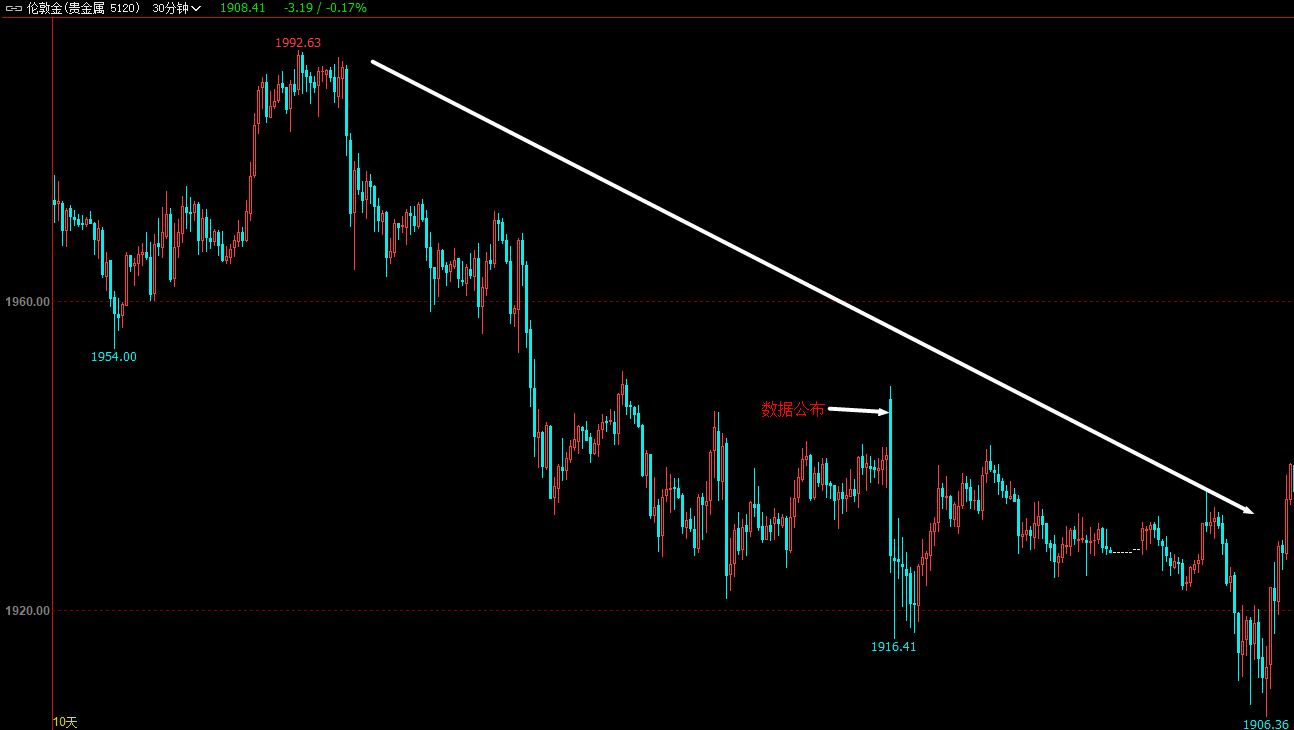
Second, the data market also conforms to the basic assumptions in the Dow Theory. Price action is everything. After all, the trend brought about by data fluctuations is only a short-term fluctuation. Under the premise of not affecting the trend structure, the price behavior will still reverse the negative fluctuations brought about by the data. Just like the non-agricultural data in September, the value of the data announced was bullish for gold, but the overall trend of gold at that time was bearish. Therefore, after the release of the data, it gapped and opened high and then fell rapidly, returning to a short trend. This is also one of the reasons for buying news and selling facts.
Third, the data market is unpredictable, and it can be seen from a distance but not played with. It is still necessary to understand that the premise is that no one can know the data market in advance. Although there is a price difference between milliseconds, ordinary traders cannot advance in advance. For example, top foreign investment banks, in order to manipulate the data market, spared no expense to set up trading servers near the Federal Reserve headquarters or the office building of the US Department of Labor. This is done for the negligible time difference. Therefore, for us ordinary people, it is best to wait for the data to be released before looking for opportunities to enter the market. This is a relatively safe way to deal with it.
Fourth, regarding the data market, we do not know whether there will be buying news and selling facts before the data is released. So we don't need to guess the data. My previous trading method is, before such data is released, two-way pending orders, especially non-agricultural data, follow the order wherever the price breaks through, enter the market quickly and close positions quickly, and never love to fight. However, the risk points of this method are also obvious. First, the price may gap, and the transaction is made at a bad price; second, the price may be swept back and forth; greater risk.
However, this trading method has been useless for a long time, and I don't operate the data surface very much now.
Finally, I still suggest that you do not gamble on such data, the risk is too great. Moreover, the data side has a high proportion of luck, which cannot last for a long time. Build your own trading system, everything is based on the trading system, this is the right way.

Copyright reserved to the author
Last updated: 08/04/2023 21:36
Add

The market price is the result of the game of buying and selling power
The market is unpredictable, mainly in the following two points:
1. The market is a game of group participation;
2. What affects market performance is not only the fundamental facts, but also the emotions and imagination of market participants, which is what we call expectations.
It is precisely because of these two points that the market cannot be predicted by calculation.
Expectations matter more than facts
Facts, the events that happen in life, are the fundamentals of the market
The fundamentals are the root cause of the market, but the facts of the fundamentals do not directly affect the market. It is people who judge the facts and make buying or selling behaviors, and the market will change. Therefore, behind the changes in the market are actually changes in expectations, and changes in expectations are the direct cause of market changes.
Because of the existence of imaginative factors, people's expected fluctuations are often much larger than fundamental changes. Especially when everyone's expectations are very consistent, there will be a sharp rise or fall, even if the price has reached a very extreme situation. This phenomenon is particularly evident in the currency circle.
When this deviation reaches a certain level, the market will diverge, and the price will adjust accordingly. The ups and downs of long-term bull stocks reflect changes in people's hearts and mutual games. The game attribute of the market gives us the enlightenment that expectations are more important than facts.
buy expectations, sell facts
There is a saying: It is good to sell all the bad news, and it is bad news to cash in the good news. What it means is: market expectations have changed to the best or worst, and a turning point will occur, because the expectations have reached an extreme, and the price has deviated far from the real value. Once the fundamentals show signs of turning, expectations will occur violently The turning point triggered a wave of violent market conditions.
Therefore, the best trading opportunity occurs when the price has been significantly overvalued or undervalued, and the market sentiment has turned. If you judge that such an opportunity has come, and quickly identify it before the turning point occurs, and make a decisive move, you will achieve great success.
Copyright reserved to the author
Last updated: 08/10/2023 12:32
Add

Let’s explain buying news and selling facts by way of examples.
A is a poor student who often gets 20--30 points in the exam. I got 55 points in one exam. Still didn't pass, but happy. Is it easy to understand? Because he was originally a poor student, no matter whether it was himself or others, the requirements or expectations for him were very low. 55 points did not pass, but exceeded the expectations of others.
This is why the data is negative, but the market has risen instead.
The score of B is very good, and the score of the annual exam has not been lower than 90. I scored 83 points in one exam. He actually looks pretty good, but others have high expectations of him, so they think he didn't do well in the exam.
This is why the market fell when the data was good.
Can you understand?
In the above two examples, the data itself is still bad when it is bad, and good is still good; but there is one factor that runs through all the time, and that is expectations. Therefore, to judge whether a certain data or event will have the behavior of buying news and selling facts, you just need to look at market expectations.
The market expectation mentioned here refers to the degree of expectation, not the expectation of guessing data. The market habitually speculates about good and bad before important data or events are announced. When good or bad dominates, it can be said that market sentiment (anticipation) is strong. But at this time, it is not enough to support the behavior of buying news and selling facts. At most, there is this basis. Because the expectation at this time is only breadth, not depth. In other words, this is just noodles, not yet to the point. At this time, the target of the market is just the data itself.
It may be difficult to understand. Still the above example. Breadth can be understood as a watershed. 60 points, 90 points, are watershed. In terms of scores alone, one is bad and the other is good. That's what I mean.
And when the market's expectations range from breadth to depth, from surface to point. That’s when news is bought and facts are sold. At this time, the expected target of the market is not the data itself, but passed on to the country/institution behind the data. Consider the overall environment.
Although a score of 60 is bad, for you, a person who has scored 30 in the Wannian test, that is a good test. A score of 90 is high, but for you who have been taking 95+ exams all year round, it is a failure.
Well, just like a joke on the Internet, Xueba said that he failed the exam. . . The result is the score. . . 90.
This situation can be described in one sentence: extremes must be reversed.
As for the best way to handle it. Here is very very very clear to tell you: wait and see. Because the behavior of buying news and selling facts appears, it is often accompanied by unilateral or big market conditions. Maybe you can catch it once or twice, but as long as you make a mistake once, you will be seriously injured if you don't die. Why bother, it is good to pursue compound interest rather than sudden profit. Investment pays attention to the steady flow of water. Don't talk about high risk and high return with me, and don't accept rebuttals.
Copyright reserved to the author
Last updated: 08/10/2023 00:14
Add

The situation mentioned by the topic can be described as "routine operation" in the trading market. We need to understand one essence: trading is always a fulfillment of expectations. We often say that stock trading is speculation in the future and expectations. In fact, any market is the same, it is a kind of hype about future expectations.
Well, before major data is released, because everyone knows that this data may have a relatively large influence, they will invest in their own understanding of it, that is, trade before the data. If you are optimistic, buy up first, and if you are bearish, buy down first. So in the end, before the data is released, the market will move in the direction of most people, which is easy to understand.
Then after the data comes out, it can be divided into two situations: 1. The market is accelerating. At this time, the market may accelerate to the previous direction, because the opposite investors realized that they made a mistake and closed their positions to boost the market; investors who did not enter the market before may catch up because of the good data. 2. The market reverses. On the one hand, it may be because the data is not as good as expected, and investors who bought before have left one after another, causing the market to reverse; Or, find a mistake and escape in time.
The second situation here is the problem mentioned by the subject. Because the data fulfilled investors' previous expectations, investors closed their positions for peace of mind, which led to a market reversal. Regardless of whether it is in line with expectations, as long as investors choose to leave the market, it will cause the market to reverse.
Regardless of the data itself, market fluctuations are only due to capital fluctuations. Then we only need to change according to the current situation of the market, without paying attention to too many other things. It would be even better if you have a trading system. Within the framework of your system, no matter how the market changes due to any reason, it is just an ordinary fluctuation. It will be clear where to enter the market and where to stop the loss.
Therefore, no matter what kind of situation we face, we only need to stick to our own trading system, manage our risks well, and leave the rest to the market.
Copyright reserved to the author
Last updated: 08/10/2023 09:00
Add

"Buy the news and sell the facts" This is a saying we often say when we are doing data market. This sentence comprehensively reflects the changes in the price trajectory before, during and after the data is released. Why do prices change like this?
Let's first pull our thinking back to the trivial things in life. When I was young, I liked a pair of shoes very much. They were very beautiful. This pair of shoes was given to me by relatives. I was still young, and the size of the shoes was too big. My mother told me to keep them and wear them when I grow up. In the following days, I always look forward to wearing new shoes when I grow up. Another year of winter, my mother took out the new pair of winter shoes, and I couldn't wait to hold them in my hands, but the pair of shoes in front of me were not good-looking, not as beautiful as I expected day and night, but nothing more, so ordinary They are just ordinary shoes, but when I try them on, I feel rustic. I smile badly in my heart. Is this the new pair of shoes I have been thinking about?
1. "Buy the news and sell the facts" is a man's heart
Looking back at "buy news and sell facts", are we looking forward to the data or the event itself? No, but the impact on the market.
What is being affected in the market? - human emotions
What affects people's emotions? - own thoughts
What controls people's thoughts? - Physiological instinct
So, what drives the size of the market volatility? It is human physiological instinct. The human brain affects the market's expectations on this event.
"Buy news and sell facts"
Before the event happened, review agencies and major financial websites predicted the results one after another, instigating people’s hearts. This event has attracted more and more people’s attention. If there is attention, it will definitely be discussed, and if there is discussion, it will increase the number of readings and related video broadcasts of the event. quantity. Induce more and more people to participate in the market, or buy more, or add more. In the long-short game, investors are more and more nervous about being instigated, and the multi-party has a strong momentum to take the initiative in the market.
After the data or events were announced, everyone said that it was nothing more than that. How can this incident be said to be so serious, and experts are nothing more than that. It is just a way of agitating public opinion in the media. Everyone sold one after another, the varieties were sold at a high level, and the price poured down.
The data market is the best embodiment of the market participants' floating support to promote the market.
2. Trends come first, events follow
"Dow Theory" stock market prices are a barometer of economic performance. It is the law that dominates the price fluctuations and changes in the market, not an event or a certain person; the impact of human behavior and events is to boost the trend.
Before the release of the data, the trend pattern of this variety has already told the market participants the direction. Whether it can be interpreted and implemented requires the benevolent to see the wisdom of the wise.
Let me take the non-agricultural data as an example, and do a simple analysis to help you expand your ideas for making data market lists.
The most concerned about every month is the US non-farm payrolls data. It is also considered by many people to be the most suitable time to grab money every month.
For the trend of non-agricultural data, there is a more important way to predict, which is a four-hour candle line closest to the data release. According to the position of the candle combination and the 60-day moving average, predict whether the direction of the market tonight is bullish or bearish.
The most commonly used and best trading methods are breakthrough and selling high and buying low. Many order-making principles are based on these two order-making methods. Therefore, the non-agricultural data can also be used in the way of selling high and buying low or breaking through. to think. On the basis of the theoretical model, it is enough to make appropriate improvements and adjustments.
This sideways range is set based on the highest price and the lowest price of the day.
2-3 hours before the market, you can prepare the order in advance, set the stop profit and stop loss and wait for the market to give the result.
Personally, I do not recommend entering the market when the market fluctuates violently after the data is released. It is easy to suffer no loss due to the unreasonable position of the market due to the spread.
"Buy the news and sell the facts", you must believe that any event in the international market will tell you the answer in advance in the form of price operation, and it is particularly important to interpret the information on the disk. Prices come first, events follow. Any strategy must be deployed in advance in order to win every battle.
Copyright reserved to the author
Last updated: 08/10/2023 01:13
Add

"Buy the news, empty the facts" - that is human nature
A handsome man, height, appearance, personality, hobbies, temperament, no matter what he is fascinating. Hope to find such a man as a husband. Every day is full of endless fantasies, fantasizing about every minute and every second with him one day in the future. One day, by chance, they got acquainted with each other and finally walked together. I was very happy at first, but as we get along for a long time, I feel more and more that he is nothing special. Picky eaters, lazy, not clean, not fond of studying, addicted to games, bad habits are becoming more and more unbearable. Quarreling, getting bored, hiding away. It turned out that he was not as good as I imagined.
1. Buy expectations, empty facts
In the same way, before and after an event, public opinion increasingly feels that the matter is of great importance, which has a high probability of triggering violent market price fluctuations.
1.1 Buy expectations
People's emotions are getting stronger and stronger. Any announcement of information will be reflexively associated with this matter. Everyone enters the arena one after another. You enter the arena and I enter the arena. You can't let him enter the arena. The value is getting higher and higher, and the price is pushed up wave after wave.
1.2 Empty facts
Afterwards, the incident had little impact on the market. People had already pushed all the ammunition into the market in the past few days. Without the resupply of ammunition, the price had no momentum to rise. People are disappointed, it’s not bad, that is, it’s not what XXX financial media said, I believe what XXX majors say...you say what you say, and the frustration spreads quickly, sell it quickly Bar. I also buy. It's all sold. Seeing that there was no possibility of pushing up the price again, people were disappointed and closed their positions. As a result, the price was sold at a high level, and the price plummeted and collapsed.
"Buy expectations, empty facts" is a show of human nature.
Is this matter, how important is it? No, everyone thinks it is important.
Is this news so reliable? No, everyone thinks it is reliable.
Is this person so trustworthy? No, everyone said he was trustworthy, so I believed him.
From beginning to end, inciting public opinion is the effect of the event itself.
The public, you and me, are the pawns in this "buy news, empty facts" game.
2. The only reliable price
The market has told you the direction of the market early on, whether the trend will continue or turn.
The price will always be digested by the market, whether it is Trump today or Putin tomorrow. Just like the earth is turning, human society thinks that a great man passed away was a bolt from the blue. From the standpoint of the natural environment, what died was just a person, and he was just one of a species, just like cats, cats and dogs. The earth is still autobiographical and he doesn't care.
The market is also from the same perspective. In this market, big and small things are all aggregated markets for buying and selling. The price is high or low, and the law is the only criterion that governs price fluctuations.
For traders, studying the law of price changes in advance is the most meaningful key. Since the trend of the market will be notified in advance, then you can place positions in advance to gain profits.
Copyright reserved to the author
Last updated: 08/07/2023 10:35
Add

"Buy news, sell facts" is also called "buy expectations, sell facts". It is not difficult to understand literally. The so-called buying news means buying according to news. It is expected that the bullish news will be bought in large quantities in the investment market in advance, and the price will rise accordingly. When the announcement of the news is not as expected or only just meets the expectation, choose to sell and take a profit. If the sale is later, the selling price may not be as good as before. Even better, so everyone scrambled to sell to close their positions, resulting in the fact of selling.
Take the previous Sino-US trade frictions, which triggered changes in the A-share index as an example.
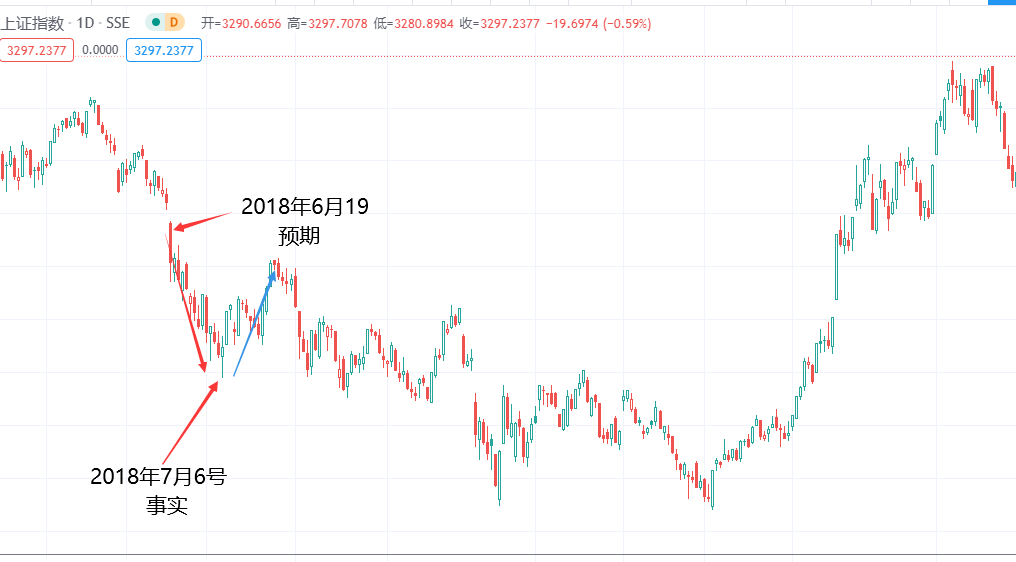
The index fell sharply on May 6. In fact, it is expected that the tariffs will be implemented on May 10. When the market expects it, we should buy it down. This is called buying expectations. Not only can you buy when it rises, but you can also buy when it is expected to fall. Of course, for us, buying down expectations is a short position.
And when the tariffs were actually implemented on May 10, it became a fact. This is the time to sell the facts. If the buying index falls, you should sell short-selling chips. As for us, we should buy some stocks appropriately.
There are many such examples in the stock market.
The most recent is the 18-year trade friction. Knowing the tariff information on June 19, the index plummeted. On July 6, the tariffs were officially implemented and the index reversed.
For friends who may not be futures buyers, it is difficult to understand short selling.
Another example is the increase in performance. If the market had expected it before, then the day the company announces its results is when we sell the stock. If the market did not expect it before, or the expectation is less than the company's announced performance. Then the day when the results are announced is the time to buy stocks. Such as Goodix Technology. On April 15, it announced a sharp increase in its first-quarter results. The daily limit on the day, and then repeatedly fluctuated and rose.
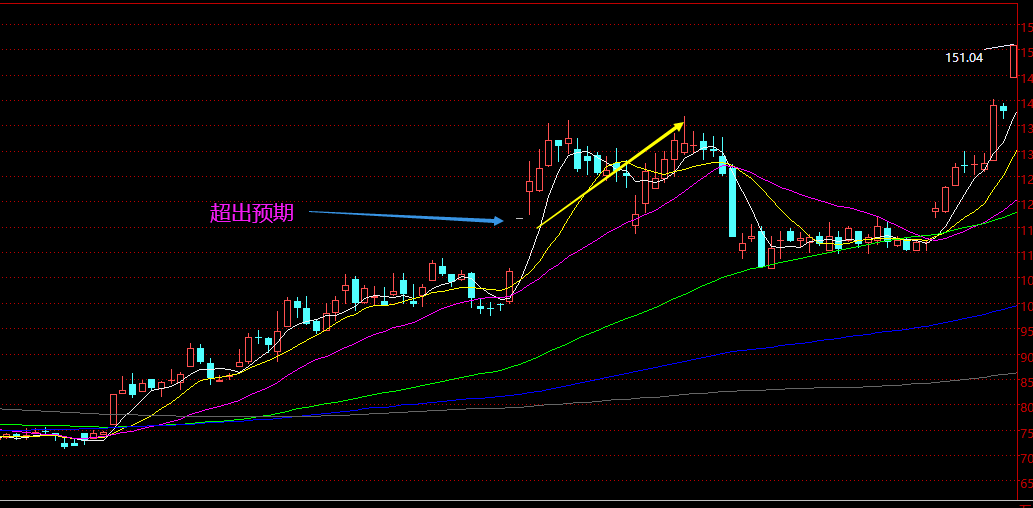
There are many similar cases of buying expectations and selling facts.
If you want to recognize this phenomenon, you must understand the main thinking. The main force takes advantage of people's hesitation about uncertain expectations to make sure purchases. And when the expectation becomes a fact and people are sure, the reverse selling operation will be carried out.
Copyright reserved to the author
Last updated: 08/08/2023 15:33
Add

Buying expectations and selling facts is an important interpretation of the market operating rules, and it has actually become a broad consensus. This is especially obvious when you are doing transactions, especially when combined with news events. So there's nothing wrong with saying that the market is pricing based entirely on participants' expectations about the future.
What is Buying Expectations Selling Facts?
When we buy a position, we think that it will rise in the future. This is the expectation of buying. When we sell, we are in the bag. The decision to sell is related to specific facts.
Specifically, it is to do more in the market in advance based on the expected bullish news, and the price will rise as a result. When the news is announced that is not as expected, or it just meets expectations, choose to sell and take a profit. If you fail to make a profit by selling, the selling price may be unsatisfactory, and then investors will close their positions one after another, resulting in the fact of selling.
This operation is roughly divided into four parts: 1) Betting on events; 2) Prices reflect expectations in advance; 3) Expectations are confirmed or falsified; 4) Price fluctuations after the facts are fulfilled.
You have to say what is the best way to deal with it. For short-term trading, I personally feel that there is basically no solution. Only by following market expectations can rational choices be made. If it is a long-term business, I am greedy when others panic, which can be used.
Isn’t the biggest black swan this year the epidemic, among which there are many things related to expectations, and the market once again vividly interprets the relationship between news and expectations. Take the US stock market in March and April as an example.
In late March, the overseas epidemic outbreak centered on the United States broke out completely. The market panicked, risky assets represented by US stocks were abandoned by investors, and the S&P 500 and other indexes plummeted and circuit breakers occurred.
In order to stabilize the financial market, the Federal Reserve launched a series of bailout policies.
1. Should have stopped falling but continued to fall
On March 16, the Federal Reserve lowered interest rates to zero and launched a $700 billion easing program. The reaction of the market was:
The U.S. stock market plummeted -9% at the opening, triggering the circuit breaker mechanism, and the third circuit breaker occurred in the U.S. stock market.
On March 23, the Federal Reserve launched unlimited QE, and the market's reaction was:
U.S. stocks opened lower across the board, with the S&P 500 down 4%.
The introduction of these favorable policies has ushered in a sharp drop. Because the market did not expect such a big move by the Fed, the subtext behind the big move is that the market is worse than everyone expected.
2. The market went up after the bearish release
On March 26, the U.S. Department of Labor announced that the number of initial jobless claims for the week of March 21 was 3.28 million, breaking the record high. On April 2, the U.S. Department of Labor announced that the number of initial jobless claims for the week of March 28 was 6.6 million, which can be described as a flood of unemployment applications.
The reaction of the two markets was: U.S. stocks skyrocketed.
On April 3, the U.S. Department of Labor announced that the number of non-agricultural employment decreased by 701,000 in March, which was the first decline in 2010 and was 7 times the previous analyst's estimate. The market reacted: U.S. stocks skyrocketed.
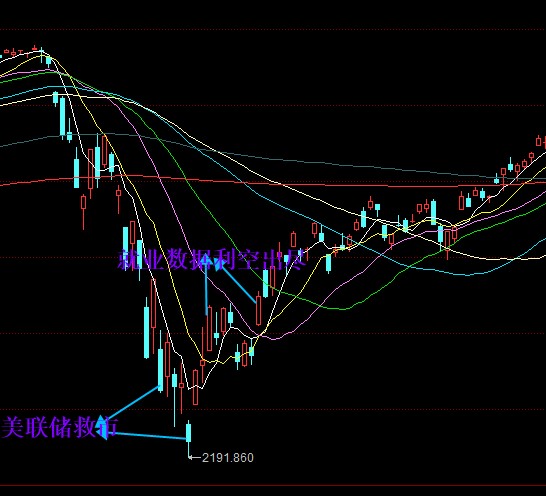
When these three data were released, the market had already expected, and the price was basically priced in. The logic of skyrocketing is: the worse the data is, the more likely it is that big stimulus policies will be introduced. In other words, what is rising now is the expectation of the future, not the current bad situation.
We are all familiar with the following plots. Although the epidemic persists, U.S. stocks have entered a technical bull market. The Nasdaq and S&P 500 have recovered their losses since the epidemic and continued to set new record highs.
Copyright reserved to the author
Last updated: 08/08/2023 12:49
Add

There is a word called price in!
Whether it is the stock market or the foreign exchange market, when the price is at a high or low level, funds need to change hands to obtain chips from the low position or throw away chips from the high position. The news is the catalyst to stimulate the change of hands, so we often say a sentence: If it is good, take the money and run quickly; if the low position is bad, take the money and rush in.
Everything that is good is bad, and everything that is bad is good.
If the market is very hot, when the good news has reached your ears, it proves that the news has spread far, and the price has already been pushed up by people who heard the news earlier than you, and you have heard the good news. At that time, I felt that rushing in would make a profit, which happened to be convenient for those who raised the stock price in the early stage to ship.
The longer an important data/event is expected by the market in advance, the more likely it is to buy news and sell facts. On the contrary, it is the kind of sudden good/bad data or events, and the market will act according to the quality of the data before the market has time to react.
As for the best way to deal with it, it is actually better to wait and see. If you have to find a way to deal with it, then just place a two-way order. Because any market behavior of buying news and selling facts is often accompanied by unilateral market behavior, at least in most cases. You don't need to consider the direction of the two-way pending order, and the worries of buying news and selling facts are relieved. The only thing you need to consider is whether the market volatility is enough to support two-way pending orders, and whether you will be swept away by stop losses on both sides.
Copyright reserved to the author
Last updated: 08/08/2023 07:56
Add

There is a saying: It is good to sell all the bad news, and it is bad news to cash in the good news. That is to say: market expectations have changed to the best or the worst, and a turning point will appear.
Because the expectation has reached an extreme, and the price has deviated far from the real value. Once the fundamentals show signs of turning, the expectation will turn sharply, triggering a wave of violent market conditions.
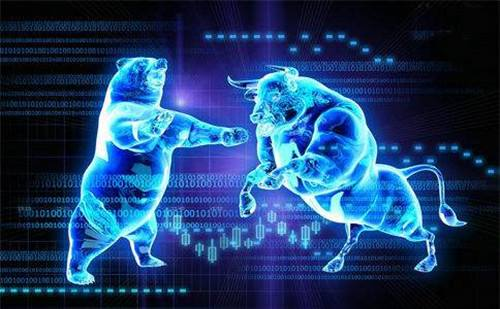
The investment principle of buying low and selling high is as simple as the avenue. It is summed up from the complicated investment world that everyone thinks is right, but it cannot be applied well in actual operation. If you want to get close to the reality of investment, "buy expectations and sell facts" is a mantra that I have deeply experienced, and it can be said to be the six-character mantra for past investments.
"Buying expectations" should be combined with low buying (lower point buying).
Anticipation can be understood as the potential value of the investment species you fancy is greater than the current price, and you wait for the market to start buying when the market sentiment is low. It is like a hunter who waits for the prey in his heart to appear for a long time. Once it appears within the hunting range, he will attack decisively. When it comes to waiting for the opportunity to buy, many people rush into the investment (mirror) world without doing their homework. The homework is not only to understand their own investment products, but also to control the sentiment of the investment market. Be low-key and luxurious, others are greedy and you are fearful. In short, buying expectations and buying low must be related to your own non-conformity and patience.
"Selling facts" should be combined with selling high (selling at a higher point).
Expectations include your own expectations for investment products and market expectations for investment products. To wait until the time to "sell the facts" is something that only a few people can do. Because the perception of "facts" in everyone's mind is different, looking at the facts of the market is as if there are a thousand Hamlets for a thousand readers.
From the perspective of time scale, expectations are divided into short-term (daily), medium-term (monthly or quarterly) and long-term (yearly) expectations. The short-term is called speculation, the medium-term is called speculation in investment, and the long-term is called value investment. , as an additional reminder, it is a personal opinion to divide into short, medium and long term, and there is no specific objective method.
When it comes to value investment, understand long-term expectations as value investment, and choosing value investment means that you must always stand on the opposite side of the public, you must firmly believe that you are right, and at the same time quickly admit your mistakes when you find yourself wrong. You have to be very obsessed with investing, but also very patient. Anyone who really takes value investing as an investment philosophy, the first thing to learn is not how to make money, but how to avoid pitfalls. Earning money to buy expectations and sell facts is enough, but it is greed and desire that make you involuntarily enter the pit; of course, you can also correct greed and set profit and stop points for speculation, but this operation is very difficult, without concentration and determination, it is very difficult It is easy to be infected by greed and fear, which affects decision-making.
"Buying expectations and selling facts" requires wisdom and analytical ability. It is necessary to constantly train and perceive the situation and trend of the investment market and make the best use of the situation. The same is true in the investment world. Training value perception and the microscopic sense of the market determines whether the investment is fruitful.
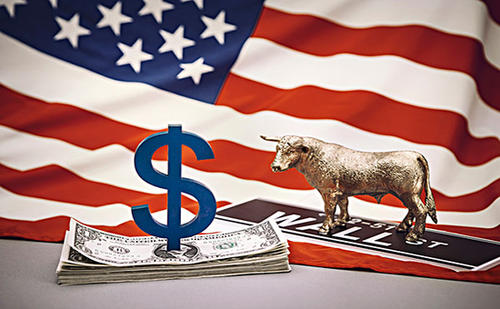
If we say "buy expectations and sell facts", there are three timing points :
The first is before the mainnet goes live, the second is when the project is booming, and the third is after the application is launched.
The popularity of supernodes before the EOS mainnet went live led to a wave of bulls in the market. Unfortunately, at that time, the eyes were only on the EOS crowdfunding and moving bricks, ignoring this expected point. Next, wait until the projects on the EOS public chain prosper. Compared with the ETH public chain, it is precisely because thousands of projects are running and have withstood the test of the market that the price of ETH has bumped from the initial 5 yuan to the current price. Therefore, in the current sluggish market, take a long-term view, firmly believe that there will be many commercial projects on the EOS public chain, and be patient to optimize the development time for EOS; Greedy to fantasize about a little more rise.
Those who can buy are apprentices, and those who can sell are masters. You can learn from others to buy expectations, but you need to perceive by yourself when selling facts.
Copyright reserved to the author
Last updated: 08/08/2023 11:58
Add

Buying news and selling facts actually reflects a market expectation and the market's reaction after this expectation is fulfilled.
Let’s use an analogy, which is easier to understand: the market will announce the US non-agricultural data tonight, and the current market expects the non-agricultural data to perform well, far exceeding the previous value. Then investors start to react to tonight's data when they choose, because the market is expected to be good, so everyone starts to buy US dollars, hoping that the data will make this position a profit. So the more people bought, the dollar started to rise ahead of the data.
Then the data was released, and the result was a good performance, basically in line with market expectations. So at this time, everyone has no motivation to chase after buying dollars, because they have already bought them before, and the reason for buying dollars has now been fulfilled. Everyone began to worry about the lack of follow-up strength, and also worried that the benefits would be exhausted, so they began to close positions and collect money. The unwinding caused the dollar to fall, even though we saw a very good non-farm payrolls release.
This is a typical operation process of buying news and selling facts. Because of the money-making effect, everyone wants to buy at a lower position and sell at a higher position. Therefore, if a data is relatively certain, there will usually be a rush to raise funds before the data is released. After the data was announced, the boots landed and the chips could be exchanged, so everyone sold them.
Of course, this is not the case for all data. Generally, if the data far exceeds expectations, then there will be a second wave of forces (those that have not entered the market ahead of time) that will continue to advance the market. But the risk is that if those who made profits in the early stage choose to close their positions, the motivation for the market to continue to rise may not be sufficient.
To deal with this situation, I think it is best to follow the market instead of subjectively thinking about what the market should be. Many people love to compete with the market, thinking that if the data is good, it must rise, and if the data is poor, it must fall. But the interpretation of the market may be different. If you don't follow the market, you can only become the victim in the end.
Copyright reserved to the author
Last updated: 08/08/2023 12:37
Add

buy news? ? I've only heard buy expectations sell facts.
"Buy news, sell facts" is also called "buy expectations, sell facts". It is not difficult to understand literally. The so-called buying news means buying according to news. It is expected that the bullish news will be bought in large quantities in the investment market in advance, and the price will rise accordingly. When the announcement of the news is not as expected or only just meets the expectation, choose to sell and take a profit. If the sale is later, the selling price may not be as good as before. Even better, so everyone scrambled to sell to close their positions, resulting in the fact of selling.
And if the news exceeds expectations and rumors, there will be relatively few investors selling the facts at this time, and at the same time, the price will rise again due to new buyers pushing up the price. This kind of situation will not sell the fact that it will not have a great impact on the market. It will only fall back slightly before the data is released, and then rise again.
Why would investors choose to sell the facts?
The reason is that when people buy, they only rely on rumors. A few minutes before the news is announced or after the news is announced, investors find that the news may not be as good as the rumors, so they choose to sell to make a profit. Selling to make a profit, I am afraid that the sale will be late, which will cause the price to drop rapidly.
The pricing of the financial market is entirely based on the expectations of the participants for the future. This kind of expectation must have a relatively clear path, and various possible probabilities can be calculated, so that there is a basis for pricing. Compared with worrying that the future situation will get worse, the market is more worried about the unknowable future situation. Huge uncertainty cannot form a unified market expectation, and uncertainty brings panic about the future.
When the epidemic broke out, U.S. stocks fell sharply and circuit breakers occurred one after another. The reason for this was market panic. The reason for the panic was that the market could not reach a consensus on future expectations.
As a result, the Federal Reserve introduced many "rescue" policies, which seemed to rise but fell, and many data releases seemed to fall but rose.
Copyright reserved to the author
Last updated: 08/05/2023 18:55
Add
Thank you, this question is very interesting, and I am afraid it is also a question that many traders wonder about. Let us simply use the US stock market as an example.
First look at the pricing mechanism of the financial market. The pricing of the financial market is completely based on the expectations of the participants for the future. This kind of expectation must have a relatively clear path, and various possible probabilities can be calculated, so that there is a basis for pricing.
Compared with worrying that the future situation will get worse, the market is more worried about the unknowable future situation. Huge uncertainty cannot form a unified market expectation, and uncertainty brings panic about the future.
When the epidemic broke out, U.S. stocks fell sharply and circuit breakers occurred one after another. The reason for this was market panic. The reason for the panic was that the market could not reach a consensus on future expectations.
As a result, the Federal Reserve introduced many "rescue" policies, which seemed to rise but fell, and many data releases seemed to fall but rose. Let me talk about it below.
a. It seems to be rising but falling
On March 16, 2020, the Federal Reserve cut interest rates to zero and launched a $700 billion easing plan. The reaction of the market was:
The U.S. stock market plummeted -9% at the opening, triggering the circuit breaker mechanism, and the third circuit breaker occurred in the U.S. stock market.
On March 23, 2020, the Federal Reserve launched unlimited QE, and the market's reaction was:
U.S. stocks opened lower across the board, with the S&P 500 down 4%.
The introduction of these favorable policies has ushered in a sharp drop, because the market did not expect such a big move from the Fed. The subtext behind the Fed's big move is that the market is worse than everyone expected. So the market panicked and responded with a plunge.
b. It seems to be falling but rising
On March 27, 2020, the U.S. Department of Labor announced that the number of initial jobless claims for the week of March 21 was 3.28 million, breaking the highest level in history.
On April 2, 2020, the U.S. Department of Labor announced that the number of initial jobless claims for the week of March 28 was 6.6 million, which can be described as a flood of unemployment applications. The reaction of the two markets was: U.S. stocks plummeted and then skyrocketed.
All speculations or theories must be tested by the market, and the market must be right.
Copyright reserved to the author
Last updated: 08/11/2023 05:01
Add

The best way is to choose to wait on the sidelines when major information and data are released, and then continue to wait for the signal to trade according to your original trading direction, and do a good job in fund management (unless there is a major black swan event, it is best to continue trading in the originally determined direction) the best choice)
Copyright reserved to the author
Last updated: 08/14/2023 20:36
Add

Let's answer your first question first. Buying news and selling facts is a very common phenomenon in the financial market. It means that investors desperately follow the market hype when rumors and news are popular, lest they fall behind. Opposite operation.
If the news about data and events in the market is bearish, then the first action is to short, and the second action is to buy to close the position before or when the news or facts come out.
Many important U.S. economic data such as GDP, non-farm payrolls, CPI and other data often appear to buy news and sell facts. In many cases, the results of the data are actually very poor, but before the data is released, the exchange rate often supports a sharp rise under very good expectations, especially 5 minutes before the data, the rise is very rapid, and some people don’t even care about the data. Whether it is good or bad, close the position in advance two minutes or 30 seconds before the data is released. If the data is bad, then he will run the fastest and make the most profit. If the data is good, some people may not close their positions. If they sell If there are few people, the exchange rate may continue to rise slightly. Although the fastest runner has not made a part of the rise, he has avoided the risk of falling behind in closing positions when the exchange rate falls sharply due to data differences.
Many times the market's expectations and hype are wrong and groundless, but no investor can lag behind. The exchange rate may still rise sharply and break through amidst the wrong hype, and even start a new round of sharp rise. The trend may It lasts for thousands of points, so sometimes you can't stick to your point of view rationally, but should follow the crazy market hype. It doesn't matter if you come in late, but you can choose to come out early.
Copyright reserved to the author
Last updated: 08/06/2023 15:40
Add

In fact, this kind of situation is often encountered, and I have done it myself. For example, non-agricultural gold, the trend of gold was very flat before the data was released, as if it was to accumulate strength for gold, and then many people went long, and the price rose. As a result After the news was announced, it was much better than expected, and the price suddenly fell. There are many such cases.
In addition, in fact, buying news and selling facts is also called buying expectations and selling facts. It is not difficult to understand literally. The so-called buying news means buying according to the news. The news here refers to expected news and rumors. Buy a lot in the investment market, and the price will rise accordingly. When the news announcement is not as expected or just meets expectations, choose to sell and take a profit. If you sell later, the selling price may not be as good as before. Therefore, Everyone scrambled to sell to close their positions, resulting in the fact of selling.
And if the news exceeds expectations and rumors, there will be relatively few investors selling facts at this time. At the same time, due to new buyers raising prices, the price will rise again. In this case, selling facts will not have a great impact on the market. , before the release of the data, the progress will fall slightly, and then rise again.
So why do people sell facts? The reason is that when people buy, they only rely on rumors or expectations. A few minutes before or after the announcement of the news, investors find that the news may not be as good as rumors or expectations, so they choose to sell to make a profit. A profit is made, which leads to a rapid drop in price.
In other words, this is actually a very normal investment behavior! The main point is that after the announcement of the news, the price fell due to a large number of sell-offs, which is not easy to do. But if you follow your own trading system, you don't need to look at the news, just look at the technical analysis!
Copyright reserved to the author
Last updated: 08/10/2023 16:58
Add

In fact, this question is about how to deal with fundamental news. I personally think that we should try our best to avoid fundamental news to make orders, because our news is too late, and the market has already started to move after we know it. Besides, there are several bad points about fundamental news: (1) Fundamental analysis It is impossible to quantify the time interval during which basic data or information has an impact on market prices. (2) There is great ambiguity and unpredictability in fundamental analysis. (3) Not all price fluctuations are caused by fundamental factors.
Sometimes, the price rises steadily due to the continuous positive influence of fundamental factors, but when the price reaches a certain price, the closing operation of the long orders entered in the early stage is enough to cause a short-term sharp correction in the market price trend. At this time, although the overall upward pattern of the market remains intact, if some investors enter the market to do long near the peak before the price has a sharp correction, then in the margin market where investors do not have enough capital reserves, it is very likely that there will be a liquidation. Phenomenon. History has proved that liquidation is extremely painful.
Copyright reserved to the author
Last updated: 08/13/2023 17:37
Add

Seeing this question, I have to talk about the Swiss franc incident. On August 17, 2011, there were rumors in the market that the Swiss National Bank would announce a policy of pegging the Swiss franc to the euro exchange rate in order to curb the appreciation of the Swiss franc. It became true that the Swiss franc was sold desperately, and the USD/CHF and EUR/CHF rose sharply, but the measures to suppress the Swiss franc announced by the Swiss National Bank a few hours later did not peg the exchange rate at all, and many people also bought through speculation after the rise They closed their positions and made a lot of money. After the facts came out, they closed their positions and sold them one after another. USD/CHF and EUR/CHF fell randomly. Judging from the results, the rumors and hype in the market were very irrational, wrong, and even illegal, but no one would be so stupid as to go against the trend, stay rational and not follow the hype, keep selling and keep losing money, and only buy , so the rise is very rapid. This is a typical operation of buying expectations and selling facts. Such an operation will bring great harm to traders every time, so it is better not to rely too much on the news. Buying news and selling facts must be two connected and opposite actions. If you only buy and don’t close your position before the news comes out, the rally may be completely withdrawn or even lose money after the fact comes out. Therefore, the second action depends on who run faster.
Copyright reserved to the author
Last updated: 08/13/2023 06:16
Add


This kind of saying should be classified as short-term traders. If trend trading returns to fundamentals, fundamentals are the essence of major trends! Returning to the information side in a short cycle, we should know that any information side, technical side, must return to the fundamental side!
Copyright reserved to the author
Last updated: 08/02/2023 12:52
Add

0
work
0
subscriber